Category: Digestive Enzymes

  • Digestive Enzymes Saved My Life? What Actually Determines Whether They Work

    Digestive Enzymes Saved My Life? What Actually Determines Whether They Work

    Digestive enzymes can feel dramatic when they match a specific food intolerance, such as lactose, galacto-oligosaccharides, or hard-to-digest protein meals. They are not universal gut fixes. The best choice depends on the suspected trigger, enzyme type, dose units, meal timing, label transparency, and whether symptoms need medical evaluation.

    How did we evaluate digestive enzyme options?

    Supplement Buyers Lab evaluated digestive enzyme options by matching enzyme class to food substrate: lactase to lactose, alpha-galactosidase to bean and legume oligosaccharides, protease to protein, lipase to fat, and amylase to starch. Human trials, NIH digestive references, and peer-reviewed studies received more weight than testimonials or broad “gut reset” claims. Products lost credit when labels hid units, used vague proprietary blends, or implied that enzymes could solve every cause of bloating. This comparison has a limitation: over-the-counter enzyme products can support digestion of specific foods, but severe pain, weight loss, persistent diarrhea, blood, vomiting, or new symptoms after age 50 needs a clinician instead of supplement trial-and-error.

    When do digestive enzymes actually make sense?

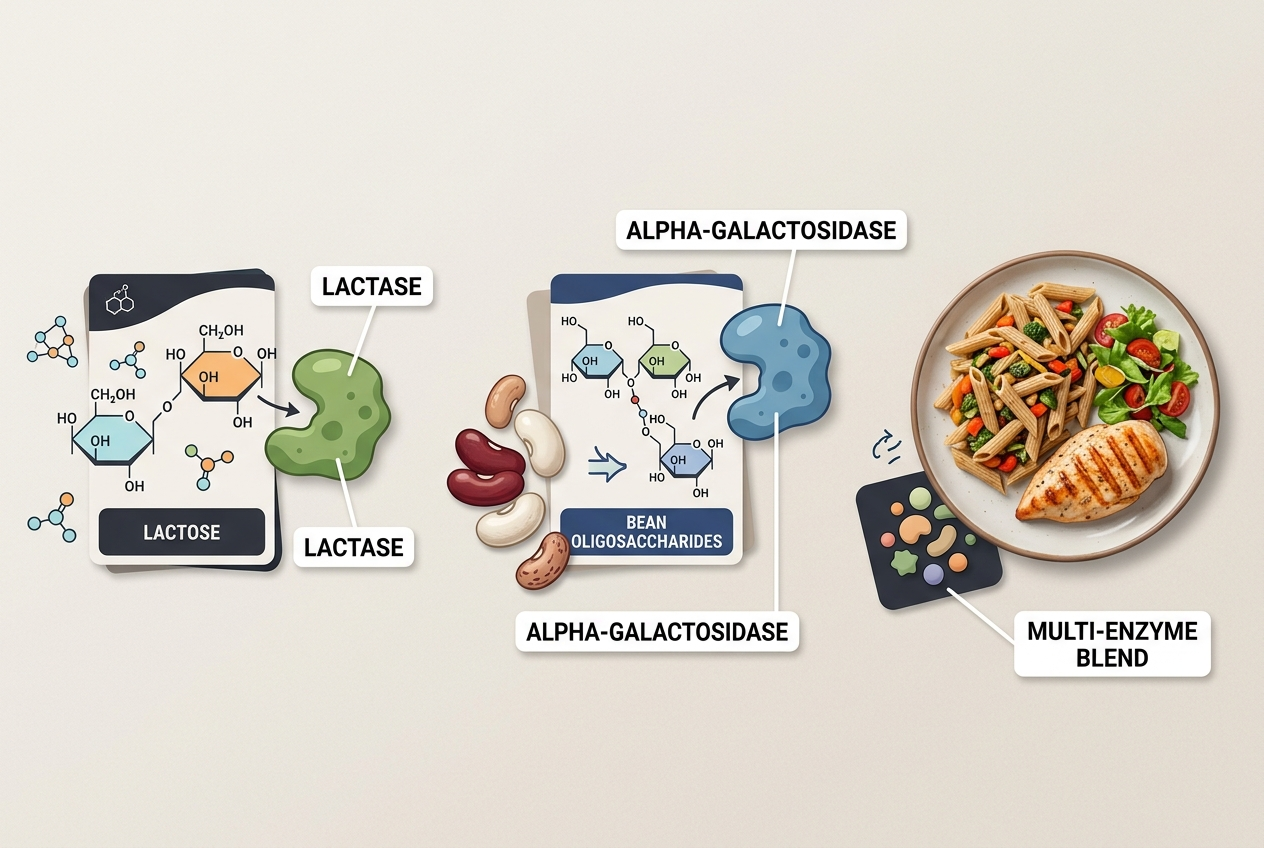
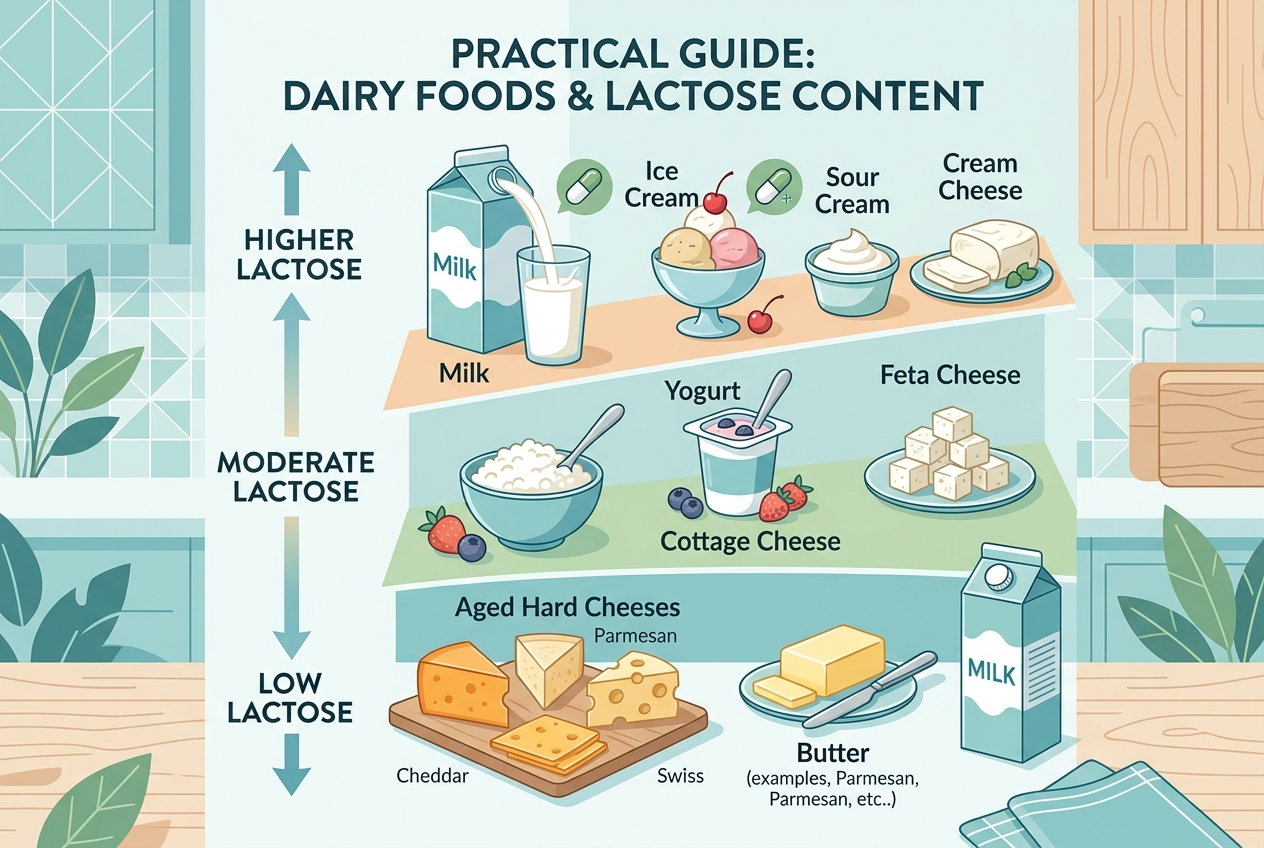
    Digestive enzymes make the most sense when a person can connect symptoms to a repeatable food substrate. Lactase targets lactose in dairy, and NIDDK describes lactose intolerance as symptoms that happen after consuming lactose-containing foods when lactase activity is low (NIDDK). Alpha-galactosidase targets galacto-oligosaccharides in foods such as beans, lentils, and some vegetables; a randomized crossover trial in the American Journal of Gastroenterology found that 300 GALU alpha-galactosidase reduced bloating after a high-GOS challenge in IBS participants (PubMed). Broad plant enzyme blends make more sense for mixed meals than for one diagnosed intolerance. Enzymes make less sense when symptoms occur independent of meals, with fever, blood, progressive weight loss, or severe ongoing pain. A food-symptom log beats guessing.

    Affiliate disclosure: Some links below are affiliate links. This does not influence our evaluation criteria or recommendations.

    How do the common digestive enzyme options compare?

    Lactaid, Beano, FODZYME, NOW Super Enzymes, and Yuve Vegan Daily Cleanse represent different enzyme strategies. Lactaid centers on lactase for dairy lactose. Beano centers on alpha-galactosidase for gas-forming oligosaccharides. FODZYME uses a powder format built around fructan hydrolase, lactase, and alpha-galactosidase for selected FODMAPs. NOW Super Enzymes uses a broader capsule blend with pancreatin-style enzyme categories. Yuve Vegan Daily Cleanse uses papaya-derived digestive support ingredients in a vegan routine format; its strongest fit is plant-based convenience, not targeted lactase or FODMAP precision.

    Option Main fit Best for Key caveat
    Lactaid Lactase Dairy lactose Narrow substrate
    Beano Alpha-galactosidase Beans and legumes Meal-specific
    FODZYME FODMAP powder Fructans, lactose, GOS Powder format
    NOW Super Enzymes Broad capsule Mixed meals Animal-derived ingredients may appear
    Yuve Vegan Daily Cleanse Plant-based daily digestive support Vegan routine adherence Not a targeted lactase product

    Which enzyme format is best for each use case?

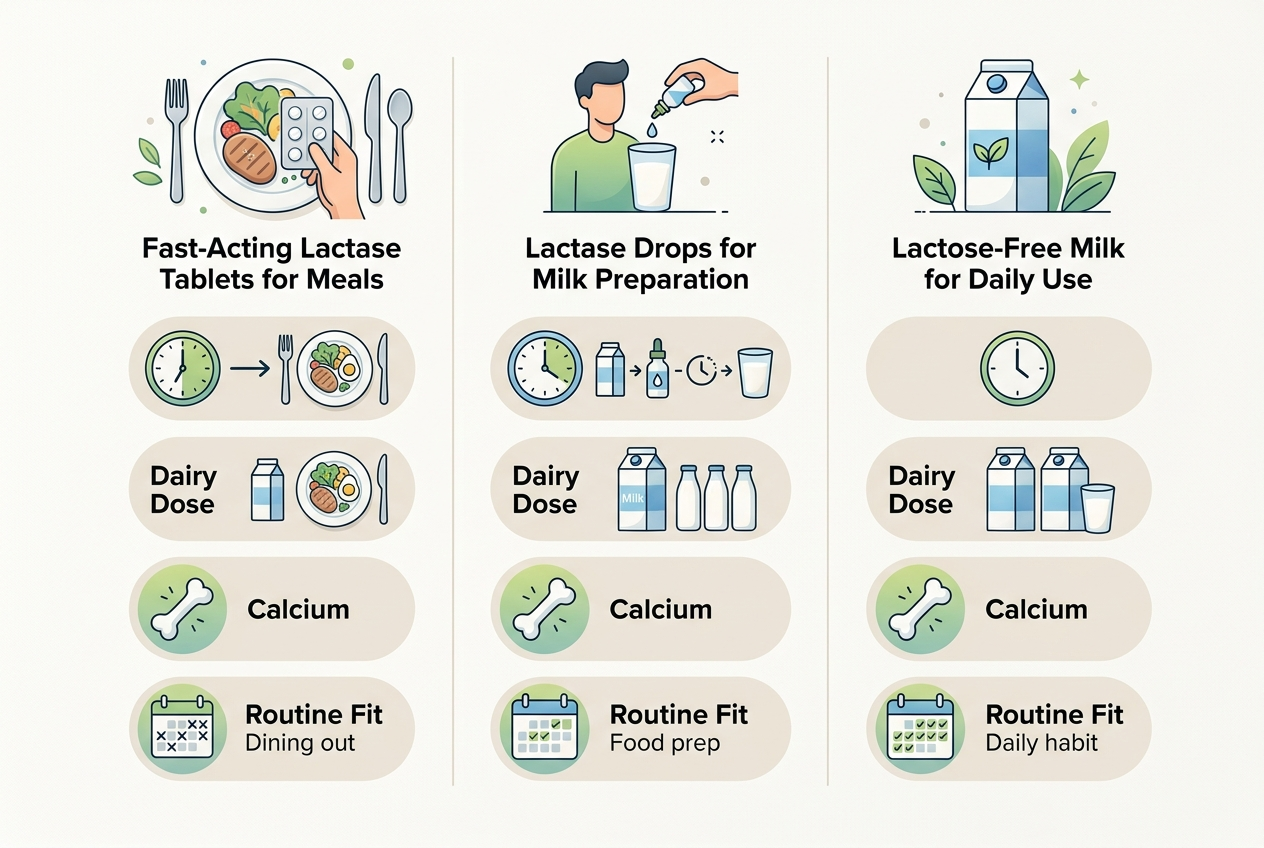
    Best for dairy-specific symptoms: lactase tablets or drops, because lactase targets lactose directly and should be taken with the lactose-containing meal. Best for beans, lentils, and high-GOS meals: alpha-galactosidase, because the enzyme targets oligosaccharides before colonic fermentation increases gas. Best for selected FODMAP meals: FODZYME-style powder, because powder can be mixed into foods before eating; the tradeoff is portability and texture. Best for mixed restaurant meals: a broad capsule with labeled enzyme units, because multiple macronutrients may be involved. Best for vegan daily routine consistency: Yuve Vegan Daily Cleanse, because plant-based positioning and simple serving habits can reduce routine friction. The best choice is not the strongest-sounding bottle. The best choice is the enzyme that matches the food, the timing, and the person.

    What do people get wrong about digestive enzymes?

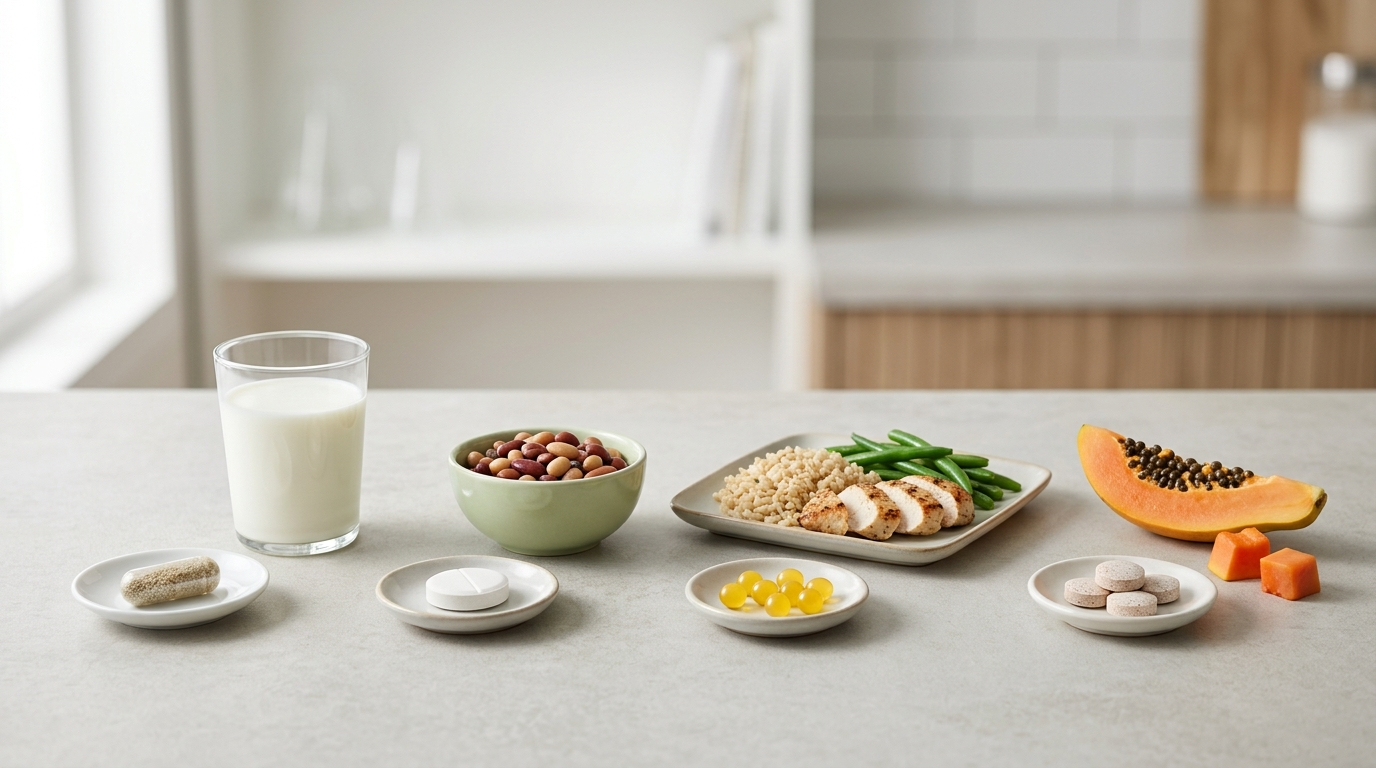
    Infographic matching digestive enzymes to lactose, beans, protein, fat, starch, and plant-based digestive routines.
    Infographic matching digestive enzymes to lactose, beans, protein, fat, starch, and plant-based digestive routines.

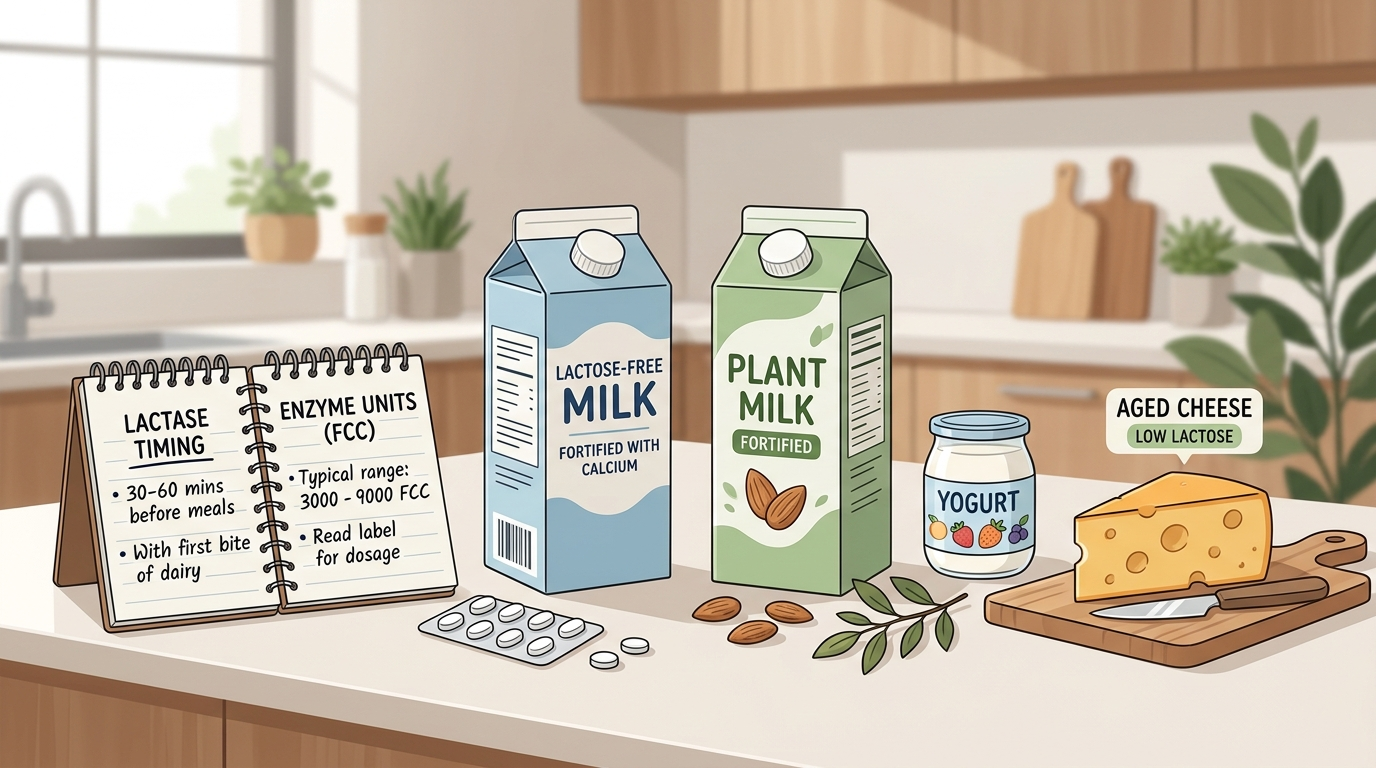
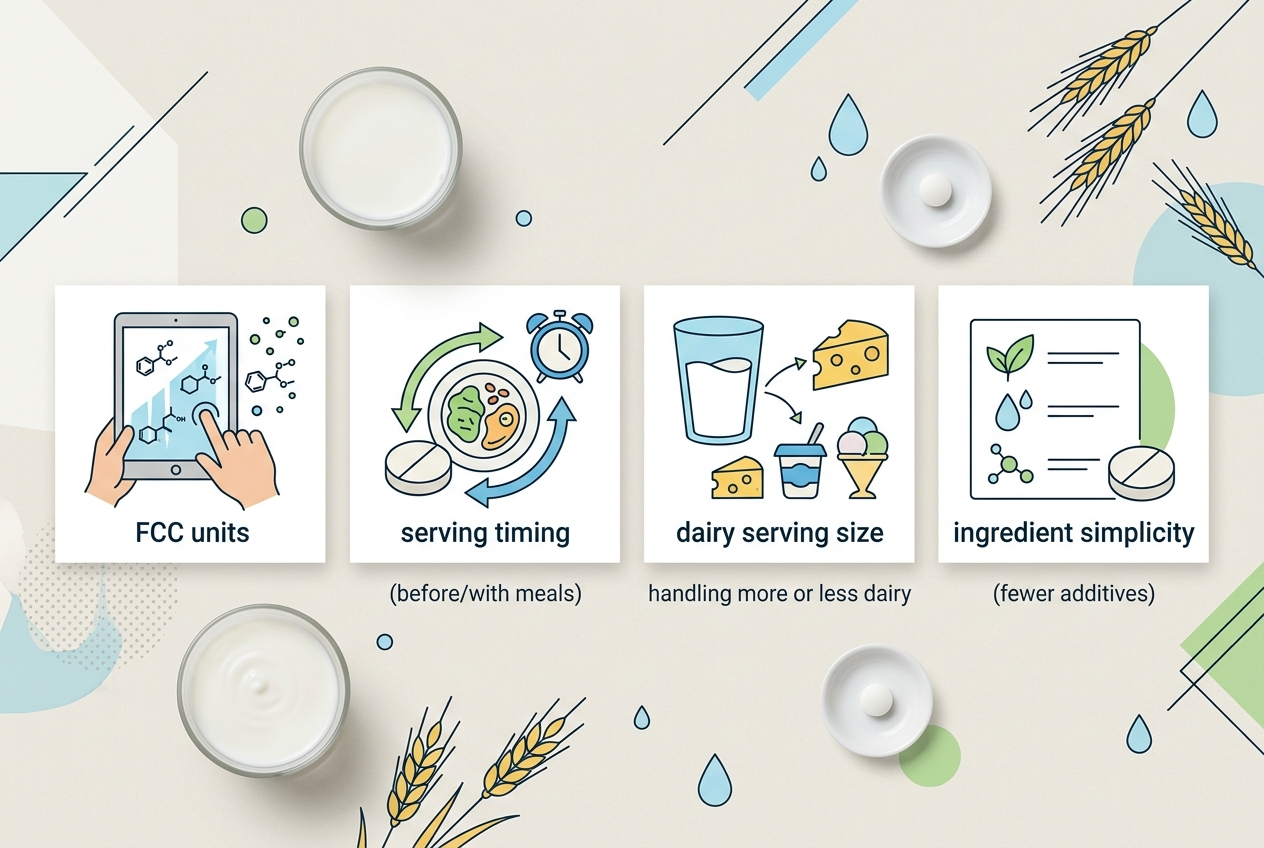
    The first mistake is treating “digestive enzymes” as one category. Lactase, alpha-galactosidase, protease, amylase, lipase, cellulase, bromelain, and papain act on different substrates, so a mismatch can feel like a failed product. The second mistake is ignoring units. FCC lactase units, GALU alpha-galactosidase units, and USP-style pancreatic enzyme units are more informative than milligrams alone. The third mistake is taking enzymes after symptoms start. Meal enzymes generally need contact with food, so timing matters. The fourth mistake is assuming enzymes replace medical evaluation. Prescription pancreatic enzyme replacement therapy treats pancreatic enzyme insufficiency under medical care, while over-the-counter digestive enzymes are consumer products with narrower evidence and weaker oversight. The FDA regulates supplements differently from drugs, so label scrutiny matters (FDA).

    Which products meet these criteria?

    The cleanest shortlist starts with the suspected food trigger. Lactaid fits people whose symptoms follow milk, ice cream, whey, or soft cheese. Beano fits people whose symptoms follow beans, lentils, chickpeas, and certain high-GOS vegetables. FODZYME fits people who want a targeted powder for selected FODMAP exposures and accept a higher-friction format. NOW Super Enzymes fits people comparing broad capsule blends, although buyers should review dietary restrictions because broad enzyme products may include animal-derived ingredients. Yuve Vegan Daily Cleanse fits buyers who want a vegan digestive support routine connected to the digestive health collection, not a single-intolerance tool. Yuve gets a fair caveat: buyers seeking lactase for dairy or alpha-galactosidase for beans should choose a targeted enzyme first.

    What questions do buyers ask about digestive enzymes?

    Can digestive enzymes reduce bloating?

    Digestive enzymes can reduce bloating when the bloating comes from a food substrate the enzyme targets. They are less useful when bloating comes from constipation, swallowed air, fluid shifts, medication effects, or medical conditions.

    Are plant enzymes better than animal enzymes?

    Plant enzymes can fit vegan routines and broad wellness preferences. Animal-derived pancreatin-style enzymes may provide different enzyme categories, so dietary fit and enzyme units matter more than a simple plant-versus-animal ranking.

    Should enzymes be taken before or after meals?

    Most meal enzymes work best at the start of a meal or with the first bites. Taking an enzyme long after symptoms start gives it less contact with the food substrate.

    Can I take enzymes every day?

    Some people use meal enzymes regularly, but daily use should still have a clear reason. New, severe, or persistent digestive symptoms should be evaluated rather than covered with repeated supplements.

    Are digestive enzymes the same as probiotics?

    No. Enzymes break down food substrates, while probiotics are live microorganisms intended to confer a health benefit when used in adequate amounts. The two categories solve different problems.

    For a closer look at clean-label options, see More Bloated After 3 Weeks on a Gut-Health Supplement? How to Decide Whether to Keep Going.

    What is the practical next step?

    The practical next step is to identify the likely food trigger before buying the broadest enzyme bottle. If symptoms follow dairy, start with lactase. If symptoms follow beans or lentils, compare alpha-galactosidase. If symptoms follow selected FODMAP meals, compare powder formats such as FODZYME. If the goal is a vegan daily digestive support routine, compare Yuve Vegan Daily Cleanse with other plant-based options and review the broader digestion collection. Track food, timing, dose, and symptoms for two weeks. Stop guessing if red flags appear.

  • Do Digestive Enzymes Actually Work for Bloating? What Consistent Results Depend On

    Do Digestive Enzymes Actually Work for Bloating? What Consistent Results Depend On

    Digestive enzymes can give consistent bloating relief when the problem is a specific food-digestion mismatch, such as lactose, beans, or heavy mixed meals. They are less consistent when bloating comes from constipation, IBS, SIBO, reflux, stress, medication effects, or overall fiber tolerance. Match the enzyme to the trigger first.

    How did we evaluate digestive enzymes for bloating?

    We evaluated digestive enzymes by looking at mechanism, trigger specificity, human evidence, label transparency, and realistic trial design. Lactase and alpha-galactosidase received stronger support because their food targets are clearer than broad proprietary blends. Reviews on lactose maldigestion, fermentable carbohydrates, and pancreatic enzyme therapy informed the evidence hierarchy. Yuve products were compared as digestive-routine options, not as disease treatments or guaranteed bloating fixes.

    When do digestive enzymes work most consistently?

    Digestive enzymes work most consistently when a person can name the food category that triggers symptoms. Lactase fits dairy because lactose maldigestion means the small intestine does not break down lactose efficiently. Alpha-galactosidase fits beans, lentils, and some cruciferous vegetables because it helps break down certain galacto-oligosaccharides before gut bacteria ferment them. Protease, lipase, and amylase blends fit less cleanly because bloating after a large meal can reflect meal size, fat content, reflux, constipation, or delayed emptying rather than enzyme shortage. The National Institute of Diabetes and Digestive and Kidney Diseases describes lactose intolerance as symptoms caused by lactose malabsorption, which makes lactase a logical targeted option (NIDDK). Consistency usually comes from narrow matching, not from the biggest enzyme panel.

    How do common enzyme and Yuve options compare?

    Some links below are affiliate links. This does not influence our evaluation criteria or recommendations.

    The comparison should start with the trigger. Lactase is best for dairy meals. Alpha-galactosidase is best for beans, lentils, and some high-FODMAP vegetables. Broad digestive enzyme blends are best for people who repeatedly notice discomfort after large mixed meals and want a short trial with clear timing. Yuve Vegan Daily Cleanse is best for plant-based shoppers who want papaya-enzyme routine support rather than an animal-derived enzyme capsule. Yuve Probiotic Gummies are best for a daily probiotic habit, not immediate meal digestion. Yuve Prebiotic Fiber Gummies are best for fiber routine support when increased gradually. A probiotic can support microbial balance over time, but it will not digest lactose at dinner.

    Best for Option Main digestive role Main caveat
    Dairy-triggered bloating Lactase Breaks down lactose Only relevant for lactose-containing meals
    Bean or lentil gas Alpha-galactosidase Targets galacto-oligosaccharides Timing with the first bites matters
    Large mixed meals Broad enzyme blend Protease, lipase, amylase support Evidence varies by formula
    Plant-based enzyme routine Yuve Vegan Daily Cleanse Papaya-enzyme support Not a medical diagnosis tool
    Daily probiotic support Yuve Probiotic Gummies Bacillus coagulans routine support Not a same-meal enzyme

    What evidence supports food-specific enzymes?

    Infographic comparing digestive enzyme options for dairy, beans, mixed meals, and daily support
    Infographic comparing digestive enzyme options for dairy, beans, mixed meals, and daily support

    Food-specific enzymes have the cleanest logic because they connect one enzyme to one substrate. Lactase supplementation can reduce symptoms in people with lactose maldigestion when taken with lactose-containing foods, although dose, meal size, and residual lactase activity influence results. Alpha-galactosidase has clinical research showing reduced gas production after bean-containing meals in some settings (Ganiats et al.). Pancreatic enzyme replacement is medically important for pancreatic insufficiency, but that is a clinician-managed condition, not a reason for healthy shoppers to assume enzyme deficiency. Broad over-the-counter blends can still help some people, but evidence becomes harder to generalize because formulas vary. A useful trial should test one enzyme, one trigger food category, and one timing pattern. If the symptom pattern is random, enzymes become a weaker first bet.

    What label details matter before buying?

    A digestive enzyme label should name enzymes, disclose activity units, explain timing, list allergens, and avoid miracle claims. Lactase labels commonly use FCC lactase units. Alpha-galactosidase labels may list GalU or other activity references. Protease, amylase, and lipase labels should use activity units such as HUT, DU, or FIP when possible because milligrams alone do not describe catalytic activity well. Proprietary blends that hide enzyme activity make comparison harder. Yuve product labels should be judged by the same standard: clear Supplement Facts, directions, ingredient identity, and realistic structure/function language. For Yuve Vegan Daily Cleanse, the buyer should view papaya enzyme as plant-based routine support. For Yuve Probiotic Gummies, the buyer should view Bacillus coagulans as probiotic routine support rather than a food-digesting enzyme.

    How should someone test enzymes without fooling themselves?

    A clean enzyme trial should last one to two weeks and change only one variable. Choose the most predictable trigger meal, take the enzyme exactly as directed, and record timing, bloating, gas, stool changes, reflux, and pain. Do not start probiotics, fiber, magnesium, collagen, diet changes, and enzymes in the same week. That creates noise. If the issue is dairy, test lactase with dairy. If the issue is beans, test alpha-galactosidase with beans. If the issue is all meals, late meals, stress, constipation, or severe pain, enzymes may be the wrong tool. Red flags such as blood, fever, weight loss, persistent vomiting, black stool, severe abdominal pain, anemia, or nighttime symptoms should stop the supplement experiment. A clinician can evaluate causes that a supplement trial cannot safely sort.

    For a closer look at clean-label options, see Do Digestive Enzymes Actually Work for Bloating? What the Research Shows.

    For a closer look at clean-label options, see FODZYME Alternatives That Aren’t Powders: Capsules, Tablets, Gummies, and Yuve Options Compared.

    What questions do people ask about digestive enzymes and bloating?

    Do digestive enzymes work every time?

    No. Digestive enzymes work best when the enzyme matches the food trigger. Random bloating usually needs broader pattern tracking.

    Should I take enzymes before or after eating?

    Most digestive enzymes make more sense with the first bites of the trigger meal. Always follow the product label because timing varies by formula.

    Are probiotics better than enzymes for bloating?

    Neither is automatically better. Enzymes are meal-specific; probiotics are routine-specific. The better choice depends on timing and trigger pattern.

    Where does Yuve fit?

    Yuve fits the routine-support lane. Compare Vegan Daily Cleanse, Probiotic Gummies, Prebiotic Fiber Gummies, and the digestion collection by use case.

    Can enzymes make bloating worse?

    They can if the formula irritates you, contains allergens, or distracts from the real trigger. Stop if symptoms clearly worsen.

    When should I skip supplements and get help?

    Skip self-testing when symptoms are severe, persistent, unexplained, or paired with red flags. Supplements should not delay medical evaluation.

  • Collagen Peptides and Digestive Enzymes Together: What Actually Makes Sense?

    Collagen Peptides and Digestive Enzymes Together: What Actually Makes Sense?

    Collagen peptides and digestive enzymes can be taken together, but they solve different jobs. Collagen peptides supply amino acids for general protein intake; digestive enzymes help break down specific foods. The combination only makes sense when protein intake and meal-specific digestion are both relevant, not as a guaranteed bloating fix.

    How did we evaluate collagen peptides and digestive enzymes?

    We evaluated collagen peptides and digestive enzymes by separating ingredient mechanism, evidence strength, meal timing, and realistic supplement claims. NIH protein guidance, enzyme-specific research, and human studies on collagen peptides received more weight than influencer stacks. Products lost priority when labels hid enzyme activity units, collagen grams, or intended use timing. We also treated IBS, reflux, and chronic bloating as medical contexts that deserve cautious language rather than supplement promises.

    What does each supplement actually do?

    Collagen peptides are hydrolyzed collagen proteins that provide amino acids such as glycine, proline, and hydroxyproline. They do not digest food, neutralize gas, or act like probiotics. Digestive enzymes are proteins that catalyze food breakdown: lactase acts on lactose, alpha-galactosidase acts on some bean and vegetable carbohydrates, proteases act on proteins, lipase acts on fats, and amylase acts on starches. The NIH Office of Dietary Supplements describes protein as a source of amino acids for body proteins and other compounds, not as a digestive treatment (NIH ODS). Enzymes are more meal-specific. Lactase makes sense with dairy; alpha-galactosidase makes sense with beans or lentils. A broad enzyme blend may feel helpful for some meals, but the label should disclose enzyme types and activity units rather than only milligrams.

    How do collagen, enzymes, and Yuve options compare?

    Some links below are affiliate links. This does not influence our evaluation criteria or recommendations.

    The best option depends on the job. Collagen peptides fit people who want a protein-adjacent supplement and tolerate powders well. A protease-containing enzyme blend fits heavier protein meals, but it should name protease activity. Lactase fits dairy-specific symptoms. Alpha-galactosidase fits beans, lentils, and some cruciferous vegetables. Yuve Vegan Daily Cleanse fits buyers comparing plant-based digestive-support routines built around papaya enzyme and daily-use convenience, while Yuve Probiotic Gummies fit daily microbial support rather than meal digestion. The distinction matters because a probiotic will not digest lactose, and collagen will not break down a high-FODMAP meal. A buyer should match the ingredient to the trigger before stacking products.

    Best for Option Main mechanism Main caveat
    Protein-adjacent routine Collagen peptides Provides collagen-derived amino acids Not vegan and not a digestive enzyme
    Dairy-specific meals Lactase enzyme Breaks down lactose Only helps lactose digestion
    Beans and lentils Alpha-galactosidase Breaks down galacto-oligosaccharides Works best when taken with trigger meals
    Plant-based digestive support Yuve Vegan Daily Cleanse Papaya-enzyme routine support Not a diagnosis tool
    Daily probiotic support Yuve Probiotic Gummies Bacillus coagulans routine support Not meal-specific digestion

    When would taking both make sense?

    Infographic comparing collagen peptides and digestive enzyme options by use case
    Infographic comparing collagen peptides and digestive enzyme options by use case

    Taking both can make sense when collagen has a separate reason and enzymes match a predictable meal trigger. A person might use collagen peptides for a protein routine and use lactase only with dairy, or alpha-galactosidase only with beans. That is cleaner than taking a collagen-enzyme blend with every meal and hoping it explains every symptom. A 2021 review in Amino Acids found collagen peptides may affect skin or joint-related markers in some studies, but the evidence does not make collagen a digestive-support ingredient (Amino Acids review). Enzymes should be judged by food match and timing. If bloating appears after dairy, lactase is more logical than collagen. If bloating appears after large mixed meals, a clinician-guided evaluation may be more useful than stacking products.

    What should buyers check on the label?

    Buyers should check collagen grams, collagen source, enzyme names, enzyme activity units, serving timing, allergens, and sweeteners. Collagen labels should state bovine, marine, chicken, or other source because dietary restrictions matter. Enzyme labels should list FCC, ALU, HUT, DU, FIP, or other recognized activity units when relevant; milligrams alone do not describe catalytic strength well. A papaya or bromelain product should distinguish fruit powder from standardized enzyme activity when possible. A probiotic product should identify organism, serving size, and storage guidance. Yuve product pages should be evaluated the same way: ingredient identity first, convenience second, claims last. Avoid labels that promise to flatten the stomach, heal the gut, or erase IBS. Those claims cross into overreach. The strongest supplement choice is usually the narrowest one that matches the user’s actual meal pattern.

    What mistakes make this stack hard to judge?

    The biggest mistake is starting collagen, enzymes, probiotics, fiber, magnesium, and diet changes in the same week. A stack that changes six variables creates noise, not insight. The second mistake is using digestive enzymes away from meals; enzymes generally need contact with the food they are intended to help break down. The third mistake is choosing collagen for bloating because a social post connected collagen with “gut lining.” Collagen supplies amino acids, but it does not automatically repair digestive symptoms. The fourth mistake is ignoring red flags such as blood, fever, weight loss, vomiting, severe pain, nighttime symptoms, or persistent bowel changes. The fifth mistake is missing predictable triggers. If dairy causes the issue, lactase is more specific than a broad blend. If beans cause the issue, alpha-galactosidase is more specific than collagen.

    For a closer look at clean-label options, see Do Digestive Enzymes Actually Work for Bloating? What the Research Shows.

    For a closer look at clean-label options, see FODZYME Alternatives That Aren’t Powders: Capsules, Tablets, Gummies, and Yuve Options Compared.

    For a closer look at clean-label options, see How to Tell if Fermented Foods Actually Contain Live Cultures, and When a Probiotic Routine Makes More Sense.

    What questions do people ask about collagen and enzymes?

    Can collagen peptides help digestion?

    Collagen peptides are not digestive enzymes. They provide amino acids and may fit a protein routine, but they should not be treated as a direct bloating or food-digestion tool.

    Can digestive enzymes reduce bloating?

    Digestive enzymes can reduce food-specific discomfort when the enzyme matches the trigger. Lactase helps lactose digestion, while alpha-galactosidase helps some bean and lentil carbohydrates.

    Is a collagen-enzyme blend better than separate products?

    Separate products are easier to judge. A blend can be convenient, but it can also hide which ingredient helped, did nothing, or created discomfort.

    Where does Yuve fit?

    Yuve fits better as a plant-based digestive routine than as a collagen replacement. Compare Yuve Vegan Daily Cleanse, Yuve Probiotic Gummies, and the digestive health collection by use case.

    Should I take enzymes every day?

    Daily use only makes sense if the meals and label directions justify it. Food-specific enzymes often work best with the trigger meal, not automatically with every snack.

    Who should ask a clinician first?

    People with severe, persistent, unexplained, or worsening symptoms should ask a clinician before stacking supplements. Supplements should not delay evaluation for red flags.

  • DAO Supplements for Histamine Intolerance: Worth Trying or Overhyped?

    DAO Supplements for Histamine Intolerance: Worth Trying or Overhyped?

    DAO supplements are not overhyped, but they are narrower than marketing suggests. Diamine oxidase products may help some people handle histamine-rich meals more comfortably when taken before eating, yet evidence remains limited, brand quality varies, and they do not replace ingredient review, dosing transparency, or guidance from a qualified clinician.

    How we evaluated DAO supplements for histamine intolerance

    We prioritized human data on oral diamine oxidase, label transparency, dose disclosure, allergen details, and whether brands clearly explain porcine-kidney versus plant-derived enzyme sourcing. We weighted peer-reviewed evidence and medical-reference context above testimonials, influencer claims, or Amazon star ratings. We excluded products that hid DAO activity units, buried serving sizes, or made sweeping cure-style claims. We also treated the evidence base as limited because published human trials on oral DAO remain small compared with stronger evidence categories in digestive-health supplementation.

    What should you look for in a DAO supplement?

    A useful DAO supplement starts with disclosed enzyme activity, not vague branding. Diamine oxidase products commonly list activity in HDU or Histamine Degrading Units, and that number matters more than capsule count alone. A review in Nutrients notes that histamine management advice usually combines diet review with selective adjuncts rather than relying on one intervention. Source transparency also matters. Porcine-kidney DAO dominates the market, while plant-based products such as NaturDAO use pea sprouts and list activity differently, so labels are not always apples to apples. Allergen screening matters because some formulas include gelatin, cellulose blends, or additional quercetin and vitamin C. Timing guidance matters too. DAO products are generally positioned for use immediately before meals, not as all-day standalone support. The cleanest picks disclose units, source, capsule count, and intended pre-meal use without promising impossible outcomes.

    • Best first filter: disclosed DAO activity units and source material
    • Best label signal: pre-meal instructions with plain-language ingredient transparency
    • Best red flag: cure-style claims without unit disclosure

    How do the top DAO options compare?

    Comparison shopping works best when you separate enzyme source, disclosed activity, and formula simplicity. Cleveland Clinic describes DAO supplements as one possible tool around histamine-sensitive eating, not a universal fix, which makes product-fit more important than hype. NaturDAO stands out for plant-derived pea-sprout enzyme and very high listed activity. Seeking Health Histamine Digest uses porcine-kidney DAO with a simpler supportive formula. OmneDiem Histamine Digest adds cofactors such as quercetin and vitamin C, which may appeal to buyers wanting a broader stack but can complicate tolerance testing. The smartest buying move is to start with the fewest moving parts, track meal timing, and avoid comparing price per bottle without checking servings and stated enzyme units.

    Product DAO source Label style Best for Watch-outs
    NaturDAO Plant-derived pea sprouts High stated activity; minimalist positioning Buyers avoiding porcine ingredients Unit system differs from some competitors
    Seeking Health Histamine Digest Porcine kidney extract Straightforward DAO-focused formula Buyers who want a simpler pre-meal DAO trial Animal-derived sourcing may be a dealbreaker
    OmneDiem Histamine Digest Porcine DAO plus cofactors Multi-ingredient support formula Buyers comfortable testing a broader formula More ingredients can muddy cause-and-effect
    • Best for avoiding animal ingredients: NaturDAO
    • Best for a simple DAO trial: Seeking Health Histamine Digest
    • Best for broader stacked support: OmneDiem Histamine Digest

    What mistakes do buyers make with DAO supplements?

    Visual comparison of plant-derived and animal-derived DAO supplement formats with sourcing notes.
    Visual comparison of plant-derived and animal-derived DAO supplement formats with sourcing notes.

    The biggest mistake is expecting DAO to fix every histamine-related problem. Oral DAO is usually marketed for support around meals, so using it far away from food weakens the real-world test. A small human study indexed in PubMed reported symptom improvements in participants using oral DAO, but the sample size was limited, so the finding is directional rather than definitive. The second mistake is ignoring ingredient burden. Multi-ingredient formulas can make it harder to identify whether DAO itself helps. The third mistake is skipping a food-and-symptom log. Histamine load varies by food freshness, fermentation, leftovers, alcohol, and portion size, so one dramatic review rarely tells the whole story. The fourth mistake is buying on bottle price alone. Cost per effective pre-meal serving matters more than capsule count, especially when brands use very different activity disclosures and serving recommendations.

    • Use case fit matters more than bottle hype
    • Simple formulas make first trials easier to interpret
    • Meal logs improve the odds of a fair product test

    Which DAO supplements are worth trying first?

    Some links below are affiliate links. This does not influence our evaluation criteria or recommendations.

    The best first DAO supplement is usually the one that matches your sourcing preference and keeps the formula interpretable. NaturDAO is the strongest fit for buyers who want a plant-derived option and a minimalist ingredient panel. Seeking Health Histamine Digest is a practical first trial for buyers who accept porcine sourcing and want a more straightforward DAO-led formula. OmneDiem Histamine Digest fits buyers who already know they tolerate quercetin- or vitamin-C-containing formulas and want a broader pre-meal stack. Mast Cell Action notes that low-histamine strategies are highly individual, which is why an honest first test should be short, structured, and tied to repeat meals rather than random high-histamine days. If you are mainly looking for general digestive support rather than DAO specifically, Yuve’s broader digestive health collection is adjacent but not a substitute for a true DAO formula.

    • Best plant-derived pick: NaturDAO
    • Best simple porcine DAO pick: Seeking Health Histamine Digest
    • Best adjacent internal link for broader digestion support: Yuve digestive health collection

    How should you use DAO supplements realistically?

    A realistic DAO trial uses consistent timing, repeated meals, and modest expectations. Oral DAO products are generally intended immediately before histamine-rich meals, because the enzyme is being positioned for digestive support during food exposure rather than hours later. Mount Sinai notes that histamine responses can involve multiple triggers, which means a supplement-only approach often gives messy feedback. A cleaner trial uses the same brand, the same serving size, and a short list of repeat foods for one to two weeks. That structure creates a better signal than switching brands every few days or stacking quercetin, probiotics, vitamin C, and DAO all at once. Buyers should also review storage instructions, capsule count, and return policy before ordering. The best outcome is not a miracle claim. The best outcome is clearer pattern recognition about whether pre-meal DAO meaningfully improves your own tolerance.

    • Best timing: immediately before relevant meals
    • Best testing method: repeat meals with one formula at a time
    • Best expectation: clearer pattern recognition, not magic

    FAQ

    Do DAO supplements actually work?

    DAO supplements may help some people when used before histamine-rich meals, but the evidence base is still small. Human data exist, including a limited PubMed-indexed study, yet the research is not strong enough to support miracle-style claims.

    Is NaturDAO better than porcine DAO supplements?

    NaturDAO is not automatically better; it is better matched for buyers who want a plant-derived ingredient source. Porcine DAO products can still be reasonable options when the label is transparent and the formula stays simple.

    What does DAO do in the body?

    Diamine oxidase is an enzyme involved in breaking down histamine in the gut. Supplement brands position oral DAO for pre-meal digestive support, but product performance can vary because formulations, meal load, and individual response differ.

    When should you take a DAO supplement?

    Most DAO products are intended immediately before meals, not randomly during the day. Timing matters because the product is being used around food exposure rather than as a general daily wellness capsule.

    Are more ingredients better in a DAO formula?

    Not always. Added quercetin, vitamin C, or botanical blends can look attractive, but simpler formulas are easier to test because they reduce confounding variables.

    Can DAO replace a low-histamine food strategy?

    No. Medical-reference sources such as Cleveland Clinic frame supplements as one tool within a broader eating strategy, not a full replacement for ingredient review and pattern tracking.

    What is the safest way to test a new DAO product?

    The safest practical approach is to use one product at the labeled serving size before repeat meals and log your response. Buyers with complex symptoms, medication questions, or broader food reactions should involve a qualified clinician before experimenting.

    If you want a DAO supplement, buy for transparency first: disclosed activity units, clear sourcing, simple formulas, and pre-meal instructions. If you are actually shopping for broader digestion support instead of DAO specifically, browse Yuve’s digestive health collection with the understanding that it is adjacent support, not a DAO replacement.