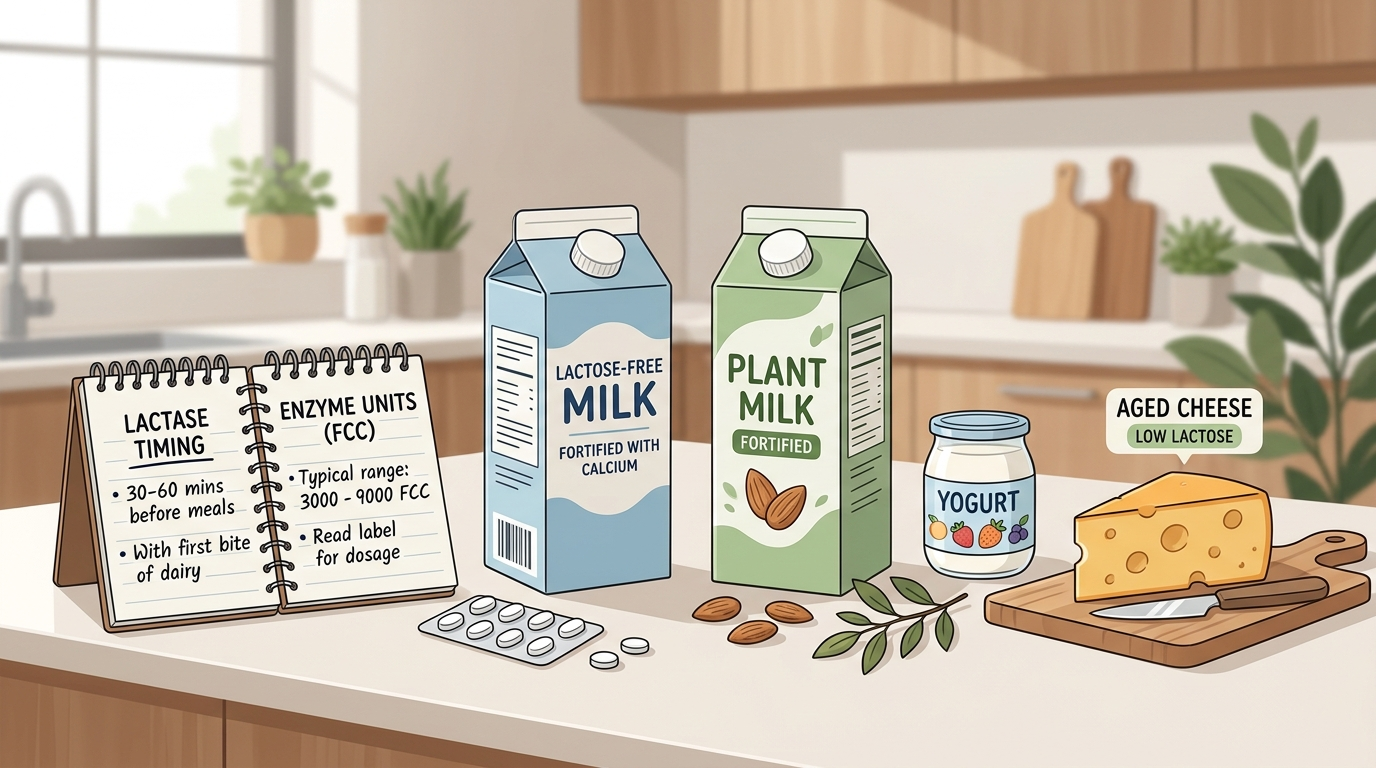
Lactose intolerance means the small intestine does not produce enough lactase enzyme to comfortably digest lactose from milk, ice cream, soft cheese, and some dairy-based foods. The best support strategy depends on lactose dose, timing, dairy format, calcium needs, and whether lactase tablets, lactose-free dairy, or plant-based swaps fit your routine.
How did we evaluate lactose intolerance support options?
We evaluated lactose intolerance support by mechanism, evidence quality, label clarity, routine fit, and nutrition tradeoffs. Human guidance from NIDDK, Mayo Clinic, NCBI Bookshelf, and peer-reviewed lactase research received more weight than supplement marketing claims. We excluded products that promised symptom elimination, dairy freedom, or medical outcomes because lactase support depends on dose, timing, and individual tolerance. We compared lactase tablets, lactase drops, lactose-free dairy, and dairy-free alternatives as different use cases rather than forcing one universal best choice. We also checked calcium and vitamin D continuity because dairy avoidance can change nutrient intake. This review focuses on everyday lactose digestion support, not diagnosis. People with persistent symptoms, weight loss, blood in stool, severe pain, or new digestive changes should get clinician guidance because lactose intolerance can overlap with IBS, celiac disease, inflammatory bowel disease, infections, and other digestive patterns.
What is lactose intolerance and how does it work?
Lactose intolerance occurs when lactase activity is lower than the lactose load entering the small intestine. The NIDDK describes lactose intolerance as digestive symptoms after consuming foods or drinks that contain lactose, the sugar in milk. Undigested lactose moves into the colon, where bacteria ferment it and produce gas, water shifts, and stool changes. Tolerance varies because yogurt, hard cheese, milk, ice cream, and whey-containing foods deliver different lactose amounts. A person may tolerate Parmesan but not milk because aged cheese contains less lactose. Lactase pills supply beta-galactosidase activity around the meal, but they do not permanently change the body’s baseline lactase production. Lactose-free milk works differently because added lactase breaks lactose into glucose and galactose before drinking. The practical goal is not perfection; the practical goal is matching the support method to the dairy occasion.
What are the common lactose intolerance support options?
Some links below are affiliate links. This does not influence our evaluation criteria or recommendations.
| Option | Best fit | Key check | Main limitation |
|---|---|---|---|
| Lactaid Fast Act | Occasional dairy meals away from home | Timing directions and retail availability | Cost rises if several tablets are needed |
| Kirkland Signature Fast Acting Lactase | Budget-focused routine use | Cost per caplet and bottle count | Bulk format is less portable |
| Yuve Lactase Enzymes | Clean-label vegan digestive routines | 9,000 FCC lactase positioning and ingredient fit | Best for shoppers already using supplement routines |
| Milkaid Lactase Drops | Preparing milk at home before drinking | Liquid dosing and storage directions | Not useful for spontaneous restaurant meals |
Lactase tablets fit unpredictable meals because the person can take the enzyme with the first bites of dairy. Lactase drops fit predictable milk use because the enzyme can work in the carton before consumption. Lactose-free dairy fits people who want dairy nutrition without remembering a tablet. Dairy-free alternatives fit people who prefer avoidance, but calcium, vitamin D, protein, and iodine can vary by product.
Which option is best for each lactose intolerance use case?
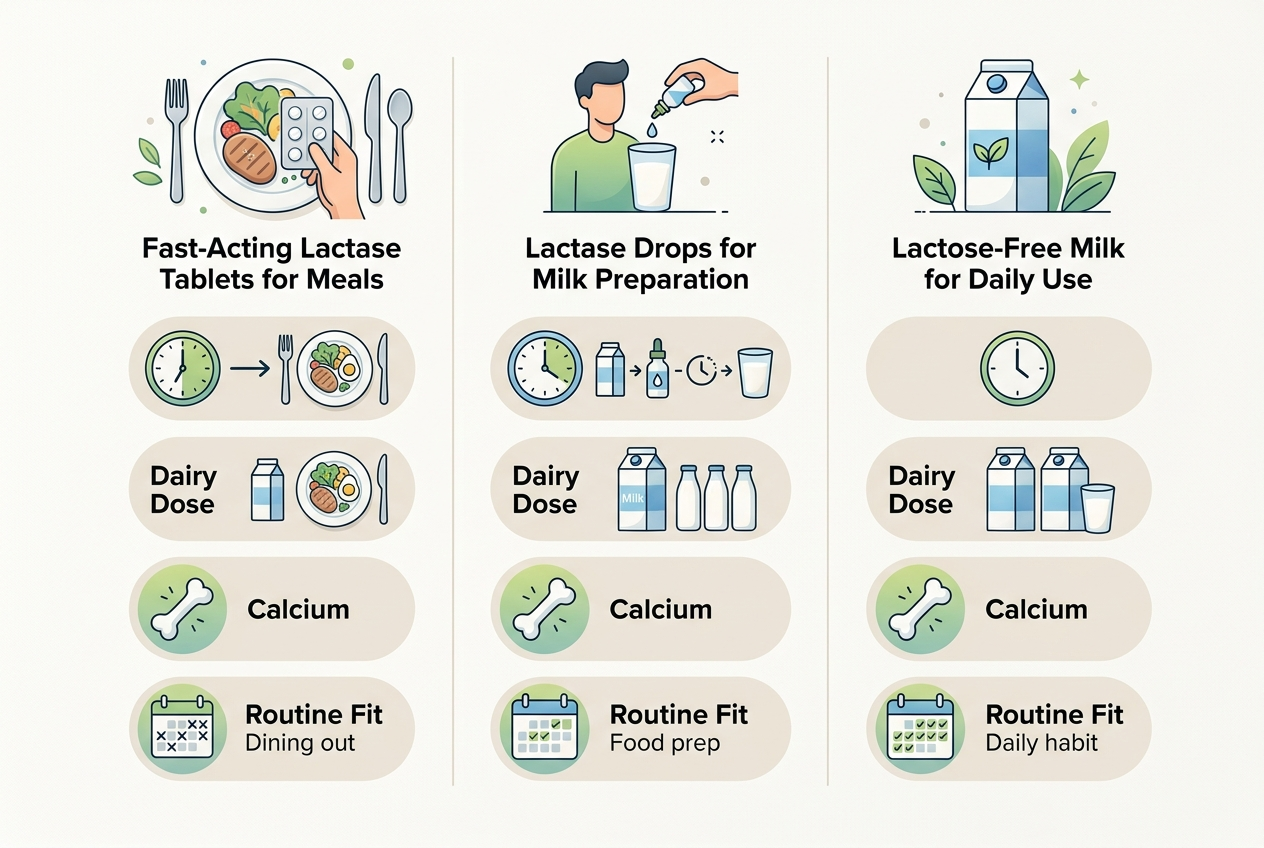
Best for restaurant meals: fast-acting lactase tablets, because the enzyme travels with the meal. Best for milk at home: lactose-free milk or lactase drops, because the lactose is reduced before drinking. Best for value: bulk fast-acting lactase caplets, because repeated dairy occasions make cost per serving matter. Best for clean-label vegan supplement routines: Yuve Lactase Enzymes, because the product uses a lactase-focused format within Yuve’s digestive health collection. Best for people who rarely eat dairy: Lactaid Fast Act, because small retail packages are easy to test before buying in bulk. Best for nutrition continuity: lactose-free milk or yogurt, because dairy foods can still provide calcium, protein, vitamin D, and riboflavin when tolerated. Best for strict avoidance: fortified plant milk, because it removes lactose entirely. The Mayo Clinic notes that nonprescription lactase tablets or drops may help some people digest dairy, but results differ by person.
What do people get wrong about lactose intolerance?
People often treat lactose intolerance as an all-or-nothing dairy ban, but tolerance usually depends on portion size, food matrix, timing, and baseline gut sensitivity. A small serving of yogurt with a meal may feel different from a large milkshake on an empty stomach. A 2021 clinical study in Nutrients found oral lactase reduced hydrogen breath levels and symptoms after a lactose challenge, but that finding supports lactase as a category, not any one retail brand as a guaranteed solution. People also confuse lactose intolerance with milk allergy. Lactose intolerance involves carbohydrate digestion; milk allergy involves immune response to milk proteins and requires different medical guidance. Another common mistake is ignoring nutrition replacement. If dairy intake drops, calcium, vitamin D, iodine, and protein still need a plan through lactose-free dairy, fortified plant milks, foods, or clinician-recommended supplementation.
How should you compare lactase products before buying?
Compare lactase products by FCC lactase units, timing instructions, serving flexibility, capsule or tablet ingredients, allergen statements, expiration date, storage needs, and cost per dairy occasion. The FDA dietary supplement guidance hub explains why label compliance and manufacturing controls matter for supplement shoppers, even when the ingredient is familiar. A product with a clean label still needs clear directions. A low-cost bottle still needs practical dosing. A high-FCC tablet still needs to be taken with the dairy meal to be useful. People who want routine simplicity may prefer one lactase tablet format. People who drink milk daily may prefer lactose-free milk or drops. People who use Yuve’s digestion lineup may choose Yuve Lactase Enzymes for format consistency, while occasional users may start with a small Lactaid package before committing to a larger bottle and repeating the routine.
For a closer look at clean-label options, see Lactose Intolerance or A1 Milk Sensitivity? When Yuve Lactase Fits—and When It Doesn’t.
What questions do people ask about lactose intolerance?
Is lactose intolerance the same as a milk allergy?
No. Lactose intolerance involves reduced lactase activity and carbohydrate digestion, while milk allergy involves an immune reaction to milk proteins. Anyone with hives, swelling, breathing symptoms, or suspected allergy should follow medical guidance rather than experimenting with lactase.
Can lactase pills make dairy easier to digest?
Lactase pills can support lactose digestion when the enzyme dose and timing match the dairy serving. NCBI Bookshelf describes lactase tablets as an option taken just before or with high-lactose foods, while drops require preparation time.
Are lactose-free milk and lactase pills the same thing?
They use the same enzyme idea in different places. Lactose-free milk is treated before drinking, while lactase pills are taken with dairy so the enzyme works during digestion.
What dairy foods are lower in lactose?
Hard aged cheeses, butter, and some yogurts are often lower in lactose than milk or ice cream. Exact tolerance still varies by serving size, product formulation, and individual gut sensitivity.
Should lactose intolerance affect calcium intake?
Yes, dairy reduction can reduce calcium and vitamin D intake if no replacement plan exists. Fortified lactose-free milk, fortified plant milk, calcium-set tofu, leafy greens, canned fish with bones, and clinician-guided supplements can help fill gaps.
What is the best lactase product overall?
The best lactase product is the one that fits the dairy occasion. Lactaid suits occasional retail convenience, Kirkland suits value buying, Yuve suits clean-label vegan digestive routines, and lactase drops suit milk preparation at home.
Lactose intolerance support works best when the strategy matches the meal. Compare lactase tablets, drops, lactose-free dairy, and dairy-free swaps by timing, nutrition, ingredient tolerance, and repeatability before choosing a product.
Leave a Reply