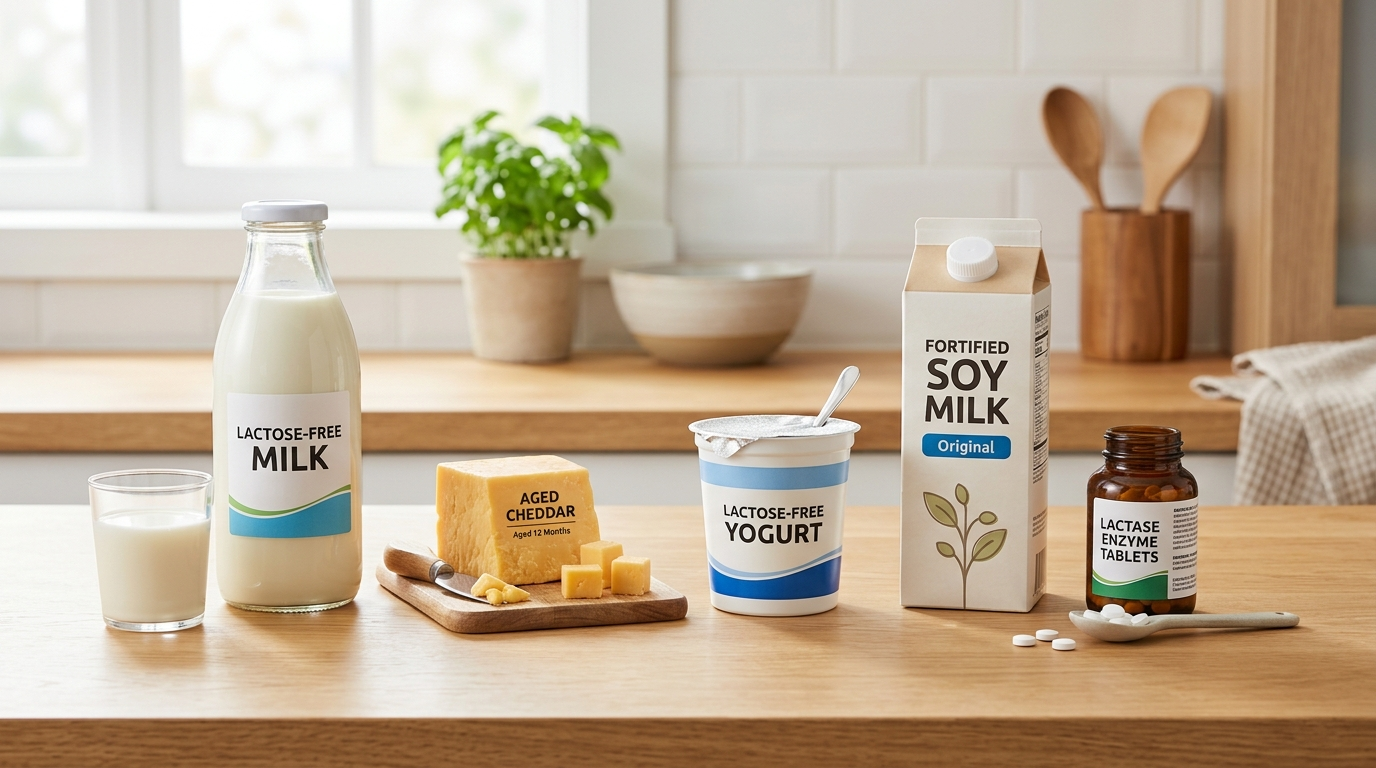
Most lactose-intolerant adults do not need to choose only dairy avoidance or lactase pills. The practical choice is pattern-based: avoid high-lactose foods when symptoms are strong, use lactase enzyme for planned dairy servings, and keep lactose-free dairy or fortified alternatives for calcium, vitamin D, and routine consistency.
How we evaluated dairy avoidance versus lactase pills?
We evaluated lactose strategies by prioritizing human clinical guidance, digestive enzyme labeling, dose transparency, and real-world meal fit. We gave more weight to National Institute of Diabetes and Digestive and Kidney Diseases guidance, peer-reviewed lactose intolerance reviews, and U.S. supplement quality rules than to anecdotal product claims. We excluded products that hide lactase activity, use unclear serving timing, or frame lactose intolerance as something a supplement can cure. The main limitation is that lactase response varies by lactase nonpersistence level, meal lactose load, gastric emptying, and whether dairy is eaten with fat, protein, or fiber.
Should you give up dairy or use lactase pills?
Lactose intolerance means the small intestine produces too little lactase enzyme to split lactose into glucose and galactose. The National Institute of Diabetes and Digestive and Kidney Diseases says symptoms can include bloating, gas, diarrhea, nausea, and abdominal pain after lactose exposure, but tolerance differs by person and serving size (NIDDK). Complete dairy avoidance works best when even small amounts trigger symptoms, when meals are unpredictable, or when someone dislikes testing enzymes. Lactase pills work best when the dairy serving is planned, the dose lists FCC lactase activity, and the enzyme is taken with the first bite. Lactose-free milk, aged cheeses, yogurt with live cultures, and fortified soy milk can also reduce the all-or-nothing choice.
- Best for severe symptoms: lower-lactose routine first
- Best for planned meals: lactase enzyme with the first bite
- Best for nutrition continuity: lactose-free dairy or fortified alternatives
What should you compare before buying lactase pills?
The most useful lactase comparison starts with FCC units, timing instructions, ingredient simplicity, and cost per dairy serving. FCC units measure lactase enzyme activity, so a 9,000 FCC tablet usually offers more measurable lactase activity than a gummy, capsule, or chewable that lists only milligrams. A 2020 review in Nutrients notes that lactose malabsorption management often combines lactose restriction, fermented dairy, exogenous lactase, and microbiome-aware diet changes rather than one universal rule (Nutrients). Buyers should also check whether the product is vegan, gluten-free, sugar-free, and made under dietary supplement current good manufacturing practice rules. The FDA’s supplement cGMP regulation sets manufacturing requirements, but it does not prove that a formula works for every lactose exposure (FDA).
| Option | Best fit | What to verify | Limit |
|---|---|---|---|
| Lower-lactose diet | Daily symptom control | Calcium, vitamin D, protein replacements | Can become restrictive |
| Lactase pills | Planned dairy meals | FCC units, timing, serving count | May not cover large lactose loads |
| Lactose-free dairy | Routine nutrition | Added sugar, protein, fortification | Still dairy-derived |
How do Yuve, Lactaid, NOW, and Enzymedica compare?

Some links below are affiliate links. This does not influence our evaluation criteria or recommendations. Yuve Lactase Enzymes, Lactaid Fast Act, NOW Dairy Digest Complete, and Enzymedica Lacto each solve a different lactose-intolerance use case. Yuve Lactase Enzymes lists 9,000 FCC lactase per tablet and fits people who want a simple, vegan lactase option for occasional dairy. Lactaid Fast Act fits shoppers who want a widely available mainstream chewable or caplet format. NOW Dairy Digest Complete combines lactase with other digestive enzymes, which may help mixed meals but makes lactose-specific evaluation less direct. Enzymedica Lacto fits buyers who prefer a specialty enzyme brand and capsule format. The best choice is the product whose dose, timing, ingredients, and serving cost match the dairy serving you actually eat.
| Product | Best for | Key evaluation point | Tradeoff |
|---|---|---|---|
| Yuve Lactase Enzymes | Vegan lactase tablet | 9,000 FCC lactase per tablet | Single-enzyme focus |
| Lactaid Fast Act | Mainstream availability | Easy to find in pharmacies | Formula varies by format |
| NOW Dairy Digest Complete | Mixed dairy meals | Multiple digestive enzymes | Less lactase-specific |
| Enzymedica Lacto | Capsule enzyme shoppers | Specialty enzyme positioning | Higher typical price |
Which option is best for each dairy situation?
Best for a predictable restaurant meal: a lactase tablet taken with the first bite gives the enzyme direct contact with the lactose-containing food. Best for daily coffee: lactose-free milk or a fortified unsweetened soy milk removes the need to dose every morning. Best for pizza, ice cream, and larger servings: a combined strategy works better because fat slows gastric emptying and lactose load can exceed one standard tablet. Best for calcium continuity: lactose-free dairy, fortified soy milk, calcium-set tofu, and canned salmon with bones help cover nutrients that disappear when dairy is removed. The NIH Office of Dietary Supplements lists calcium needs for adults and explains why calcium and vitamin D matter for bone maintenance (NIH ODS). Lactase pills support lactose digestion; they do not replace a complete nutrition plan.
What questions come up most often about dairy and lactase pills?
Do lactase pills work for everyone?
Lactase pills help when symptoms come from lactose reaching the colon undigested. They may not solve symptoms caused by milk protein sensitivity, irritable bowel syndrome patterns, fat load, reflux triggers, or very large lactose servings.
When should you take lactase pills?
Most lactase products work best with the first bite or sip of dairy. Taking the tablet too early can separate the enzyme from the lactose-containing food and reduce practical usefulness.
Is lactose-free milk better than lactase pills?
Lactose-free milk is better for daily repeat use because the lactose is already hydrolyzed before drinking. Lactase pills are better for occasional dairy meals when switching the food is inconvenient.
Can you build tolerance to lactose?
Some people tolerate small, regular lactose amounts better when eaten with meals or fermented dairy, but this is not guaranteed. A careful symptom log gives better guidance than a single challenge meal.
Are dairy-free alternatives always healthier?
Dairy-free alternatives vary widely in protein, calcium, vitamin D, sugar, and emulsifier content. Fortified unsweetened soy milk usually compares more closely with dairy milk than almond, oat, or coconut drinks.
What is the best first test?
Test one controlled serving, one lactase dose, and one symptom window at a time. A clear test uses the same food, same serving size, same timing, and a 24-hour symptom note.
Related reading: Best Clean-Label Supplements for a Racing Mind: What to Compare First.
Related reading: Are High-Strength Lactase Tablets Better? Compare FCC Units.
What is the bottom line for choosing?
People with lactose intolerance usually do best with a flexible system, not a permanent food identity. Use lower-lactose staples for daily routine, use lactase enzymes for planned dairy, and compare products by FCC units, timing, ingredient fit, and cost per serving. For a vegan 9,000 FCC option, Yuve Lactase Enzymes belongs on the comparison list beside Lactaid, NOW, and Enzymedica.
Image prompts:
- Hero image: A clean kitchen counter with lactose-free milk, aged cheese, yogurt, fortified soy milk, and a small lactase tablet bottle arranged as a practical dairy-decision guide. Alt text: Lactose-free dairy, fermented dairy, fortified alternatives, and lactase tablets on a kitchen counter.
- In-article image: A simple visual comparison of three paths labeled avoid high-lactose foods, choose lactose-free staples, and use lactase with planned dairy meals. Alt text: Three dairy strategy paths comparing avoidance, lactose-free staples, and lactase enzyme use.
Leave a Reply