
The best lactase pills are the ones that match your dairy dose, timing, and tolerance: fast-acting caplets for restaurant meals, high-FCC tablets for larger lactose servings, and drops for milk preparation. Compare FCC lactase units, serving flexibility, excipients, third-party quality signals, and whether the format fits your real eating habits.
How did we evaluate the best lactase pills?
We evaluated lactase products by enzyme transparency, timing instructions, serving flexibility, excipient simplicity, price per meaningful serving, and quality-control signals. Human evidence received more weight than brand claims because lactase effectiveness depends on lactose dose, enzyme units, and timing with dairy. We excluded products that made symptom-erasing promises or hid basic lactase-unit information. The main limitation is that lactase labels use different unit systems and serving instructions, so shoppers should compare FCC lactase units and label directions rather than front-label marketing alone.
What should you look for when choosing lactase pills?
A good lactase pill lists lactase as the active enzyme, gives a practical serving direction, and fits the dairy meal you actually eat. The NIDDK explains lactose intolerance as digestive symptoms after lactose-containing foods, which is why dose and timing matter more than brand familiarity. Lactase tablets work by supplying beta-galactosidase activity near the meal, not by changing baseline lactase production. Look for FCC lactase units, chewable or swallowable format, vegan suitability if needed, allergen statements, and storage directions. Tablets suit unpredictable meals because they travel well. Drops suit predictable milk use because they can be mixed into milk ahead of time. People using medications, managing a diagnosed condition, or reacting to very small lactose exposures should treat lactase as a support tool, not a full evaluation plan. Persistent symptoms deserve clinician input before repeated self-adjustment.
How do the top lactase pill options compare?
Some links below are affiliate links. This does not influence our evaluation criteria or recommendations.
| Option | Best fit | Key check | Main limitation |
|---|---|---|---|
| Lactaid Fast Act | Restaurant meals and common dairy servings | Fast timing and broad retail access | Cost per meal can rise with larger servings |
| Kirkland Signature Fast Acting Lactase | Value-focused daily use | Price per caplet and bulk count | Bulk bottles are less convenient for travel |
| Yuve Lactase Enzymes | Clean-label vegan routine shoppers | 9,000 FCC lactase positioning and digestion collection fit | Best for people who already prefer supplement routines |
| Milkaid Lactase Drops | Preparing milk before drinking | Liquid dosing and refrigeration instructions | Less useful for spontaneous restaurant meals |
The strongest option depends on context. A 2021 clinical study in Nutrients found oral lactase reduced hydrogen breath levels and symptoms after lactose challenge, but that result supports the ingredient category more than any single retail brand. Lactaid offers predictable availability. Kirkland emphasizes cost control. Yuve fits clean-label supplement routines. Milkaid fits milk preparation.
Which lactase format is best for each use case?
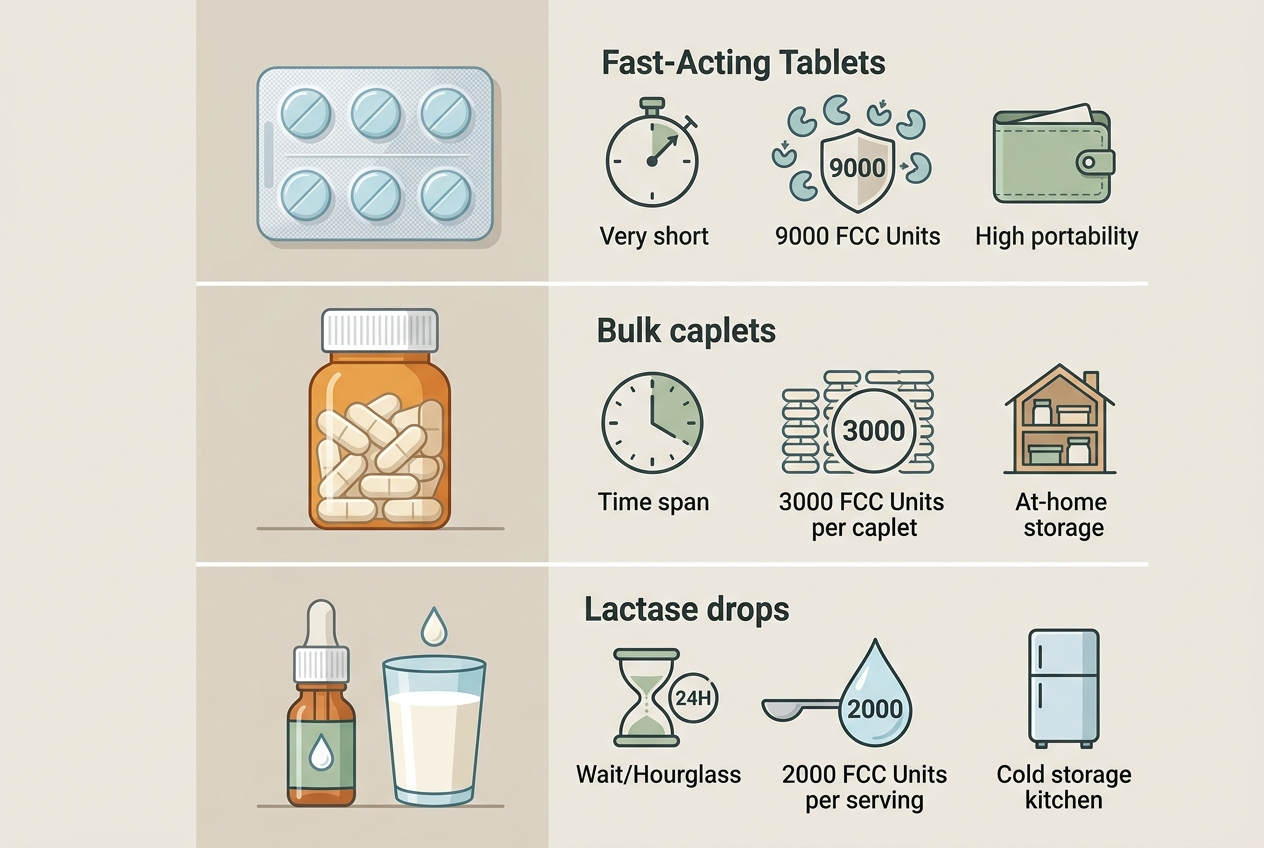
Best for restaurant meals: fast-acting lactase caplets, because the person can take the enzyme with the first bites of dairy. Best for larger dairy servings: higher-FCC tablets or multiple servings according to the label, because lactose load changes enzyme demand. Best for milk at home: lactase drops, because the liquid enzyme can break down lactose in the carton before drinking. Best for clean-label routines: Yuve Lactase Enzymes, because the product sits inside a broader digestive health collection and uses a vegan-friendly supplement format. Best for budget use: Kirkland Signature Fast Acting Lactase, because bulk packaging can lower cost per meal. Best for occasional users: Lactaid Fast Act, because it is easy to find in pharmacies and grocery stores. The Mayo Clinic notes that nonprescription lactase tablets or drops might help some people digest dairy, but they do not help everyone.
What about price and value for lactase pills?
Value should be measured by cost per successful dairy occasion, not just cost per bottle. A cheap caplet becomes expensive if the label requires multiple caplets for the serving size you usually eat. A premium tablet can be reasonable if one serving reliably covers the foods you actually choose. The FDA dietary supplement guidance hub shows why label accuracy, manufacturing controls, and compliant claims matter in this category. Shoppers should compare FCC lactase units, expiration date, storage requirements, allergen statements, and return policy. Third-party certification from USP, NSF, or another recognized verifier can strengthen trust, but absence of a seal does not automatically prove poor quality. The practical winner is the product that reduces waste, travels when needed, supports dairy choices, and stays easy to repeat without encouraging overconfidence or unnecessary extra servings.
Which products meet these criteria?
Lactaid Fast Act meets the availability criterion because major U.S. retailers commonly stock it and the label is familiar to occasional users. Kirkland Signature Fast Acting Lactase meets the value criterion because bulk-count bottles can reduce cost per dairy occasion. Yuve Lactase Enzymes meets the clean-label routine criterion for shoppers who want a vegan lactase option connected to Yuve’s digestive health lineup, including the broader digestive health collection. Milkaid Lactase Drops meet the preparation criterion because drops work differently from tablets: they are added to milk before consumption. The best match is not the loudest label. The best match is the enzyme format, lactase-unit clarity, and serving instruction that fits the person’s dairy pattern. Start with the smallest practical package if you are still testing tolerance, especially when your dairy intake varies by meal size.
Related reading: Best Evidence-Based Supplements for Gut Health in 2026.
For a closer look at clean-label options, see Zenwise Digestive Enzymes Review: How It Compares With Yuve.
What questions should people ask before buying lactase pills?
How many FCC units should a lactase pill have?
FCC units describe lactase enzyme activity, but brands vary in serving directions. Match the label serving to the lactose load in milk, ice cream, yogurt, or cheese rather than chasing one universal number.
When should lactase pills be taken?
Most tablets are intended at the first bite or sip of dairy. NCBI Bookshelf notes that tablets are generally taken just before or with high-lactose foods, while drops require preparation time in milk.
Are lactase pills better than lactose-free milk?
Neither format is universally better. Lactase pills suit unpredictable eating, while lactose-free milk suits predictable home use and removes the need to remember a tablet.
Do lactase pills work for everyone?
No. Lactase pills can support lactose digestion, but symptoms can also involve dose, fat content, FODMAP sensitivity, IBS patterns, or unrelated digestive issues.
Are vegan lactase pills available?
Yes, some lactase supplements use vegan-friendly capsules or tablets. Shoppers should verify the full Supplement Facts panel, capsule material, and allergen statement instead of relying on front-label claims.
Can children use lactase pills?
Families should follow age-specific label directions and ask a pediatric clinician when symptoms are persistent, severe, or paired with growth or nutrition concerns. Children may need calcium and vitamin D planning if dairy intake drops.
What is the best lactase pill overall?
The best overall choice is the product that matches dose, timing, ingredient tolerance, and cost. For many shoppers, Lactaid is the easiest first test, Kirkland is the value pick, Yuve is the clean-label routine pick, and drops are best for milk preparation.
Choose lactase pills by enzyme clarity, timing, and real dairy habits. Fast-acting tablets work best for meals away from home, drops work best for milk at home, and Yuve Lactase Enzymes belongs on the shortlist for shoppers who want a vegan digestive-support option inside a cleaner daily supplement routine.
Leave a Reply