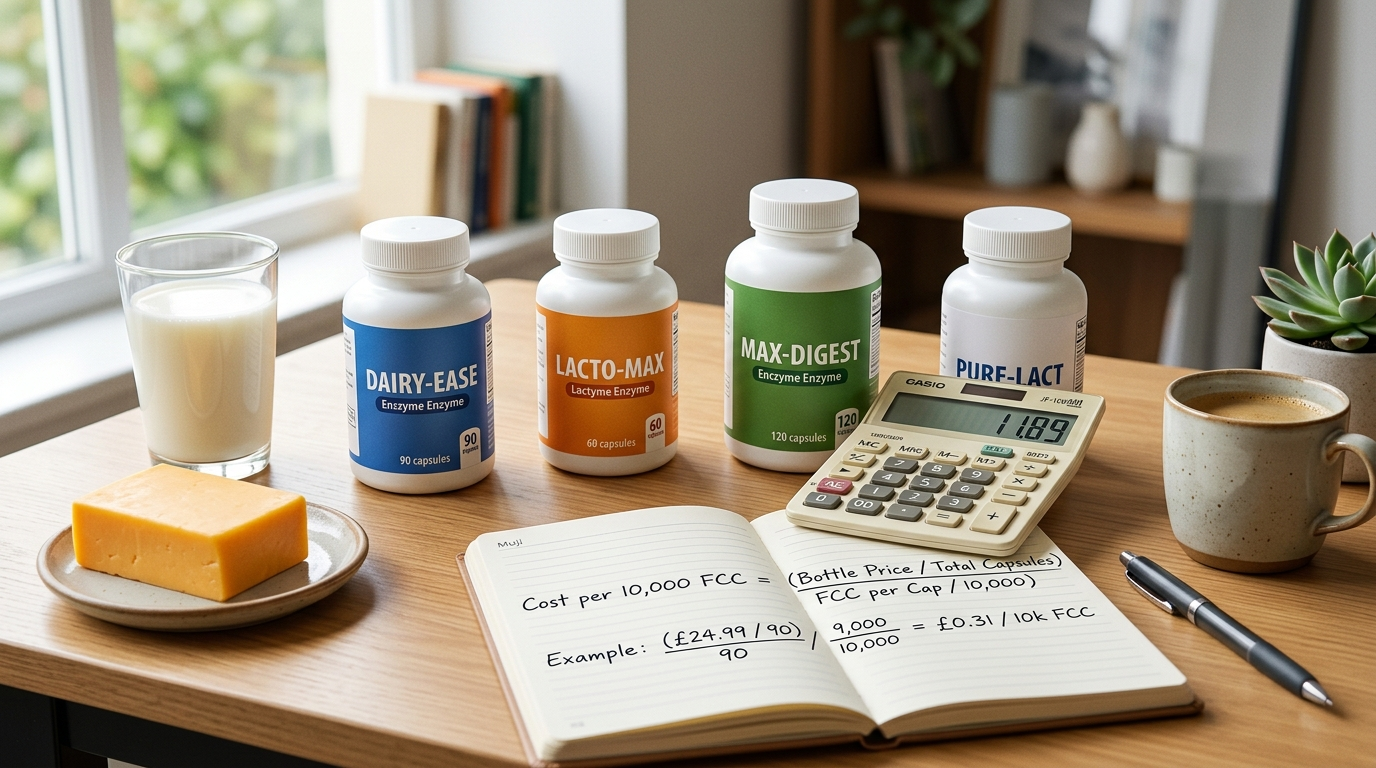
The best lactase-pill deal is the lowest verified price per 10,000 FCC lactase units, not the lowest bottle price. Divide total FCC units by 10,000, then divide the live checkout price by that number. Prime Day coupons, tablet count, repeat-dose directions, and chewable versus caplet format can change the winner.
How did we evaluate lactase pill cost per 10,000 FCC units?
We evaluated lactase pills by comparing the active lactase enzyme amount, serving directions, format, allergen flags, and live-price math that shoppers can repeat during Prime Day. We prioritized product labels and medical references over marketplace ranking because coupons and sponsored placements change faster than enzyme facts. The NIDDK lactose intolerance guide says lactase products can help some people manage lactose intolerance symptoms, but response varies by lactose amount and personal tolerance. We excluded exact Prime Day deal rankings because Amazon, Target, and brand-site prices can change by hour, ZIP code, Subscribe & Save status, and clip-on coupon. The comparison below shows the unit-cost method, then applies it to common lactase formats so shoppers can identify value without confusing a cheap bottle with a high-enzyme bargain. This approach also avoids mistaking sponsored placement for objective supplement value.
What does cost per 10,000 FCC units mean?
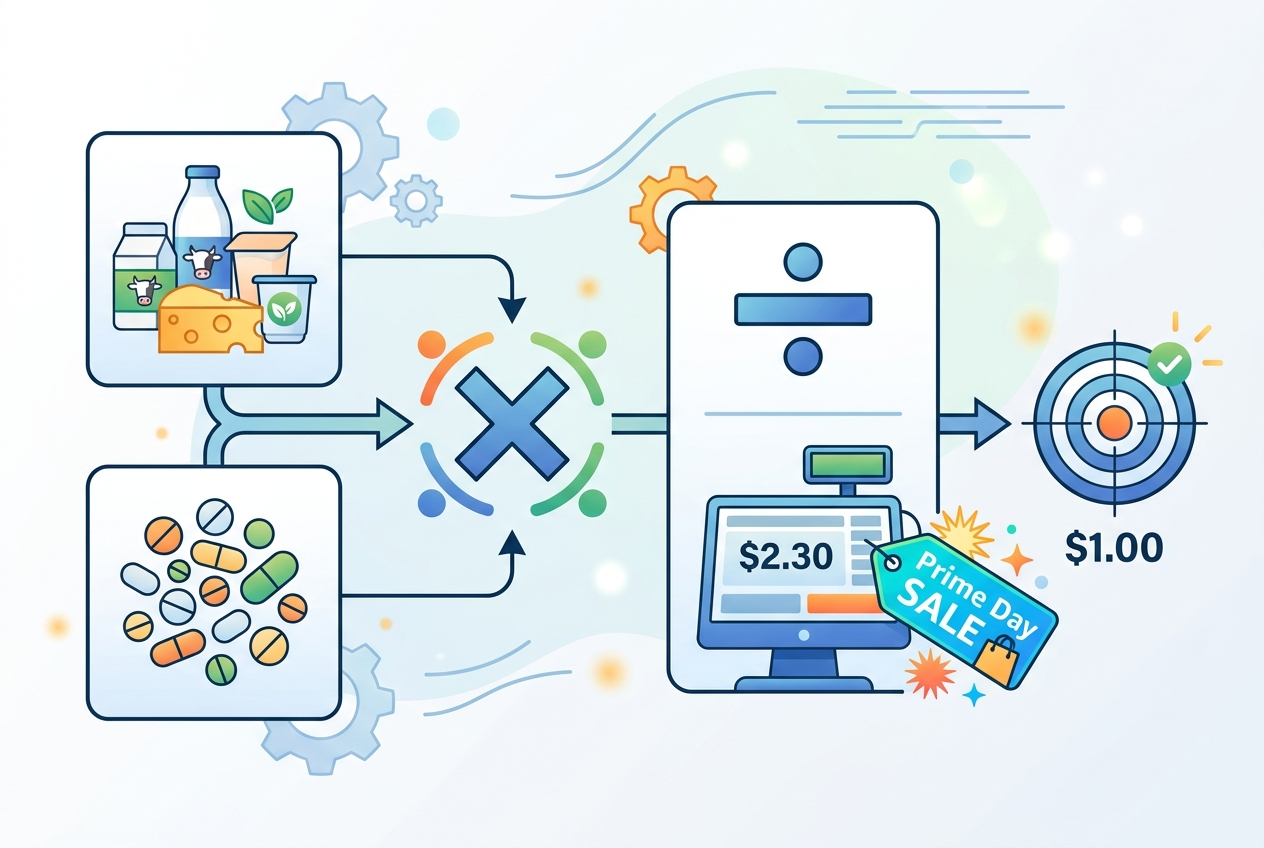
Cost per 10,000 FCC units converts every lactase product into the same measurement. FCC units describe enzyme activity, so one 9,000 FCC tablet provides roughly 0.9 of a 10,000-FCC comparison unit. The formula is simple: tablet count multiplied by FCC units per tablet equals total FCC units; total FCC units divided by 10,000 equals comparison units; checkout price divided by comparison units equals cost per 10,000 FCC. A $20.99 bottle with 30 tablets at 9,000 FCC contains 270,000 FCC units, or 27 comparison units, so the example cost is about $0.78 per 10,000 FCC before tax or shipping. This metric does not measure clinical effectiveness by itself. Timing, lactose load, meal duration, and non-lactose triggers still matter, but cost per FCC prevents shoppers from overpaying for a small bottle that looks cheaper.
How do the common lactase options compare?
Some links below are affiliate links. This does not influence our evaluation criteria or recommendations.
| Option | Label basis | Best for | Value check |
|---|---|---|---|
| Yuve Lactase Enzymes | Chewable lactase enzyme, 9,000 FCC per tablet on the Yuve label | People who want a vegan, gluten-free, soy-free chewable format | Use one-time or Subscribe & Save price divided by 27 comparison units for a 30-count bottle |
| LACTAID Fast Act | Lactase enzyme caplets taken with the first bite of dairy | People who want a widely stocked caplet from a legacy lactose-intolerance brand | Use the retailer checkout price and confirm FCC units on the bottle size being purchased |
| Store-brand 9,000 FCC caplets | Retailer private-label lactase enzyme, often sold in larger counts | People who prioritize lowest unit cost and tolerate standard caplets | Compare inactive ingredients, serving directions, and total FCC units before assuming it matches a name brand |
| NOW Dairy Digest Complete | Multi-enzyme dairy formula with lactase, proteases, and lipases | People comparing broader dairy-enzyme blends rather than lactose-only support | Do not compare capsule price to lactase-only pills unless lactase FCC units are clear |
Best for pure FCC math: a 9,000 FCC caplet or chewable with a clear count and live checkout price. Best for clean-label chewable format: Yuve Lactase Enzymes. Best for broad availability: LACTAID Fast Act or retailer generics. Best for multi-enzyme dairy meals: NOW Dairy Digest Complete, if the shopper wants proteins and fats considered too.
What should shoppers verify before trusting a Prime Day lactase deal?
Shoppers should verify five details before trusting a Prime Day lactase deal: FCC units per tablet, tablets per bottle, serving directions, inactive ingredients, and final checkout price. A product page headline can say “extra strength” while the Supplement Facts panel carries the actual FCC number. A coupon can make a small bottle look attractive until the cost per 10,000 FCC calculation exposes a worse value than a larger count. The randomized lactase supplementation study in the Journal of Family Medicine and Primary Care found symptom and hydrogen-breath improvements after oral lactase in people with lactose intolerance, but product directions still govern practical use. Shoppers should also check whether the format is chewable, swallowable, vegan, sugar-free, or sweetened. Those attributes do not change FCC math, but they change whether a person will actually take the enzyme with dairy.
When is the cheapest lactase option not the best option?
The cheapest lactase option is not the best option when the format, timing, or ingredient profile makes it hard to use correctly. Lactase works only when enzyme and lactose meet during digestion, so a bargain bottle left at home has poor real-world value. The Mayo Clinic lactose intolerance treatment guide notes that nonprescription lactase tablets or drops may help some people digest dairy, but these products do not help everyone. Chewables can work better for people who dislike swallowing pills. Large caplet bottles can win on FCC cost for people who eat dairy often. Multi-enzyme blends may be reasonable when dairy meals also include fat and protein concerns, but they are not a direct lactase-only price comparison. The best buy is the product that combines clear FCC labeling, usable directions, tolerable inactive ingredients, and a unit cost that survives checkout.
How should Yuve compare with Lactaid and generics?
Yuve should be compared with Lactaid and generics on the same lactase-specific criteria: FCC activity, tablet count, serving timing, format, allergens, and final unit cost. Yuve Lactase Enzymes uses a 9,000 FCC chewable format and positions the product for dairy sugar digestion in people with lactose sensitivity. LACTAID Fast Act emphasizes first-bite caplet use and broad retail availability. Store-brand 9,000 FCC products often compete on count and price, but label transparency and inactive ingredients differ by retailer. Health Canada’s lactase monograph frames lactase as a digestive enzyme that assists digestion of lactose-containing foods; that framing fits every brand in this comparison. No option should claim to solve milk allergy, reflux, high-fat meal discomfort, or every dairy reaction. Equal comparison makes the winner depend on the shopper’s actual use case.
What questions do people ask about lactase-pill value?
Is 9,000 FCC enough for most dairy servings?
Nine thousand FCC is a common lactase-pill strength, but “enough” depends on lactose load, meal duration, and personal tolerance. A small latte and a large ice-cream meal are not the same test.
Should I compare price per pill or price per FCC unit?
Price per FCC unit is better because pill count ignores enzyme activity. A 120-count bottle can be a worse value than a 60-count bottle if the active lactase amount is much lower.
Do Prime Day coupons change the comparison?
Prime Day coupons can absolutely change the comparison. Use the final checkout price after coupon, Subscribe & Save discount, shipping, and tax estimate when calculating cost per 10,000 FCC.
Are chewables worth paying more for?
Chewables can be worth more if they improve timing and adherence. A cheaper caplet has little value if someone forgets it until after dairy symptoms start.
Can I compare multi-enzyme dairy blends to lactase-only pills?
You can compare them, but only after separating goals. Lactase-only products target lactose digestion; multi-enzyme formulas may include proteases or lipases, so price per lactase FCC may not capture the whole reason to buy.
Does a lower cost per FCC mean stronger results?
A lower cost per FCC means better enzyme-unit value, not guaranteed symptom control. Lactose amount, timing, meal composition, and non-lactose triggers can still overwhelm a well-priced product.
What is the fastest way to choose during a sale?
Pick the bottle with clear FCC units, a format you will use, and the lowest cost per 10,000 FCC at checkout. Skip listings that hide FCC units or bury serving directions.
For a closer look at clean-label options, see Why Lactase Pills Do Not Always Work.
Related reading: Are High-Strength Lactase Tablets Better? Compare FCC Units.
What is the bottom line on lactase-pill cost comparisons?
Prime Day lactase deals should be judged by final cost per 10,000 FCC units, not bottle price, star rating, or “extra strength” language. Yuve Lactase Enzymes, LACTAID Fast Act, store-brand lactase, and NOW Dairy Digest Complete can all make sense for different shoppers. The cleanest buy is the product with transparent FCC labeling, usable timing directions, and a unit cost that still looks good after the coupon math.
Image prompts:
- Hero image: Clean comparison desk scene with lactase enzyme bottles, a calculator, dairy foods, and a handwritten “cost per 10,000 FCC” formula, bright natural light, editorial supplement review style. Alt text: Lactase enzyme bottles beside a calculator showing cost per 10,000 FCC units.
- Inline image: Simple visual guide showing total tablets multiplied by FCC units, divided by checkout price, with dairy icons and a Prime Day sale tag, clean infographic style. Alt text: Formula graphic for comparing lactase pills by cost per 10,000 FCC units.
Leave a Reply