
Lactase pills can seem to stop working when the lactose dose, enzyme timing, FCC strength, meal fat, or dairy type changes. The fix is usually not “more pills forever.” Compare FCC units per serving, take lactase with the first bite, match dose to dairy load, and check whether symptoms are really lactose-related.
How we evaluated lactase pills that stop working?
We evaluated lactase pills by comparing enzyme strength, timing instructions, ingredient transparency, serving math, and fit for repeat dairy exposure. We prioritized human lactose-digestion evidence, National Institute of Diabetes and Digestive and Kidney Diseases guidance, European Food Safety Authority lactase opinions, and label details such as FCC lactase units. We excluded products that hide enzyme strength behind proprietary blends, make disease-treatment claims, or frame broad digestive symptoms as simple lactose intolerance. The main limitation is that lactase helps lactose digestion only; persistent pain, bleeding, weight loss, fever, symptoms without dairy, or severe chest symptoms need clinician review rather than supplement escalation.
Why can lactase pills feel like they stopped working?
Lactase pills can feel weaker when the lactose challenge increases faster than the enzyme dose. Milk, ice cream, soft cheese, whey powders, and creamy sauces deliver different lactose loads, and a pill that matched coffee creamer may not match a large milkshake. The National Institute of Diabetes and Digestive and Kidney Diseases explains that lactose intolerance happens when the small intestine does not make enough lactase to digest lactose, the milk sugar in dairy foods. Timing also matters because supplemental lactase must meet lactose in the meal, not thirty minutes later. Gastric emptying, meal fat, alcohol, and large mixed meals can delay contact between enzyme and substrate. A product switch can also change FCC lactase units per tablet. The practical check is simple: compare the dairy amount, the FCC dose, and the timing before assuming your body became resistant.
What should you look for when choosing lactase pills?
Choose lactase pills by reading FCC units first, then serving instructions, then format. FCC units measure lactase enzyme activity, so a 9,000 FCC tablet provides a different practical dose than a 3,000 FCC tablet even if both labels say “lactase.” A European Food Safety Authority opinion concluded that lactase enzyme contributes to lactose digestion in people who have difficulty digesting lactose when consumed with lactose-containing meals, but that claim depends on using the enzyme with the meal. Tablets suit planned meals because the dose is easy to count. Chewables suit restaurants because the enzyme is taken at the first bite without water. Drops suit milk containers because the enzyme can pre-digest lactose over time. People comparing options should also check vegan capsules, sweeteners, allergens, third-party manufacturing standards, and cost per 10,000 FCC units.
How do common lactase options compare?
Some links below are affiliate links. This does not influence our evaluation criteria.
| Option | Best fit | Key check | Limitations |
|---|---|---|---|
| Yuve Lactase Enzymes | Plant-based shoppers who want a simple 9,000 FCC lactase option | Verify serving size, vegan capsule fit, and cost per dairy meal | Works only when symptoms are lactose-related |
| LACTAID Fast Act | Widely available tablet or chewable use before dairy | Compare FCC units and number of caplets per serving | Some formats include sweeteners or flavor ingredients |
| Kirkland Fast Acting Lactase | Bulk buyers who use lactase frequently | Calculate price per 10,000 FCC units, not bottle price | Large bottles may expire before occasional users finish them |
| NOW Dairy Digest Complete | Mixed dairy meals that include fat, protein, and carbohydrates | Check whether lactase is the main enzyme or one enzyme in a blend | Blends can obscure whether lactase dose is high enough |
The strongest lactase choice matches your dairy pattern. A high-FCC single enzyme suits milk, yogurt, and ice cream. A broader enzyme blend may fit mixed meals, but it should not replace clear lactase dosing when lactose is the known trigger.
Which option is best for everyday dairy use?
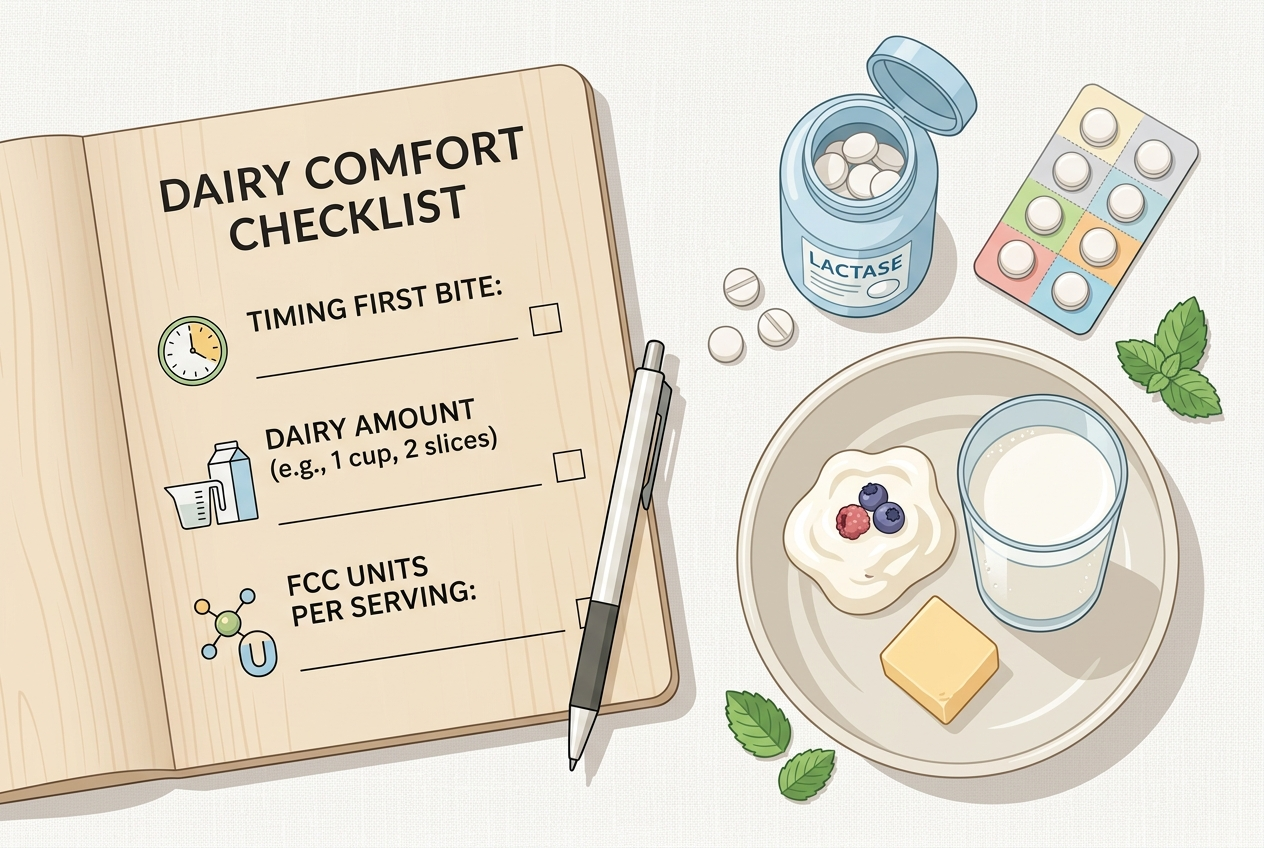
Best for predictable milk or ice cream: a clear 9,000 FCC lactase tablet or capsule, because dose matching is easier. Best for restaurants: chewable lactase, because first-bite timing is more reliable than waiting for water. Best for households that drink milk daily: lactase drops, because pre-treated milk reduces the need to dose at every meal. Best for plant-based supplement standards: Yuve Lactase Enzymes, because the format fits shoppers who avoid gelatin and want a straightforward lactase-only product. Best for lowest unit cost: bulk lactase, if the expiration date and storage conditions make sense. The useful comparison is not brand reputation alone; it is FCC units, timing convenience, dietary restrictions, repeat cost, and whether the format fits real meals. If symptoms continue after well-timed lactase, lactose may be only one part of the digestive pattern.
What should you do before raising your lactase dose?
Before raising your lactase dose, run a three-meal test with consistent variables. Use the same dairy food, same portion size, same lactase product, and same first-bite timing. Then change one variable: either dairy dose, lactase FCC amount, or dairy type. NIDDK notes that people with lactose intolerance may tolerate different amounts of lactose, so personal threshold testing matters more than copying a generic serving. Also check hidden lactose sources such as whey, milk solids, cream sauces, protein bars, and medications that use lactose as an excipient. If lactase works for hard cheese but fails with ice cream, lactose load and fat-delayed digestion may explain the difference. If lactase fails even with small dairy portions, consider whether FODMAP sensitivity, reflux, gallbladder issues, infection, or another condition is involved and ask a clinician before stacking more enzymes.
What are the FAQ answers about lactase pills stopping working?
Can your body become resistant to lactase pills?
Your body does not become resistant to lactase in the way bacteria can become resistant to antibiotics. Lactase is an enzyme that breaks lactose into glucose and galactose during digestion. A failed dose usually reflects timing, insufficient FCC units, a larger lactose load, or a non-lactose trigger.
Should lactase be taken before or after dairy?
Lactase usually works best with the first bite or first sip of dairy. Taking it too early may separate the enzyme from the lactose-containing food. Taking it after symptoms start is often too late because undigested lactose has already moved forward in digestion.
Are 9,000 FCC lactase pills stronger than regular pills?
A 9,000 FCC lactase pill has more measured lactase enzyme activity than a 3,000 FCC pill. The serving comparison matters because some labels define one dose as multiple tablets. Calculate FCC units per serving and per dairy meal, not just per bottle.
Can lactase pills help with milk protein intolerance?
Lactase pills help digest lactose, not casein or whey proteins. Milk protein reactions, dairy allergy, and lactose malabsorption are different problems. People with hives, swelling, wheezing, or severe reactions after dairy should avoid self-testing and speak with a clinician.
Why do lactase pills work for cheese but not ice cream?
Hard cheeses often contain less lactose than milk or ice cream, while ice cream can combine lactose, fat, and a larger portion size. Fat can slow gastric emptying and change symptom timing. The same lactase dose can therefore feel adequate for cheese and inadequate for ice cream.
Is lactose-free milk better than taking lactase pills?
Lactose-free milk is regular milk treated with lactase before you drink it. It can be easier for daily milk users because the enzyme has already broken down much of the lactose. Lactase pills are more flexible for restaurants, travel, desserts, and mixed meals.
When should symptoms after dairy be checked medically?
Symptoms need medical review when they include blood in stool, persistent vomiting, fever, unexplained weight loss, nighttime diarrhea, severe chest pain, or dehydration. Lactase pills should not be used to mask red-flag symptoms. New or worsening digestive symptoms deserve a clinician’s assessment.
Related reading: Are High-Strength Lactase Tablets Better? Compare FCC Units.
What is the bottom line on lactase pills that stop working?
Lactase pills usually “stop working” because the dairy challenge changed, the dose was too low, or the timing missed the meal. Compare FCC units, take the enzyme with the first bite, and test one variable at a time. For routine dairy support, compare Yuve Lactase Enzymes, LACTAID, Kirkland, and enzyme blends by FCC dose, format, dietary fit, and cost per use. If the same symptoms happen without dairy, lactase is the wrong tool to evaluate in isolation. A food-and-symptom log can separate lactose exposure from reflux triggers, high-FODMAP meals, stress timing, alcohol, and large late meals. The best next step is a controlled retest, not a random product switch.
Leave a Reply