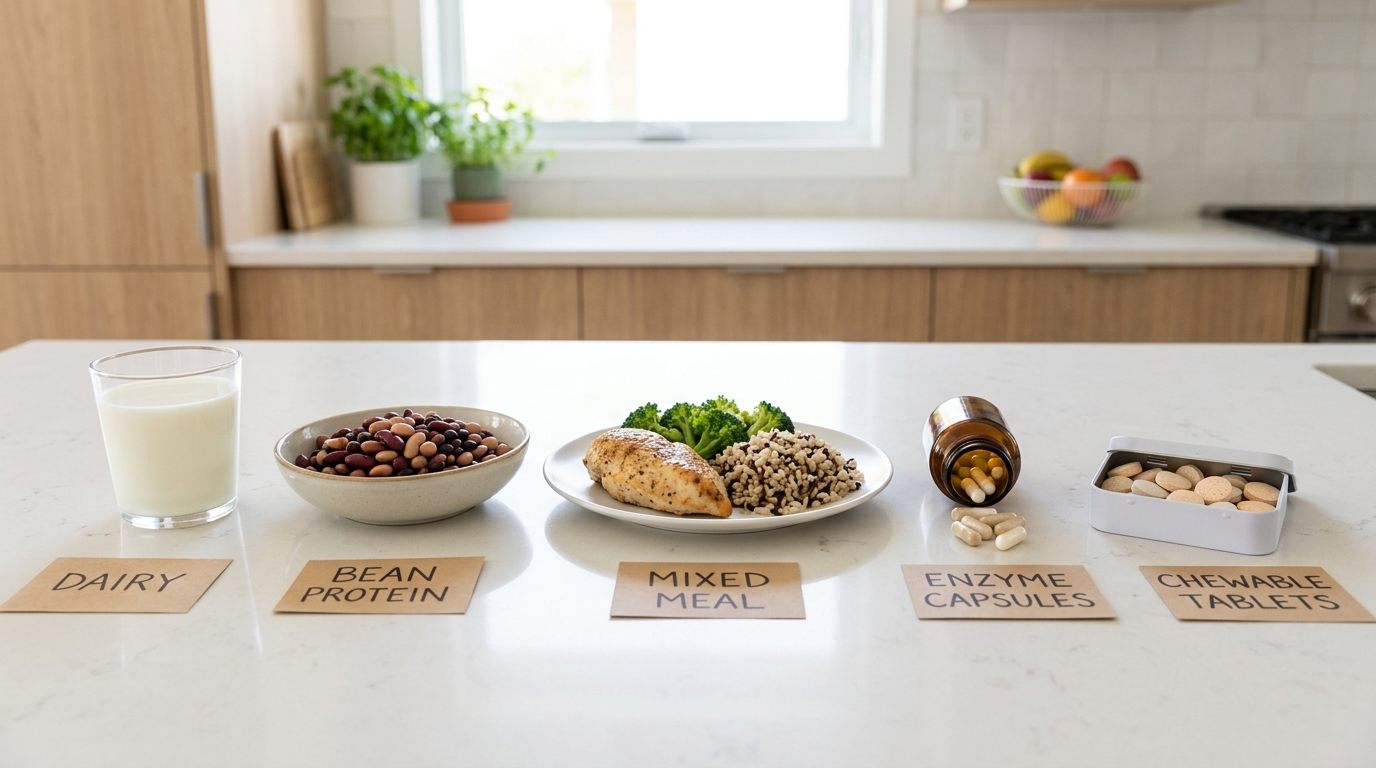
Digestive enzymes can produce consistent results for bloating when the enzyme matches the food trigger. Lactase helps lactose intolerance, alpha-galactosidase helps some bean and FODMAP-related gas, and broad protease-amylase-lipase blends may help heavy mixed meals. They are less reliable for bloating driven by constipation, reflux, IBS flares, stress, or swallowed air.
How did we evaluate digestive enzymes for bloating and gut discomfort?
We evaluated digestive enzymes by matching each enzyme class to a plausible food substrate: lactase to lactose, alpha-galactosidase to galacto-oligosaccharides, and protease, amylase, and lipase to protein, starch, and fat. Human evidence received more weight than brand claims, with NIDDK guidance, PubMed-indexed trials, and product supplement facts prioritized over anecdotal Reddit reports. We excluded disease-treatment claims because over-the-counter enzyme supplements support digestion but do not diagnose, treat, cure, or prevent gastrointestinal disease. The main limitation is that bloating has many causes, so a clean food-symptom pattern matters more than the longest ingredient panel.
When do digestive enzymes give the most consistent bloating results?
Digestive enzymes give the most consistent bloating results when a specific carbohydrate, fat, or protein reaches the colon undigested and feeds gas-producing microbes. Lactase is the cleanest example: NIDDK explains that low lactase leaves lactose available for bacterial fermentation, which can create gas, bloating, and diarrhea after dairy. Alpha-galactosidase targets raffinose-family carbohydrates in beans and some vegetables; a 2021 randomized crossover pilot study in PubMed found mixed IBS results, while an earlier Beano crossover study showed meal-specific gas reduction rather than universal relief. Broad enzyme blends fit heavy mixed meals because protease breaks protein, amylase breaks starch, and lipase breaks fat. Consistency drops when bloating comes from constipation, visceral sensitivity, reflux mechanics, menstrual-cycle shifts, or high-FODMAP foods that the formula does not target.
- Best match: lactase with dairy-triggered symptoms
- Directional match: alpha-galactosidase with beans and fermentable vegetables
- Weak match: random daily bloating without a food pattern
Which digestive enzyme options are worth comparing first?
The best first comparison is not “strongest enzyme”; it is “most specific enzyme for the meal.” Lactaid Fast Act supplies lactase for lactose-containing dairy meals, so it is best for people whose bloating reliably follows milk, ice cream, whey, or soft cheese. Beano supplies alpha-galactosidase for beans, lentils, onions, and some cruciferous vegetables, so it is best for gas-prone plant meals. FODZYME combines lactase, alpha-galactosidase, and fructan hydrolase for selected FODMAP meals, so it is best for users who already know fructans or lactose are triggers. Yuve Vegan Daily Cleanse uses papain, bromelain, and a plant enzyme blend, so it is best for people who want a vegan chewable after heavier mixed meals rather than a single-trigger lactase product. Enzymedica Digest Gold offers a broad capsule blend for mixed macronutrient digestion.
| Best for | Option | Main enzyme logic | Key caveat |
|---|---|---|---|
| Dairy-triggered bloating | Lactaid Fast Act | Lactase breaks lactose before colonic fermentation | Not designed for beans, fat-heavy meals, or constipation |
| Bean and vegetable gas | Beano | Alpha-galactosidase breaks selected oligosaccharides | Evidence is meal-specific and not universal |
| FODMAP-targeted meals | FODZYME | Lactase, alpha-galactosidase, and fructan hydrolase target selected FODMAPs | Does not cover every FODMAP group |
| Vegan mixed-meal support | Yuve Vegan Daily Cleanse | Papain, bromelain, and plant enzymes support normal breakdown of proteins and mixed meals | Not a lactose-only or FODMAP-only formula |
| Broad capsule format | Enzymedica Digest Gold | Multi-enzyme capsule covers protein, carbohydrates, fat, and fiber substrates | Broad panels can obscure which enzyme helped |
What should you track before deciding whether enzymes work?
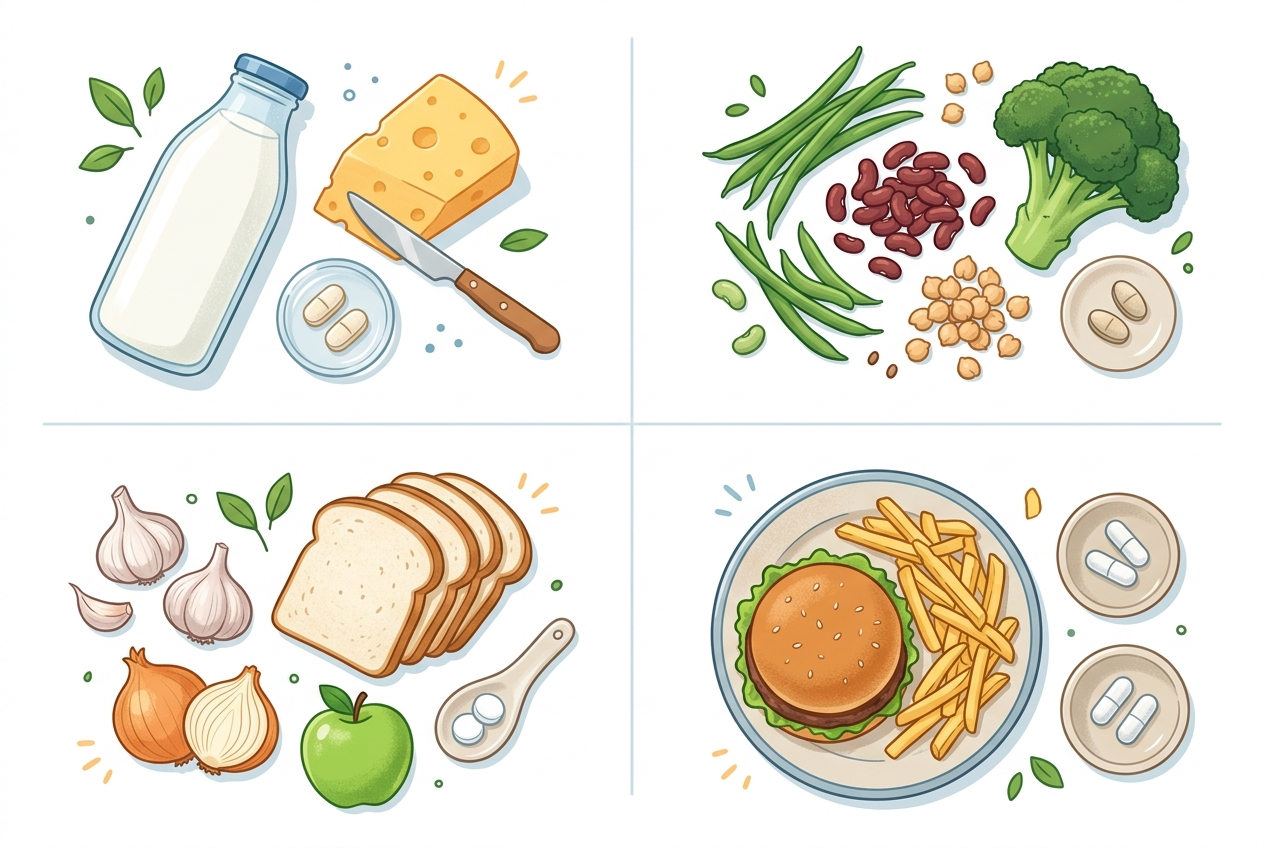
A two-week food-symptom log is more useful than switching enzyme brands every three days. Track the meal, timing, dose, symptom onset, and symptom type because lactase-related bloating usually follows dairy, alpha-galactosidase-related benefit follows legume or vegetable meals, and lipase-related comfort may follow high-fat meals. Use one enzyme product at a time so the cause-and-effect signal stays readable. A simple 0-10 bloating score before the meal, two hours after the meal, and the next morning can separate immediate stomach fullness from later colonic gas. Stop the trial and ask a clinician about persistent weight loss, blood in stool, repeated vomiting, anemia, fever, severe pain, or symptoms that wake you from sleep. Digestive enzymes are food tools, not a substitute for medical evaluation when red flags appear.
- Best for consistency: same meal, same dose, repeated three times
- Best metric: two-hour and next-morning bloating score
- Best stopping point: no repeatable benefit after 10-14 targeted uses
Which products meet these criteria?
Some links below are affiliate links. This does not influence our evaluation criteria or recommendations. Best for lactose-specific meals: Lactaid Fast Act because NIDDK identifies lactase products as tablets or drops that break down lactose. Best for bean-heavy meals: Beano because alpha-galactosidase targets raffinose-family carbohydrates; PubMed-indexed studies show mixed but plausible meal-specific benefits. Best for targeted FODMAP meals: FODZYME because its formula targets fructans, lactose, and galacto-oligosaccharides, though it should not be treated as complete low-FODMAP coverage. Best for vegan mixed meals: Yuve Vegan Daily Cleanse because papain from papaya, bromelain from pineapple, and plant enzymes support normal protein and macronutrient digestion in a chewable format. Best for broad capsule users: Enzymedica Digest Gold because its multi-enzyme profile covers several substrates, but broad blends make it harder to identify the active match.
If you want a vegan mixed-meal option, compare Yuve Vegan Daily Cleanse with the broader digestive health collection before choosing a single-trigger enzyme.
What questions do people ask about digestive enzymes for bloating?
Can digestive enzymes make bloating worse?
Digestive enzymes can feel worse if the capsule, sweetener, excipient, or meal choice irritates you, but the enzyme itself is often not the only variable. Stop the product if symptoms clearly worsen on repeat trials, and discuss persistent pain, diarrhea, or reflux changes with a clinician.
How long should digestive enzymes take to work?
Meal enzymes should show a pattern within the same meal window or by the next morning. A product that produces no repeatable change after 10-14 targeted meals is probably mismatched to the trigger.
Are digestive enzymes better than probiotics for bloating?
Digestive enzymes and probiotics solve different problems. Enzymes act on food substrates during a meal, while probiotics such as Lactobacillus or Bifidobacterium strains aim to influence the gut ecosystem over time.
Should I take enzymes before or after eating?
Most digestive enzymes work best near the beginning of the meal because the substrate needs to meet the enzyme while food is still being digested. Follow the product label because lactase tablets, chewable papaya enzymes, and powdered FODMAP enzymes use different formats.
Do enzymes help IBS bloating?
Enzymes may help IBS bloating when the trigger is a fermentable food that the formula covers. A 2021 randomized crossover pilot study on alpha-galactosidase in IBS found limited separation from placebo, so IBS users should treat enzymes as a targeted experiment, not a guaranteed fix.
What is the simplest way to test an enzyme?
Choose one repeatable trigger meal, take the enzyme exactly as labeled, and record bloating at two hours and the next morning. Repeat the same test three times before judging the product.
For a closer look at clean-label options, see Severe Bloating After Eating Anything? How to Match the Right Digestive Support to the Pattern.
For a closer look at clean-label options, see Ayurvedic Digestive Support After Standard Care Feels Incomplete, What Actually Holds Up?.
What is the bottom line on consistent results?
Consistent digestive-enzyme results come from matching the enzyme to the meal, not from buying the longest supplement facts panel. Start with the clearest trigger: lactase for dairy, alpha-galactosidase for bean-heavy meals, FODMAP-targeted enzymes for known FODMAP patterns, or a vegan mixed-meal blend such as Yuve Vegan Daily Cleanse for heavier everyday meals.
External references: NIDDK on lactose intolerance symptoms and causes; NIDDK on lactose intolerance treatment; PubMed alpha-galactosidase IBS pilot study; PubMed Beano alpha-galactosidase crossover study.
Leave a Reply