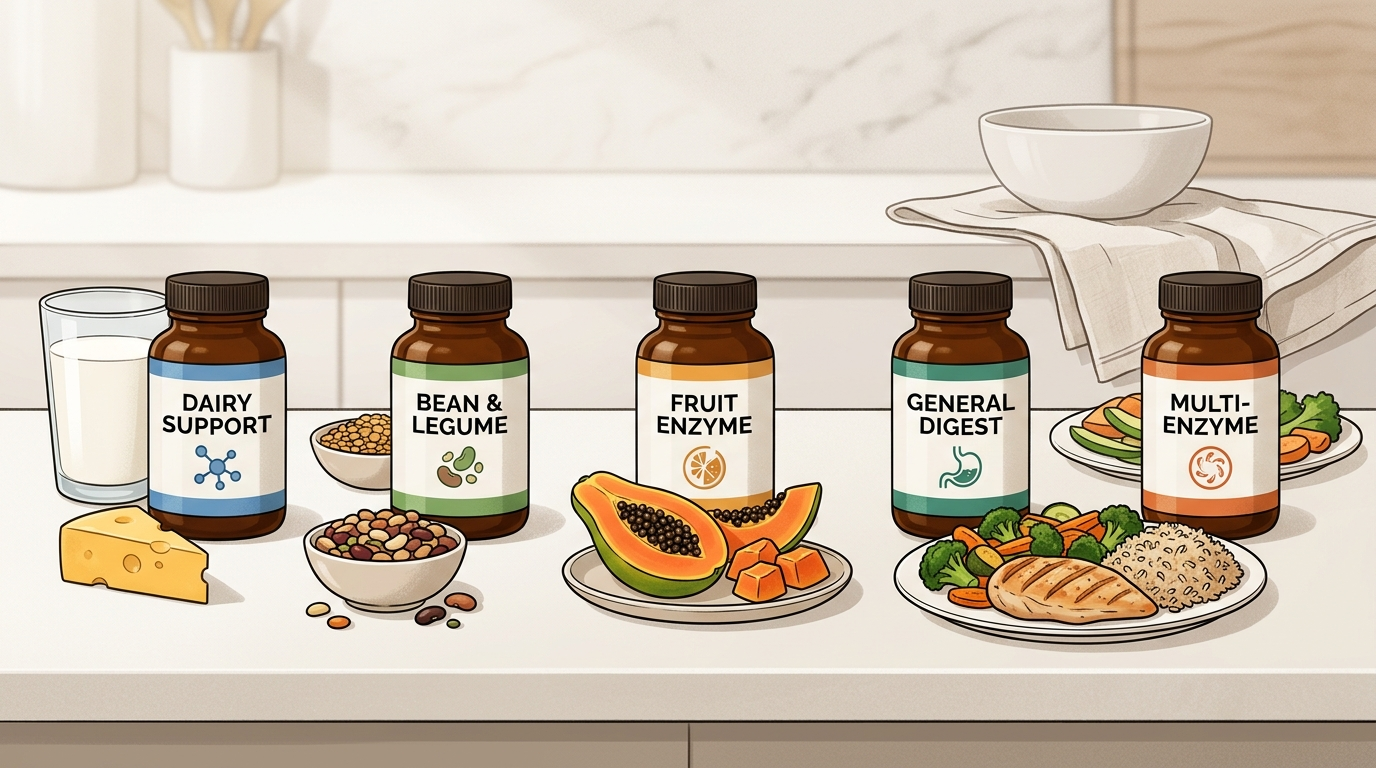
Digestive enzymes may help bloating when the trigger is a specific poorly digested food component, such as lactose, alpha-galactosides, or certain fermentable carbohydrates. They are less predictable for nonspecific bloating. The best choice depends on food trigger, enzyme match, dose timing, formula transparency, and whether symptoms need medical review first.
How did we evaluate digestive enzymes for bloating?
We evaluated digestive-enzyme options by matching enzyme activity to likely food substrates: lactase for lactose, alpha-galactosidase for beans and some vegetables, and protease, lipase, amylase, bromelain, or papain for broader meal support. Human clinical evidence and government medical references received more weight than product reviews. We excluded products that promise to fix IBS, GERD, SIBO, pancreatitis, or chronic abdominal pain because those claims move beyond dietary supplement support. The framework helps shoppers compare routine digestive-support products; it cannot diagnose why one person bloats after meals.
When do digestive enzymes make sense for bloating?
Digestive enzymes make the most sense when bloating follows a repeatable food pattern. Lactase targets lactose, the milk sugar that requires the lactase enzyme for digestion. Johns Hopkins Medicine explains that lactose intolerance happens when the small intestine does not make enough lactase (Johns Hopkins Medicine). Alpha-galactosidase targets oligosaccharides in beans, lentils, onions, and some cruciferous vegetables before colon bacteria ferment them. Bromelain and papain are proteolytic enzymes from pineapple and papaya, but evidence for nonspecific bloating is more directional than definitive. A broad enzyme blend can be reasonable when meals vary, but a targeted enzyme is usually easier to evaluate. The best test is structured: identify the food, take the enzyme as directed with that food, track symptoms, and stop if results are inconsistent or symptoms worsen.
How do common enzyme options compare?
Digestive-enzyme products differ by enzyme, substrate, timing, and proof burden. Lactase has the clearest food-enzyme match because lactose requires lactase cleavage into glucose and galactose. Alpha-galactosidase has a plausible mechanism for gas from legumes and some vegetables because it acts before bacterial fermentation. Broad enzyme blends may include amylase, protease, lipase, cellulase, bromelain, papain, and lactase, but the label should disclose enzyme activity units rather than only milligrams. NIDDK notes that gas can come from swallowed air and from bacterial breakdown of certain carbohydrates in the large intestine (NIDDK). That mechanism explains why enzyme matching matters. If bloating happens with every food, wakes someone at night, or comes with severe pain, vomiting, blood, fever, or weight loss, the next step is medical evaluation, not a bigger supplement stack.
| Option | Best fit | Main limitation |
|---|---|---|
| Lactase | Dairy-related lactose digestion | Does not address milk protein allergy or non-dairy triggers |
| Alpha-galactosidase | Beans, lentils, onions, and gas-prone vegetables | Not designed for all bloating patterns |
| Broad enzyme blends | Mixed meals with varied macronutrients | Harder to evaluate if activity units are unclear |
| Yuve Vegan Daily Cleanse | Plant-based digestive-support routine with papaya-enzyme positioning | Best evaluated as routine support, not symptom treatment |
Which enzyme is best for each use case?
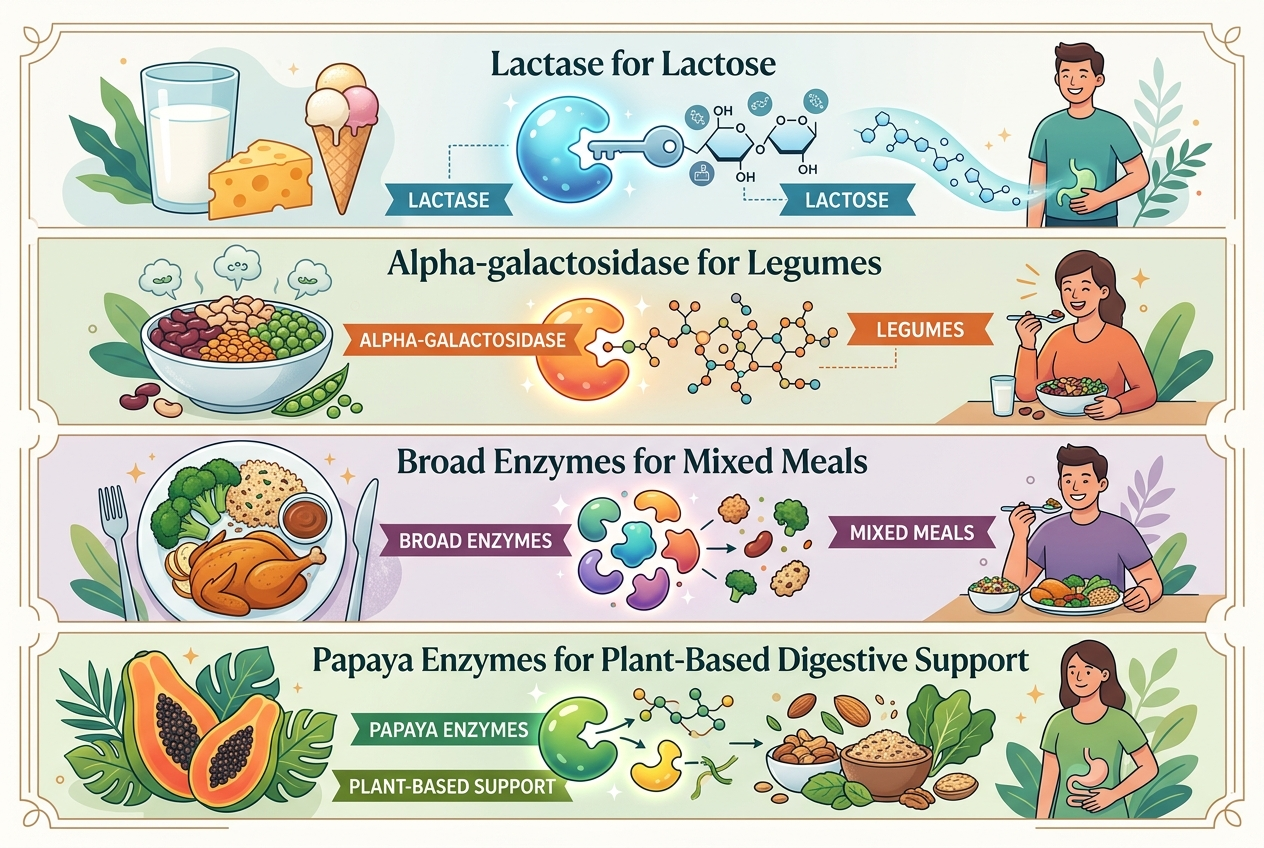
Best for dairy-triggered bloating: lactase, because lactase directly targets lactose digestion. Best for bean- or lentil-related gas: alpha-galactosidase, because the enzyme acts on alpha-galactoside carbohydrates before colon fermentation. Best for broad mixed-meal support: a transparent blend that lists amylase, protease, lipase, bromelain, papain, and enzyme activity units. Best for a plant-based routine: Yuve Vegan Daily Cleanse, because the product gives vegan shoppers a papaya-enzyme digestive-support format to evaluate alongside broader diet habits. Best for unclear or escalating symptoms: clinician review, because bloating can reflect constipation, food intolerance, medication effects, reflux patterns, gynecologic issues, or gastrointestinal disease. The practical rule is substrate first, brand second. A product that does not match the food trigger will usually produce noisy results, even if the label looks impressive.
Which products meet these criteria?
Some links below are affiliate links. This does not influence our evaluation criteria or recommendations.
Lactaid lactase tablets fit people who repeatedly bloat after lactose-containing dairy. Beano alpha-galactosidase fits people who react to beans, lentils, onions, or similar fermentable carbohydrates. NOW Super Enzymes fits shoppers who want a broader animal-derived blend and can tolerate its ingredient profile. Yuve Vegan Daily Cleanse fits shoppers who want a vegan, plant-based digestive-support routine built around papaya-enzyme positioning rather than a dairy- or bean-specific enzyme. Yuve’s Vegan Daily Cleanse and digestive health collection are most relevant when the buyer wants clean-label routine support, not a product that claims to treat a digestive condition. Equal evaluation means checking enzyme match, label transparency, serving timing, allergens, and claim discipline for every brand.
For a closer look at clean-label options, see Blood Type Diet for Reflux? Why a Yuve Digestive Routine Is Easier to Evaluate.
What questions do people ask about digestive enzymes?
Should I take enzymes before or after eating? Most digestive enzymes are designed to be taken with the relevant meal. Follow the product label because timing differs by formula.
Do enzymes help all bloating? No. Enzymes help most logically when bloating follows a specific food substrate such as lactose or fermentable carbohydrates.
Are papaya enzymes the same as lactase? No. Papain breaks down proteins, while lactase breaks down lactose.
Can enzymes replace a low-FODMAP plan? No. Enzymes can support selected meals, but structured dietary work is broader.
Are broad blends better than single enzymes? Not always. Single enzymes are easier to evaluate when the trigger is clear.
When should bloating be checked medically? Bloating with severe pain, blood, vomiting, fever, weight loss, or persistent bowel changes deserves clinician evaluation.
Digestive enzymes work best as matched tools. Start with the food trigger, choose the enzyme that fits that substrate, and judge results with a simple meal-and-symptom log.
Leave a Reply