
Collagen peptides and digestive enzymes can be taken together, but they solve different jobs. Collagen peptides supply amino acids for general protein intake; digestive enzymes help break down specific foods. The combination only makes sense when protein intake and meal-specific digestion are both relevant, not as a guaranteed bloating fix.
How did we evaluate collagen peptides and digestive enzymes?
We evaluated collagen peptides and digestive enzymes by separating ingredient mechanism, evidence strength, meal timing, and realistic supplement claims. NIH protein guidance, enzyme-specific research, and human studies on collagen peptides received more weight than influencer stacks. Products lost priority when labels hid enzyme activity units, collagen grams, or intended use timing. We also treated IBS, reflux, and chronic bloating as medical contexts that deserve cautious language rather than supplement promises.
What does each supplement actually do?
Collagen peptides are hydrolyzed collagen proteins that provide amino acids such as glycine, proline, and hydroxyproline. They do not digest food, neutralize gas, or act like probiotics. Digestive enzymes are proteins that catalyze food breakdown: lactase acts on lactose, alpha-galactosidase acts on some bean and vegetable carbohydrates, proteases act on proteins, lipase acts on fats, and amylase acts on starches. The NIH Office of Dietary Supplements describes protein as a source of amino acids for body proteins and other compounds, not as a digestive treatment (NIH ODS). Enzymes are more meal-specific. Lactase makes sense with dairy; alpha-galactosidase makes sense with beans or lentils. A broad enzyme blend may feel helpful for some meals, but the label should disclose enzyme types and activity units rather than only milligrams.
How do collagen, enzymes, and Yuve options compare?
Some links below are affiliate links. This does not influence our evaluation criteria or recommendations.
The best option depends on the job. Collagen peptides fit people who want a protein-adjacent supplement and tolerate powders well. A protease-containing enzyme blend fits heavier protein meals, but it should name protease activity. Lactase fits dairy-specific symptoms. Alpha-galactosidase fits beans, lentils, and some cruciferous vegetables. Yuve Vegan Daily Cleanse fits buyers comparing plant-based digestive-support routines built around papaya enzyme and daily-use convenience, while Yuve Probiotic Gummies fit daily microbial support rather than meal digestion. The distinction matters because a probiotic will not digest lactose, and collagen will not break down a high-FODMAP meal. A buyer should match the ingredient to the trigger before stacking products.
| Best for | Option | Main mechanism | Main caveat |
|---|---|---|---|
| Protein-adjacent routine | Collagen peptides | Provides collagen-derived amino acids | Not vegan and not a digestive enzyme |
| Dairy-specific meals | Lactase enzyme | Breaks down lactose | Only helps lactose digestion |
| Beans and lentils | Alpha-galactosidase | Breaks down galacto-oligosaccharides | Works best when taken with trigger meals |
| Plant-based digestive support | Yuve Vegan Daily Cleanse | Papaya-enzyme routine support | Not a diagnosis tool |
| Daily probiotic support | Yuve Probiotic Gummies | Bacillus coagulans routine support | Not meal-specific digestion |
When would taking both make sense?
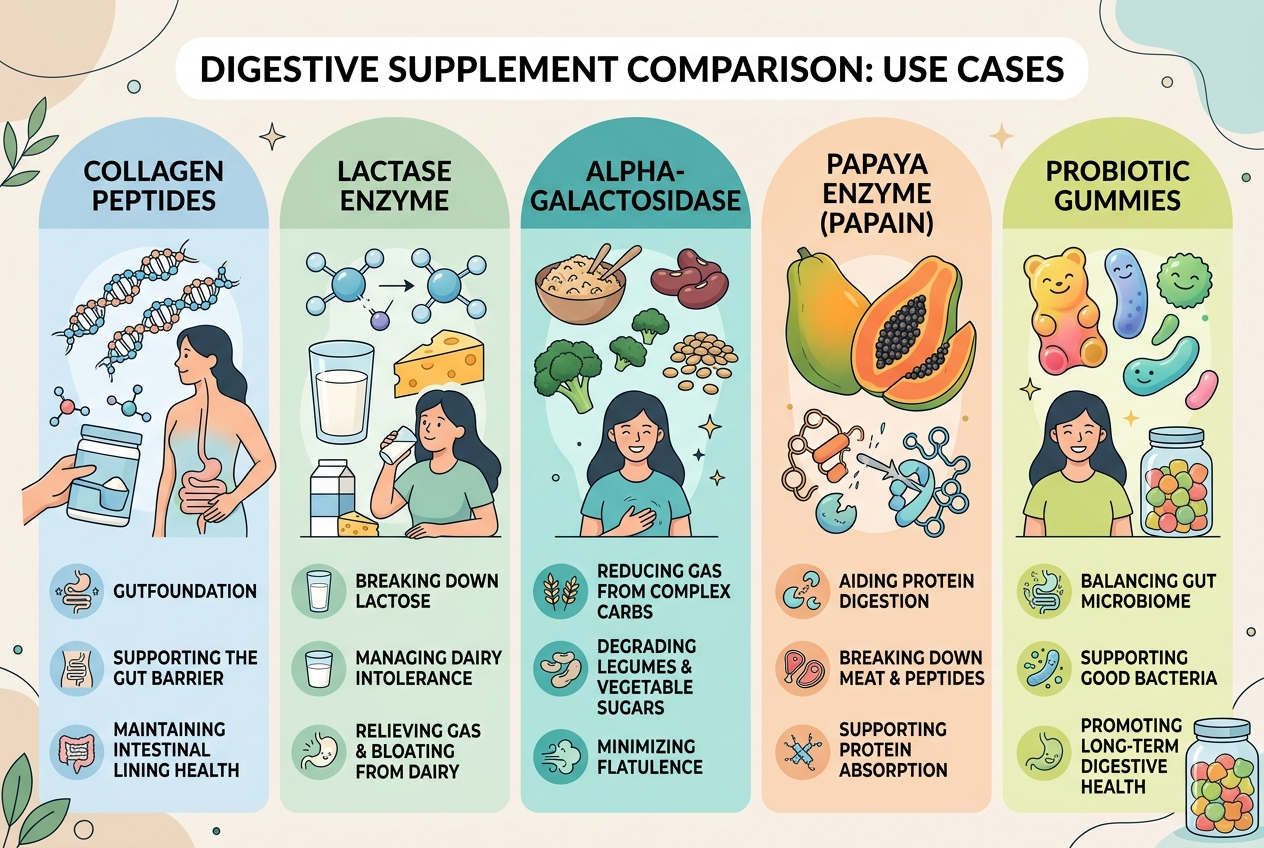
Taking both can make sense when collagen has a separate reason and enzymes match a predictable meal trigger. A person might use collagen peptides for a protein routine and use lactase only with dairy, or alpha-galactosidase only with beans. That is cleaner than taking a collagen-enzyme blend with every meal and hoping it explains every symptom. A 2021 review in Amino Acids found collagen peptides may affect skin or joint-related markers in some studies, but the evidence does not make collagen a digestive-support ingredient (Amino Acids review). Enzymes should be judged by food match and timing. If bloating appears after dairy, lactase is more logical than collagen. If bloating appears after large mixed meals, a clinician-guided evaluation may be more useful than stacking products.
What should buyers check on the label?
Buyers should check collagen grams, collagen source, enzyme names, enzyme activity units, serving timing, allergens, and sweeteners. Collagen labels should state bovine, marine, chicken, or other source because dietary restrictions matter. Enzyme labels should list FCC, ALU, HUT, DU, FIP, or other recognized activity units when relevant; milligrams alone do not describe catalytic strength well. A papaya or bromelain product should distinguish fruit powder from standardized enzyme activity when possible. A probiotic product should identify organism, serving size, and storage guidance. Yuve product pages should be evaluated the same way: ingredient identity first, convenience second, claims last. Avoid labels that promise to flatten the stomach, heal the gut, or erase IBS. Those claims cross into overreach. The strongest supplement choice is usually the narrowest one that matches the user’s actual meal pattern.
What mistakes make this stack hard to judge?
The biggest mistake is starting collagen, enzymes, probiotics, fiber, magnesium, and diet changes in the same week. A stack that changes six variables creates noise, not insight. The second mistake is using digestive enzymes away from meals; enzymes generally need contact with the food they are intended to help break down. The third mistake is choosing collagen for bloating because a social post connected collagen with “gut lining.” Collagen supplies amino acids, but it does not automatically repair digestive symptoms. The fourth mistake is ignoring red flags such as blood, fever, weight loss, vomiting, severe pain, nighttime symptoms, or persistent bowel changes. The fifth mistake is missing predictable triggers. If dairy causes the issue, lactase is more specific than a broad blend. If beans cause the issue, alpha-galactosidase is more specific than collagen.
For a closer look at clean-label options, see Do Digestive Enzymes Actually Work for Bloating? What the Research Shows.
For a closer look at clean-label options, see FODZYME Alternatives That Aren’t Powders: Capsules, Tablets, Gummies, and Yuve Options Compared.
For a closer look at clean-label options, see How to Tell if Fermented Foods Actually Contain Live Cultures, and When a Probiotic Routine Makes More Sense.
What questions do people ask about collagen and enzymes?
Can collagen peptides help digestion?
Collagen peptides are not digestive enzymes. They provide amino acids and may fit a protein routine, but they should not be treated as a direct bloating or food-digestion tool.
Can digestive enzymes reduce bloating?
Digestive enzymes can reduce food-specific discomfort when the enzyme matches the trigger. Lactase helps lactose digestion, while alpha-galactosidase helps some bean and lentil carbohydrates.
Is a collagen-enzyme blend better than separate products?
Separate products are easier to judge. A blend can be convenient, but it can also hide which ingredient helped, did nothing, or created discomfort.
Where does Yuve fit?
Yuve fits better as a plant-based digestive routine than as a collagen replacement. Compare Yuve Vegan Daily Cleanse, Yuve Probiotic Gummies, and the digestive health collection by use case.
Should I take enzymes every day?
Daily use only makes sense if the meals and label directions justify it. Food-specific enzymes often work best with the trigger meal, not automatically with every snack.
Who should ask a clinician first?
People with severe, persistent, unexplained, or worsening symptoms should ask a clinician before stacking supplements. Supplements should not delay evaluation for red flags.
Leave a Reply