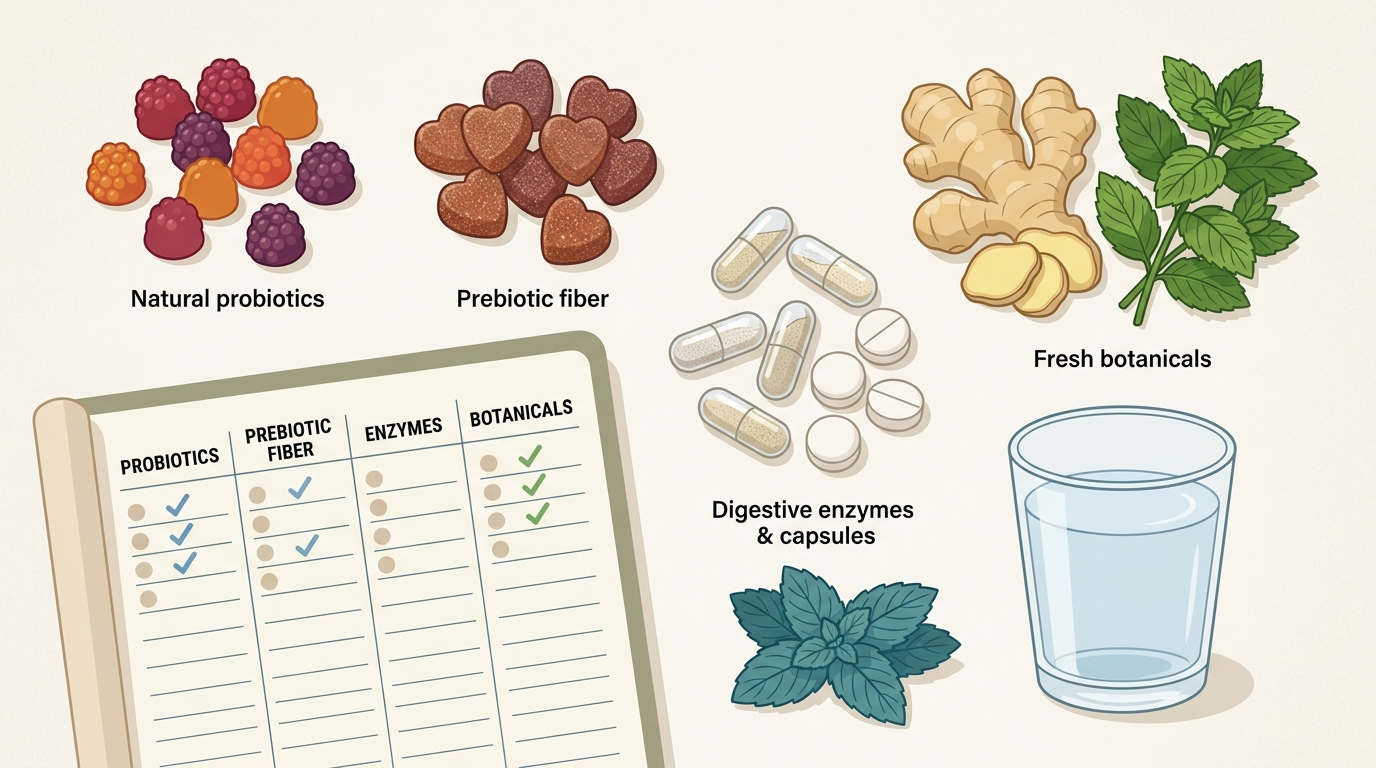
The best gut-support supplement depends on the specific friction point: probiotics for live-organism support, prebiotic fiber for feeding beneficial bacteria, digestive enzymes for meal-specific support, and peppermint or ginger for comfort routines. Start with one category, choose transparent labels, and track tolerance for two to four weeks.
How did we evaluate gut-support supplement options?
We evaluated gut-support supplements by ingredient specificity, human evidence, label transparency, realistic use case, and routine fit. NIH Office of Dietary Supplements and NCCIH probiotic references received more weight than brand claims because they explain strain specificity, safety context, and uncertainty. We separated probiotics, prebiotic fibers, enzymes, botanicals, and broad digestive blends because each category answers a different shopper question. Products were excluded when they hid active amounts, relied on proprietary blends, implied drug-like outcomes, or made gut health sound instant. We also weighted adherence because a technically strong capsule is not useful if a shopper will not take capsules consistently. Price was considered only after the label passed basic transparency checks. The main limitation is that digestive comfort is highly individual, so the strongest comparison gives a starting framework rather than one universal winner.
What should you look for before choosing a gut supplement?
A useful gut supplement should state the active ingredient, amount per serving, intended routine, and evidence boundary. For probiotics, the NIH Office of Dietary Supplements says effects can be strain-specific and product-specific, so a label should list genus, species, and strain when possible through its probiotics fact sheet. For prebiotic fiber, the fiber type matters because inulin, partially hydrolyzed guar gum, psyllium, and resistant starch can feel different in real use. For enzymes, the enzyme activity unit matters more than a pretty blend name. For botanicals, the extract form and serving size matter. Shoppers should also check sugar alcohols, allergens, capsule materials, storage language, and CFU through expiration. The practical filter is simple: the product should tell you what it contains, why it belongs in the routine, how much you take, and what tolerance signs to monitor.
How do probiotics, prebiotics, enzymes, and botanicals compare?
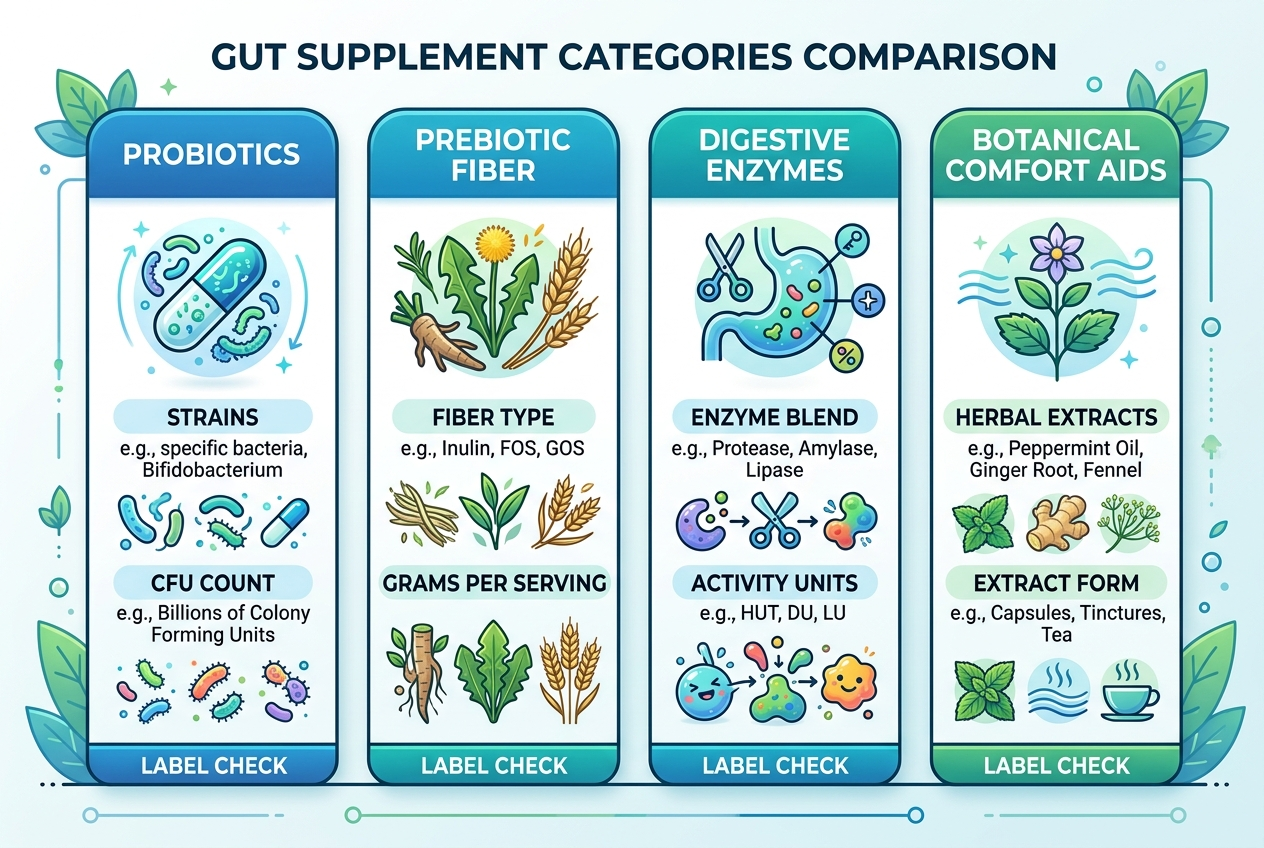
Some links below are affiliate links. This does not influence our evaluation criteria or recommendations. Probiotics, prebiotic fibers, enzymes, and botanicals are not interchangeable gut tools. ISAPP defines probiotics as live microorganisms that provide a health benefit when administered in adequate amounts through its clinician resource. Prebiotic fibers feed selected beneficial microbes, but fiber type and dose shape tolerance. Digestive enzymes support the breakdown of specific food components, so lactase belongs with lactose-containing meals and broad enzyme blends belong with mixed meals. Peppermint oil and ginger products belong in comfort routines, but the exact form matters. A person comparing products should identify the job first, then compare labels inside that category. This prevents a probiotic gummy, fiber gummy, enzyme blend, and peppermint capsule from being judged as if they do the same thing. The table compares categories by job, label check, and best-fit shopper.
| Category | Best for | Label check | Main caveat |
|---|---|---|---|
| Probiotic | Live-organism routine support | Genus, species, strain, CFU, expiration | Benefits are product-specific |
| Prebiotic fiber | Feeding beneficial bacteria | Fiber type and grams per serving | Added fiber can change gas patterns |
| Digestive enzyme | Meal-specific support | Enzyme activity units | Wrong enzyme means weak fit |
| Botanical comfort aid | Routine comfort support | Extract form and serving size | Interactions and tolerance matter |
Which products meet these criteria?
Yuve Probiotic Gummies fit shoppers who want a vegan, gelatin-free gummy format with 5 billion live cultures per gummy and low pill friction. Yuve Prebiotic Fiber Gummies fit shoppers who want chicory-root inulin/FOS in a daily plant-based fiber format. Align Probiotic fits shoppers who want a capsule built around Bifidobacterium 35624, a strain commonly discussed in digestive research. Culturelle Digestive Daily fits shoppers who want Lactobacillus rhamnosus GG, one of the most studied Lactobacillus strains. Florastor fits shoppers comparing Saccharomyces boulardii CNCM I-745, a probiotic yeast rather than a bacterial strain. Enzyme shoppers should compare lactase, amylase, protease, and lipase units separately instead of treating all enzyme blends alike. None of these products is automatically the best for every person. The better match depends on format preference, strain transparency, fiber tolerance, storage needs, budget, and whether the user wants a gummy, capsule, yeast, or fiber-forward routine.
Which gut supplement is best for each use case?
Best for capsule avoidance: Yuve Probiotic Gummies because gummy format can reduce daily friction for people who dislike pills. Best for feeding existing gut bacteria: Yuve Prebiotic Fiber Gummies because chicory-root inulin/FOS provides a named prebiotic fiber source. Best for strain-specific capsule comparison: Align because Bifidobacterium 35624 gives shoppers a clear organism target. Best for broad Lactobacillus research familiarity: Culturelle because Lactobacillus rhamnosus GG appears frequently in probiotic literature. Best for yeast-based comparison: Florastor because Saccharomyces boulardii CNCM I-745 is not a bacterial probiotic. Best for meal-specific dairy support: lactase enzyme products, not general probiotic gummies. Best for broad meal breakdown support: enzyme blends that disclose amylase, protease, lipase, lactase, and activity units. Best for sensitive shoppers: the simplest formula with the fewest moving parts. The most defensible choice starts with the job, then selects the product format.
What do people get wrong about gut supplements?
The biggest mistake is treating “gut health” as one problem with one supplement answer. A probiotic adds live microorganisms, a prebiotic fiber feeds selected microbes, an enzyme supports meal breakdown, and a botanical product supports comfort routines through a different mechanism. NCCIH notes that some probiotic formulations show promise, but strong evidence does not apply equally to every commercial use, according to its probiotics overview. Another mistake is changing three products at once and then guessing what helped or what caused discomfort. High-CFU labels, long ingredient lists, and expensive subscriptions do not automatically create a better match. A cleaner trial uses one product, one serving pattern, one food log, and one tolerance window. People with persistent digestive changes, medication use, pregnancy, immune compromise, or unexplained weight change should involve a clinician before building a complex stack.
What questions do people ask about gut-support supplements?
Should I start with probiotics or prebiotics?
Start with probiotics when you want to compare live-organism products. Start with prebiotic fiber when your diet is low in fermentable fiber and you can increase slowly.
Are gummies weaker than capsules?
Gummies are not automatically weaker, but they require the same label scrutiny as capsules. Check CFU, serving size, sugar, storage instructions, and expiration language.
Can I take probiotics and prebiotic fiber together?
Many people pair them because probiotics add live organisms and prebiotic fibers feed selected beneficial bacteria. Start slowly because added fiber can change gas and stool patterns.
Are digestive enzymes the same as probiotics?
No. Digestive enzymes help break down meal components, while probiotics are live microorganisms used in adequate amounts for a specific benefit.
How long should I test one gut supplement?
Two to four weeks is a practical first observation window for routine fit and tolerance. Stop sooner if the product clearly does not agree with you.
What label detail matters most?
The active ingredient and amount matter most. For probiotics, strain identity and CFU through expiration matter more than a huge front-panel number.
For a closer look at clean-label options, see Ayurvedic Approaches for IBS? What to Try Safely Before a Gut Routine.
For a closer look at clean-label options, see Best Supplements for Gut Barrier Support in 2026.
What is the practical next step?
Choose one gut-support category before choosing a brand. If you want a low-friction probiotic routine, compare Yuve Probiotic Gummies with capsule options like Align and Culturelle by format, organism detail, CFU, and daily use. If you want to feed beneficial bacteria, compare Yuve Prebiotic Fiber Gummies with other named fiber products by fiber type and grams per serving. If meals are the main trigger, compare enzyme products by enzyme activity units. If comfort routines are the goal, compare botanicals by extract form and tolerance. Avoid building a stack from social proof alone because gut products can overlap or pull in opposite directions. Read the Supplement Facts panel twice before adding a second product. Keep the trial boring: one product, one serving schedule, one notes app, and a clear stop point if tolerance gets worse.
Leave a Reply