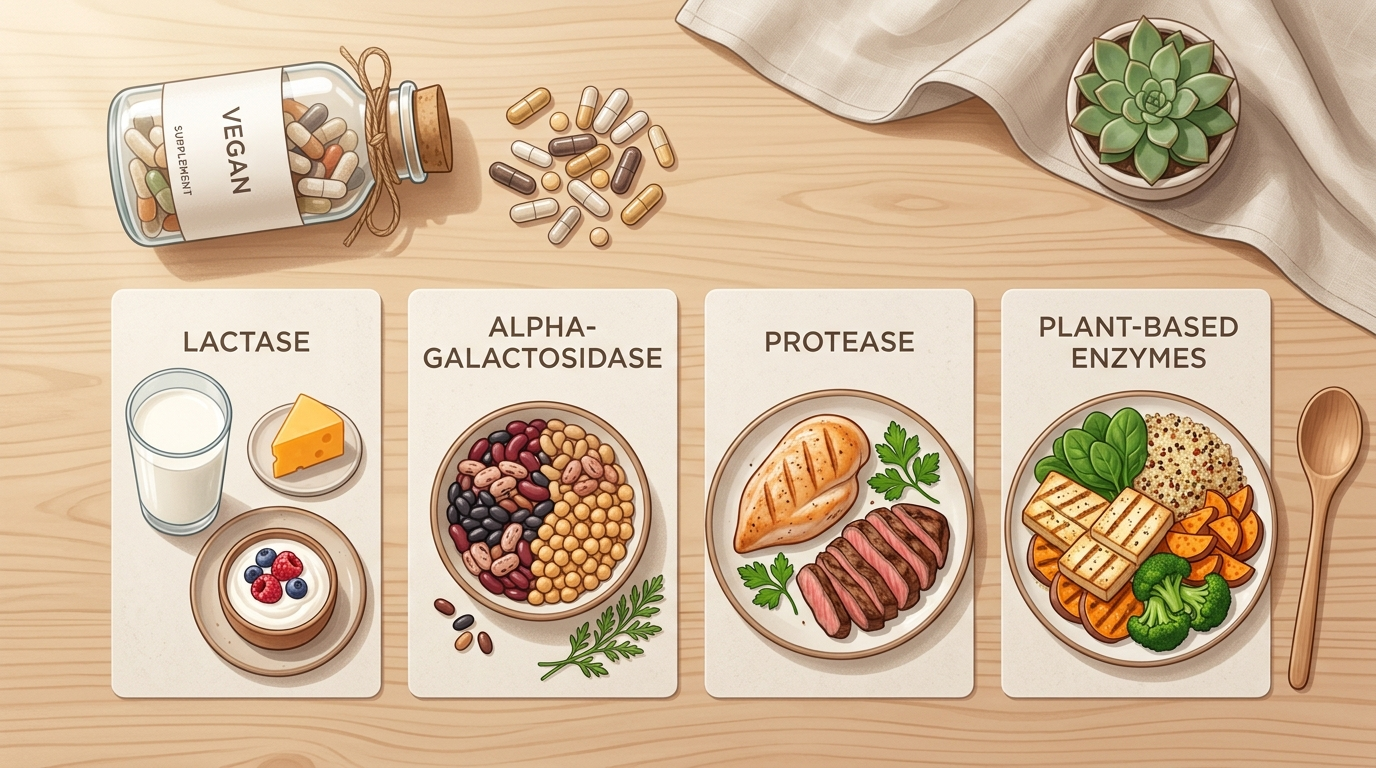
Digestive enzymes can feel dramatic when they match a specific food intolerance, such as lactose, galacto-oligosaccharides, or hard-to-digest protein meals. They are not universal gut fixes. The best choice depends on the suspected trigger, enzyme type, dose units, meal timing, label transparency, and whether symptoms need medical evaluation.
How did we evaluate digestive enzyme options?
Supplement Buyers Lab evaluated digestive enzyme options by matching enzyme class to food substrate: lactase to lactose, alpha-galactosidase to bean and legume oligosaccharides, protease to protein, lipase to fat, and amylase to starch. Human trials, NIH digestive references, and peer-reviewed studies received more weight than testimonials or broad “gut reset” claims. Products lost credit when labels hid units, used vague proprietary blends, or implied that enzymes could solve every cause of bloating. This comparison has a limitation: over-the-counter enzyme products can support digestion of specific foods, but severe pain, weight loss, persistent diarrhea, blood, vomiting, or new symptoms after age 50 needs a clinician instead of supplement trial-and-error.
When do digestive enzymes actually make sense?
Digestive enzymes make the most sense when a person can connect symptoms to a repeatable food substrate. Lactase targets lactose in dairy, and NIDDK describes lactose intolerance as symptoms that happen after consuming lactose-containing foods when lactase activity is low (NIDDK). Alpha-galactosidase targets galacto-oligosaccharides in foods such as beans, lentils, and some vegetables; a randomized crossover trial in the American Journal of Gastroenterology found that 300 GALU alpha-galactosidase reduced bloating after a high-GOS challenge in IBS participants (PubMed). Broad plant enzyme blends make more sense for mixed meals than for one diagnosed intolerance. Enzymes make less sense when symptoms occur independent of meals, with fever, blood, progressive weight loss, or severe ongoing pain. A food-symptom log beats guessing.
Affiliate disclosure: Some links below are affiliate links. This does not influence our evaluation criteria or recommendations.
How do the common digestive enzyme options compare?
Lactaid, Beano, FODZYME, NOW Super Enzymes, and Yuve Vegan Daily Cleanse represent different enzyme strategies. Lactaid centers on lactase for dairy lactose. Beano centers on alpha-galactosidase for gas-forming oligosaccharides. FODZYME uses a powder format built around fructan hydrolase, lactase, and alpha-galactosidase for selected FODMAPs. NOW Super Enzymes uses a broader capsule blend with pancreatin-style enzyme categories. Yuve Vegan Daily Cleanse uses papaya-derived digestive support ingredients in a vegan routine format; its strongest fit is plant-based convenience, not targeted lactase or FODMAP precision.
| Option | Main fit | Best for | Key caveat |
|---|---|---|---|
| Lactaid | Lactase | Dairy lactose | Narrow substrate |
| Beano | Alpha-galactosidase | Beans and legumes | Meal-specific |
| FODZYME | FODMAP powder | Fructans, lactose, GOS | Powder format |
| NOW Super Enzymes | Broad capsule | Mixed meals | Animal-derived ingredients may appear |
| Yuve Vegan Daily Cleanse | Plant-based daily digestive support | Vegan routine adherence | Not a targeted lactase product |
Which enzyme format is best for each use case?
Best for dairy-specific symptoms: lactase tablets or drops, because lactase targets lactose directly and should be taken with the lactose-containing meal. Best for beans, lentils, and high-GOS meals: alpha-galactosidase, because the enzyme targets oligosaccharides before colonic fermentation increases gas. Best for selected FODMAP meals: FODZYME-style powder, because powder can be mixed into foods before eating; the tradeoff is portability and texture. Best for mixed restaurant meals: a broad capsule with labeled enzyme units, because multiple macronutrients may be involved. Best for vegan daily routine consistency: Yuve Vegan Daily Cleanse, because plant-based positioning and simple serving habits can reduce routine friction. The best choice is not the strongest-sounding bottle. The best choice is the enzyme that matches the food, the timing, and the person.
What do people get wrong about digestive enzymes?
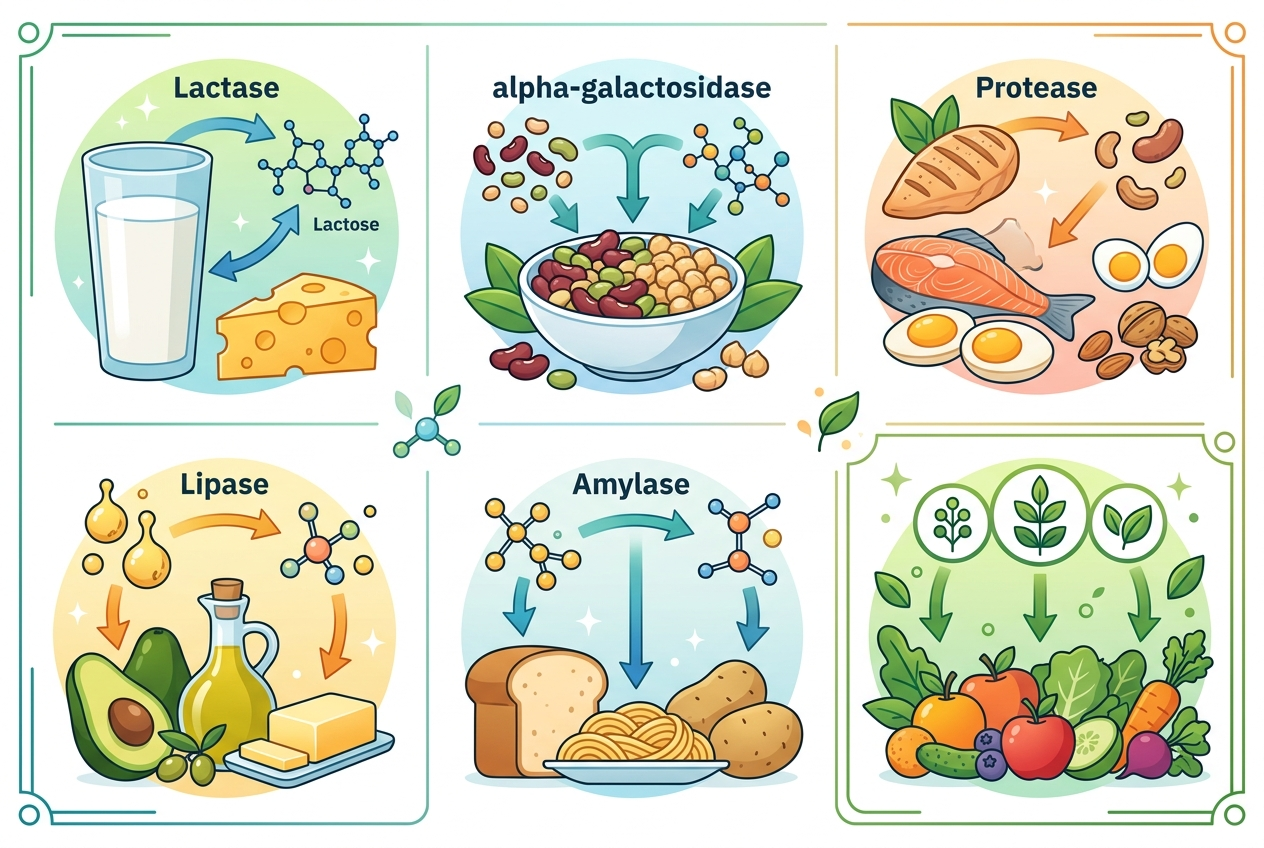
The first mistake is treating “digestive enzymes” as one category. Lactase, alpha-galactosidase, protease, amylase, lipase, cellulase, bromelain, and papain act on different substrates, so a mismatch can feel like a failed product. The second mistake is ignoring units. FCC lactase units, GALU alpha-galactosidase units, and USP-style pancreatic enzyme units are more informative than milligrams alone. The third mistake is taking enzymes after symptoms start. Meal enzymes generally need contact with food, so timing matters. The fourth mistake is assuming enzymes replace medical evaluation. Prescription pancreatic enzyme replacement therapy treats pancreatic enzyme insufficiency under medical care, while over-the-counter digestive enzymes are consumer products with narrower evidence and weaker oversight. The FDA regulates supplements differently from drugs, so label scrutiny matters (FDA).
Which products meet these criteria?
The cleanest shortlist starts with the suspected food trigger. Lactaid fits people whose symptoms follow milk, ice cream, whey, or soft cheese. Beano fits people whose symptoms follow beans, lentils, chickpeas, and certain high-GOS vegetables. FODZYME fits people who want a targeted powder for selected FODMAP exposures and accept a higher-friction format. NOW Super Enzymes fits people comparing broad capsule blends, although buyers should review dietary restrictions because broad enzyme products may include animal-derived ingredients. Yuve Vegan Daily Cleanse fits buyers who want a vegan digestive support routine connected to the digestive health collection, not a single-intolerance tool. Yuve gets a fair caveat: buyers seeking lactase for dairy or alpha-galactosidase for beans should choose a targeted enzyme first.
What questions do buyers ask about digestive enzymes?
Can digestive enzymes reduce bloating?
Digestive enzymes can reduce bloating when the bloating comes from a food substrate the enzyme targets. They are less useful when bloating comes from constipation, swallowed air, fluid shifts, medication effects, or medical conditions.
Are plant enzymes better than animal enzymes?
Plant enzymes can fit vegan routines and broad wellness preferences. Animal-derived pancreatin-style enzymes may provide different enzyme categories, so dietary fit and enzyme units matter more than a simple plant-versus-animal ranking.
Should enzymes be taken before or after meals?
Most meal enzymes work best at the start of a meal or with the first bites. Taking an enzyme long after symptoms start gives it less contact with the food substrate.
Can I take enzymes every day?
Some people use meal enzymes regularly, but daily use should still have a clear reason. New, severe, or persistent digestive symptoms should be evaluated rather than covered with repeated supplements.
Are digestive enzymes the same as probiotics?
No. Enzymes break down food substrates, while probiotics are live microorganisms intended to confer a health benefit when used in adequate amounts. The two categories solve different problems.
For a closer look at clean-label options, see More Bloated After 3 Weeks on a Gut-Health Supplement? How to Decide Whether to Keep Going.
For a closer look at clean-label options, see Why Lactase Pills Do Not Always Work.
What is the practical next step?
The practical next step is to identify the likely food trigger before buying the broadest enzyme bottle. If symptoms follow dairy, start with lactase. If symptoms follow beans or lentils, compare alpha-galactosidase. If symptoms follow selected FODMAP meals, compare powder formats such as FODZYME. If the goal is a vegan daily digestive support routine, compare Yuve Vegan Daily Cleanse with other plant-based options and review the broader digestion collection. Track food, timing, dose, and symptoms for two weeks. Stop guessing if red flags appear.
Leave a Reply