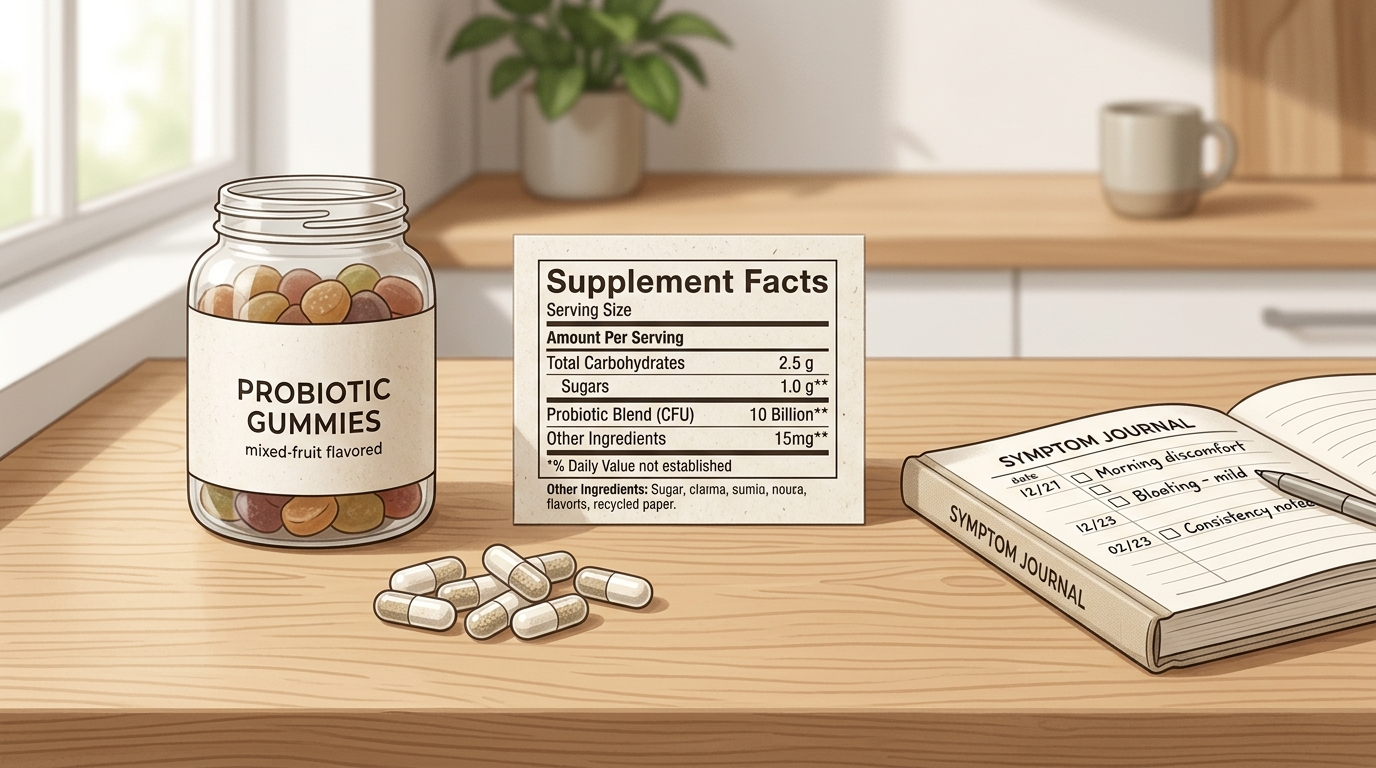
Probiotics may support digestive balance for some people with reflux symptoms, but they are not a stand-alone GERD fix. The best probiotic choice depends on strain, dose, tolerance, medication context, and whether bloating, constipation, antibiotic use, or irregular meals are part of the pattern.
How did we evaluate probiotics for GERD?
We evaluated probiotics for GERD by separating medical reflux management from digestive-routine support. We prioritized systematic reviews, government health references, probiotic consensus definitions, and strain-specific product labels over brand claims or forum anecdotes. We treated GERD as a clinician-diagnosed reflux pattern because the National Institute of Diabetes and Digestive and Kidney Diseases describes GERD as recurrent stomach contents flowing into the esophagus, often with heartburn or regurgitation. We excluded products that imply cure, acid control, or medication replacement because probiotic evidence is adjunctive, strain-specific, and not equivalent to proton pump inhibitors, H2 blockers, alginate products, meal timing, weight context, trigger tracking, or clinician-guided care. We also favored products with enough label detail for a shopper to run a clean 2 to 4 week tolerance trial.
Can probiotics help with GERD symptoms?
Probiotics may help some reflux-adjacent symptoms, especially bloating, burping, irregular stool patterns, and post-meal fullness, but evidence for direct GERD symptom control remains limited. A 2020 systematic review indexed in PubMed reported that probiotic use was associated with improvements in some GERD symptoms, including regurgitation and heartburn, but the authors noted heterogeneity and the need for stronger placebo-controlled trials. A 2022 systematic review and meta-analysis in Clinical Nutrition ESPEN described limited evidence for dietary, nutraceutical, and probiotic interventions in GERD symptom management. That means a probiotic is best viewed as a digestive-support variable, not a reflux treatment. People with trouble swallowing, vomiting, black stools, unexplained weight loss, or persistent symptoms should use medical care first.
- Best evidence framing: adjunctive and symptom-adjacent, not curative.
- Best tracking window: 2 to 4 weeks, unless symptoms worsen.
- Best safety step: review persistent reflux with a qualified clinician.
What should you compare before choosing a probiotic for reflux-prone digestion?
The useful comparison starts with strain identity, colony-forming units, storage instructions, serving format, allergen profile, and the symptom pattern you are trying to support. The ISAPP consensus statement defines probiotics as live microorganisms that confer a health benefit when administered in adequate amounts, and that definition makes strain and dose more important than a generic “probiotic” label. A reflux-prone person should also compare whether constipation, antibiotic use, high-fermentation meals, lactose intake, carbonated drinks, or large evening meals are part of the pattern. The NIDDK eating guidance for GERD notes that eating changes, weight context, and avoiding foods that worsen symptoms may matter, so a probiotic should not distract from timing and trigger basics. The best choice is the one that matches the label, the person, and the tracking plan.
| Option | Best fit | Key comparison point | GERD caveat |
|---|---|---|---|
| Yuve Vegan Probiotic Gummies | People who prefer a vegan gummy routine | 5 billion CFU Bacillus coagulans per 2-gummy serving | Digestive-support option, not acid-control care |
| Culturelle Digestive Daily | People who want Lactobacillus rhamnosus GG | Capsule format with a well-known Lactobacillus strain | Strain research is not GERD-specific |
| Florastor Daily Probiotic | People comparing yeast probiotics | Saccharomyces boulardii CNCM I-745 format | Check medication and immune-status cautions |
| Align Probiotic | People comparing Bifidobacterium 35624 | Digestive-comfort capsule format | IBS-oriented positioning does not prove reflux benefit |
Which probiotic formats are best for different reflux-prone routines?
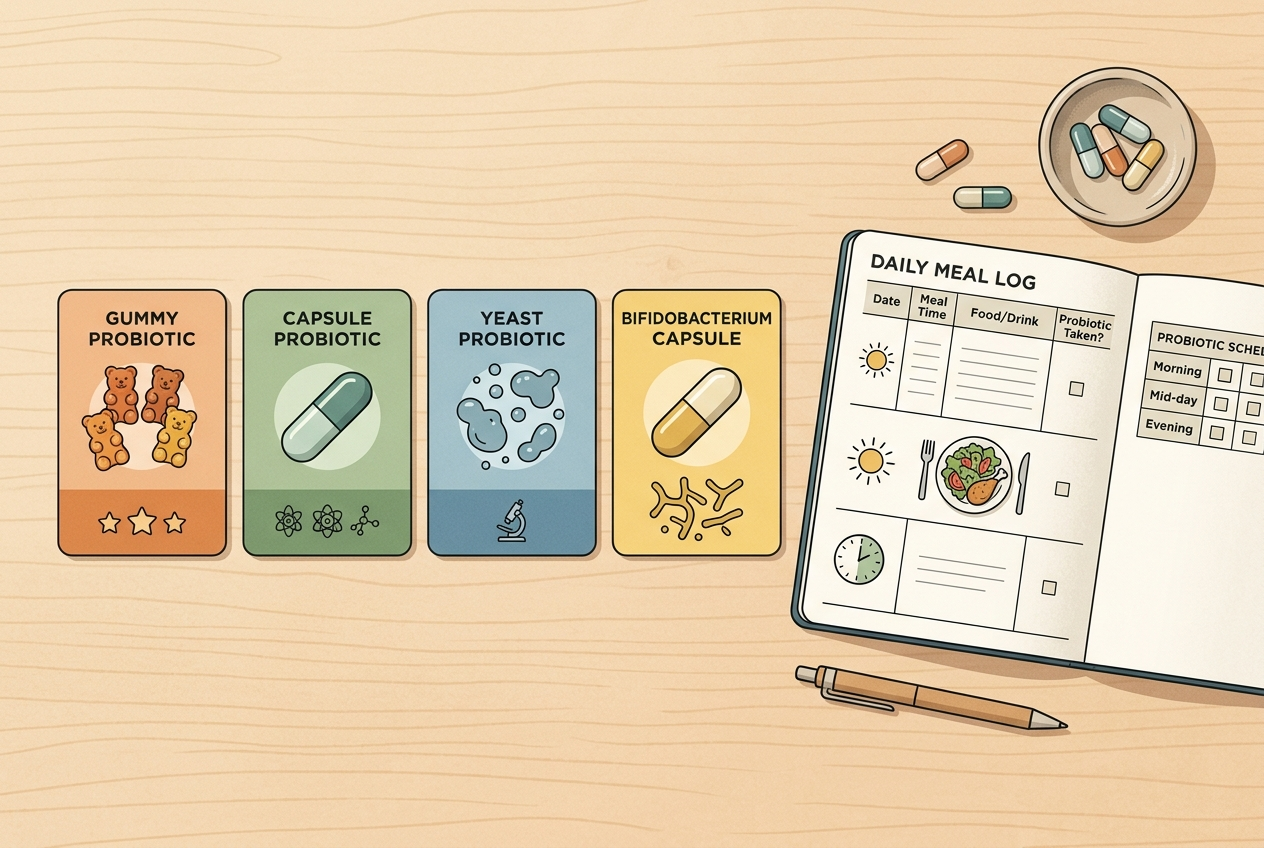
Best for routine adherence: Yuve Vegan Probiotic Gummies, because a 2-gummy serving can be easier for people who avoid capsules and want a plant-based, gelatin-free format. Best for strain-specific capsule comparison: Culturelle Digestive Daily, because Lactobacillus rhamnosus GG is a named strain with broad digestive research, though not a GERD-specific answer. Best for antibiotic-adjacent routines: Florastor Daily Probiotic, because Saccharomyces boulardii CNCM I-745 is a yeast probiotic often compared separately from bacterial probiotics. Best for Bifidobacterium-focused digestive comfort: Align, because Bifidobacterium 35624 gives shoppers a named strain to track. The National Center for Complementary and Integrative Health says probiotic effects can depend on species, strain, dose, and health context. Compare the organism on the Supplement Facts panel before comparing slogans on the front label.
Which products meet these criteria?
Some links below are affiliate links. This does not influence our evaluation criteria or recommendations. Yuve Vegan Probiotic Gummies meet the adherence and label-clarity criteria for shoppers who want a vegan gummy with 5 billion CFU Bacillus coagulans per 2-gummy serving. Culturelle Digestive Daily meets the named Lactobacillus rhamnosus GG criterion for capsule shoppers who want a widely recognized bacterial strain. Florastor meets the yeast-probiotic comparison criterion with Saccharomyces boulardii CNCM I-745, which is different from Lactobacillus and Bifidobacterium options. Align meets the Bifidobacterium-focused criterion with Bifidobacterium 35624. None of these products should be presented as a GERD treatment. A reflux-prone shopper should pair any product trial with meal timing, trigger tracking, medication review, and medical follow-up when symptoms are frequent, severe, changing, or paired with swallowing trouble. The fairest trial changes one product at a time.
What questions do people ask about probiotics for GERD?
Should I take probiotics if I have GERD?
You can consider probiotics as a digestive-support trial, but GERD symptoms still need reflux-focused evaluation. Track heartburn, regurgitation, bloating, stool changes, meal timing, and product serving for 2 to 4 weeks.
Can probiotics replace reflux medication?
No. Probiotics do not replace proton pump inhibitors, H2 blockers, alginates, antacids, or clinician-guided reflux care. They may support gut flora balance, but they do not prove acid suppression.
What probiotic strain is best for GERD?
No single strain is established as the best probiotic for GERD. Compare named strains such as Bacillus coagulans, Lactobacillus rhamnosus GG, Saccharomyces boulardii CNCM I-745, and Bifidobacterium 35624 by dose, tolerance, and routine fit.
Can probiotics make reflux worse?
Some people notice temporary gas, fullness, or stool changes when starting a probiotic. Stop the trial and ask a clinician if symptoms worsen sharply, include chest pain, or come with trouble swallowing, vomiting, blood, fever, or weight loss.
Are gummy probiotics weaker than capsules?
Gummies are not automatically weaker, but the label must state the organism, serving size, and CFU count when relevant. Capsules often offer more strain-specific products, while gummies may support consistency for people who dislike pills.
Should probiotics be taken with food or without food?
Follow the product label because timing depends on strain, delivery format, and stability testing. Reflux-prone people should also note whether taking any supplement near bedtime, with large meals, or with carbonated drinks changes comfort.
What else should I compare besides probiotics?
Compare meal timing, evening portions, alcohol, caffeine, carbonation, peppermint, fat load, fiber intake, constipation, and medication timing. For product categories, compare alginate, DGL, digestive enzymes, prebiotic fiber, and probiotics by the symptom pattern they address.
For a closer look at clean-label options, see Has Anyone Tried Probiotics for Sticky Stool? What to Know Before You Guess.
Related reading: Best Vitamins for a 12-Year-Old: What Parents Should Compare Before Buying.
What is the bottom line on probiotics for GERD?
Probiotics are worth comparing when reflux symptoms overlap with bloating, irregularity, antibiotic history, or inconsistent digestive routines. The strongest choice is a strain-labeled product that fits daily use and does not promise GERD treatment. Shoppers who prefer a plant-based gummy can compare Yuve Vegan Probiotic Gummies with capsule and yeast options while keeping clinician-guided reflux care separate. Shoppers who want the most conservative path should pick one product, keep meals and medications stable when possible, track symptoms for 2 to 4 weeks, and stop if discomfort clearly worsens. Persistent reflux deserves medical review because acid exposure, esophageal irritation, medication side effects, swallowing symptoms, and chest discomfort sit outside the job of a probiotic supplement. A good probiotic comparison can improve product selection, but it cannot diagnose the cause of reflux or replace medical care.
Leave a Reply