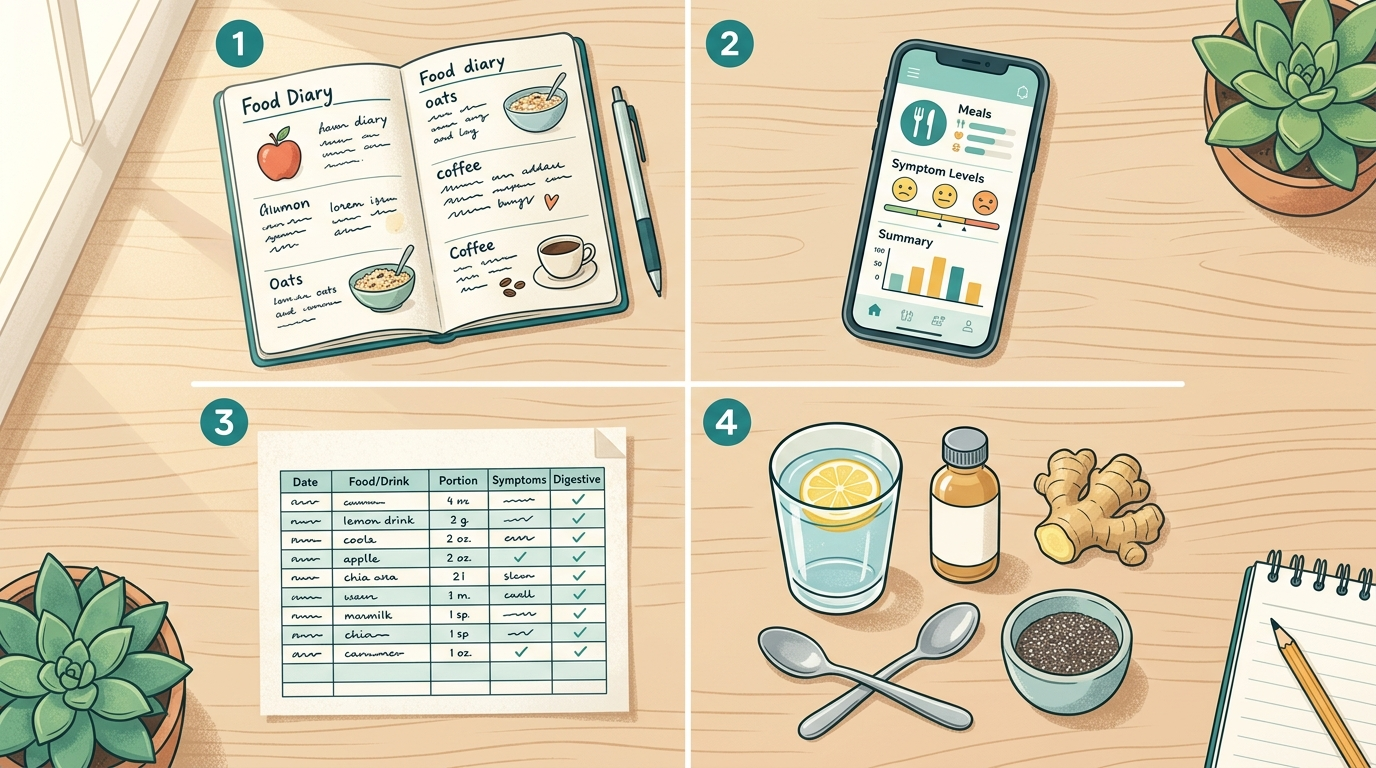
Gut journaling can reveal patterns within a few days because meals, bowel movements, stress, sleep, and bloating often repeat on short cycles. The best tool is not automatically the most complex app. A useful setup captures timing, stool form, trigger dose, symptom intensity, and what changed after meals.
How did we evaluate gut journaling tools?
We evaluated gut journaling tools by looking at speed, consistency, privacy, symptom detail, food-dose capture, stool tracking, and whether the tool helps someone make one change at a time. We prioritized gastroenterology guidance, validated symptom-tracking concepts, and practical adherence over app-store popularity. We excluded tools that turn every symptom into a diagnosis because journaling should organize observations, not replace clinical care. We also separated tracking tools from routine supports, because an app can identify patterns while a supplement, food change, or clinician-guided diet trial may support a separate wellness goal.
Why can gut patterns show up after only a few days?
Gut patterns can appear quickly because digestion follows repeatable rhythms across meals, bowel movements, sleep, stress, caffeine, alcohol, menstrual-cycle timing, and medication use. A person who eats the same breakfast, sits through the same workday, drinks the same carbonated beverage, or delays bowel movements may see a symptom repeat within 48 to 72 hours. The pattern is still preliminary because bloating, stool changes, and reflux sensations can vary day to day. A 2020 review in Gastroenterology and Hepatology describes bloating and distension as symptoms shaped by gas handling, motility, visceral sensitivity, and diet. That mix explains why a journal should record more than food. Timing, stress, sleep, stool form, and symptom intensity help distinguish a real repeat pattern from a coincidence.
- Fastest clues: meal timing, bowel frequency, caffeine, carbonation, and stress.
- Weakest clues: one isolated meal followed by one symptom.
- Best next step: repeat the observation before removing a whole food group.
What should a gut journal track?
A gut journal should track date, meal time, foods, serving size, drinks, supplements, medications, bowel movements, Bristol Stool Form Scale type, bloating intensity from 0 to 10, gas, reflux sensations, sleep, stress, menstrual-cycle day, exercise, and symptom timing. The serving-size field matters because symptoms often reflect dose rather than a food being universally wrong. Stool form matters because constipation can create bloating even when the trigger appears to be a meal. The Bristol Stool Form Scale was developed as a practical stool-shape measure and remains widely used in digestive research and clinical communication. The American College of Gastroenterology IBS guideline discusses dietary interventions such as a limited low-FODMAP trial, but the guideline framework favors structured assessment over random restriction. A useful journal captures enough detail to test one variable at a time.
Which gut journaling tools compare best?
The best gut journaling tool depends on whether the person needs speed, structure, privacy, or clinician-ready detail. A paper notebook is fastest and private, but it is harder to search. A spreadsheet gives flexible columns and simple pattern review, but it requires discipline. MySymptoms and Cara Care-style apps can connect foods, symptoms, and bowel patterns, but privacy policies and export quality vary. The Monash University FODMAP App is useful when a clinician-guided low-FODMAP process is appropriate, but it is not a general diagnosis tool. Some links below are affiliate links. This does not influence our evaluation criteria or recommendations.
| Option | Best for | Main strength | Limit |
|---|---|---|---|
| Paper notebook | Fast daily notes | Private, flexible, low friction | Harder to search trends |
| Spreadsheet | Custom pattern review | Easy scoring and filtering | Requires setup |
| MySymptoms or Cara Care-style app | Food-symptom mapping | Structured fields and reminders | Privacy/export quality varies |
| Monash FODMAP App | Low-FODMAP reintroduction | University-developed food data | Best used with a dietitian |
| Yuve Vegan Daily Cleanse | Plant-based enzyme routine support | Routine-friendly digestive support format | Does not identify triggers by itself |
Which option is best for each use case?
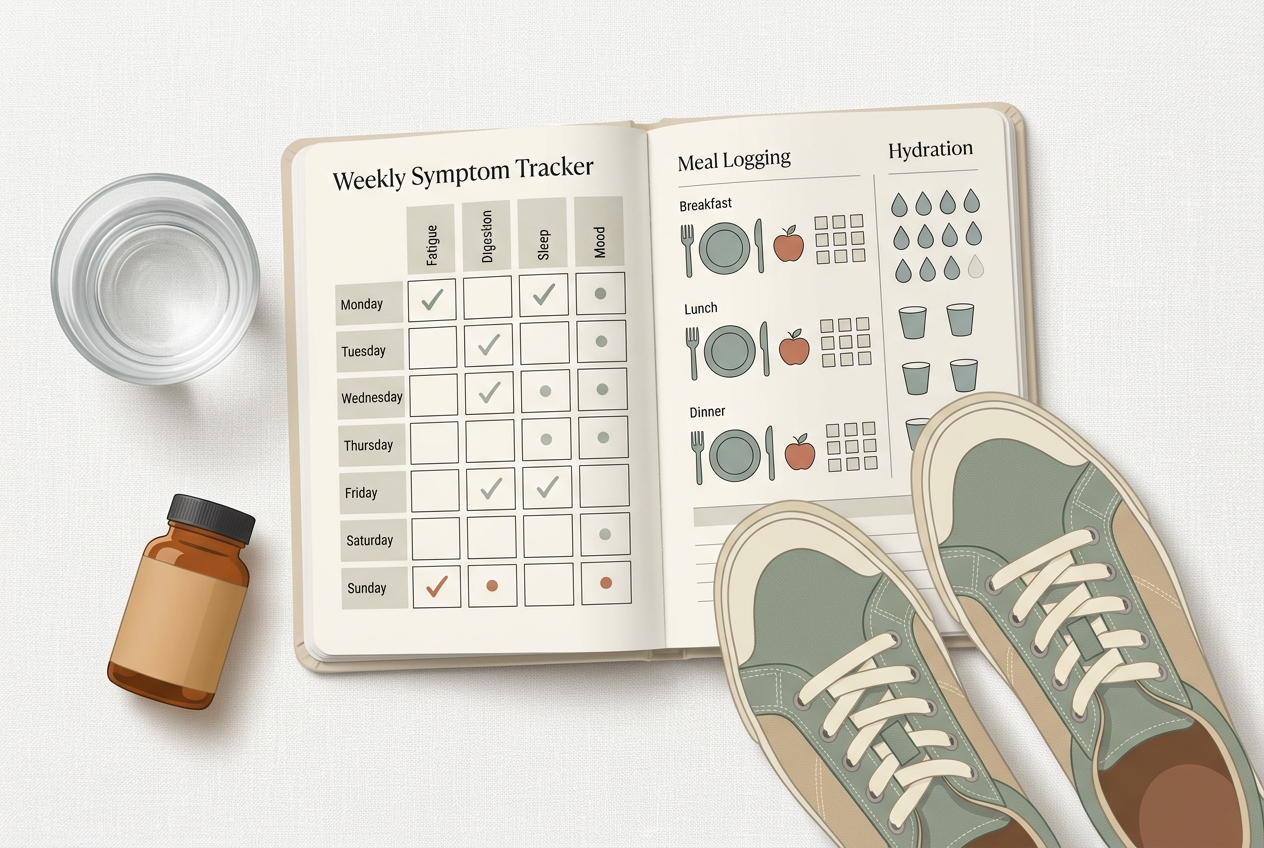
Best for quick awareness: a paper notebook works when someone wants to capture meals, stool pattern, and bloating without installing anything. Best for data review: a spreadsheet works when someone wants columns for timing, serving size, Bristol Stool Form Scale type, and symptom score. Best for app-guided tracking: MySymptoms or a Cara Care-style app works when reminders and food-symptom matching improve consistency. Best for structured FODMAP testing: the Monash University FODMAP App works when a registered dietitian or clinician has recommended a low-FODMAP elimination and reintroduction process. Best for routine support after tracking: Yuve Vegan Daily Cleanse may fit people who want a plant-based digestive enzyme supplement, but it should follow pattern identification rather than replace it. Best for red-flag symptoms: a clinician is the correct option.
How should you turn journal data into a safer experiment?
Turn journal data into a safer experiment by choosing one suspected variable, changing it for a defined window, and keeping the rest of the routine mostly stable. A good test might reduce carbonated drinks for seven days, adjust breakfast fiber gradually, move a large late meal earlier, or check constipation support before blaming one food. Do not remove five food groups at once because improvement will be impossible to interpret. The National Institute of Diabetes and Digestive and Kidney Diseases lists gas, constipation, and food intolerances as common contributors to bloating, which supports testing patterns rather than guessing. A clinician or registered dietitian can help when symptoms are persistent, severe, or nutritionally complicated. The goal is a repeatable observation: when variable A changes, symptom B changes in the same direction more than once.
What mistakes make gut journals less useful?
The biggest mistake is writing only the food and ignoring the context. A symptom can reflect meal size, speed of eating, constipation, poor sleep, stress, cycle timing, medication, or delayed bowel movements. The second mistake is using vague labels like bad stomach instead of specific scores for bloating, gas, stool form, nausea, reflux sensation, and pain. The third mistake is changing too many variables after one uncomfortable day. The fourth mistake is keeping the journal forever without reviewing it; a journal should produce a short testable hypothesis every few days. The fifth mistake is treating an app correlation as proof. Correlation can guide a trial, but repeated observations and professional assessment matter when symptoms are intense, new, or persistent.
Related reading: Best Supplements for “Leaky Gut”? Safer Gut-Barrier Support Options.
When should journaling stop and medical care start?
Journaling should stop being the main strategy when symptoms include severe abdominal pain, persistent vomiting, blood in stool, black stool, fever, fainting, trouble swallowing, unexplained weight loss, anemia, new symptoms after age 50, or inability to pass stool or gas. The Mayo Clinic recommends medical evaluation for persistent bloating with concerning features such as weight loss, diarrhea, fever, vomiting, or blood in stool. A journal can still help the appointment because it documents timing, stool form, foods, medications, and symptom intensity. People with pregnancy concerns, inflammatory bowel disease, celiac disease, eating-disorder history, or major diet restriction should avoid self-directed elimination experiments. Safety comes before optimization. Tracking is useful when it clarifies patterns; it is not useful when it delays care.
How long should I gut journal before changing anything?
Three to seven days is enough to spot obvious timing patterns, but two to four weeks gives better data for constipation, cycle timing, and repeated food exposures. Make small adjustments only after a pattern repeats.
Is a food diary better than a symptom diary?
A combined food and symptom diary is better than either one alone. Food explains possible inputs, while symptoms, stool form, stress, sleep, and timing explain how the body responded.
Are gut tracking apps worth paying for?
Gut tracking apps can be worth paying for if reminders, structured fields, and exports improve consistency. A free notebook or spreadsheet is better if privacy, simplicity, or customization matters more.
Should I track supplements too?
Track supplements, medications, caffeine, alcohol, and carbonated drinks because they can change digestion or symptom timing. Record brand, dose, time, and whether the product was taken with food.
Can a journal prove I have a food intolerance?
A journal cannot prove a food intolerance by itself. It can identify a repeat pattern that supports a structured elimination and reintroduction test with a clinician or dietitian when needed.
What is the best score for bloating?
A 0 to 10 score works well because it is fast and comparable across days. Pair the number with timing, visible distension, stool form, and whether passing gas or stool changed the pressure.
Does Yuve replace gut journaling?
Yuve does not replace gut journaling because a supplement cannot identify personal triggers by itself. A digestive support product may fit a routine after tracking clarifies the pattern someone wants to support.
Sources:
Leave a Reply