Category: Probiotics

  • Probiotics, Peppermint Oil, and Fiber for IBS Comfort: Which Options Compare Best?

    Probiotics, Peppermint Oil, and Fiber for IBS Comfort: Which Options Compare Best?

    Some adults with IBS use targeted probiotics, peppermint oil, or soluble fiber as part of clinician-guided digestive-comfort routines. The most defensible options are strain-specific probiotics such as Bifidobacterium longum 35624, Lactobacillus rhamnosus GG products, enteric-coated peppermint oil, and soluble fiber such as psyllium; results vary by IBS pattern, dose, and consistency.

    How did we evaluate probiotics and supplements for IBS digestive comfort?

    We prioritized human randomized controlled trials, gastroenterology guidelines, PubMed-indexed reviews, and transparent Supplement Facts panels over marketing copy. The evaluation scored each option on strain identity, dose clarity, ingredient role, format adherence, safety flags, and fit within clinician-guided IBS care. We excluded “microbiome reset” claims, proprietary probiotic blends without strain-level naming, and supplement categories that rely mainly on testimonials. We also separated ingredient evidence from product-format convenience, because a named strain capsule and a vegan gummy solve different shopper problems. The main limitation is heterogeneity: IBS-C, IBS-D, mixed IBS, diet patterns, stress, medications, and baseline microbiome differences can change how a probiotic, peppermint oil capsule, or soluble fiber powder fits a real routine. This article therefore ranks options by evidence lane, safety context, label quality, adherence burden, and routine fit, not by universal superiority.

    What supplement categories have the clearest role in clinician-guided IBS comfort routines?

    Soluble fiber, peppermint oil, and strain-specific probiotics carry the most useful evidence signals for IBS digestive-comfort routines. The American College of Gastroenterology IBS guideline states that soluble fiber has guideline support while insoluble fiber does not carry the same support, according to its PubMed-indexed guideline summary (ACG Clinical Guideline, 2021). Peppermint oil has randomized-trial and meta-analysis support for abdominal comfort endpoints, especially when enteric-coated capsules limit upper-GI irritation. Probiotics require strain-level analysis because Lactobacillus rhamnosus GG, Bifidobacterium longum subsp. infantis 35624, and multi-strain blends are different entities, not interchangeable labels. NIH NCCIH notes that probiotic effects depend on the microorganism, dose, and health context, not the word “probiotic” alone (NCCIH Probiotics overview). The practical hierarchy is therefore clear: match soluble fiber to stool-form goals, peppermint oil to abdominal-comfort routines, and probiotics to a named strain with a transparent label.

    How do probiotics, peppermint oil, and soluble fiber compare?

    Some links below are affiliate links. This does not influence our evaluation criteria or recommendations. A fair comparison separates active ingredient, evidence anchor, best-fit use case, practical downside, and label transparency. Align Probiotic uses Bifidobacterium longum subsp. infantis 35624, a named strain with IBS-focused human research. Culturelle Digestive Daily Probiotic uses Lactobacillus rhamnosus GG, one of the most studied probiotic strains, though its strongest evidence base is broader gut-health research rather than IBS-specific certainty. Yuve Probiotic Gummies fit shoppers who prioritize vegan gummy adherence and a simpler daily format; strain identity, CFU, sugar alcohols, and serving size should be checked on the current Supplement Facts panel. Enteric-coated peppermint oil targets abdominal comfort pathways. Psyllium and partially hydrolyzed guar gum support stool form and regularity through soluble fiber mechanics, dose titration, meal timing, and water intake.

    Option Evidence anchor Best for Watchouts
    Align / B. longum 35624 Strain-specific IBS human trial history Best for strain-specific probiotic comparison Capsule adherence and cost
    Culturelle / L. rhamnosus GG Well-studied Lactobacillus strain Best for broad probiotic familiarity IBS-specific fit is less direct
    Yuve Probiotic Gummies Routine-friendly vegan gummy format Best for gummy adherence and plant-based preference Verify current strain and CFU label
    Enteric-coated peppermint oil Abdominal-comfort trial and review literature Best for meal-adjacent comfort routines Reflux sensitivity and medication timing
    Soluble fiber, such as psyllium Guideline-supported fiber category Best for stool-form consistency Gas if dose increases too quickly

    Which option is best for each digestive-comfort use case?

    Best for strain-specific IBS probiotic evidence: Align / Bifidobacterium longum subsp. infantis 35624. A randomized trial in The American Journal of Gastroenterology reported dose-specific changes in global IBS scores for B. infantis 35624 versus placebo, which makes strain identity central to the comparison (Whorwell et al., 2006). Best for broad probiotic familiarity: Culturelle / Lactobacillus rhamnosus GG, because LGG has extensive human research across gut-health contexts. Best for vegan gummy adherence: Yuve Probiotic Gummies, because format can determine whether a daily routine actually happens. Best for abdominal-comfort support: enteric-coated peppermint oil, which has review-level evidence but needs reflux caution; a BMJ review found fiber, antispasmodics, and peppermint oil had IBS-relevant evidence signals (BMJ systematic review). Best for stool-form regularity: soluble fiber such as psyllium, introduced gradually with water. Best for sensitive shoppers: one low-complexity option at a time, documented with dose, timing, food intake, and stool-form notes.

    What should someone check before adding a supplement to an IBS routine?

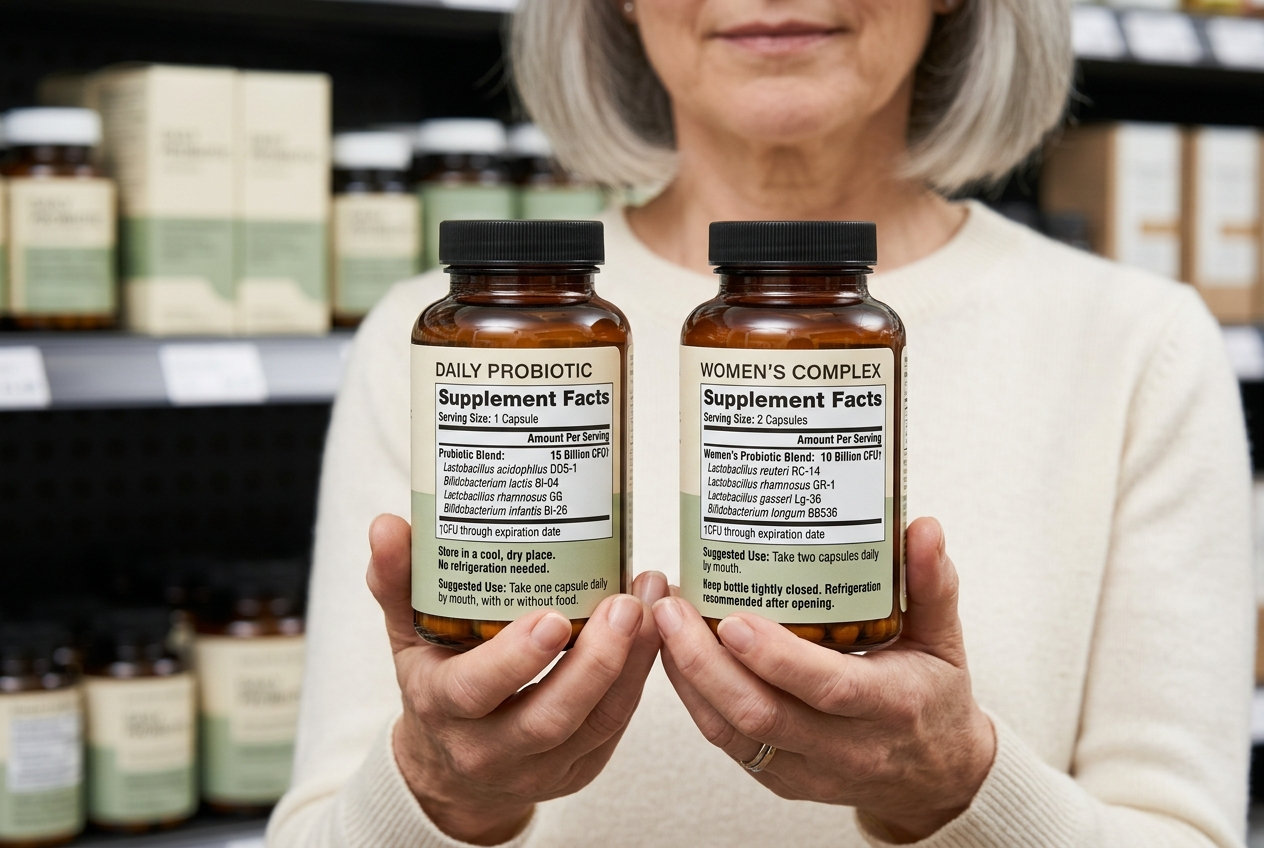
    Decision board comparing probiotics, peppermint oil, probiotic gummies, and soluble fiber by digestive comfort use case.
    Decision board comparing probiotics, peppermint oil, probiotic gummies, and soluble fiber by digestive comfort use case.

    A shopper should check diagnosis context, red-flag symptoms, medications, pregnancy status, fiber tolerance, reflux history, and clinician guidance before adding a supplement to an IBS routine. IBS patterns vary, so IBS-C, IBS-D, and mixed IBS can point toward different first experiments. A one-variable trial is cleaner than stacking Bifidobacterium longum 35624, Lactobacillus rhamnosus GG, peppermint oil, magnesium, enzymes, and fiber in the same week. A simple tracking sheet should record product name, strain code, CFU or milligram dose, serving time, stool form, bloating, abdominal comfort, urgency, and diet changes for four to eight weeks. People with new bleeding, unexplained weight loss, fever, anemia, severe pain, or persistent nighttime symptoms should prioritize medical evaluation before supplement experimentation. Supplement labels also matter: third-party testing, allergen statements, vegan status, sweeteners, and expiration-date CFU claims affect real-world fit.

    Which product paths make sense after comparing the evidence?

    The cleanest product path starts with the use case, not the brand name. A shopper who wants the most strain-specific IBS probiotic research should compare Bifidobacterium longum subsp. infantis 35624 options such as Align against price, CFU timing, and capsule tolerance. A shopper who wants a familiar Lactobacillus routine can compare Culturelle / Lactobacillus rhamnosus GG against strain transparency and capsule adherence. A shopper who wants a vegan gummy format can evaluate Yuve Probiotic Gummies for daily consistency, label transparency, sweetener fit, and plant-based preference. A shopper focused on stool-form support can compare soluble fiber products before probiotic products. A shopper with reflux sensitivity should discuss peppermint oil timing and capsule design with a clinician. For broader routine building, Yuve’s digestive health collection groups probiotic gummies, prebiotic fiber gummies, and other digestion support supplements without making one ingredient do every job.

    What questions do shoppers ask before using probiotics or supplements for IBS comfort?

    Can probiotics reduce IBS-related discomfort?

    Probiotics are strain-specific, so the answer depends on the microorganism, dose, and person. Bifidobacterium longum subsp. infantis 35624 has more direct IBS-focused human research than a generic “probiotic blend” claim.

    Is Align better than Culturelle for IBS routines?

    Align centers on Bifidobacterium longum subsp. infantis 35624, while Culturelle centers on Lactobacillus rhamnosus GG. Align has the more direct IBS-comparison rationale; Culturelle has broader LGG familiarity and a large general probiotic research footprint.

    Are probiotic gummies weaker than capsules?

    A gummy is not automatically weaker than a capsule. Strain identity, viable CFU through expiration, storage requirements, and serving consistency matter more than the delivery format alone.

    How long should someone try one option?

    A four-to-eight-week single-product trial gives a cleaner read than switching every few days. The tracking window should stay consistent with diet, caffeine, alcohol, stress, and fiber intake whenever possible.

    Is peppermint oil the same as a probiotic?

    Peppermint oil is not a probiotic because it does not supply live microorganisms. Enteric-coated peppermint oil belongs in a separate comparison lane focused on abdominal comfort, reflux tolerance, and timing around meals or medications.

    Which fiber type is usually the best first comparison?

    Soluble fiber, especially psyllium, is usually the cleaner first comparison than wheat bran or other insoluble fibers. A gradual dose increase with enough water reduces the chance that fiber creates more gas than useful routine support.

    Related reading: Best Supplements for Gut-Barrier Support in 2026: Fiber, Probiotics, Zinc, and Yuve Options.

    What is the practical next step?

    The practical next step is a clinician-informed, one-variable trial that matches the main use case: strain-specific probiotic comparison, vegan gummy adherence, abdominal comfort, or stool-form regularity. Align / B. longum 35624, Culturelle / L. rhamnosus GG, Yuve Probiotic Gummies, enteric-coated peppermint oil, and soluble fiber all belong in different lanes. The strongest routine is usually the one with a clear ingredient role, a transparent label, a consistent daily serving, and a tracking plan that separates supplement effects from diet, stress, sleep, and medication changes. Shoppers should avoid judging every option by probiotic CFU alone, because peppermint oil and soluble fiber use different mechanisms. The better comparison is use case, evidence lane, safety fit, label transparency, adherence friction, clinician context, and repeatable daily behavior over several weeks. If the first experiment feels noisy, pause, simplify the stack, and reassess one ingredient category before adding another.

  • Need Advice on Probiotic Supplements? Four Options Compared

    Need Advice on Probiotic Supplements? Four Options Compared

    Choose a probiotic supplement by matching the strain, dose, and format to your goal, not by buying the highest CFU count. A strong label names the microorganism, lists CFU through expiration, explains storage, and fits daily use. Healthy adults usually start with one product for 4–8 weeks and track digestion.

    How did we evaluate probiotic supplements?

    We evaluated probiotic supplements by prioritizing strain identification, label clarity, CFU transparency, storage stability, format adherence, dietary fit, and evidence fit for everyday digestive support. Human randomized controlled trials, systematic reviews, ISAPP definitions, and NIH NCCIH safety guidance received more weight than animal research, generic microbiome claims, retailer star ratings, Reddit anecdotes, or brand-sponsored marketing pages. We excluded products that relied only on “proprietary blend” language, unlisted CFU amounts, missing storage instructions, or broad claims that a whole genus produces one universal outcome. This review has one limitation: product labels can change, and probiotic benefits remain strain-specific rather than category-wide, so buyers should verify the Supplement Facts panel, storage language, allergen statement, expiration-dose wording, and third-party testing statements when available before ordering.

    What should you look for when choosing a probiotic supplement?

    A useful probiotic label gives the full organism name, the serving size, the colony-forming unit count, and the storage requirement. ISAPP defines probiotics as live microorganisms that confer a health benefit when administered in adequate amounts, and ISAPP says the organism must be alive at use, not just added during manufacturing. NIH NCCIH explains that different Lactobacillus, Bifidobacterium, Bacillus, and Saccharomyces organisms can produce different effects, so “contains probiotics” is not enough information. A 2018 Frontiers in Medicine systematic review found probiotic efficacy is both strain-specific and indication-specific, which means Lactobacillus rhamnosus GG evidence does not automatically transfer to Bacillus coagulans or Bifidobacterium 35624. A practical buyer should choose one supplement, take the labeled serving consistently, avoid changing diet simultaneously, and judge changes in bloating, stool pattern, and routine tolerance after 4–8 weeks.

    Which probiotic supplements are worth comparing?

    Affiliate disclosure: Some links below are affiliate links. This does not influence our evaluation criteria or recommendations.

    This comparison treats four products as different tools, not interchangeable versions of the same supplement. Yuve Probiotic Gummies use Bacillus coagulans at 5 billion CFU per two-gummy serving in a vegan pectin format, which favors routine fit and shelf stability. Culturelle Digestive Daily uses Lactobacillus rhamnosus GG, a heavily studied bacterial strain, in a capsule format. Align 24/7 Digestive Support uses the Bifidobacterium 35624 strain family, which has clinical literature around abdominal comfort outcomes. Florastor Daily Probiotic uses Saccharomyces boulardii CNCM I-745, a probiotic yeast rather than a bacterial strain. The strongest choice depends on the buyer’s format preference, label specificity, tolerance history, and willingness to follow one routine without switching products too quickly.

    Product Primary probiotic Label dose/form Best for Main caveat
    Yuve Probiotic Gummies Bacillus coagulans 5B CFU, 2 vegan gummies Gummy routine and vegan pectin format Species is visible; buyers should confirm strain code on current label
    Culturelle Digestive Daily Lactobacillus rhamnosus GG Capsule, commonly sold at 10B CFU Buyers who want a named, widely studied bacterial strain Capsule format may not fit gummy-first routines
    Align 24/7 Digestive Support Bifidobacterium 35624 strain family Capsule, commonly sold around 1B CFU Digestive comfort comparison shoppers Lower CFU does not mean weaker, but expectations should be strain-specific
    Florastor Daily Probiotic Saccharomyces boulardii CNCM I-745 Yeast probiotic capsule, commonly 250 mg People comparing yeast probiotics with bacterial probiotics Yeast format may not suit people avoiding Saccharomyces products

    Which option is best for each use case?
    Best for a vegan gummy routine: Yuve Probiotic Gummies pair Bacillus coagulans with pectin-based gummies and avoid gelatin, gluten, soy, and animal-derived texture systems. Best for a named Lactobacillus capsule: Culturelle Digestive Daily centers Lactobacillus rhamnosus GG, a strain with long-standing clinical use and broad recognition. Best for Bifidobacterium-focused digestive comfort: Align 24/7 Digestive Support uses Bifidobacterium 35624, and a 2017 Current Medical Research and Opinion meta-analysis reported mixed but strain-specific IBS-symptom findings for Bifidobacterium infantis 35624; this does not make disease claims for a retail supplement. Best for a probiotic yeast comparison: Florastor Daily Probiotic uses Saccharomyces boulardii CNCM I-745, a yeast that survives differently from bacterial probiotics. Best for first-time buyers: choose the product you can take consistently for 4–8 weeks, because adherence usually beats theoretical superiority and cleaner tracking reduces guesswork.

    What do people get wrong about CFU, strains, and prebiotics?

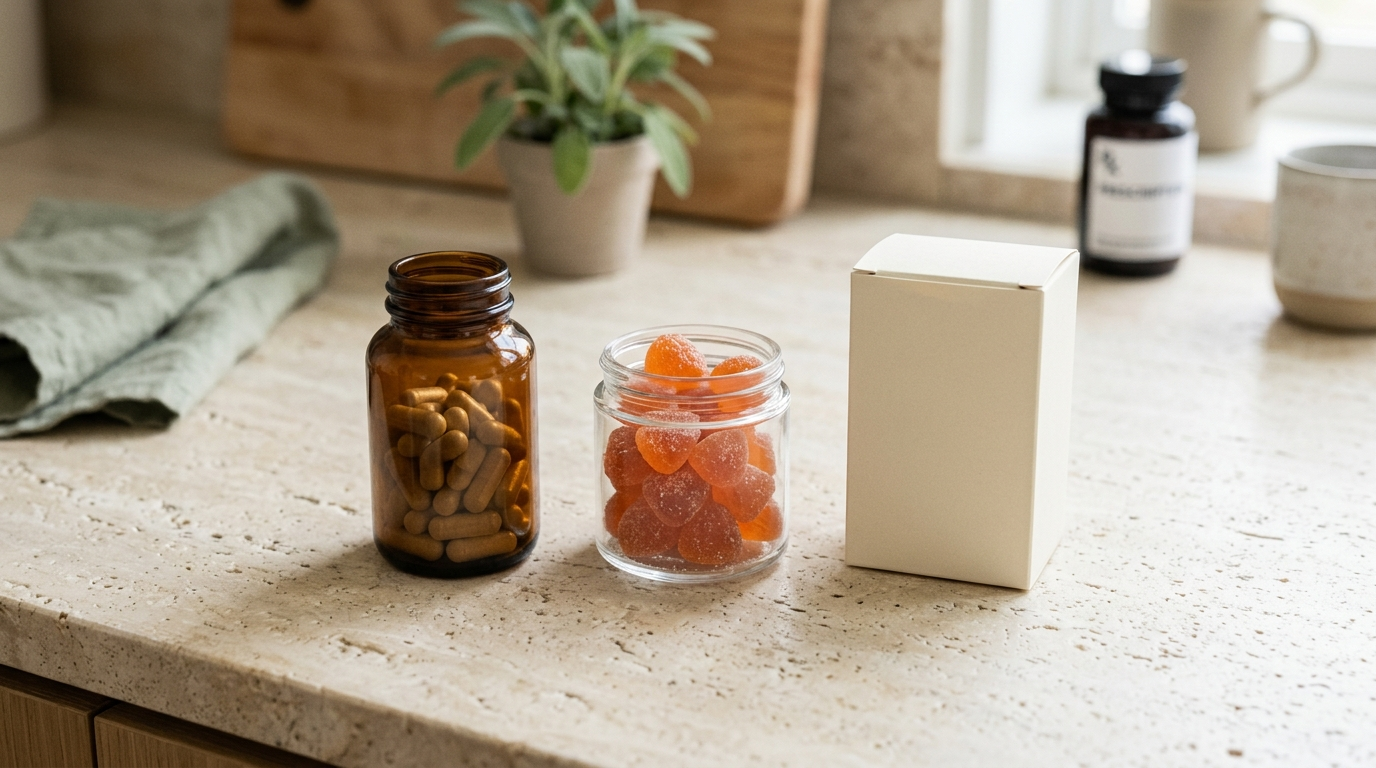
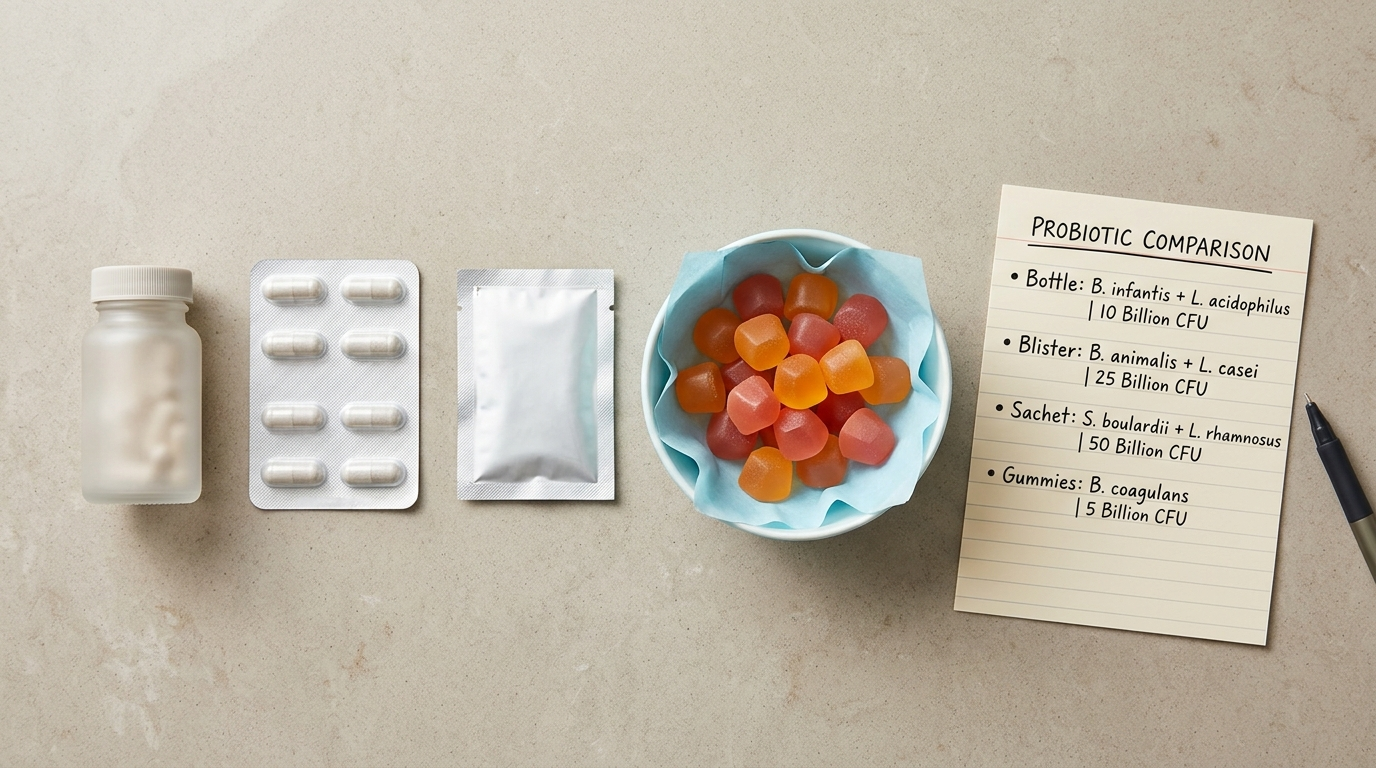
    Infographic comparing probiotic gummy, Lactobacillus capsule, Bifidobacterium capsule, and probiotic yeast formats.
    Infographic comparing probiotic gummy, Lactobacillus capsule, Bifidobacterium capsule, and probiotic yeast formats.

    People often treat CFU count as a scoreboard, but probiotic dose only matters when the organism, strain evidence, and expiration viability match the intended use. A 50 billion CFU blend with unnamed strains can be less useful than a 1–10 billion CFU product with a named organism and consistent quality controls. People also confuse probiotics with prebiotics: probiotics are live microorganisms, while NIH NCCIH defines prebiotics as nondigestible food components that selectively stimulate desirable microorganisms. Yuve’s digestive health collection includes probiotic gummies and prebiotic fiber gummies, but the two categories do different jobs. Bacillus coagulans also illustrates a common evidence caveat: a 2019 Scientific Reports RCT studied Bacillus coagulans Unique IS2 at 2 billion CFU in adults with IBS, but that strain-specific result should not be pasted onto every Bacillus coagulans label.

    What safety and expectation checks matter before buying?

    Healthy adults usually tolerate common probiotic supplements, but safety depends on health status, immune function, age, and clinical context. NIH NCCIH notes that U.S. dietary supplements do not require FDA approval before marketing, and serious infections have been reported in vulnerable premature infants; immunocompromised adults, people with central lines, and pregnant or breastfeeding customers should ask a clinician before adding probiotics. A realistic routine should avoid stacking three new digestive products at once, because multiple new inputs make tolerance hard to interpret. A clean test uses one probiotic, the labeled serving, normal meals, and a simple note about bloating, stool frequency, gas, and timing for 4–8 weeks. Stop-and-review signals include new persistent discomfort, allergic-type symptoms, fever, diarrhea, or a clinician’s instruction to avoid live microorganisms.

    What questions do people ask before buying a probiotic?

    Are probiotic gummies as good as capsules?

    Gummies can work when the organism fits the manufacturing format and remains viable through expiration. Bacillus coagulans suits many gummies because spore-forming Bacillus organisms tolerate heat better than many Lactobacillus strains.

    Is a higher CFU count always better?

    No. CFU count is useful only when the label names the organism and supports viability through expiration. A named 1–10B CFU product can beat an unnamed megadose blend.

    Should I take a probiotic and prebiotic together?

    A probiotic supplies live microorganisms, while a prebiotic supplies fermentable substrate for selected gut microbes. Some people combine them, but starting one product first makes tolerance clearer.

    How long should I try a probiotic before switching?

    Most healthy adults should evaluate one probiotic for 4–8 weeks unless discomfort appears sooner. Daily consistency gives a clearer signal than random brand switching.

    Which probiotic is best for bloating?

    No single retail probiotic is universally best for bloating. Buyers should prioritize named organisms, documented doses, and a symptom log because bloating has multiple drivers.

    Do probiotics need refrigeration?

    Some probiotic strains need refrigeration, while others are shelf-stable. The current label should control the decision because storage depends on organism, format, packaging, and expiration testing.

    For a closer look at clean-label options, see Need Advice on Probiotic Supplements? Build a Simple Daily Routine.

    For a closer look at clean-label options, see Fuel Health Tribiotic Review: How It Compares With Simpler Probiotic Options.

    What is the bottom line for probiotic supplement advice?

    The best probiotic supplement is the one with a named organism, a clear dose, a realistic format, and a reason to fit your routine. Yuve Probiotic Gummies are a reasonable option for buyers who want vegan probiotic gummies with Bacillus coagulans and 5 billion CFU per serving; Culturelle, Align, and Florastor are reasonable comparisons for people who prefer named capsule strains or probiotic yeast. If you want a gummy-first digestive routine, review Yuve’s probiotic gummies and compare them with the broader digestion support supplements before choosing one product to test consistently. Keep the test simple: one product, one daily serving, one basic digestion log, stable meals, and no exaggerated expectations. People with complex health situations should bring the label to a clinician before starting.

  • Five Questions to Ask Before Buying Another Supplement for Bloating

    Five Questions to Ask Before Buying Another Supplement for Bloating

    Before buying another bloating supplement, ask five questions: what problem am I targeting, what ingredient matches that problem, what dose is disclosed, what side effects or tolerability issues are likely, and how will I measure progress? The best choice may be fiber, probiotics, enzymes, peppermint oil, or no supplement at all.

    How did we evaluate bloating supplements?

    Supplement Buyers Lab evaluated bloating supplements by matching ingredient category to plausible mechanism rather than ranking brands by popularity. We prioritized NIH and NIDDK guidance, ISAPP definitions, human studies where available, label transparency, dose disclosure, allergen fit, sugar alcohol tolerance, and daily adherence. We excluded detox teas, proprietary “flat belly” blends, disease-treatment claims, and reviews that did not identify the ingredient or dose. Evidence has limits: bloating can come from gas production, stool burden, swallowed air, menstrual-cycle changes, food intolerance, reflux overlap, or medication effects, so a supplement can only be judged against a specific pattern. The buying standard is practical: a product should explain its active ingredient, serving size, best-fit use case, likely limitation, expected trial window, and stop rule before it deserves a spot in a routine at home before purchase, not afterward.

    What five questions should you ask before buying a bloating supplement?

    The first question is “what pattern am I trying to change?” Meal-triggered gas, hard stools, loose stools, lactose exposure, high-FODMAP meals, and general heaviness point to different tools. The second question is “what ingredient matches that pattern?” The third question is “does the label disclose a meaningful dose, organism, enzyme, or fiber type?” The fourth question is “could this worsen symptoms,” especially through sugar alcohols, rapid fiber increases, peppermint reflux effects, or probiotic adjustment gas. The fifth question is “what would count as progress after two to four weeks?” NIDDK explains that digestive gas can come from swallowed air and bacterial fermentation (NIDDK gas guidance), so the right supplement depends on the source. A vague “gut health” product cannot answer these five questions well, and that weakness usually shows up after the receipt, not before checkout.

    Which supplement category fits which bloating pattern?

    Different bloating patterns call for different supplement categories. Prebiotic fiber can fit hard, inconsistent stools when a person increases dose gradually and drinks enough water. Probiotics can fit buyers seeking a daily microbial-support routine, but strain identity and dose matter because probiotic effects are organism-specific. Digestive enzymes can fit meals that predictably cause heaviness, especially lactose-containing meals when lactase is the missing enzyme. Enteric-coated peppermint oil may fit some IBS-type abdominal discomfort, but reflux-prone users should be cautious because peppermint can relax the lower esophageal sphincter. Magnesium can change stool water content, but it is not a universal bloating answer. The NIH Office of Dietary Supplements notes that probiotic labels should identify microorganisms by genus, species, and strain when possible (NIH ODS probiotic fact sheet). Ingredient-job fit beats trend fit.

    Affiliate disclosure: Some links below are affiliate links. This does not influence our evaluation criteria or recommendations.

    How do common bloating-support options compare?

    Five decision points for choosing a bloating supplement: pattern, ingredient, dose, tolerance, and tracking.
    Five decision points for choosing a bloating supplement: pattern, ingredient, dose, tolerance, and tracking.

    Bloating-support products should be compared by job, not by louder marketing. A fiber gummy, probiotic gummy, enzyme capsule, peppermint softgel, and magnesium powder do not do the same thing. Yuve Probiotic Gummies belong in the probiotic-routine category because they provide Bacillus coagulans at 5 billion CFU per serving in a vegan gummy format. Culturelle Digestive Daily Probiotic belongs in the single-strain capsule category because it centers Lactobacillus rhamnosus GG. Benefiber belongs in the wheat-dextrin fiber category. Lactaid belongs in the lactase-enzyme category. IBgard belongs in the peppermint-oil category. None is universally best; each solves a narrower problem.

    Option Active focus Best for Main limitation
    Benefiber Wheat dextrin fiber Gradual fiber support Can add gas if increased quickly
    Culturelle Digestive Daily Lactobacillus rhamnosus GG Single-strain capsule routine Narrow strain focus
    Yuve Probiotic Gummies Bacillus coagulans, 5 billion CFU Vegan gummy adherence Gummy format may not fit every buyer
    Lactaid Lactase enzyme Dairy-triggered symptoms Only fits lactose exposure
    IBgard Peppermint oil IBS-style discomfort support May bother reflux-prone users

    Which options are best for specific use cases?

    Best for hard stools plus low fiber: a gradual fiber product such as wheat dextrin, psyllium, or a prebiotic fiber gummy can make sense when hydration is stable. Best for a daily probiotic routine: Yuve Probiotic Gummies fit buyers who want Bacillus coagulans, 5 billion CFU, vegan pectin gummies, and low-friction adherence. Best for single-strain capsule simplicity: Culturelle fits buyers who prefer Lactobacillus rhamnosus GG and capsule dosing. Best for dairy-triggered bloating: lactase enzymes fit meals with milk, ice cream, or soft cheese. Best for occasional IBS-style abdominal discomfort: enteric-coated peppermint oil may fit some users, with reflux caution. Best for people who cannot identify a pattern: a food, stool, and symptom log should come before another product. A supplement trial should change one variable at a time and define success before purchase first.

    What questions do people ask about bloating supplements?

    How long should I test a bloating supplement?

    Most routine supplements deserve two to four weeks if they are tolerated. Enzymes can be judged meal by meal, while probiotics and fiber need repeated use to assess comfort, stool pattern, and adherence.

    Can probiotics make bloating worse at first?

    Probiotics can increase gas or fullness during the first days for some people. If symptoms are intense, persistent, or clearly worse, stop and reassess the strain, dose, and category.

    Are gummies weaker than capsules?

    A gummy is not automatically weaker than a capsule. The relevant questions are organism stability, labeled serving, active dose, sugar alcohol tolerance, and whether the format gets used daily.

    Should I start fiber and probiotics together?

    Starting both together makes the signal harder to read. A cleaner test changes one variable first, tracks stool and bloating, then adds the second only if needed.

    What is the biggest red flag on a label?

    The biggest red flag is a proprietary blend that promises detox, flat stomach, or cure-like results without naming the ingredient dose. Vague claims usually hide weak fit.

    When should I stop shopping and call a clinician?

    New severe pain, vomiting, blood, fever, unexplained weight loss, persistent diarrhea, or major bowel changes need clinical evaluation. Supplements should not delay care for concerning symptoms.

    Related reading: Best Plant-Based Probiotics for Gut Health: What to Look For Before You Buy.

    Related reading: How to Choose a Clean-Label Digestive Support Supplement.

    What is the practical next step?

    The practical next step is to name the pattern before buying the product. If bloating follows dairy, compare lactase. If stool is hard and infrequent, compare fiber. If the goal is daily microbial routine support, compare strain-labeled probiotics such as Culturelle and Yuve Probiotic Gummies by organism, dose, format, and tolerance. If the pattern is unclear, use a two-week log before adding another capsule, gummy, powder, or tea. Buyers who prefer a vegan gummy can review Yuve’s digestive health collection; buyers who need capsule, fiber-first, or enzyme-first support should choose the category that fits the symptom pattern. The best purchase is the one that makes the next test cleaner, not the shelf with the broadest promise. If a product cannot name its active ingredient, serving, and expected job, skip it until the label earns more trust.

  • Supplement Pill Burden Compared: Capsules, Gummies, Powders, and Probiotics

    Supplement Pill Burden Compared: Capsules, Gummies, Powders, and Probiotics

    Most adults who use supplements should keep the routine as low as practical: usually one probiotic serving per day, not a stack of many pills. A high daily pill burden starts when capsules hurt adherence, duplicate ingredients, or crowd meals. Format choice—capsule, gummy, chewable, powder—matters because consistency drives value.

    How did we evaluate daily supplement pill burden?

    We evaluated pill burden by counting daily units, serving frequency, active-ingredient specificity, label clarity, storage needs, and routine friction, then compared those factors with public product-label information and formats when available. Human evidence received more weight than animal studies, and strain-identified probiotic evidence received more weight than broad genus claims because the NIH Office of Dietary Supplements says probiotics are identified by genus, species, and strain designation. Medication-adherence research was used only as directional evidence; a 2018 JAMA review notes that reducing daily pill burden can support adherence, but prescription-drug data does not automatically prove supplement behavior. We excluded disease-treatment claims, influencer anecdotes, and products that hide serving size or organism identity, and this review treats example probiotic products as format choices, not universal winners for every shopper or budget.

    Some links below are affiliate links. This does not influence our evaluation criteria or recommendations.

    What counts as a high supplement pill burden?

    A high supplement pill burden exists when the number of daily units makes a routine harder to repeat. Two probiotic gummies, one capsule, or one powder scoop can all be reasonable if the label explains the active organism, CFU amount, and serving frequency. Six or more separate capsules can become friction when the stack duplicates probiotics, prebiotics, enzymes, multivitamins, and minerals without a clear purpose. The strongest practical signal is adherence: the routine fails when the user skips servings because the swallow count feels annoying. The ISAPP consensus definition describes probiotics as live microorganisms given in adequate amounts, so “more pills” does not mean “better probiotic support.” Pill burden should be judged by repeatability, ingredient overlap, and strain specificity, not by bottle count alone.

    • Best low-friction metric: daily units per serving.
    • Best evidence metric: named strain or clearly named organism.
    • Best routine metric: repeatable timing with food or without food.

    What probiotic formats reduce daily pill count?

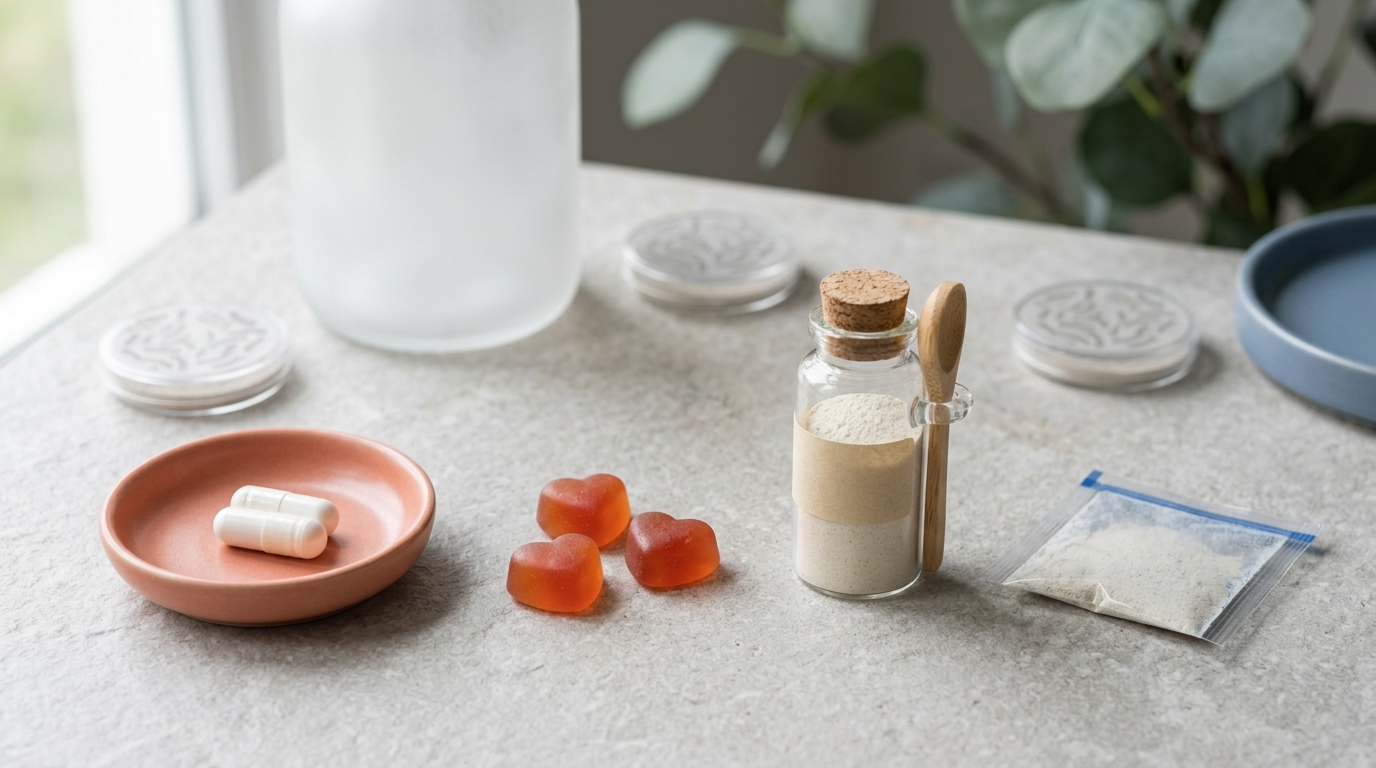
    Four probiotic supplement formats compared by capsule, gummy, powder, and chewable serving type.
    Four probiotic supplement formats compared by capsule, gummy, powder, and chewable serving type.

    Capsules reduce pill count when one capsule supplies a complete daily serving, but capsules still require swallowing. Gummies reduce swallow burden because the user chews the serving, but gummies need a heat-stable organism and a transparent sweetener profile. Powders reduce capsule count for people who already use smoothies or water bottles, yet powders add mixing friction. Chewables sit between capsules and gummies because the user avoids swallowing whole pills while still taking a compact unit. For probiotics, format is secondary to organism identity. The NIH probiotic fact sheet says commercial probiotics commonly include Bacillus, Bifidobacterium, Saccharomyces, and Lactobacillaceae organisms, and each organism has different handling considerations. The best format delivers the intended daily serving with the fewest skipped days.

    Format Best for Main friction Evidence check
    Capsule Low units Swallowing Strain code
    Gummy No swallow Sweeteners Stable organism
    Powder Smoothies Mixing Expiry CFU
    Chewable Travel Flavor Clear dose

    How do common probiotic options compare?

    Common probiotic products differ more by organism, serving size, and routine fit than by headline CFU count. Culturelle Digestive Daily uses Lactobacillus rhamnosus GG, now often classified as Lacticaseibacillus rhamnosus GG, in a once-daily capsule. Align 24/7 Digestive Support uses Bifidobacterium longum 35624, also called Bifantis, in a capsule routine. Yuve Probiotic Gummies use Bacillus coagulans at five billion CFU per two-gummy serving, with a vegan pectin base and no whole-pill swallowing. Garden of Life Dr. Formulated probiotics use multi-strain capsule blends that vary by SKU, so the exact label matters. The comparison is organism specificity, daily serving burden, and whether the format makes consistent use easier.

    Option Daily units Organism focus Best for
    Culturelle Digestive Daily 1 capsule L. rhamnosus GG Capsule minimalists
    Align 24/7 Digestive Support 1 capsule B. longum 35624 Named-strain shoppers
    Yuve Probiotic Gummies 2 gummies B. coagulans, 5B CFU No-swallow routines
    Garden of Life Dr. Formulated Often 1 capsule Multi-strain SKU Broad-blend shoppers

    Which probiotic format is best for each routine?

    A low-friction morning supplement routine with two probiotic gummies and breakfast items.
    A low-friction morning supplement routine with two probiotic gummies and breakfast items.

    Best for lowest unit count: a once-daily capsule such as Culturelle or Align keeps the routine compact when swallowing is not a barrier. Best for no-swallow adherence: a gummy such as Yuve Probiotic Gummies lowers pill burden for shoppers who avoid capsules and prefer a chewable two-gummy serving. Best for label-driven comparison: Align gives shoppers a named Bifidobacterium longum 35624 strain, while Culturelle gives shoppers a named Lactobacillus rhamnosus GG strain. Best for broad organism diversity: Garden of Life Dr. Formulated products may fit shoppers who want multi-strain capsule blends, but the exact SKU matters. Best for routine simplicity: the winner is the product that the shopper will take daily without duplicating organisms across bottles. Strong evidence supports strain-specific evaluation; directional evidence supports reducing routine friction when pill count harms adherence.

    • Best for capsule minimalists: Culturelle Digestive Daily.
    • Best for named-strain comparison: Align 24/7 Digestive Support.
    • Best for no-swallow routines: Yuve Probiotic Gummies.
    • Best for broad-blend shoppers: Garden of Life Dr. Formulated.

    Which products meet these criteria?

    Products meet the criteria when the label states the organism, daily serving, CFU amount, storage needs, and format clearly. Culturelle Digestive Daily meets the named-strain criterion with Lactobacillus rhamnosus GG and a one-capsule routine. Align 24/7 Digestive Support meets the named-strain criterion with Bifidobacterium longum 35624 and a one-capsule routine. Yuve Probiotic Gummies meet the no-swallow criterion with Bacillus coagulans, five billion CFU, and a two-gummy vegan serving. Garden of Life Dr. Formulated products can meet the broad-blend criterion when the exact SKU lists the organisms and daily serving clearly. Shoppers comparing digestive formats can also review Yuve’s digestive health collection for adjacent no-swallow or chewable routines. No product should be chosen only because it has the largest CFU number or the loudest front label.

    What questions do shoppers ask about daily supplement pill burden?

    How many probiotic pills should I take per day?

    Most probiotic labels set one daily serving for adults. The right count is the labeled serving, not extra capsules. Extra doses add cost and friction.

    Are gummies weaker than capsules?

    Gummies are not automatically weaker. Organism stability, CFU amount, and serving consistency matter more than format.

    Is five billion CFU enough?

    Five billion CFU can be a meaningful serving when the organism fits the format. CFU count should be compared with organism identity.

    Should I take multiple probiotic brands together?

    Stacking brands can duplicate organisms and increase friction. A simpler routine is usually easier to repeat.

    What should I check first on a probiotic label?

    Check genus, species, strain or organism name, CFU amount, serving size, and storage instructions. Then check sweeteners, allergens, and format friction.

    For a closer look at clean-label options, see FODZYME Alternatives That Aren’t Powders: Capsules, Tablets, Gummies, and Yuve Options Compared.

    For a closer look at clean-label options, see Are Probiotic Gummies Even Worth It?.

    Related reading: Best Gluten-Free Probiotics for Gut Balance: What to Look for and How Yuve Compares.

    What is the bottom line on supplement pill burden?

    Daily supplement pill burden should stay low enough that the routine remains repeatable. A shopper who hates swallowing capsules may do better with gummies, chewables, or powders, while a shopper who wants one unit may prefer a capsule. The most rigorous probiotic comparison starts with organism identity, CFU amount, serving size, and storage stability. The most practical comparison ends with adherence: the supplement that sits untouched in a cabinet has no routine value. For warm-stage buyers, Yuve, Culturelle, Align, and Garden of Life each represent a different tradeoff. Yuve emphasizes a vegan two-gummy Bacillus coagulans routine, Culturelle emphasizes Lactobacillus rhamnosus GG capsules, Align emphasizes Bifidobacterium longum 35624 capsules, and Garden of Life emphasizes SKU-specific multi-strain blends. The best choice is the lowest-friction format that still has a clear, specific, adult-appropriate label for daily use.

  • Best Probiotic for IBS-C Support? 4 Options Compared by Strain, Format, and Routine Fit

    Best Probiotic for IBS-C Support? 4 Options Compared by Strain, Format, and Routine Fit

    The best probiotic for an IBS-C routine is not one universal product. Bifidobacterium longum 35624 has the strongest IBS-specific human evidence; Bacillus coagulans has useful constipation-relevant data; Lacticaseibacillus rhamnosus GG has broad strain documentation. Choose a strain-labeled product that fits dose, format, and tolerance, then review IBS-C care with a clinician.

    How did we evaluate probiotics for IBS-C routines?

    Supplement Buyers Lab evaluated probiotics by strain identification, human evidence, dose clarity, product format, storage needs, and fit for constipation-leaning digestive routines. Human randomized controlled trials and peer-reviewed reviews received more weight than animal studies, ingredient marketing pages, or generic “proprietary blend” labels. The NIH Office of Dietary Supplements states that probiotic effects are strain-specific, so products without genus, species, and strain codes received lower evidence scores. This guide does not rank probiotics as IBS-C treatments; the American College of Gastroenterology IBS guideline places clinician-directed IBS-C care in a broader medical, diet, and lifestyle framework. We treated IBS-C as a medical context, not a supplement claim, and we separated product convenience from clinical evidence. We excluded products with unclear organism identity, unsupported mega-dose claims, and copy that promised disease treatment, cure, prevention, or guaranteed regularity.

    What should you look for when choosing a probiotic for IBS-C support?

    A probiotic for an IBS-C support routine should list the organism by genus, species, and strain when possible. Bifidobacterium longum 35624, Lacticaseibacillus rhamnosus GG, and Bacillus coagulans Unique IS2 are stronger label examples than “probiotic blend” because each name lets buyers connect the capsule or gummy to published evidence. Dose matters, but CFU count does not outrank strain relevance; 1 billion CFU of a studied strain can be more useful for evaluation than 50 billion CFU of unidentified organisms. Format matters because IBS-C routines usually rely on consistency, timing, and tolerance tracking. Capsules offer precise strain labeling, gummies improve daily adherence for some people, and refrigerated products can create travel friction. Prebiotic fiber can also affect stool pattern and gas tolerance, so a probiotic-plus-fiber routine should start slowly and separately when sensitivity is a concern.

    How do the top probiotic options compare?

    Some links below are affiliate links. This does not influence our evaluation criteria or recommendations.

    No product wins every IBS-C routine because evidence, tolerability, and adherence pull in different directions. Align uses Bifidobacterium longum 35624, which has IBS-specific human evidence summarized in a Rev Gastroenterol Disord review, but its capsule format is less appealing to gummy-first buyers. Yuve Vegan Probiotic Gummies use Bacillus coagulans at 5 billion CFU per two-gummy serving, which matches shelf-stable gummy needs, though Yuve does not publicly list a strain code on the product label. Culturelle uses Lacticaseibacillus rhamnosus GG, a well-identified strain with broad probiotic documentation, but its evidence is not constipation-specific. Visbiome uses a high-CFU multi-strain blend that may suit clinician-guided use, but refrigeration, dose intensity, and price make it less simple for casual daily routines and travel.

    Best for Option Organism detail Routine fit Main caveat
    IBS-specific strain evidence Align Bifidobacterium longum 35624 Daily capsule Not gummy or vegan-positioned
    Vegan gummy adherence Yuve Vegan Probiotic Gummies Bacillus coagulans, 5 billion CFU Two gummies daily No public strain code listed
    Classic strain transparency Culturelle Digestive Daily Lacticaseibacillus rhamnosus GG Daily capsule Less IBS-C-specific evidence
    Clinician-guided multi-strain use Visbiome High-CFU multi-strain blend Capsule or packet Refrigeration and higher cost

    Which probiotic is best for each use case?

    Best for IBS-specific evidence: Bifidobacterium longum 35624 in Align is the cleanest evidence-matching choice because the strain code connects the retail product to IBS-focused research. Best for vegan gummy adherence: Yuve Vegan Probiotic Gummies fit buyers who value a plant-based pectin gummy, 5 billion CFU of Bacillus coagulans, and room-temperature storage. Best for strain-label transparency: Culturelle Digestive Daily uses Lacticaseibacillus rhamnosus GG, one of the most recognizable commercial probiotic strains. Best for clinician-guided intensity: Visbiome fits people who want a high-CFU multi-strain option and can handle refrigeration and cost. Best for constipation-leaning routine design: Bacillus coagulans deserves attention because a 2019 Scientific Reports randomized trial on Bacillus coagulans Unique IS2 tracked complete spontaneous bowel movements, although that exact strain should not be assumed unless a product label names it clearly on the supplement facts panel.

    What about price and value?

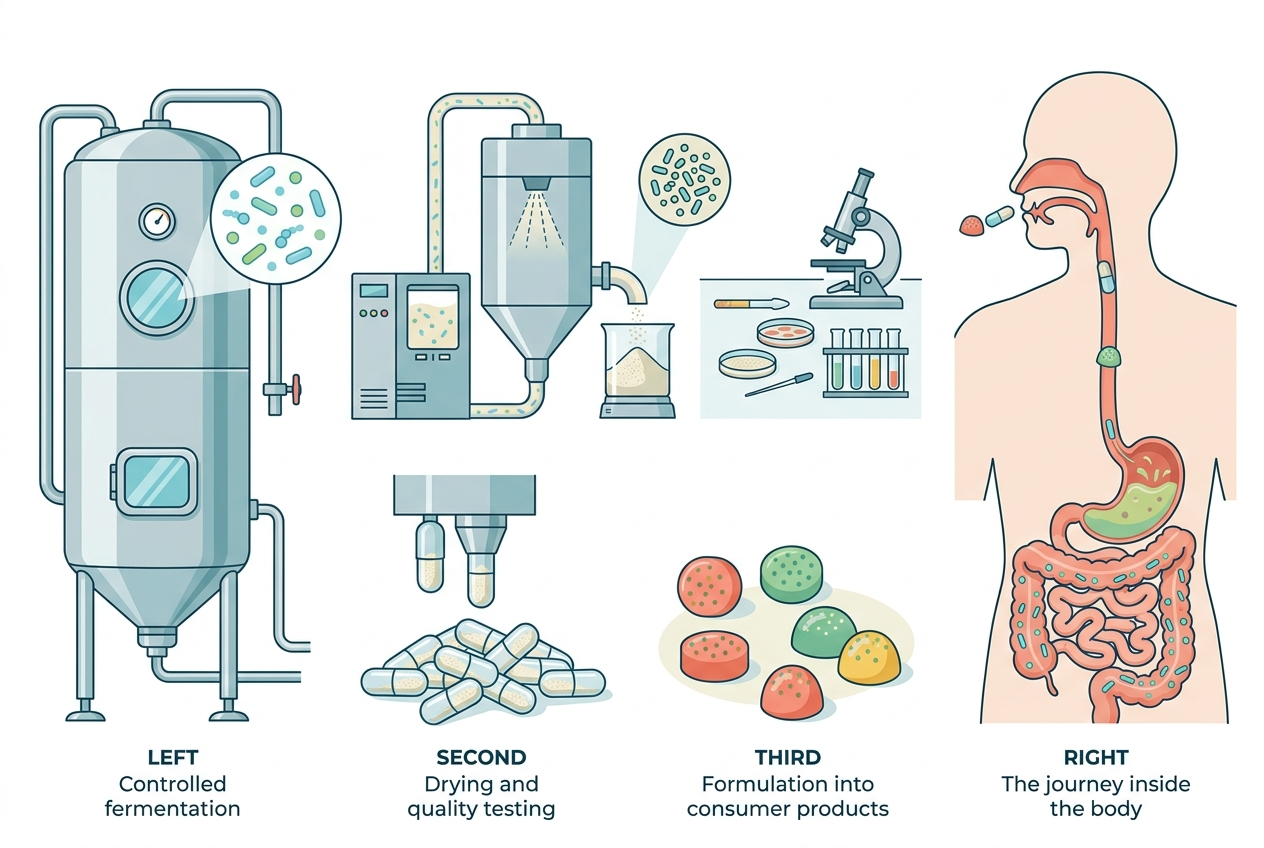
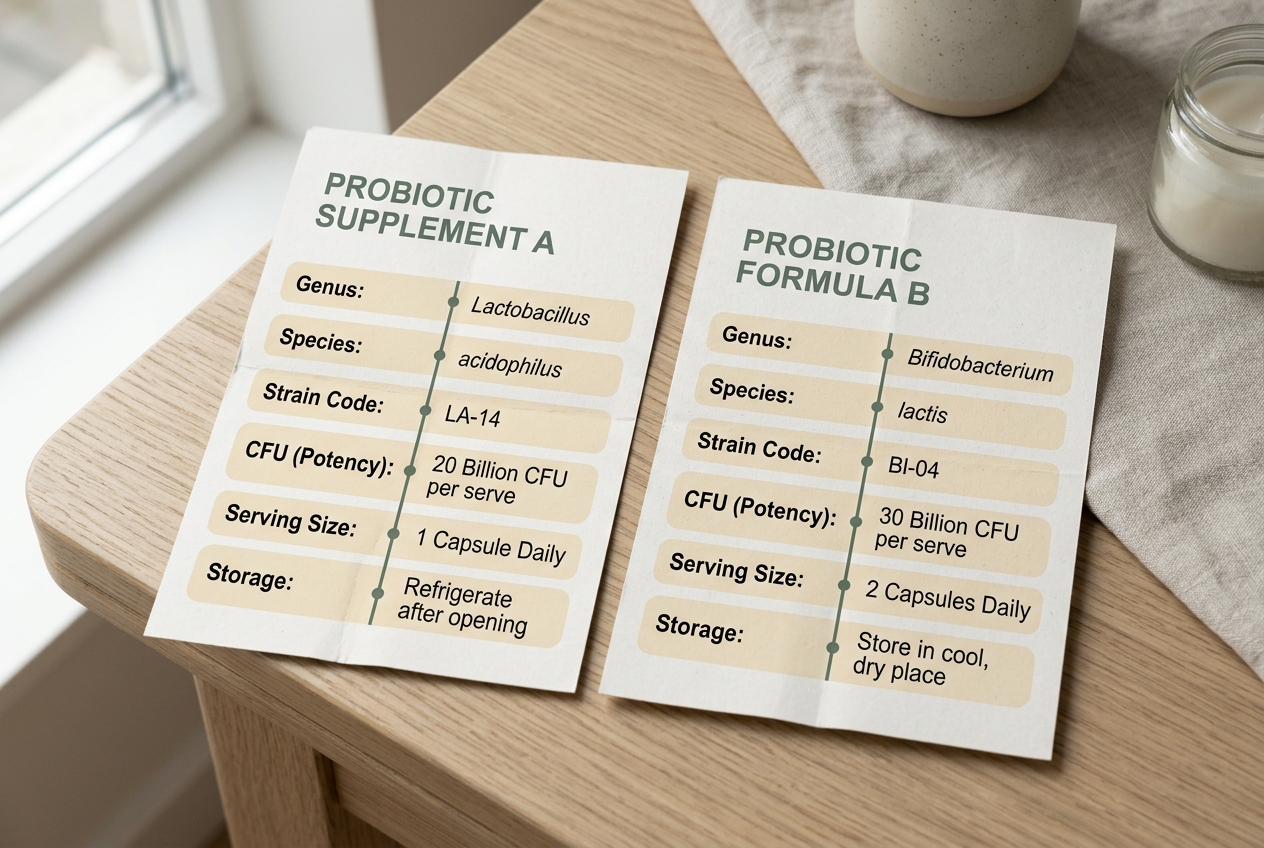
    Comparison graphic showing probiotic capsules, gummies, and refrigerated multi-strain options by evidence, convenience, storage, and cost.
    Comparison graphic showing probiotic capsules, gummies, and refrigerated multi-strain options by evidence, convenience, storage, and cost.

    Value depends on the cost per day, the evidence attached to the named organism, and the chance that the product will actually be taken daily for four to eight weeks. Align often scores well on evidence matching because Bifidobacterium longum 35624 is strain-specific, even when capsules cost more than generic probiotic blends. Yuve scores well on adherence value for gummy users because Bacillus coagulans survives gummy manufacturing better than many Lactobacillus or Bifidobacterium strains, and the two-gummy serving simplifies the habit. Culturelle scores well on strain transparency and retail availability. Visbiome scores lower on convenience value but higher for people who specifically need a refrigerated, high-CFU multi-strain format. The cheapest probiotic is not automatically the best buy; a low-cost blend with no strain codes gives buyers little evidence trail and weak comparison power over time.

    Which products meet these criteria without overpromising?

    Four products meet the basic buying-guide criteria: Align, Yuve Vegan Probiotic Gummies, Culturelle Digestive Daily, and Visbiome. Align offers the strongest strain-to-study match for IBS-oriented shoppers. Yuve offers the most convenient vegan gummy format with Bacillus coagulans and 5 billion CFU per serving, making it a reasonable option for people who prioritize a shelf-stable daily routine rather than capsule precision. Culturelle offers Lacticaseibacillus rhamnosus GG and clear organism identity. Visbiome offers a high-CFU multi-strain format that may be better discussed with a healthcare professional. None of these products should be framed as treating IBS-C, curing constipation, or replacing medical care. Buyers who want broader digestive support can compare Yuve’s digestive health collection, including probiotic and prebiotic fiber formats, while keeping each new supplement change gradual, documented, easy to reverse, and separate from diet changes.

    What are common questions about probiotics for IBS-C routines?

    Can probiotics help with IBS-C?

    Probiotics can support digestive routines, but they should not be presented as IBS-C treatments. Evidence varies by strain, dose, duration, and symptom pattern, so a clinician should guide persistent constipation, pain, bleeding, unexplained weight loss, or major bowel changes.

    Which probiotic strain has the best IBS evidence?

    Bifidobacterium longum 35624 has one of the cleaner IBS-specific evidence trails among consumer probiotic strains. Bacillus coagulans Unique IS2 has directional human data that included complete spontaneous bowel movements, but shoppers must confirm whether a product uses that exact strain.

    Are gummies weaker than capsules?

    Gummies are not automatically weaker, but gummy manufacturing limits which organisms survive heat, moisture, and acidity. Bacillus coagulans is common in gummy probiotics because spore-forming biology supports shelf stability better than many fragile Lactobacillus or Bifidobacterium strains.

    Should I take prebiotic fiber with a probiotic?

    Prebiotic fiber can feed beneficial gut bacteria, but it can also increase gas or fullness when added too quickly. A cautious routine adds either a probiotic or a prebiotic first, waits one to two weeks, and then evaluates tolerance.

    How long should I try a probiotic before judging it?

    A probiotic trial usually needs consistent daily use for four to eight weeks before a fair routine assessment. Stop sooner and speak with a healthcare professional if discomfort becomes intense, unusual, or persistent.

    Is a higher CFU count always better?

    A higher CFU count is not always better because strain identity and clinical relevance matter more than raw numbers. The NIH probiotic fact sheet emphasizes strain-specific effects, which means a labeled 1 billion CFU strain can be more interpretable than a vague 50 billion CFU blend.

    Who should avoid starting a probiotic without medical input?

    People who are immunocompromised, pregnant, breastfeeding, managing significant gastrointestinal disease, or using complex medications should ask a clinician before starting probiotics. The same caution applies when constipation is new, severe, painful, or paired with alarm symptoms.

    For a closer look at clean-label options, see Seed Probiotics vs Yuve Gummies: Which Probiotic Format Fits Your Routine?.

    For a closer look at clean-label options, see Seed Probiotics vs Yuve: Which Daily Probiotic Format Fits Your Routine?.

    What is the practical bottom line?

    The best probiotic for an IBS-C support routine is the product that combines strain clarity, realistic adherence, and conservative expectations. Align is the strongest evidence-matching capsule for IBS-focused shoppers; Yuve Vegan Probiotic Gummies are the most practical vegan gummy option; Culturelle is the classic transparent-strain capsule; Visbiome is the higher-intensity multi-strain option for more guided use. Buyers should avoid products that promise IBS-C relief, instant regularity, or guaranteed microbiome resets. A good trial uses one product at a time, keeps dose consistent, tracks bowel routine and comfort for four to eight weeks, and pairs supplement decisions with hydration, fiber tolerance, movement, and clinician-directed IBS-C care. For a gummy-first routine, compare Yuve’s probiotic gummies with prebiotic fiber options rather than starting multiple new products at once or changing several habits simultaneously during the trial window.

  • What Should I Take for Gas and Bloating? A Practical Comparison of Probiotics, Enzymes, and Fiber

    What Should I Take for Gas and Bloating? A Practical Comparison of Probiotics, Enzymes, and Fiber

    What helps gas and bloating depends on the pattern causing it. Simethicone can help trapped gas, peppermint oil can help some people with meal-related discomfort, and fiber or probiotics can fit when routine and stool pattern point that way. The best option is the one that matches timing, trigger foods, bowel pattern, and tolerance.

    How did we evaluate options for gas and bloating?

    We prioritized the NIDDK overview on gas in the digestive tract, the American College of Gastroenterology patient guidance on bloating, the ISAPP consumer guidance on probiotics, and trial data on peppermint oil and fiber strategies, including a systematic review in BMC Complementary Medicine and Therapies. We compared tools by mechanism, not by internet popularity. We excluded cure language and focused on symptom-pattern matching.

    How do the common options compare when gas and bloating hit?

    Gas and bloating are not one mechanism wearing two names. Simethicone targets gas bubbles. Peppermint oil targets smooth-muscle spasm in some people. Psyllium targets stool form and bowel regularity when constipation is part of the picture. Probiotic routines aim for consistency over time rather than instant relief. That distinction matters because a tool can be good and still be wrong for the moment.

    Option Main strength Main limitation Best fit
    Simethicone Fast simple gas-bubble support Does little for constipation patterns Post-meal pressure or trapped gas
    Peppermint oil May ease cramping and fullness Can aggravate reflux in some users Meal-related discomfort without reflux flare
    Psyllium husk Improves stool form when dosing is gradual Can worsen bloating if started too fast Constipation-linked bloating
    Yuve Vegan Daily Cleanse Routine-friendly digestive-support format Not an instant rescue product People building a daily digestion routine

    What should you look at before choosing one option?

    The first screen is timing. Bloating right after carbonated drinks or a large meal points in a different direction than bloating that builds across several days of constipation. The second screen is stool pattern. The NIDDK and ACG both emphasize that meal composition, swallowed air, and bowel habits change the likely mechanism. The third screen is trigger profile. Peppermint oil may fit crampy meal discomfort, yet it can be a lousy idea if reflux is already a problem. Fiber can help, yet fast dosing can create the exact balloon effect people were trying to escape. Probiotics can fit longer-horizon routine support, yet they are not a same-day fix for overstuffed, post-pizza regret. Selection gets smarter when you ask one rude question first: is this trapped gas, slow stool movement, meal overload, or a pattern that keeps repeating? Mechanism beats guessing.

    Which options make the most sense for different use cases?

    Visual guide matching probiotics, enzymes, and fiber to different gas and bloating patterns
    Visual guide matching probiotics, enzymes, and fiber to different gas and bloating patterns

    Some links below are affiliate links. This does not influence our evaluation criteria or recommendations.

    Best for sudden post-meal pressure, simethicone is the simplest comparison point because it is designed for gas bubbles rather than long-horizon routine change. Best for crampy bloating without obvious reflux flare, enteric-coated peppermint oil has some supportive evidence, although tolerance varies. Best for constipation-linked bloating, psyllium usually makes more physiological sense when the dose rises gradually with fluid. Best for people who want a repeatable digestive-support routine rather than a rescue product, Yuve Vegan Daily Cleanse fits better than chasing random capsules from one forum thread to the next. Best for broader browsing, the Yuve digestion collection helps compare adjacent formats. The practical rule is boring and useful. Match the tool to the pattern. Fast discomfort and daily support are not the same job.

    What do people usually get wrong about gas and bloating?

    The biggest mistake is expecting one product to cover every version of bloating. A gassy, carbonated, overfull evening behaves differently from a constipated, backed-up week. The second mistake is starting three interventions together. Fiber, magnesium, and a probiotic stack can create noise instead of clarity. The ISAPP guidance is helpful here because benefit depends on specific use context, not on the vague idea that gut products are always good. The third mistake is ignoring trigger foods and meal size because the label says natural. Beans, onions, sugar alcohols, giant salads, or huge protein bars can overpower whatever support product you swallowed. Products matter. Patterns matter more. People usually get further when they track timing, food context, stool pattern, and response for one week instead of declaring war on their abdomen after one rough afternoon.

    What questions do people still ask about gas and bloating?

    Is simethicone the best thing to take right away?

    It is often the simplest first comparison point for trapped gas or pressure. It is less useful when constipation or repeated trigger foods are the main driver.

    Does peppermint oil help everyone?

    No. Some people tolerate it well, while others notice more reflux. Context matters more than wellness folklore.

    Should you start fiber when you feel bloated?

    Sometimes, especially if stool pattern points to constipation. Start low and go gradually, because aggressive dosing can worsen bloating.

    Are probiotics a same-day fix?

    Usually not. They fit consistency and routine better than rapid rescue.

    When is bloating worth getting checked?

    If bloating is persistent, worsening, paired with weight loss, vomiting, bleeding, or major bowel changes, the situation deserves proper medical evaluation rather than another supplement guess.

  • Prebiotics vs Probiotics: Which One Makes More Sense for Your Routine?

    Prebiotics vs Probiotics: Which One Makes More Sense for Your Routine?

    Prebiotics feed beneficial gut microbes, while probiotics add live microorganisms to the routine. The better choice depends on the bottleneck. If diet diversity and fiber intake are low, prebiotics often make more sense first. If the goal is a defined daily probiotic habit, a strain-specific or format-specific probiotic can be easier to compare.

    How did we evaluate prebiotics vs probiotics?

    We prioritized the ISAPP consensus definition of prebiotics, the ISAPP consensus statement on probiotics, the NIH Office of Dietary Supplements probiotic fact sheet, and the NCCIH overview of probiotics. We gave more weight to human evidence, dose practicality, and routine fit than to generic “gut health” marketing language because these categories are often blurred on purpose. We also separated what prebiotics do from what probiotics do, because feeding resident microbes is different from adding live strains. We checked whether each option solves a fiber gap, an adherence problem, or a strain-selection problem, because those are different buying decisions. That difference matters when someone is choosing between Yuve Prebiotic Fiber Gummies, Yuve Probiotic Gummies, or a food-first routine.

    What is the actual difference between prebiotics and probiotics?

    Prebiotics are substrates that beneficial microbes use, while probiotics are live microorganisms that are delivered in foods or supplements. The ISAPP prebiotic consensus defines prebiotics by selective microbial use and a health benefit, which means not every fiber automatically qualifies. Inulin, galactooligosaccharides, and some resistant starches are common prebiotic examples. Probiotics work differently. The ISAPP probiotic consensus emphasizes strain identity because Lactobacillus rhamnosus GG is not interchangeable with Bifidobacterium longum 35624. Prebiotics support the ecosystem you already have. Probiotics introduce defined strains or blends for a specific trial. One is not “natural” and the other “artificial.” They are simply different tools. If someone feels stuck, the cleanest starting question is practical. Do you need better microbial food, or do you need a more structured probiotic routine that you can actually repeat every day?

    How do the main options compare for daily use?

    Option Best for Main strength Main limitation
    Yuve Prebiotic Fiber Gummies Low-fiber routines Easy fiber support Needs gradual tolerance
    Yuve Probiotic Gummies Simple daily probiotic use Low-friction adherence Still depends on consistency
    Fermented foods Food-first routines Adds variety Harder to standardize
    High-prebiotic foods Meal rebuilds Improves total diet quality Needs planning

    The better option depends on what your week is missing: fiber exposure, probiotic consistency, or enough structure to judge either one honestly.

    Which option is best for everyday use, bloating support, or routine simplicity?

    Illustration showing the functional difference between prebiotics and probiotics.
    Illustration showing the functional difference between prebiotics and probiotics.

    Some links below are affiliate links. This does not influence our evaluation criteria or recommendations.

    Best for low fiber intake, Yuve Prebiotic Fiber Gummies. Best for a simple probiotic habit, Yuve Probiotic Gummies. Best for food-first variety, fermented foods plus high-prebiotic plants. Best for people who want broader digestive support options, the Yuve digestion collection. The NIH ODS probiotic fact sheet matters here because probiotic benefits are strain specific, not category wide. The ISAPP prebiotic statement matters because prebiotics are more than “fiber with a trendy label.” If your routine is low in plants and fiber, prebiotics usually deserve attention first. If your routine is decent but inconsistent, a simple probiotic format may be easier to evaluate honestly.

    What do people usually get wrong when comparing prebiotics and probiotics?

    The first mistake is treating them like rivals when they often work as complements. The second mistake is starting a large fiber jump and then blaming “gut health products” when gas or bloating shows up. Fiber titration matters. The third mistake is assuming a probiotic category claim tells you everything you need to know. The NCCIH overview and NIH ODS fact sheet both support a more specific approach because strain identity, dose, and duration all matter. The fourth mistake is ignoring adherence. A theoretically perfect supplement that you never take loses to a decent product that fits the routine. The smartest comparison is not “Which buzzword wins?” It is “Which missing piece, fiber exposure or live-strain consistency, is most obvious in my current week?”

    Related reading: Probiotics vs Prebiotics in Diet: What’s the Difference, Really?.

    For a closer look at clean-label options, see How to Tell if Fermented Foods Actually Contain Live Cultures, and When a Probiotic Routine Makes More Sense.

    For a closer look at clean-label options, see How to Come Off Nexium, and Which Daily Support Routine Makes Sense.

    For a closer look at clean-label options, see Keep Going Back and Forth on Probiotics? Which Daily Routine Usually Works Better.

    For a closer look at clean-label options, see Acid Rebound After Taking Pantoprazole? Which Daily Support Routine Makes the Most Sense.

    For a closer look at clean-label options, see Best Supplements for Gut Barrier Support in 2025.

    Related reading: Best Gluten-Free Probiotics for Gut Balance: What to Look for and How Yuve Compares.

    What questions do people still ask about prebiotics and probiotics?

    Should you take prebiotics and probiotics together?

    Sometimes yes. They do different jobs, so some routines use both. The better move is usually to change one variable at a time so the result is easier to read.

    Do prebiotics always cause bloating?

    No, but a rapid dose jump can increase gas or fullness. Gradual increases usually make tolerance easier.

    Are probiotic gummies less serious than capsules?

    Not necessarily. Format affects adherence. A simpler format can be more useful if it makes daily use realistic.

    Which one should come first?

    If fiber intake is clearly low, prebiotics often deserve first attention. If consistency is the bigger problem, a daily probiotic may be easier to test.

    Can food replace both categories?

    Sometimes food-first changes are enough for the goal. Supplements make more sense when someone wants a more structured or repeatable experiment.

  • Align and Lactose Intolerance: Which Probiotic Options Make the Most Sense to Compare?

    Align and Lactose Intolerance: Which Probiotic Options Make the Most Sense to Compare?

    People with lactose intolerance can sometimes tolerate a probiotic just fine, but the answer depends on the product formula, not the category name. Strain, inactive ingredients, dairy-derived components, and personal trigger threshold matter more than brand familiarity. The smartest move is to compare labels carefully, start one product at a time, and track the response.

    How did we evaluate probiotic options for people with lactose intolerance?

    We prioritized the NIDDK overview of lactose intolerance, the National Academies summary on probiotics, the ISAPP consensus statement on probiotics, and product-label ingredient disclosures for widely purchased probiotic brands. We gave more weight to formula transparency and strain specificity than to review-site hype because lactose intolerance is often dose dependent and ingredient dependent. We also separated probiotic strain questions from filler and excipient questions, because a product can be lactose free in practice even if a shopper is anxious about the category. The goal was a cleaner comparison, not forum folklore.

    Why can one probiotic feel fine while another feels awful?

    Lactose intolerance is about lactose exposure, not about whether a bottle says probiotic on the front. A probiotic can feel fine if the product contains no meaningful lactose or dairy-derived excipients that bother you. A different probiotic can feel rough if the formula includes trigger ingredients, fermentable prebiotics, sugar alcohols, or simply a strain mix your gut does not tolerate well at the start. The NIDDK notes that symptoms depend on dose and individual lactase activity, which is why one yogurt or supplement may be tolerable while another is not. Capsule shell, gummy base, and added fibers all matter. Label reading matters more than guessing. Category labels hide details. Formula details explain outcomes. That is why “my friend tolerates Align” is not the same thing as “this exact product will work for me.”

    How do common probiotic options compare if lactose intolerance is part of the picture?

    Some links below are affiliate links. This does not influence our evaluation criteria or recommendations.

    Option Best for What stands out Main caveat Why lactose-intolerant shoppers look twice
    Align People who want a single-strain mainstream option Bifidobacterium 35624 is the defining strain identity Ingredient checks still matter by format and region Brand familiarity does not replace label review
    Culturelle People prioritizing Lactobacillus rhamnosus GG Strain specificity is clearer than in many blends Not every format fits every digestive pattern Non-active ingredients can matter as much as the strain
    Florastor People comparing a yeast-based option Saccharomyces boulardii is not a bacterial strain Not everyone wants a yeast-based product Lactose question is separate from yeast tolerance
    Yuve Probiotic Gummies People wanting a lower-friction gummy format Simple routine fit and digestive-support positioning Gummy format still requires ingredient review for personal triggers Format tolerance varies person to person

    The best comparison starts with the label, not the marketing promise.

    Which option is best for different shopping patterns?

    Graphic comparing probiotic formats for people shopping with lactose intolerance in mind.
    Graphic comparing probiotic formats for people shopping with lactose intolerance in mind.

    Best for shoppers who want a single well-known strain identity, Align or Culturelle depending on the strain goal. Best for shoppers who prefer a yeast-based comparison point, Florastor. Best for shoppers who know consistency is their real problem, Yuve Probiotic Gummies. Best for browsing a broader daily-digestion shelf, the Yuve digestion collection. The ISAPP consensus statement matters here because probiotic effects are strain specific, not magically transferable across every bottle in the aisle. The shopping lesson is simple. Best for label clarity is not always best for adherence. Best for adherence is not always best for every symptom pattern. Compare strain, ingredients, format, and how likely you are to use the product consistently. A probiotic only helps if you actually take it.

    What do people usually get wrong when lactose intolerance enters the probiotic conversation?

    The biggest mistake is treating lactose intolerance like a yes-or-no identity instead of a dose-sensitive pattern. The NIDDK makes clear that many people tolerate some exposures better than others, which is why one product may feel manageable while another does not. The second mistake is blaming the probiotic strain for symptoms caused by sweeteners, fibers, or a brand-new gummy or capsule format. The third mistake is starting two products at once. That destroys the experiment. A clean comparison uses one product, a short log, and a stable routine. Labels matter. Pace matters. Precision matters. If a product repeatedly causes gas, bloating, or diarrhea that feels clearly worse, that is not a moral failure. It is just a signal to compare a different formula.

    Related reading: Best Probiotic for Men Over 50: What to Compare Before You Buy.

    For a closer look at clean-label options, see Does Probiotic Strain Matter? How to Compare Yuve, Culturelle, Align, Florastor, and Seed.

    What questions do people still ask about probiotics and lactose intolerance?

    Can a lactose-intolerant person ever take probiotics safely?

    Sometimes yes. The key question is the exact product formula, not the probiotic category by itself. Ingredient review matters.

    Is Align automatically safe for lactose intolerance?

    Not automatically. It may work for some people, but the label and format still need a careful look. Brand reputation is not a substitute for checking ingredients.

    Are gummy probiotics easier to tolerate?

    Sometimes. Gummies can be easier to stick with, but the base ingredients can still matter. Ease of use and ingredient tolerance are separate questions.

    Should you start with a full dose?

    Usually not if you are sensitive. A slower start gives a clearer read on whether the formula fits your routine.

    What is the best first step before buying?

    Read the inactive ingredients, compare strains, and decide whether you want capsule, gummy, or yeast-based format. Precision beats aisle panic.

  • Anyone Take Any Probiotics? What to Compare Before You Buy One

    Anyone Take Any Probiotics? What to Compare Before You Buy One

    Yes, many people take probiotics, but the useful question is not whether people take them. The useful question is which strain, format, and label transparency actually match your goal. A probiotic is worth trying when the product identifies what is inside, fits your routine, and does not pretend every gummy or capsule does the same job.

    How did we evaluate probiotics worth comparing?

    We prioritized the NIH Office of Dietary Supplements probiotic fact sheet, the ISAPP overview of probiotic evidence, the World Gastroenterology Organisation probiotic guidelines, and strain-specific clinical literature rather than generic wellness marketing. We scored products by strain disclosure, use-case clarity, daily adherence, and format fit. We excluded miracle claims because probiotic effects are strain specific, not vibe specific. We also treated gummy convenience as a real advantage when a person consistently skips capsules.

    What actually makes a probiotic worth taking?

    A worthwhile probiotic gives you enough information to judge mechanism and fit. The NIH Office of Dietary Supplements stresses that probiotic effects depend on the specific microorganism, dose, and target outcome, which means “contains probiotics” is not an evidence standard. A better label shows genus, species, and ideally strain identity. It also tells you how many live cultures are present through shelf life, not just at manufacturing. Format matters too. A capsule can look more clinical, but a gummy can outperform it in the real world if you actually remember to take it. Storage guidance, ingredient simplicity, and daily tolerance matter more than trendy packaging. The best probiotic is usually the one that makes a credible mechanism visible and then earns a real place in your routine instead of becoming another half-finished bottle in the cabinet.

    How do common probiotic options compare before you buy?

    Some links below are affiliate links. This does not influence our evaluation criteria or recommendations.

    Product Best for What stands out Main caveat
    Yuve Vegan Probiotic Gummies Gummy-first shoppers who want a plant-based daily routine Easy adherence, vegan format, simple daily use Public strain-level transparency is less specific than single-strain clinical products
    Culturelle Daily People who want Lactobacillus rhamnosus GG label clarity Well-known single-strain identity, practical everyday capsule Capsule format is a miss for people who avoid swallowing pills
    Align Daily People focused on Bifidobacterium longum 35624 Strain-specific positioning and clean daily use case Narrower formula than broad multi-strain products
    Florastor People comparing a yeast-based option Saccharomyces boulardii CNCM I-745 is a distinct non-bacterial approach Not every shopper wants a yeast-based product or higher price point

    Comparison gets smarter when you ask, “What is this product clearly trying to do?” instead of “Which bottle has the loudest claims?”

    Which probiotic option is best for different goals?

    Best for gummy convenience: Yuve Vegan Probiotic Gummies, because routine friction kills more supplement plans than imperfect theory does. Best for shoppers who want strain transparency first: Culturelle or Align, because the public label makes mechanism easier to verify. Best for people who want a distinct non-bacterial option: Florastor, because yeast-based support sits in a different category than the usual lactobacillus-or-bifidobacterium conversation. Best for broad digestive browsing: the Yuve digestion collection works when you are comparing probiotics alongside fiber or digestive-enzyme support rather than forcing everything into one bottle. The World Gastroenterology Organisation guideline makes the larger point clearly, one strain or organism can fit one goal while another fits a different goal. That is why “best overall” rankings are often lazy. Format tolerance matters too, because the best capsule on paper still loses if it never becomes a habit. The better frame is best fit for the job.

    What do people usually get wrong when they shop for probiotics?

    The biggest mistake is assuming more strains automatically means better results. A multi-strain blend can be useful, but it can also hide weak evidence behind complexity. Another mistake is treating CFU count like a high score. More CFUs do not rescue a poor strain match or a label that says almost nothing. Shoppers also underrate adherence. A clinically respectable capsule does not help if it gets skipped four days a week. This is where gummy formats can win honestly. The ISAPP evidence summary and the NIH fact sheet both reinforce that product-specific evidence matters far more than category hype. The smartest shopper compares mechanism, format, storage, and labeling first, then price. Most people do the reverse and end up paying for branding instead of fit. That is a dumb tax, and it is avoidable.

    What questions do people still ask about taking probiotics?

    Is it normal for lots of people to take probiotics daily?

    Yes. Probiotics are common daily supplements, but popularity is not proof of fit. Daily use only makes sense when the product matches your goal and your routine.

    Are gummy probiotics less legitimate than capsules?

    Not automatically. Gummy versus capsule says more about format than evidence. What matters is strain disclosure, dose, shelf-life stability, and whether you actually take it consistently.

    Do you need a multi-strain product?

    Not always. Single-strain products can be easier to evaluate because the mechanism is clearer. Multi-strain products can still work well, but they need better label transparency to justify the blend.

    Is the highest CFU count usually best?

    No. CFU count without strain fit is mostly marketing wallpaper. A well-matched product with clear organism identity often beats a giant number on the front label.

    When should you compare probiotics with fiber or enzymes instead?

    When your issue looks more like irregularity, low-fiber intake, or food-specific digestion trouble than a general probiotic question. Mechanism should drive the category.

    What is the smartest first buying filter?

    Start with label clarity. If you cannot tell what organism is inside, what the daily dose is, and why the product exists, the bottle has already made the decision harder than it should be.

    Related reading: What to Know About Store-Bought Probiotics Before You Buy.

    Related reading: Best Supplements for Gut-Barrier Support in 2026: What to Look For Before You Buy.

    What is the bottom line on whether anyone takes probiotics?

    People do take probiotics, but the better move is comparing the right probiotic instead of joining the crowd blindly. Pick the product whose labeling, format, and mechanism make the most honest sense for your routine.

  • Starting a New Probiotic? What to Expect, What to Compare, and What Usually Goes Wrong

    Starting a New Probiotic? What to Expect, What to Compare, and What Usually Goes Wrong

    Starting a new probiotic usually works best when the product has a clearly identified strain, a realistic use case, and a slow ramp-up plan. The safest expectation is gradual change, not overnight transformation. Temporary gas or stool changes can happen early, while a poor strain match, unnecessary megadosing, or random brand switching usually creates more confusion than benefit.

    How did we evaluate what matters when starting a probiotic?

    We prioritized the NIH Office of Dietary Supplements probiotic fact sheet, the ISAPP consumer guidance, and review-level evidence on strain-specific outcomes such as Lactobacillus rhamnosus GG and Bifidobacterium longum 35624. We compared products by strain transparency, starter friendliness, and evidence fit rather than by colony count hype alone. We also treated early digestive changes as a tolerability question, not automatic proof that a probiotic is working. That kept the comparison practical. A starter probiotic should be easy to identify, easy to repeat, and easy to evaluate after a short trial.

    What should you expect when you start a probiotic?

    Most people should expect a boring start, and boring is good. A probiotic routine usually works by repeating the same input long enough to see whether stool pattern, bloating, or meal tolerance shifts gradually. The NIH probiotic fact sheet notes that effects are strain-specific, which means a label saying probiotic is not enough information on its own. Some people notice transient gas or stool change during the first one to two weeks, especially if the product includes fermentable fibers or higher doses. That early adjustment is not automatically bad, but it should stay mild and fade rather than escalate. If a product causes steadily worse bloating, urgency, or discomfort, the fit may simply be wrong. Starting one product at a time, with a consistent daily schedule, makes it much easier to tell whether the strain, format, and dose are actually helping.

    Which product features matter most before you buy?

    The most useful probiotic label tells you the organism, strain, dose, and intended use case. Culturelle uses Lactobacillus rhamnosus GG, one of the most studied strains for antibiotic-associated diarrhea and some acute digestive settings. Align centers on Bifidobacterium longum 35624, which has human trial data for abdominal comfort and bowel-pattern support. Florastor uses Saccharomyces boulardii CNCM I-745, a yeast probiotic with a different mechanism and a strong track record in diarrhea-related contexts. Yuve Probiotic Gummies fit better as a format-first daily option for people who want a simpler routine and digestive-balance positioning, not as a magic bullet for every symptom pattern. The ISAPP guidance makes the big point clearly: strain identity matters more than vague promises. If the label hides strain detail, the brand is asking you to trust marketing instead of evidence.

    How do the main starter-friendly probiotic options compare?

    Infographic showing strain identity, intended use, and consistency as the main probiotic buying checks.
    Infographic showing strain identity, intended use, and consistency as the main probiotic buying checks.
    Product Main strain or format Best for Evidence strength Main tradeoff
    Culturelle Digestive Daily Lactobacillus rhamnosus GG People who want a clinically familiar starter strain Strong for selected digestive-use contexts Capsule format is not ideal for everyone
    Align 24/7 Digestive Support Bifidobacterium longum 35624 People prioritizing abdominal comfort and routine consistency Moderate to strong, strain-specific Premium price for a single-strain product
    Florastor Daily Saccharomyces boulardii CNCM I-745 People comparing yeast-based probiotic support Strong in diarrhea-related use cases Not the first pick for every bloating complaint
    Yuve Probiotic Gummies Daily gummy format People who want a lower-friction, everyday gut-balance routine Format-forward, evidence depends on formula specifics Less useful if you need a very specific studied strain

    A starter product should match the job. Convenience matters, but mechanism matters more.

    Which probiotic approach makes the most sense if you are just starting?

    Some links below are affiliate links. This does not influence our evaluation criteria or recommendations.

    The best starter approach is usually the least chaotic one. If you want the cleanest strain-specific evidence, Culturelle, Align, and Florastor each give you a more explicit research anchor than a generic “20 billion CFU” blend. If your real problem is consistency, not supplement literacy, Yuve Probiotic Gummies can make more sense as a routine you will actually keep taking. The right choice depends on the use case. Best for strain specificity, Culturelle or Align. Best for comparing a yeast-based option, Florastor. Best for low-friction daily adherence, Yuve. The useful rule is simple: pick one product, take it consistently for two to four weeks, and do not stack three other changes on top. The Yuve digestion collection fits people exploring a broader daily routine, but the product still needs to match the pattern you are trying to improve.

    What do people usually get wrong when starting a probiotic?

    The biggest mistake is treating more CFUs like more certainty. Colony count matters only after strain identity and storage stability make sense. Another mistake is switching products too fast. A mild adjustment phase can happen, but it becomes uninterpretable when someone adds fiber powder, digestive enzymes, and a second probiotic in the same week. People also overread early discomfort. Temporary gas can reflect fermentation changes, while steadily worsening symptoms may reflect a poor fit or an unrelated issue. The NIH probiotic fact sheet also notes that benefits depend on the specific microorganism and outcome being studied, not on the category label alone. That is why “best probiotic” is usually a bad question. “Best probiotic for this exact goal, in a format I will actually stick with” is the smarter one.

    Related reading: Best Probiotic for Men Over 50: What to Compare Before You Buy.

    For a closer look at clean-label options, see Does Probiotic Strain Matter? How to Compare Yuve, Culturelle, Align, Florastor, and Seed.

    What questions do people still ask about starting a probiotic?

    How long should you give a probiotic before judging it?

    Two to four weeks is a reasonable first window for a stable routine. That is long enough to notice whether the pattern is settling, staying neutral, or getting steadily worse.

    Is temporary bloating normal at first?

    Mild short-term bloating or gas can happen, especially with formulas that include prebiotic fibers. It should trend down, not keep escalating.

    Should you start with the highest CFU possible?

    No. Strain identity and use-case fit matter more than chasing the biggest number on the label. High CFU marketing is often louder than the evidence.

    Is a gummy format less serious than a capsule?

    Not automatically. A gummy can be the better product if it improves adherence and the formula is transparent, but it is weaker when the brand hides what strains are actually included.

    Can you take two probiotics at once right away?

    You can, but it usually makes self-testing worse. One product at a time gives cleaner feedback.

    When should you stop and ask for clinical advice?

    If symptoms become severe, persistent, or clearly worse, or if you notice weight loss, fever, or blood in stool, the situation deserves proper medical review rather than more supplement guessing.

  • What Else Can I Do to Improve My Gut Health? Habits, Fiber, and Probiotic Options Compared

    What Else Can I Do to Improve My Gut Health? Habits, Fiber, and Probiotic Options Compared

    Improve gut health by increasing fermentable fiber, widening plant diversity, moving daily, sleeping on a stable schedule, and using probiotics only when the strain and dose fit your goal. Most people get better results from consistent food and routine upgrades than from chasing a random “gut health” supplement.

    How did we evaluate ways to improve gut health?

    We prioritized human evidence over theory. We weighted randomized controlled trials, meta-analyses, and consensus statements above influencer advice, animal data, or vague “gut reset” claims. We favored interventions that can improve stool regularity, microbial diversity, and digestive comfort without drifting into disease-treatment language, including higher-fiber eating patterns, fermented foods, exercise, sleep regularity, and strain-specific probiotic use. For supplements, we scored label transparency, strain disclosure, live-culture count, format fit, and routine realism, because adherence matters as much as ingredient hype. We excluded detoxes, unsupported food-sensitivity kits, and products that hide strain identity behind generic blends. Evidence is currently strongest for broad dietary patterns and selected probiotic strains, for now, while microbiome testing for healthy adults remains more directional than decisive according to the NIH Office of Dietary Supplements.

    Which daily habits improve gut health the most?

    Fiber intake shapes the gut environment more reliably than trendy cleanses do. The strongest non-supplement levers are plant diversity, adequate total fiber, regular movement, and consistent sleep timing. A diverse dietary pattern gives colonic microbes more substrates to ferment into short-chain fatty acids, which support the gut barrier and stool regularity. A widely cited review in Cell linked long-term dietary patterns with measurable microbiome differences, and the American Gastroenterological Association highlights fiber-rich eating patterns as a core gut-health input. Fermented foods can help some people, but tolerance varies, so gradual increases matter. Exercise also changes gut ecology in a favorable direction, particularly when paired with higher cardiorespiratory fitness, according to a review in Medicine & Science in Sports & Exercise. Start with boring wins: 25 to 38 grams of fiber, 20 to 30 plant foods weekly, walks after meals, and a stable sleep window.

    Which supplement types are worth considering?

    Supplements can help, but the category matters less than the mechanism. Prebiotics feed resident microbes, probiotics add live microorganisms, and postbiotics deliver non-living metabolites or cell components. For everyday gut support, prebiotic fiber often makes the most sense when diet is low in legumes, oats, fruit, or vegetables. Probiotics make the most sense when a label discloses strain names, dose, and storage guidance, because benefits are strain specific rather than universal. The NIH Office of Dietary Supplements and the International Scientific Association for Probiotics and Prebiotics both emphasize that genus-only claims are not enough. Gummy, capsule, and sachet formats can all work. The best format is the one you will take consistently. What usually underperforms is the kitchen-sink supplement with hidden strains, flashy claims, and no clear link between dose, strain identity, and digestive outcome.

    Some links below are affiliate links. This does not influence our evaluation criteria or recommendations.

    Which products meet these criteria?

    Infographic matching common gut-health patterns to practical support options.
    Infographic matching common gut-health patterns to practical support options.

    A warm-stage shortlist should reward label clarity before brand familiarity. Yuve Probiotic Gummies suit shoppers who want a plant-based gummy and a simple 5-billion-culture starting point, but the public copy would be stronger with explicit strain naming. Culturelle Daily is clearer on single-strain identity because it centers Lactobacillus rhamnosus GG. Align Daily works for shoppers who want Bifidobacterium longum 35624 on the label. Seed DS-01 is the most transparency-heavy multi-strain option, but it asks for more budget.

    Product Best for Caveat
    Yuve Gummies Gummy-first shoppers Strains unclear
    Culturelle Daily LGG clarity Capsule only
    Align Daily 35624 labels Narrow formula
    Seed DS-01 Transparency Higher cost

    What do people get wrong about improving gut health?

    The biggest mistake is treating gut health like a 7-day fix instead of a daily systems problem. People often chase one probiotic, one food-sensitivity test, or one dramatic elimination plan before fixing the basics that actually change the gut environment: fiber, meal regularity, sleep, movement, and consistency. Another mistake is assuming more strains automatically means better results. In reality, one clearly identified strain can outperform a crowded formula if the dose, survival profile, and use case line up. The AGA Clinical Practice Update30456-8/fulltext) and the NIH Office of Dietary Supplements both reinforce that probiotic effects are product specific. People also overread microbiome tests. For healthy consumers, those tests can be interesting, but they rarely translate into a precise shopping list. The boring truth wins here: better inputs, repeated long enough, usually beat expensive complexity.

    FAQ

    How long does it take to notice a gut-health routine working?

    Fiber changes can affect stool consistency and regularity within days, but microbiome-level shifts usually take longer. Most people should evaluate a new routine over two to four weeks, not two to four days. Probiotic timelines also vary by strain, dose, and adherence.

    Are fermented foods enough, or do you still need a probiotic?

    Fermented foods can be enough if you tolerate them well and your overall diet is strong. Supplements become more useful when convenience, travel, taste preferences, or strain-specific goals matter. Food first is a solid default, but food alone is not automatically easier for every routine.

    Should you take a probiotic every day?

    Daily use makes sense when the product is well matched to your goal and the format fits your routine. Intermittent use usually makes adherence worse because it turns a habit into a guess. If a label hides strain identity, daily use is harder to justify.

    Do probiotic gummies work as well as capsules?

    They can, but format does not guarantee quality either way. What matters more is whether the label identifies strains, states a live-culture count through shelf life, and uses a dose tied to evidence. Gummies mainly win on adherence when someone consistently avoids capsules.

    Can too much fiber make gut symptoms worse at first?

    Yes. A rapid jump in fiber can increase gas or bloating before the gut adjusts. Gradual increases, better hydration, and spreading fiber across meals usually make the transition smoother.

    Is microbiome testing worth it for a healthy adult?

    Usually not as a first move. Microbiome tests can generate interesting data, but for generally healthy adults they rarely outperform a basics-first plan built around diet quality, routine stability, and careful supplement selection. They are better viewed as optional data, not a shortcut.

    For a closer look at clean-label options, see Best Supplements for Gut Barrier Support in 2025.

    Related reading: Best Gluten-Free Probiotics for Gut Balance in 2026.

    Related reading: Probiotics vs Prebiotics in Diet: What’s the Difference, Really?.

    Related reading: Best Probiotic Meal Plan for Daily Gut Care.

    What is the simplest next step?

    Start with the least glamorous fixes first, because they usually create the clearest signal. Add one fiber-rich food you will actually repeat, walk after one daily meal, keep bedtime tighter for two weeks, and only then decide whether a probiotic fills a real gap. If you want a supplement, choose one with visible strain identity or an obvious mechanism such as prebiotic fiber or lactase, not a mystery blend with dramatic promises. That sequence makes the shopping decision cleaner because you are not asking a gummy or capsule to rescue a chaotic routine. Gut health improves when inputs become more consistent, not when the stack gets more expensive. Give the basics a fair, honest test window, then compare products with less guesswork, less marketing fog, and fewer impulsive purchases in the way. That order usually saves money too.

  • Best Bioma Alternative for Bloating, What to Compare Before You Switch

    Best Bioma Alternative for Bloating, What to Compare Before You Switch

    The best Bioma alternative for bloating depends on what you want Bioma to do. If you want a synbiotic-style formula with multiple mechanisms, Bioma is one reference point. If you want simpler daily adherence, clearer format fit, or a more familiar strain story, alternatives such as Yuve Probiotic Gummies, Align, or Culturelle can be easier to judge.

    How did we evaluate Bioma alternatives for bloating?

    We compared products by mechanism, strain transparency, format, and day-to-day adherence instead of chasing the loudest marketing claims. We used the NIH Office of Dietary Supplements probiotic fact sheet, ISAPP resources on probiotics, Harvard Health, and Bioma’s own product page at bioma.health as reference points. We prioritized whether a product names specific organisms, explains storage and format clearly, and fits a realistic daily routine. We excluded exaggerated weight-loss promises and broad gut-reset language because those claims often tell you less than the actual ingredient panel and usage design.

    What should you compare first when looking for a Bioma alternative?

    The first comparison should be mechanism, not brand popularity. Bioma presents itself as a combined prebiotic, probiotic, and postbiotic product, with xylooligosaccharides, tributyrin, and a proprietary probiotic blend listed on its site at bioma.health. That structure may appeal to shoppers who want a layered formula, but it also creates a harder attribution problem because several moving parts change at once. The NIH Office of Dietary Supplements notes that probiotic products are most interpretable when genus, species, and strain identity are clear. Harvard Health makes the same practical point in plain language: probiotics are not interchangeable. For bloating, the smarter comparison is single-strain simplicity versus broader synbiotic design, plus whether the format is a capsule, gummy, or powder you will actually take long enough to judge.

    How do the main alternatives compare on fit and transparency?

    Probiotic comparison graphic showing mechanism, format, and best-fit criteria.
    Probiotic comparison graphic showing mechanism, format, and best-fit criteria.

    Some links below are affiliate links. This does not influence our evaluation criteria or recommendations.

    Option Main structure Best fit Main watch-out
    Bioma Prebiotic + postbiotic + proprietary probiotic blend Shoppers who want a multi-mechanism formula in one product Harder to isolate which component drives the experience
    Yuve Probiotic Gummies Simple gummy probiotic format People who care most about adherence and dislike capsules Format convenience matters, but label specifics still need review
    Culturelle Digestive Daily Lactobacillus rhamnosus GG focused capsule People who want a widely recognized strain-specific option Single-strain products are still use-case dependent
    Align Bifidobacterium 35624 focused capsule People who prefer a simple branded probiotic comparison Capsule-only format may reduce adherence for some users

    A better alternative is not the one with the most buzzwords. It is the one whose mechanism and format you can understand well enough to test cleanly.

    Which option makes the most sense for different kinds of shoppers?

    Best for low-friction daily use: Yuve Probiotic Gummies, because format friction is a real reason people stop taking probiotic products before they can judge them fairly. Best for a multi-mechanism experiment: Bioma, because its prebiotic plus postbiotic framing gives shoppers a broader formula if they specifically want that style. Best for strain-first shoppers: Culturelle Digestive Daily, because Lactobacillus rhamnosus GG is one of the most recognizable named strains in the literature cited by the NIH Office of Dietary Supplements. Best for simple single-product comparison shopping: Align, because its product identity is easy to understand even if it is not automatically the best fit for every bloating pattern. ISAPP emphasizes that benefit depends on the specific microorganism and context, not the category label alone. That is why routine fit, strain clarity, and mechanism still matter more than marketing language.

    For a closer look at clean-label options, see Hiya Kids Probiotic Review: What Parents Should Compare Before Buying.

    What questions come up most often about Bioma alternatives?

    Is a Bioma alternative automatically better if it has more strains?

    No. More strains can sound impressive, but strain count alone does not tell you whether the product matches your use case or is easier to judge.

    Does bloating always mean you need a probiotic?

    No. Meal size, food triggers, fiber pattern, carbonation, and eating speed can all matter. A probiotic product is only one piece of the comparison.

    Are gummies less legitimate than capsules?

    Not automatically. Gummies can improve adherence, and adherence is part of real-world effectiveness.

    What matters more, CFU or strain identity?

    Strain identity usually tells you more. A giant CFU number without a clear strain story is not automatically more useful.

    Should you switch products quickly if one week feels unimpressive?

    Usually no. Clean comparisons need consistency, otherwise you are mostly measuring impatience.

    What is the best first filter when shopping?

    Start with the format you will actually take, then review strain details, storage instructions, and the rest of the ingredient structure.

    The strongest Bioma alternative is the one you can understand, tolerate, and use consistently. For most shoppers, that means filtering by mechanism and format first, then choosing the product with the clearest fit instead of the flashiest promise.