
Probiotics are live microorganisms that add specific strains to a routine, while prebiotics are fermentable fibers that feed beneficial microbes already living in the gut. The practical difference is simple: probiotics supply organisms, prebiotics supply food, and some people use both when they want broader daily digestive support.
How did we evaluate probiotics versus prebiotics?
We evaluated probiotics and prebiotics by separating ingredient category, dose transparency, evidence quality, and routine fit. We prioritized definitions from the International Scientific Association for Probiotics and Prebiotics, NIH supplement summaries, peer-reviewed clinical reviews, and label-level details such as strain identification, colony-forming units, fiber grams, and added sweeteners. We excluded vague “gut health blend” claims that do not identify a probiotic strain, prebiotic fiber source, or serving size. The evidence is category-specific: probiotic outcomes depend heavily on strain and context, while prebiotic outcomes depend on fiber type, tolerance, and total daily intake. This comparison treats supplements as daily wellness tools, not treatments for digestive disease. Buyers should match the product type to the job: adding microbes, feeding microbes, or building a combined routine. We also weighted practical adherence because a precise capsule, gummy, or powder only matters if the serving is repeatable.
What is the difference between probiotics and prebiotics?
Probiotics are live bacteria or yeasts that a product delivers in a stated amount, often measured as colony-forming units. The NIH Office of Dietary Supplements explains that probiotic effects depend on genus, species, strain, dose, and storage conditions, so “contains probiotics” is not enough information. Prebiotics are substrates, usually fermentable fibers, that host microorganisms selectively use. ISAPP defines a prebiotic as a substrate that microorganisms use to confer a health benefit, which means inulin, fructooligosaccharides, galactooligosaccharides, and resistant starch can behave differently. The easiest distinction is supply versus support: Lactobacillus rhamnosus GG supplies a named organism, while inulin supplies fuel for existing organisms such as Bifidobacterium. A supplement can contain one category or both, but the label should make the role, dose, and expected routine clear. That distinction helps shoppers avoid comparing a culture count against a fiber gram as if they were the same metric.
Which option is best for each use case?
Best for adding named live cultures: a probiotic with strain IDs, storage guidance, and a clear serving. Best for feeding existing gut microbes: a prebiotic fiber with stated grams per serving and a tolerable fiber source. Best for a low-friction daily routine: a gummy, powder, or capsule that the user can take consistently without excess sugar alcohols. Best for sensitive digestion: a slow-start prebiotic dose, because sudden fiber increases can increase gas. Best for broad routine support: a separate probiotic plus prebiotic approach may be easier to adjust than a fixed synbiotic blend. A 2017 consensus paper in Nature Reviews Gastroenterology & Hepatology notes that prebiotic effects are substrate-specific, and probiotic guidance is similarly strain-specific. The right product is the one whose label answers what organism or fiber is included, how much is provided, and how the dose fits daily use.
| Feature | Probiotic | Prebiotic | Synbiotic |
|---|---|---|---|
| Main job | Adds live microorganisms | Feeds beneficial gut microbes | Combines organisms and substrate |
| Key label detail | Genus, species, strain, CFU | Fiber type and grams | Both strain and fiber details |
| Best for | Targeted culture routine | Microbiome nourishment | One-product convenience |
| Main caution | Strain claims can be vague | Too much fiber can cause gas | Fixed doses are harder to adjust |
What should buyers check on the label?
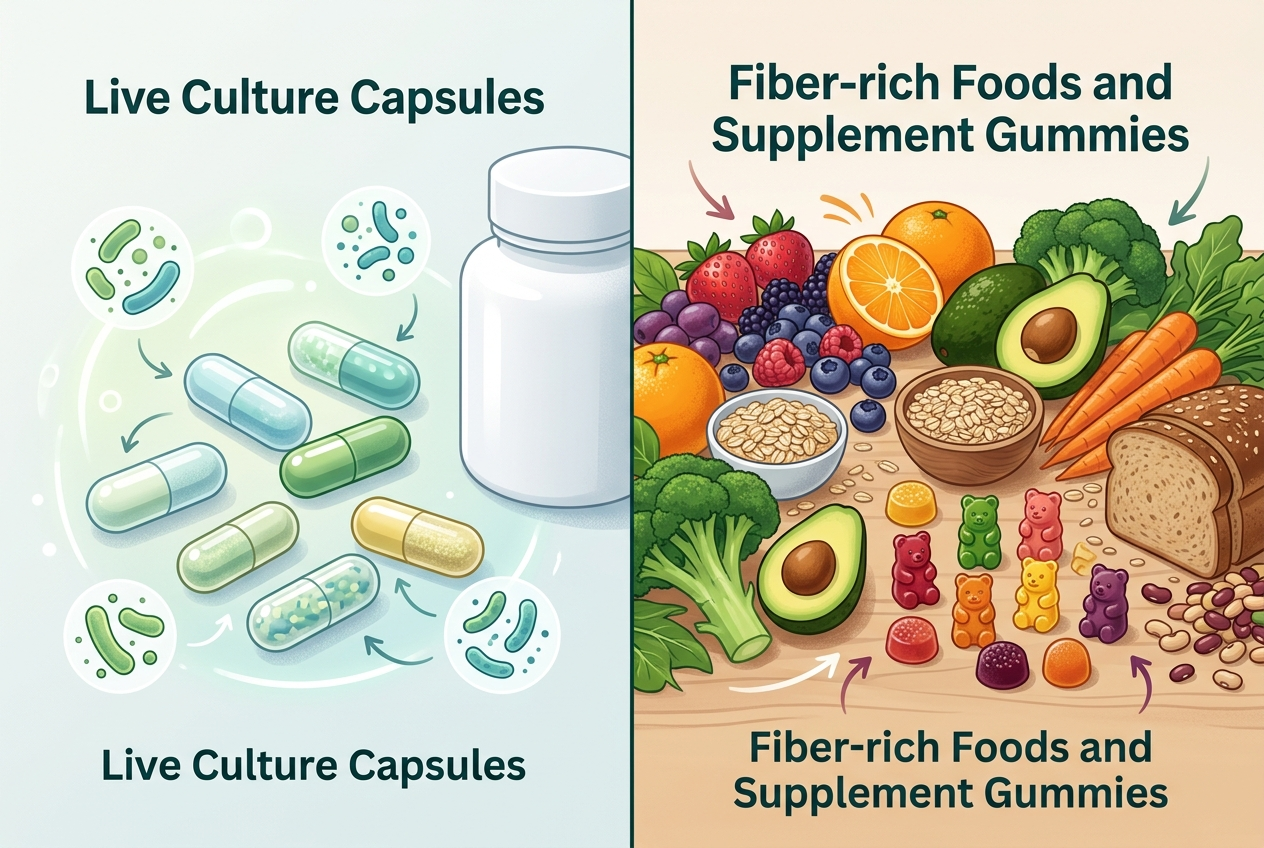
A probiotic label should list the organism below the marketing name, ideally with genus, species, and strain, such as Lactobacillus rhamnosus GG or Bifidobacterium lactis HN019. The label should also state CFU at end of shelf life, storage instructions, serving size, allergen status, and third-party quality signals. A prebiotic label should identify the fiber source, grams per serving, added sugars, sugar alcohols, and suggested start dose. The FDA dietary supplement framework does not pre-approve supplements for effectiveness before sale, so label specificity matters more than front-panel promises. Buyers should also check whether the product uses structure/function language rather than disease claims. If a brand says “supports digestive health,” the label should still explain the ingredient basis. If a brand says “clinically studied,” the strain or fiber should match the cited research, not merely the category.
Which products meet these criteria?
Some links below are affiliate links. This does not influence our evaluation criteria or recommendations.
Yuve Probiotic Gummies fit the probiotic-routine lane because they are positioned as daily vegan probiotic gummies with a clear product format and a simple serving experience. Yuve Prebiotic Fiber Gummies fit the prebiotic-routine lane because they provide a fiber-first option for people who want to feed existing gut microbes rather than add cultures. Culturelle Digestive Daily Probiotic fits the named-strain lane when shoppers want Lactobacillus rhamnosus GG in capsule form. Benefiber Prebiotic Fiber Supplement fits the low-flavor fiber lane when shoppers want wheat dextrin rather than a gummy. Seed DS-01 fits the premium synbiotic lane when shoppers want multiple strains and a prebiotic component in one subscription product. The fairest comparison is not “which brand wins”; it is which product type matches the user’s routine, tolerance, diet preference, and label-detail standards.
What do people get wrong about probiotics and prebiotics?
The first mistake is assuming probiotics and prebiotics do the same thing. Probiotics add organisms, while prebiotics feed organisms, so a person may respond differently to each category. The second mistake is buying a probiotic without strain information; NIH notes that probiotic research cannot be generalized across all organisms. The third mistake is taking a full prebiotic serving immediately and blaming the product when rapid fiber fermentation causes gas. The fourth mistake is expecting either category to override low fiber intake, poor sleep, irregular meals, or a constantly changing supplement stack. The fifth mistake is treating synbiotics as automatically better. A synbiotic can be useful, but a fixed blend may make troubleshooting harder because the user cannot easily tell whether the live cultures or the fiber caused the reaction. Clean comparisons require one variable at a time.
Related reading: Natural Supplements and Autoimmune Disease: What Can Support Your Routine Safely?.
For a closer look at clean-label options, see Keep Going Back and Forth on Probiotics? Which Daily Routine Usually Works Better.
For a closer look at clean-label options, see Can Anxiety Make Reflux Feel Worse? Evidence, Tracking, and a Gentle Yuve Routine.
For a closer look at clean-label options, see Microbiome Feels Off? How to Build a Simple Yuve Digestive Routine.
What questions do people ask before choosing?
People usually ask whether probiotics or prebiotics are better, whether they can take both, and how long a routine takes to evaluate. The best answer is category-specific: probiotics depend on strain and viability, while prebiotics depend on fiber source and dose tolerance. A two-to-four-week log can track serving size, timing, stool pattern, gas, bloating, and consistency without turning the routine into guesswork. People with immune compromise, severe symptoms, persistent constipation, blood in stool, unexplained weight loss, or frequent reflux should ask a clinician before self-directed supplement changes. The cleanest approach is to test one change at a time. Add a probiotic, prebiotic, or synbiotic, keep meals mostly stable, and decide from actual tolerance data rather than social-media claims. If a reaction appears, pause the newest change first so the routine remains interpretable and the next decision is based on evidence.
Are prebiotics better than probiotics?
Prebiotics are not automatically better than probiotics. Prebiotics feed existing gut microbes, while probiotics add live organisms, so the better choice depends on whether the user wants fiber support, cultures, or both.
Can you take probiotics and prebiotics together?
Yes, many people take probiotics and prebiotics together. A combined routine is easiest to judge when the probiotic strain, prebiotic fiber, and serving sizes are clearly labeled.
Do probiotic gummies work the same as capsules?
Gummies and capsules can both fit a routine, but the format does not prove effectiveness. Strain identity, CFU, quality control, serving size, and added sugars matter more than the delivery form.
Why do prebiotics cause gas at first?
Prebiotic fibers can increase gas because gut microbes ferment them. Starting with a smaller serving and increasing gradually can make inulin, FOS, GOS, or resistant starch easier to tolerate.
What is a synbiotic?
A synbiotic combines live microorganisms with a substrate that supports microorganisms. A useful synbiotic label identifies both the probiotic strains and the prebiotic fiber source.
Should beginners start with probiotics or prebiotics?
Beginners should start with the category that matches their current gap. Low-fiber diets usually point toward gentle prebiotic fiber, while culture-focused routines point toward a named-strain probiotic.
How long should you try a gut-health supplement?
A two-to-four-week trial is a practical window for routine tolerance, not a guarantee of a result. Track timing, dose, stool pattern, gas, and bloating before adding another supplement.
Sources:
Leave a Reply