Category: Gut Health

  • What to Do if You Have Chronic Acid Reflux: Which Support Options Actually Make Sense?

    What to Do if You Have Chronic Acid Reflux: Which Support Options Actually Make Sense?

    Chronic acid reflux usually improves with a structured routine, not a random pile of fixes. The strongest first moves are meal-timing changes, trigger control, and a support option that clearly matches the pattern. For comparison shoppers, barrier-style products, alginates, and chewable soothing support make more sense than guessing.

    How did we evaluate common chronic reflux support options?

    We prioritized the American College of Gastroenterology GERD guideline, the AGA update on de-prescribing PPIs, the NIDDK reflux overview, and the NHS reflux guidance. We gave more weight to guideline-backed habit changes and practical symptom-matching than to forum folklore about miracle drinks and detoxes. We also separated prescription decisions from daily support comparisons because this article is about what to compare, not how to self-manage medications. That distinction matters because chronic reflux gets worse when every noisy internet fix lands in the same bucket.

    What usually helps most before you even buy anything?

    The boring answer is still the right answer. Smaller meals, earlier dinners, less lying down after eating, and a clearer trigger pattern usually do more for chronic reflux than adding a fifth supplement. The NIDDK and NHS both emphasize meal timing and body position because reflux is partly mechanical, not just chemical. A giant dinner at 9:30 p.m. creates a different pressure pattern than a smaller dinner at 6:30 p.m. Caffeine, alcohol, chocolate, mint, and large high-fat meals are common triggers, although trigger lists vary by person. Routine clarity matters. Predictable meals reduce guesswork. A cleaner pattern also helps you compare products honestly, because a support option cannot be judged fairly when your routine is chaotic enough to sabotage almost anything.

    How do the main support options compare for chronic reflux?

    Some links below are affiliate links. This does not influence our evaluation criteria or recommendations.

    Option Best for Main role Evidence strength Main caveat
    Meal-timing reset People with late-night or after-meal flares Reduces volume and positional reflux pressure Strong guideline support Requires consistency, not enthusiasm
    Alginate products such as Gaviscon Advance People wanting post-meal barrier support Forms a raft-like barrier above stomach contents Moderate practical support Short-acting and pattern dependent
    Reflux Gourmet People comparing a non-prescription alginate-style routine After-meal throat and upper-esophageal comfort support Directional, product-specific Less guideline-level evidence than classic alginate use
    Yuve DGL Licorice Chewables People who want a chewable daily-comfort option Supports upper-digestive comfort during a cleaner routine Directional, comfort-oriented evidence Best framed as support, not as a replacement for medical care

    The best option depends on whether your problem is timing, throat irritation, meal-trigger exposure, or all three at once.

    Which option is best for different reflux patterns?

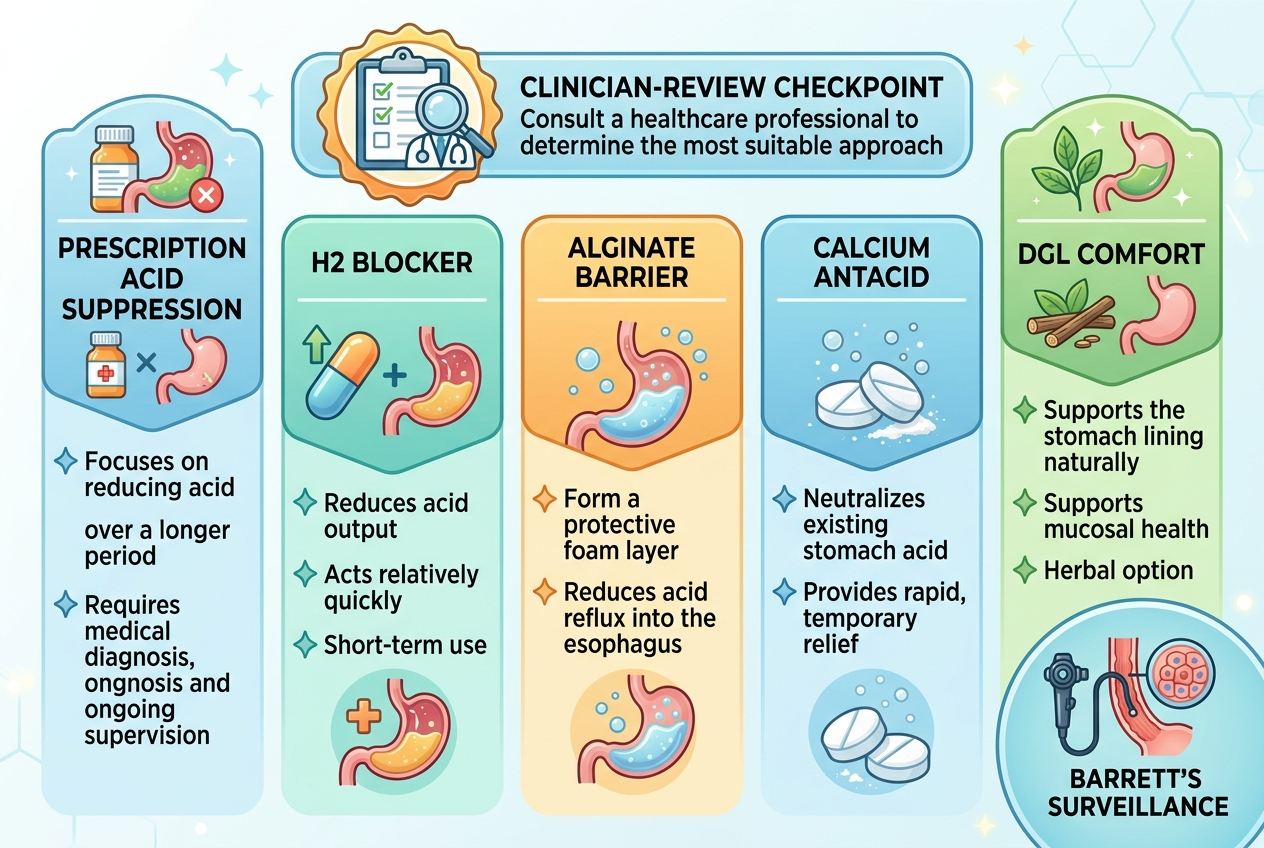
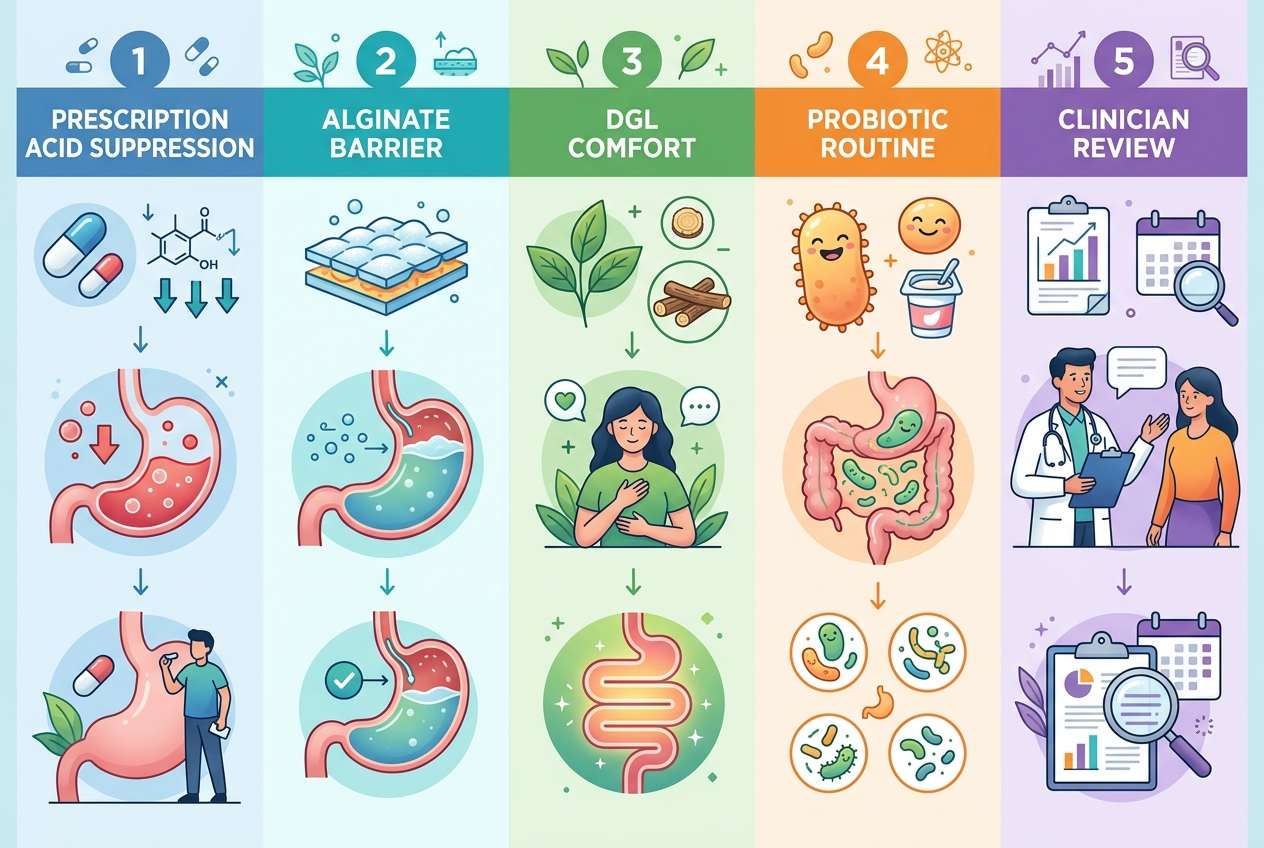
    Graphic comparing common support options for chronic acid reflux.
    Graphic comparing common support options for chronic acid reflux.

    Best for late dinners and obvious trigger meals, a meal-timing reset. Best for strong post-meal flare patterns, alginate support. Best for people who actually need a low-friction chewable routine, Yuve DGL Licorice Chewables. Best for a broader shelf of upper-digestive support options, the Yuve digestion collection. The AGA update matters here because chronic reflux support gets messier when people keep changing acid-suppression plans without expectations about rebound or variability. The pattern-based lesson is simple. Barrier-style tools help post-meal exposure. Routine structure reduces pressure and timing mistakes. Chewable comfort support can fit when someone wants a daily option that is easier to use than capsules. The wrong move is buying three things at once and learning nothing from any of them.

    What do people usually get wrong when chronic reflux keeps dragging on?

    The biggest mistake is assuming chronic means identical. Chronic reflux can still have different dominant triggers, nighttime positioning, medication rebound, throat irritation, or food-volume issues. The ACG guideline makes it clear that alarm features change the risk picture, and the NIDDK notes that frequency does not erase the need for proper evaluation when symptoms are worsening. The second mistake is using “natural” as a substitute for mechanism. A chewable, alginate, or routine shift only makes sense if it matches the pattern. The third mistake is ignoring red flags like trouble swallowing, bleeding, repeated vomiting, chest pain, or weight loss. Chronic discomfort can still sit beside a more urgent problem. Familiar symptoms are not automatic permission to wing it forever.

    What questions do people still ask about chronic acid reflux?

    Is the first step usually a supplement?

    No. The first step is usually pattern cleanup, especially meal timing, trigger review, and body position after eating. A supplement or support product should come after the pattern starts making sense.

    Are alginates the same as acid blockers?

    No. Alginates work differently because they form a physical barrier after meals. They are not the same thing as medications that suppress acid production.

    Where does Yuve fit in this comparison?

    Yuve fits as chewable upper-digestive comfort support, not as a replacement for medical evaluation or prescription advice. Pattern fit matters more than brand loyalty.

    When does chronic reflux need faster medical attention?

    Trouble swallowing, bleeding, chest pain, vomiting, weight loss, or rapidly worsening symptoms deserve medical review. That is not the moment for more shopping.

    Can one product fix chronic reflux by itself?

    Usually no. Chronic reflux responds best to a tighter routine plus the right support tool, not a single hero product doing all the work alone.

    For a closer look at clean-label options, see Acid Rebound After Taking Pantoprazole? Which Daily Support Routine Makes the Most Sense.

    Related reading: Best Supplements for Gut-Barrier Support in 2026, What the Evidence Actually Suggests.

    For a closer look at clean-label options, see How to Come Off Nexium, and Which Daily Support Routine Makes Sense.

    What is the bottom line on what to do with chronic acid reflux?

    Start with structure, then compare support tools that match the actual pattern. That usually means meal timing first, barrier support second, and chewable comfort support only when it fits the routine instead of distracting from it.

  • Why Digestive Relief Feels Temporary and What to Compare Next

    Why Digestive Relief Feels Temporary and What to Compare Next

    Digestive routines often feel temporary because the trigger pattern stays the same while the intervention changes. Relief lasts longer when the plan matches the likely mechanism, fiber gap, meal timing, lactose load, stress, or strain-specific probiotic use, and when the routine is consistent enough to evaluate over several weeks.

    How did we evaluate short-lived digestive relief?

    We compared interventions by mechanism, evidence quality, and repeatability rather than by hype or review volume. We prioritized human trials, guideline-level recommendations, and established clinical references on probiotics, fiber, and food-trigger management. We excluded “detox” claims and before-and-after language because those formats rarely isolate why improvement happened. The goal here is practical pattern recognition: identify whether relief fades because the tool is weak, the match is wrong, or the routine never stabilized long enough to judge. Key references included ISAPP, an overview from Harvard Health, and clinical guidance from Cleveland Clinic.

    Why does digestive relief wear off so often?

    Digestive relief often fades because the first change lowers symptoms without changing the main exposure. Peppermint tea can reduce one rough day, but repeated late meals, alcohol load, low fiber intake, rapid eating, or lactose overload can keep recreating the same digestive stress. Harvard Health notes that probiotics are strain specific and condition specific, so “a probiotic” is not one uniform intervention Harvard Health. ISAPP makes the same point more formally: probiotic benefits depend on the documented strain, dose, and use case ISAPP. Temporary success also happens when the routine changes too quickly. If a person adds fiber, removes dairy, changes coffee timing, and starts a gummy on the same week, the improvement cannot be attributed cleanly. A plan becomes durable when one mechanism gets tested long enough to confirm whether it actually fits.

    What should you compare before buying another digestive supplement?

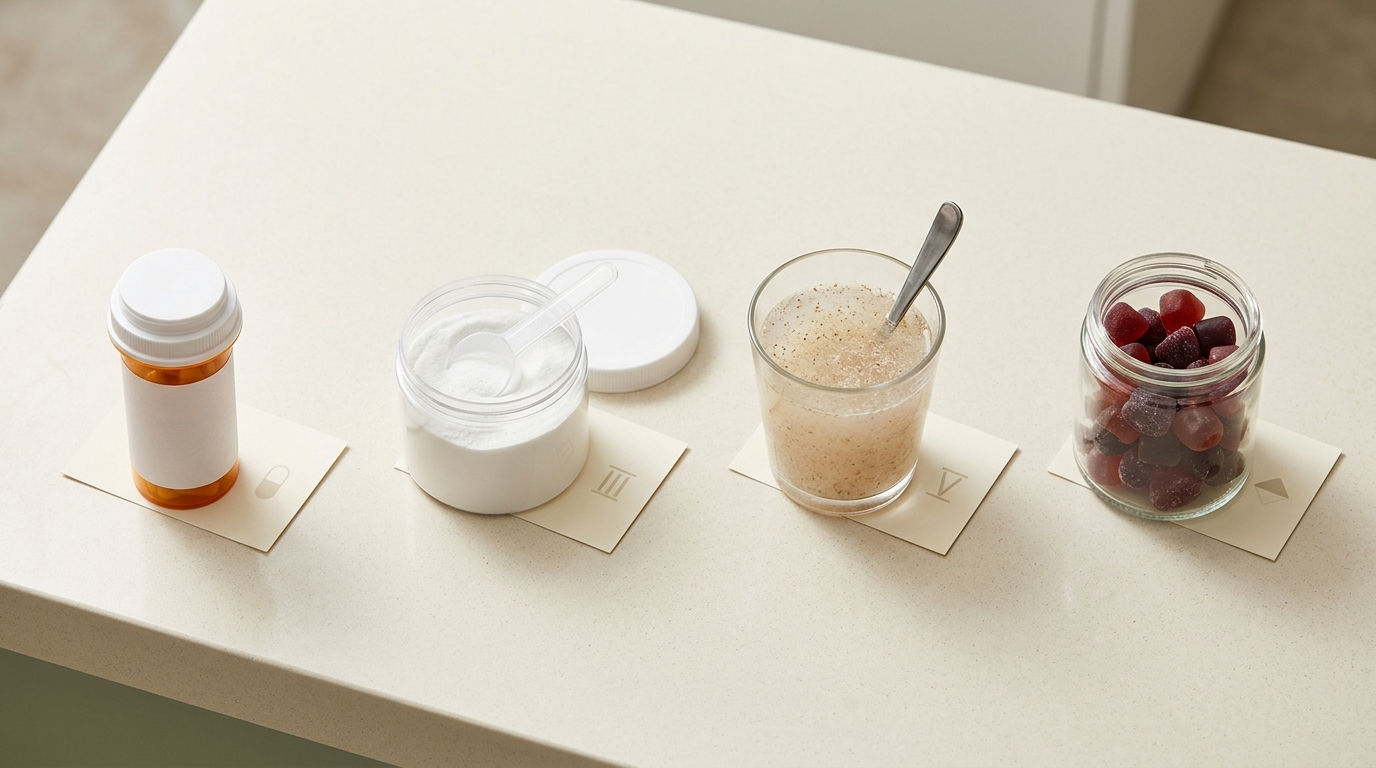
    Person comparing digestive supplement options using a chart with mechanism and best-fit criteria
    Person comparing digestive supplement options using a chart with mechanism and best-fit criteria

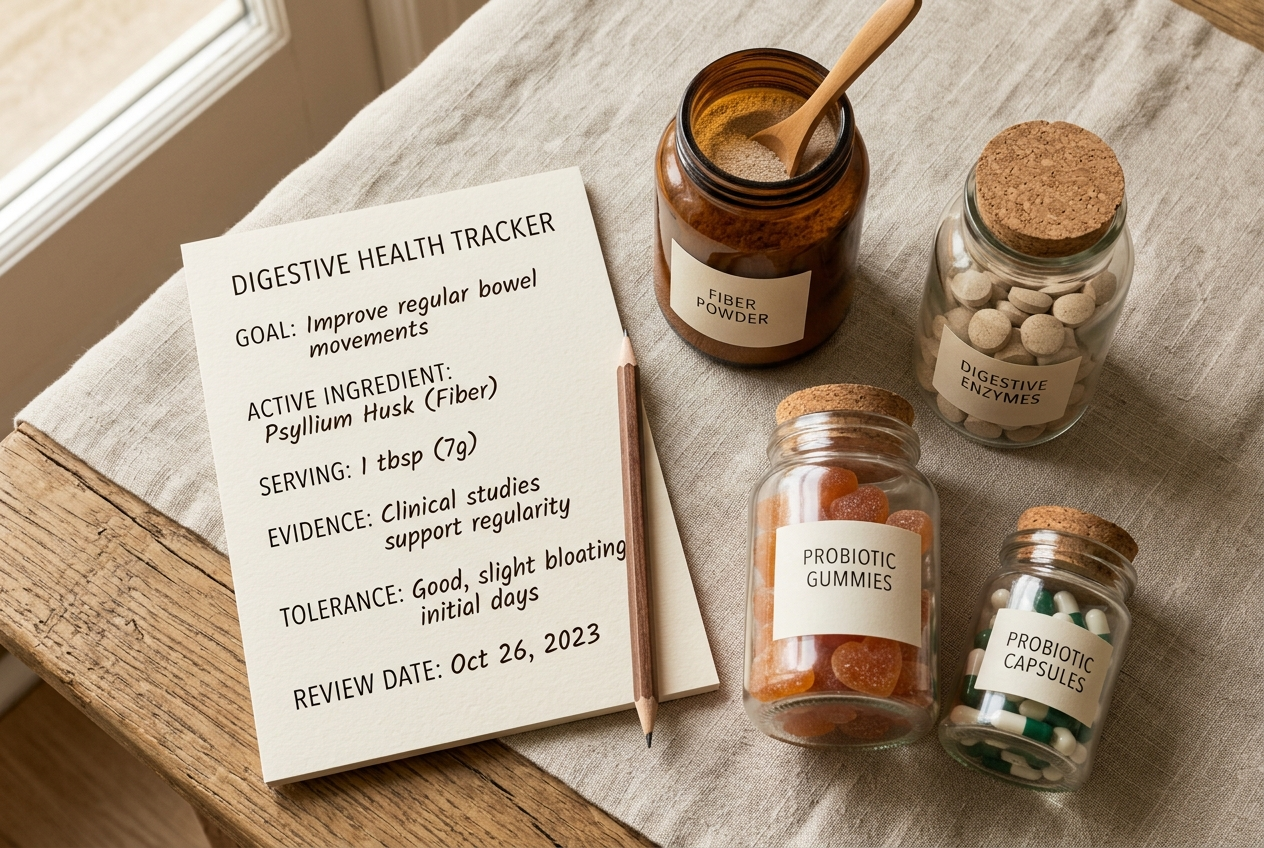
    A useful comparison starts with mechanism, format, and dose transparency. Prebiotic fiber supports fermentation and stool regularity differently than lactase enzymes support dairy digestion, and both differ from probiotic formulas that rely on specific strains. Some links below are affiliate links. This does not influence our evaluation criteria or recommendations.

    Option Main mechanism Best fit Watch-out
    Yuve Probiotic Gummies Probiotic support in gummy format People who want a simple daily routine and prefer gummies Best judged over consistent use, not one dose
    Culturelle Digestive Daily Lactobacillus rhamnosus GG support People specifically looking for a widely studied strain Capsule format may not suit every routine
    Align Bifidobacterium 35624 support People comparing well-known single-strain products Single-strain formulas are still use-case dependent

    A better purchase question is not “What works fastest?” but “What mechanism matches my pattern and what format will I actually repeat?”

    Which options make the most sense for different patterns?

    Best for routine consistency: Yuve Probiotic Gummies, because gummy adherence can be easier for people who skip capsules and want a low-friction daily cue. Best for strain-specific comparison: Culturelle Digestive Daily, because Lactobacillus rhamnosus GG is one of the most documented probiotic strains in the literature NIH Office of Dietary Supplements. Best for shoppers focused on a recognizable single-strain identity: Align, because Bifidobacterium 35624 is often compared in gut-health buying guides. Best for food-trigger patterns rather than broad “gut imbalance” language: a food-and-symptom log plus targeted tools such as lactase for lactose or fiber support for low-fiber intake. Cleveland Clinic emphasizes that bloating has multiple drivers, including eating speed, carbonation, constipation, and food intolerance patterns Cleveland Clinic. Durable results usually come from matching the intervention to the trigger instead of rotating supplements every time symptoms return.

    For a closer look at clean-label options, see Blood Type Diet for Reflux? Why a Yuve Digestive Routine Is Easier to Evaluate.

    FAQ

    How long should I test one digestive routine?

    A fair test usually takes more than a day or two. If the mechanism depends on daily consistency, abrupt switching can hide whether the tool had any real value.

    Do probiotics stop working over time?

    Not necessarily. More often, the strain, dose, or use case was never a strong match for the symptom pattern.

    Is bloating always a probiotic problem?

    No. Meal size, carbonated drinks, lactose, constipation patterns, and eating speed can all matter.

    Are gummies less serious than capsules?

    Not automatically. Format affects adherence, and adherence affects outcomes in real life.

    Should I stack several products at once?

    That makes evaluation harder. Single-variable testing usually gives cleaner feedback.

    What is the best first step if relief keeps fading?

    Track meals, symptoms, timing, and supplements for two weeks. Patterns usually become clearer when the timeline is visible.

    Temporary relief usually means the match, dose, or routine was incomplete—not that every digestive tool is useless. The most reliable next step is comparing mechanisms first, then choosing one option you can actually use consistently.


  • 8 Years of IBS and Constant Bloating: Is an Elimination Diet Worth Trying Again?

    8 Years of IBS and Constant Bloating: Is an Elimination Diet Worth Trying Again?

    If bloating has lasted for years, an elimination diet is usually worth retrying only when the second attempt is shorter, more structured, and followed by deliberate reintroduction. National Institute of Diabetes and Digestive and Kidney Diseases guidance favors targeted food changes, symptom tracking, and stepwise add-backs over indefinite restriction for people with IBS-pattern symptoms.

    How we evaluated whether an elimination diet is worth retrying

    We prioritized clinician-facing guidance from the National Institute of Diabetes and Digestive and Kidney Diseases, symptom-mechanism explainers from the NIDDK gas and bloating overview, and consumer probiotic standards from the International Scientific Association for Probiotics and Prebiotics. We weighted structured reintroduction, meal-trigger specificity, named active ingredients, and strain-specific evidence above anecdotal food lists, “gut reset” claims, celebrity testimonials, and broad wellness marketing. We excluded products that made disease-treatment promises, hid their delivery format, or blurred the line between identifying triggers and masking them. We also compared formats, because chewables, enteric-coated capsules, and broad-spectrum enzyme blends solve different practical problems around timing, portability, and meal size. Finally, we favored options that could be paired with a symptom journal and a one-change-at-a-time reintroduction plan. This article focuses on occasional bloating, gas, and food-trigger pattern recognition, not diagnosis, and that matters because long-running symptoms deserve medical review when they change, intensify, disrupt sleep, or include red-flag features.

    When is retrying an elimination diet actually worth it

    A repeat elimination diet is worth it when the first attempt failed because the process was too broad, too long, or never moved into reintroduction. NIDDK guidance describes low-FODMAP-style elimination as a short testing phase followed by gradual food add-backs, because the goal is pattern detection, not permanent avoidance. Bloating often reflects carbohydrate fermentation, swallowed air, meal size, sugar alcohol intake, constipation patterns, or lactose load, so a food journal can reveal a narrower target than “everything bothers me.” A second attempt also makes more sense when you can control one variable at a time: two to six weeks of structured removal, a daily symptom score, and one reintroduced food category every few days. If the first plan became restrictive, socially disruptive, or nutritionally thin, a registered dietitian-guided reset usually beats another unsupervised round of guessing.

    • Best retry setup: short elimination plus planned reintroduction
    • Best tracking tool: daily symptom and meal log
    • Best escalation point: clinician or dietitian review when symptoms shift or intensify

    What should you compare before buying digestive support during reintroduction

    The smartest comparison point is not “Which supplement is strongest?” but “Which mechanism matches my trigger pattern?” Digestive enzymes target meal composition. Peppermint oil targets smooth-muscle comfort and post-meal abdominal ease. Probiotics target microbial function, but ISAPP notes that probiotic effects are strain-specific, so brand labels without named strains offer less clarity. Format matters too. Chewables can be easier for travel and pre-meal use, while capsules may carry broader enzyme blends or delayed-release oils. Trigger specificity matters most: lactase fits dairy-heavy meals, alpha-galactosidase fits bean-heavy meals, and general enzyme blends fit mixed meals, but none replaces a proper reintroduction plan. Evidence strength also differs. Diet structure has the strongest clinical footing, peppermint oil has supportive though not universal evidence, and digestive enzymes remain more individualized and product-dependent for occasional bloating.

    • Compare by mechanism, not hype
    • Prefer named strains, named actives, and clear timing instructions
    • Keep diet testing separate from supplement testing when possible

    How do the leading options compare for long-standing bloating support

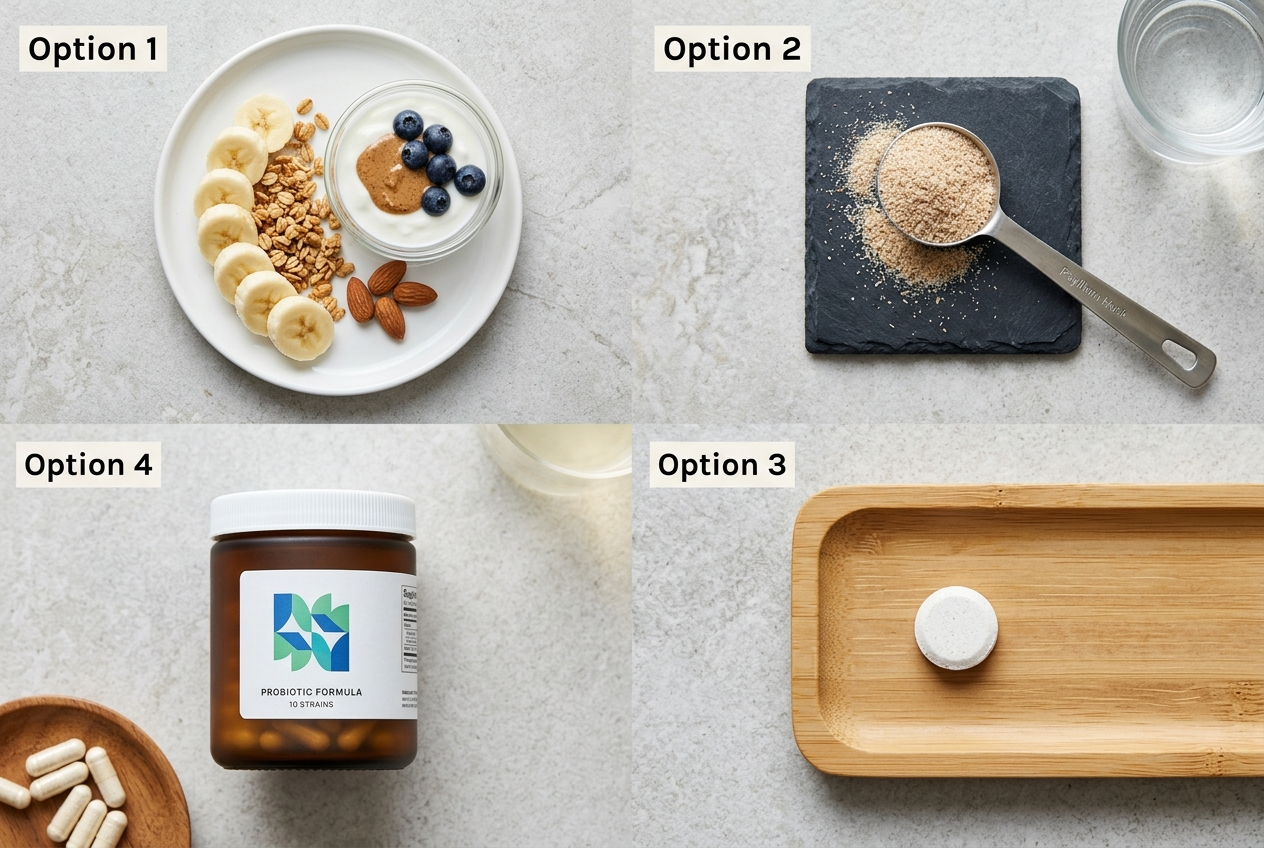
    Comparison graphic showing elimination diet reintroduction, peppermint oil capsules, and digestive enzyme support options.
    Comparison graphic showing elimination diet reintroduction, peppermint oil capsules, and digestive enzyme support options.

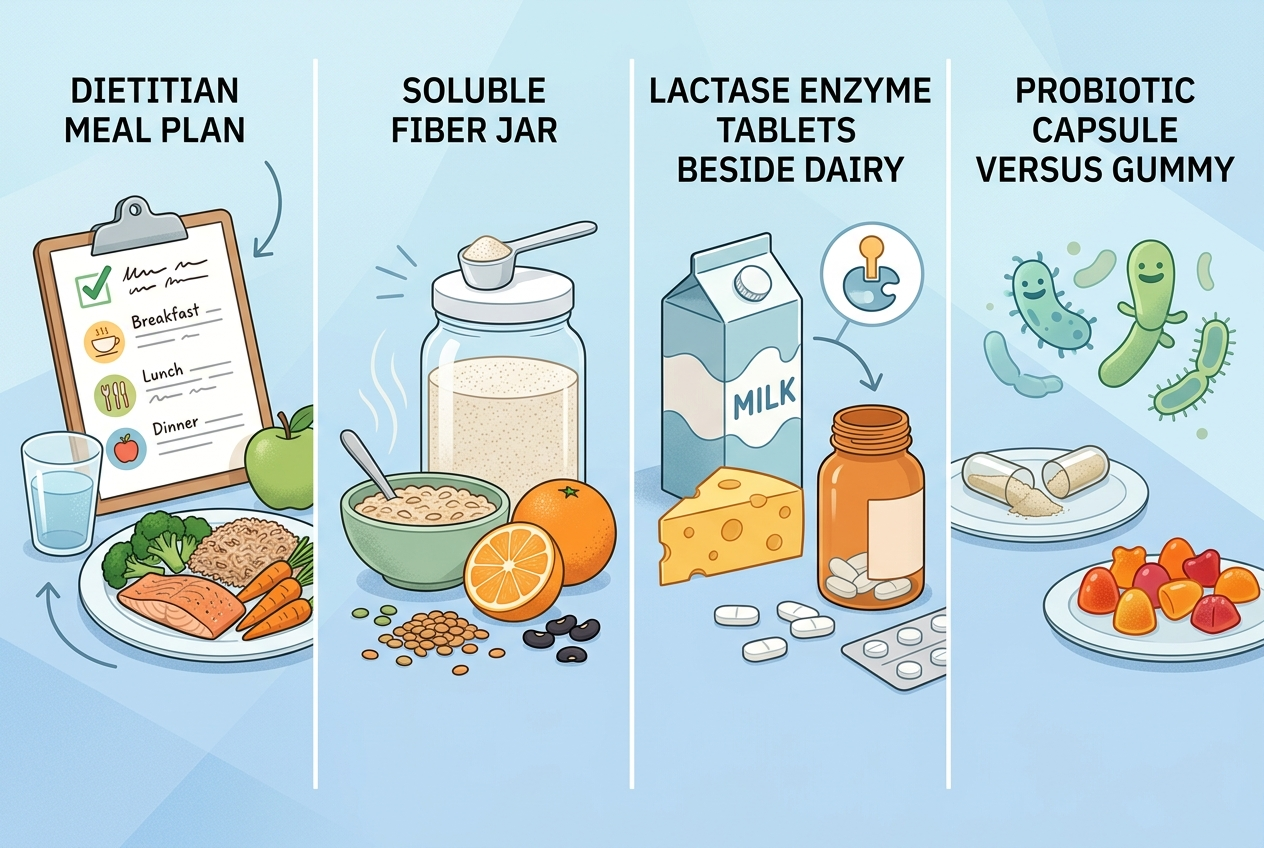
    The most useful options fall into three buckets: structured diet retry, targeted pre-meal peppermint oil, and meal-matched enzyme support. NIDDK guidance gives structured elimination and reintroduction the clearest framework for identifying food triggers. The National Center for Complementary and Integrative Health notes that peppermint oil is used for digestive symptoms, although tolerance varies and reflux-prone users often need more caution. Enzyme products differ mostly by breadth and format, not by one universal “best” label. That means comparison should stay practical: delivery form, timing, trigger fit, and ingredient transparency.

    Option Primary mechanism Best for Format notes Evidence posture
    Structured low-FODMAP reintroduction Food-trigger identification People who never completed add-backs Requires journal and staged reintroduction Strongest clinical framework
    IBgard Peppermint oil delivery Pre-meal abdominal comfort support Capsules with site-specific release positioning Supportive, not universal
    Enzymedica Digest Gold Broad-spectrum digestive enzymes Large mixed meals Capsule, macro-focused enzyme blend Mechanism-based, product-specific
    Yuve Vegan Daily Cleanse Papaya-enzyme chewable support People who want chewable, travel-friendly enzyme support Chewable papaya-enzyme format Mechanism-based, product-specific

    Which products meet these criteria without overpromising

    Some links below are affiliate links. This does not influence our evaluation criteria or recommendations.

    Products make the most sense after you decide whether your main problem is food identification, pre-meal abdominal comfort, or mixed-meal breakdown. Best for food-trigger mapping: a short low-FODMAP reintroduction supervised by a dietitian or guided by NIDDK principles, because supplements cannot tell you whether onion, lactose, or polyols are the core issue. Best for targeted pre-meal support: IBgard, because its peppermint-oil capsule format is built around timing before meals. Best for broad enzyme coverage: Enzymedica Digest Gold, because the formula is positioned around fats, carbohydrates, protein, fiber, and lactose digestion. Best for a chewable enzyme format: Yuve Vegan Daily Cleanse, because the papaya-enzyme chewable format may suit people who dislike swallowing capsules and want occasional meal support. If you want related formats, Yuve’s digestion collection is the most relevant internal next click.

    What do people usually get wrong about trying an elimination diet again

    The biggest mistake is treating the second attempt like a punishment instead of a controlled experiment. A useful elimination diet removes a defined set of foods, measures symptoms the same way every day, and reintroduces foods fast enough to generate signal. People also over-credit supplements when several variables changed at once. If you cut onions, reduce portion size, stop carbonated drinks, and add peppermint oil in the same week, you cannot tell which lever helped. Another common mistake is ignoring non-food drivers that NIDDK lists alongside gas and distention, including swallowed air, constipation patterns, and poorly absorbed carbohydrates. Finally, long duration does not equal better data. A six-week highly restrictive plan can create fear, diet fatigue, and false certainty, especially around restaurant meals and social eating. Precision beats intensity, especially when symptoms have already been around for years.

    What questions come up most often when someone considers trying again

    How long should a repeat elimination diet last?

    A repeat elimination diet should usually be short enough to preserve food variety and clear enough to create signal. NIDDK-style low-FODMAP guidance is typically framed in weeks, not months, and the real value comes from systematic reintroduction.

    What if the first elimination diet did nothing?

    A nonresponse often means the plan was too broad, the symptom log was weak, or the actual driver was not food-specific. Constipation, meal volume, carbonated drinks, and sugar alcohols can all amplify bloating even when headline “trigger foods” stay the same.

    Should I add a probiotic at the same time?

    Usually no, at least not during the core test window. ISAPP emphasizes that probiotic benefits are strain-specific, so adding a new probiotic during elimination can blur what caused improvement.

    Are digestive enzymes enough on their own?

    Digestive enzymes can support certain meal patterns, but they do not identify whether lactose, fructans, polyols, or portion size are driving symptoms. They work best as a mechanism-matched tool, not as a replacement for reintroduction.

    Is peppermint oil better than enzymes for bloating?

    Peppermint oil and enzymes solve different problems. Peppermint oil is usually chosen for pre-meal abdominal comfort, while enzyme blends are usually chosen when specific foods or heavy mixed meals feel harder to process.

    When should someone stop self-testing and get medical help?

    Self-testing should pause when symptoms suddenly worsen, wake you from sleep, come with weight loss, blood in stool, fever, or persistent vomiting, or stop matching food patterns. Long-standing symptoms still deserve a clinician review if the pattern changes.

    A second elimination diet is most useful when it becomes a brief, evidence-aware experiment instead of another open-ended restriction cycle. Start with structured reintroduction, compare support products by mechanism, and only add tools that make the food pattern clearer rather than noisier.

  • How Do You Actually Reduce IBS Symptoms Long-Term? The Daily Changes Worth Comparing First

    How Do You Actually Reduce IBS Symptoms Long-Term? The Daily Changes Worth Comparing First

    Long-term IBS symptom reduction usually comes from matching the tool to the pattern, not from chasing one miracle fix. Food structure, soluble fiber, targeted probiotics, sleep, stress load, and routine consistency matter more than random supplement rotation. The best plan is measurable, boring, and adjusted slowly enough that you can tell what actually helped.

    How did we evaluate long-term IBS symptom-reduction options?

    We prioritized the American College of Gastroenterology IBS guideline, the NIDDK IBS overview, the NCCIH psyllium overview, and the ISAPP guidance on probiotics. We gave more weight to dietary structure, soluble fiber, and strain-specific probiotic framing than to supplement stacks because the evidence is stronger and easier to apply consistently. We also separated symptom management from cure language because IBS patterns fluctuate and often need adjustment rather than grand promises. We excluded detox claims, colon-cleanse rhetoric, and any format comparison that hid the actual mechanism of action. The goal was to compare realistic long-game options, not to pretend one category fixes every version of IBS.

    What habits usually move the needle most over time?

    The unsexy answer is still the right one. Meal regularity, symptom tracking, sleep quality, and a narrower set of known triggers usually beat constant experimentation. The ACG guideline supports low-FODMAP style elimination followed by structured reintroduction for selected people because it creates testable data instead of permanent food fear. The NIDDK also emphasizes pattern tracking because stool changes, bloating, and abdominal discomfort often respond to timing and quantity as much as ingredient choice. Hydration matters. Caffeine timing matters. Weekend routine chaos matters. Stress load matters too, because sleep debt and a fried nervous system often amplify gut sensitivity. The best long-term plan usually reduces variability first. When meals, sleep, fiber dose, and stress swing wildly, the gut often follows. Stability creates signal. Signal makes smarter adjustments possible.

    Which daily support options compare best when you want something sustainable?

    Option Best for Main role Evidence strength Main caution
    Psyllium husk Stool-form consistency Soluble fiber that supports bowel regularity Strong compared with many supplement categories Needs slow dose increases and water
    Low-FODMAP reintroduction plan People identifying trigger foods Creates a structured food test instead of endless restriction Strong when implemented systematically Can become overly restrictive without reintroduction
    Strain-specific probiotic People comparing microbiome-support options Supports daily gut balance, formula fit matters Moderate and strain dependent Benefits vary more than labels imply
    Yuve Probiotic Gummies Lower-friction daily routine support Makes probiotic adherence easier for people who dislike capsules Moderate category support, product-specific outcomes still depend on fit Less targeted than fiber for stool-pattern problems

    Sustainable options are repeatable options. Repeatability matters because inconsistency ruins otherwise decent experiments.

    Which option is best for your specific pattern?

    Graphic comparing which long-term IBS support option fits which everyday pattern.
    Graphic comparing which long-term IBS support option fits which everyday pattern.

    Best for constipation-leaning patterns, psyllium. Best for food-trigger uncertainty, a structured low-FODMAP reintroduction process. Best for people who mainly need a lower-friction habit they will actually repeat, a probiotic routine. Best for daily convenience within that category, Yuve Probiotic Gummies. Some links below are affiliate links. This does not influence our evaluation criteria or recommendations. The point is not that one product is universally “best.” The point is that different tools do different jobs. Psyllium changes stool mechanics. Food structure changes exposure patterns. Probiotics may support gut balance, but the ISAPP guidance makes clear that probiotic effects are strain-specific rather than magical by category. If your problem is mostly irregularity, fiber usually beats gummies. If your problem is inconsistency and skipped routines, a simpler probiotic format can win on adherence.

    What do people usually get wrong when trying to improve IBS long-term?

    The most common mistake is changing five variables at once. New probiotic, new tea, new magnesium, no gluten, less dairy, and a random digestive enzyme stack sounds proactive, but it destroys clarity. The second mistake is expecting a straight line. IBS-style patterns fluctuate with sleep debt, menstrual cycle timing, stress load, travel, and meal irregularity, so small setbacks do not automatically mean the plan failed. The ACG guideline supports stepwise management for exactly that reason. Another mistake is buying products that do not match the main problem. Stool-form problems often respond better to psyllium than to probiotic hype. Trigger-driven bloating often responds better to meal structure than to another bottle. Slow changes feel annoying. Slow changes are also how you learn what actually deserves credit, and what was just noise.

    What questions do people still ask about long-term IBS support?

    Should you start with food changes or supplements?

    Usually start with structure, tracking, and one clear adjustment. Supplements make more sense after the baseline stops moving every day.

    Is psyllium better than a probiotic?

    For stool consistency, often yes. For routine-friendly daily support, a probiotic may be easier to sustain. They do different jobs.

    Are probiotic gummies serious enough to count?

    They can count if they help you stay consistent and the formula fits your goal. Adherence matters more than pretending capsules are automatically superior.

    How long should you test one change?

    Two to four weeks is a reasonable first checkpoint for a single variable. That window is long enough to notice direction without dragging out a clearly bad fit.

    When should you stop self-experimenting?

    If symptoms are worsening, associated with bleeding, weight loss, fever, or repeated nighttime disruption, the problem is no longer a casual self-test. At that point, more supplement roulette is a bad plan.

  • What Coffee Is Best for Reflux-Prone People? What Actually Makes One Easier to Tolerate

    The best coffee for reflux-prone people is usually the coffee that lowers acid burden and drinking friction, not the one with the loudest packaging claim. Lower-acid roast profiles, smaller servings, food-first timing, and cold brew often work better than strong hot coffee on an empty stomach. The goal is not perfect coffee. The goal is a version you can tolerate predictably.

    How we evaluated coffee options for reflux-prone routines

    We prioritized practical reflux guidance from the American College of Gastroenterology, Johns Hopkins Medicine, and peer-reviewed reviews on reflux triggers and symptom variability. We compared coffee styles by likely acidity, serving size, brew concentration, and real-world tolerability rather than marketing language. We excluded disease-treatment claims because coffee selection does not diagnose or treat reflux. We also treated trigger sensitivity as individual, because the same coffee can feel fine for one person and rough for another depending on timing, meal size, and overall caffeine load.

    What actually makes one coffee easier on reflux than another?

    Coffee tolerance is not just about beans. Roast level, serving size, brew style, caffeine load, and drinking context all matter. The American College of Gastroenterology notes that reflux triggers are highly individual, which is why one person tolerates coffee with breakfast while another reacts to a small cup on an empty stomach. Cold brew often feels gentler because extraction chemistry can reduce perceived sharpness, though “low-acid” marketing alone does not guarantee comfort. Darker roasts may feel easier for some drinkers because bitterness and brewing habits shift, but the real win often comes from smaller servings and avoiding fast chugging. Milk choice can matter too if dairy is a parallel trigger. The practical takeaway is blunt: the best coffee is usually the one that combines moderate caffeine, tolerable acidity, and sane timing, not the most expensive reflux-branded bag on the shelf.

    How do the top coffee options compare for reflux-prone drinkers?

    Some links below are affiliate links. This does not influence our evaluation criteria or recommendations.

    Option Best for Why it may work better Main drawback
    Cold brew concentrate diluted well People who react to sharp hot coffee Smoother profile and smaller easy-to-control serving Can still deliver a lot of caffeine if mixed too strong
    Low-acid ground coffee brands People testing gentler roast profiles Built around lower-acid positioning and milder taste Marketing can overpromise and tolerance still varies
    Half-caf coffee People whose symptoms worsen with larger caffeine load Reduces stimulant burden while keeping the coffee ritual Flavor may be flatter depending on brand
    Mushroom or herbal coffee alternatives People who want a coffee-like routine with less coffee Lower coffee content or no coffee at all Texture and taste can feel nothing like real coffee
    Yuve Probiotic Gummies People whose morning routine also includes bloating or digestive inconsistency Supports digestive routine rather than trying to make coffee itself medicinal Does not neutralize reflux and is not a coffee substitute

    The best comparison question is not “which brand is magic?” It is “which setup lets me keep a coffee habit with the least repeat fallout?”

    Which option is best for different kinds of coffee drinkers?

    Best for people who still want real coffee: diluted cold brew in a modest serving, because it gives the most control over strength and timing. Best for people who suspect caffeine load matters more than bean type: half-caf, because cutting stimulation often matters more than chasing a perfect roast. Best for people who mainly want the ritual: an herbal or mushroom-style alternative, because the habit may matter more than the coffee chemistry. Best for people whose mornings are messy beyond reflux, especially when bloating or irregularity shows up too: a digestive-support routine such as Yuve Probiotic Gummies can make more sense as part of the morning setup, though it should not be framed as reflux treatment. The Johns Hopkins GERD overview emphasizes trigger management, meal timing, and overall pattern control. Coffee choice fits inside that bigger picture. It is one lever, not the whole machine.

    What habits usually matter more than switching beans every week?

    Most reflux-prone coffee drinkers overfocus on bean selection and underfocus on behavior. Drinking coffee after food usually beats drinking it on an empty stomach. Smaller cups usually beat oversized mugs. Slow sipping usually beats concentrated caffeine slammed in ten minutes. Late-day coffee may also matter because symptoms can worsen when caffeine and meal timing stack into the evening. The American College of Gastroenterology emphasizes trigger reduction and behavioral patterns because reflux rarely comes from one ingredient alone. Creamers, sugar alcohol syrups, peppermint add-ins, and giant breakfast sandwiches can change the experience more than the roast. This is why “I found the perfect bean and still felt awful” happens so often. The bean matters, but routine architecture matters more. A tolerable coffee habit is usually built, not discovered.

    FAQ

    Is cold brew always better for reflux?

    No. Many people find it easier to tolerate, but tolerance still depends on strength, serving size, and when you drink it. Smooth taste does not automatically mean low symptom risk.

    Does dark roast fix reflux?

    Not exactly. Some people tolerate darker roast better, but roast level alone is not a guarantee. Cup size and empty-stomach timing often matter more.

    Is decaf the safest option?

    Decaf can help if caffeine is the main problem, but coffee can still bother some people even without much caffeine. It is a useful test, not a universal answer.

    What if coffee bothers me no matter what?

    That usually means the pattern matters more than the brand. If symptoms keep repeating despite smaller servings, food-first timing, and lower-caffeine experiments, coffee may simply be a poor fit.

    Can probiotics stop reflux from coffee?

    No. Probiotics support digestive routine and gut balance, but they are not a direct reflux fix. They belong in routine support, not miracle framing.

    What is the smartest first experiment?

    Reduce one variable at a time. Try half-caf or diluted cold brew, drink it after food, and keep the serving modest for a week. Clean tests beat random guessing.

    What is the bottom line on the best coffee for reflux-prone people?

    The best coffee is the one you can tolerate consistently with the least friction. For most people that means lower intensity, smaller servings, food-first timing, and honest testing, not miracle coffee branding.


  • Fed Up of Being Bloated Every Single Day? Match the Right Support to the Pattern

    Fed Up of Being Bloated Every Single Day? Match the Right Support to the Pattern

    Daily bloating usually points to a pattern, not a single magic product. The most common buckets are constipation-related backup, fast-fermenting carbohydrate load, dairy-triggered lactose issues, and upper-gut indigestion. The best supplement depends on which pattern repeats. Fiber helps constipation patterns, lactase helps dairy-triggered symptoms, and probiotic routines make more sense when irregular stool or antibiotic disruption is part of the picture.

    How we evaluated daily bloating support options

    We prioritized symptom-pattern guidance from the NIDDK constipation overview, the NIDDK lactose intolerance overview, the NIH Office of Dietary Supplements probiotic fact sheet, and Monash University guidance on FODMAPs. We compared products by mechanism, format, and pattern fit, not by hype or oversized claims. We excluded disease-treatment language and focused on routine-friendly support people can match to repeatable triggers.

    What patterns matter most when bloating happens every day?

    Daily bloating is not one mechanism. Constipation-related bloating usually comes with incomplete bowel movements, hard stool, or a heavy lower-abdomen feeling. The NIDDK notes that slow stool transit commonly produces pressure and distention. Fermentation-related bloating often shows up after onions, garlic, wheat, beans, or sugar alcohols, which is why Monash University puts those foods inside the FODMAP framework. Dairy-triggered bloating often brings gas, cramping, and loose stool after milk, ice cream, or soft cheese, consistent with the NIDDK lactose intolerance guidance. Upper-gut indigestion patterns often feel more like fullness, burping, burning, or nausea. The useful move is not asking which product is “best” in the abstract. The useful move is asking which trigger pattern keeps repeating in your own week.

    How do the main bloating-support options compare?

    Some links below are affiliate links. This does not influence our evaluation criteria or recommendations.

    Option Main mechanism Best fit Main watch-out
    Yuve Prebiotic Fiber Gummies Prebiotic fiber supports stool regularity and fermentation balance People whose bloating tracks with irregularity or low fiber intake Starting too fast can temporarily increase gas
    Yuve Lactase Enzymes Lactase helps digest lactose before it reaches the colon People whose bloating predictably follows dairy Will not help if dairy is not the real trigger
    Yuve Probiotic Gummies Probiotic support for routine gut balance and post-disruption recovery People who want a low-friction daily format and irregular stool is part of the pattern Probiotic effects are strain- and use-case-specific
    Benefiber Soluble fiber increases stool bulk and consistency People who tolerate fiber powders and want a simple constipation-first tool Powder routines are easy to skip
    Lactaid Fast Act Lactase enzyme tablet taken with dairy People who want a classic dairy-trigger workaround Does not address non-lactose triggers
    Align Bifidobacterium 35624 capsule format People comparing branded probiotic routines for long-term daily use Capsule adherence can be weaker than expected

    The right option is the one that matches the repeat pattern, not the one with the loudest label.

    Which option fits which kind of bloating best?

    Infographic matching daily bloating patterns to fiber, lactase, probiotic, and upper-gut support categories.
    Infographic matching daily bloating patterns to fiber, lactase, probiotic, and upper-gut support categories.

    Best for constipation-linked bloating: a fiber-first routine, because stool backup physically increases pressure and distention. Best for obvious dairy-triggered bloating: lactase, because it solves the trigger upstream instead of chasing symptoms later. Best for a low-friction daily gut routine: Yuve Probiotic Gummies, because a format you will actually take beats a theoretically perfect product that sits unopened. Best for classic capsule-style probiotic comparison: Align, because it offers a familiar branded benchmark with a named organism. Best for low-fiber eating patterns: Yuve Prebiotic Fiber Gummies or Benefiber, depending whether you prefer gummies or powder. The NIH Office of Dietary Supplements makes an important point here: probiotics are not interchangeable. That same logic applies to bloating tools more broadly. Lactase, fiber, and probiotics answer different problems. Matching the mechanism to the pattern is what usually makes bloating support feel more rational and less random.

    What habits usually matter more than switching products every week?

    Product hopping usually creates more confusion than clarity. Daily bloating responds better when you control the obvious variables first: meal speed, carbonation, portion size, late-night eating, and the repeat foods that reliably trigger symptoms. Monash University uses the FODMAP model because small dietary patterns often explain more than supplement marketing does. A simple seven-day log can reveal whether bloating tracks with dairy, wheat-heavy meals, skipped bowel movements, or stress-packed eating. Hydration and walking matter too, especially when constipation is part of the picture. The point is not perfection. The point is cleaner signal. If you change three foods, two supplements, and your caffeine intake at the same time, you learn nothing. If you keep the week steady and test one mechanism at a time, you can usually tell whether the problem is fiber, lactose, fermentation load, or something that deserves clinical review.

    For a closer look at clean-label options, see Severe Bloating After Eating Anything? How to Match the Right Digestive Support to the Pattern.

    For a closer look at clean-label options, see Stomach Bloating Nonstop? Match the Right Daily Support to the Pattern.

    FAQ

    Is daily bloating usually a probiotic problem?

    No. Probiotics can help some people, but daily bloating often starts with meal pattern, fiber intake, constipation, or lactose exposure. Pattern fit matters more than category buzz.

    When does lactase make the most sense?

    Lactase makes the most sense when bloating repeatedly follows milk, ice cream, soft cheese, or other lactose-containing foods. If dairy is not the trigger, lactase will usually do nothing useful.

    Can fiber make bloating worse at first?

    Yes. Starting fiber too fast can increase gas temporarily because fermentation increases before the gut adapts. That is why gradual increases work better than a hard jump.

    Are probiotics worth trying for bloating?

    Sometimes. The NIH ODS notes that probiotic effects depend on the specific organism and context. They are not one-size-fits-all.

    What is the fastest way to figure out your pattern?

    Track meals, stool pattern, dairy intake, and symptom timing for one week. Daily logs are boring, but they beat guessing.

    When should you stop self-testing?

    If bloating comes with weight loss, bleeding, vomiting, severe pain, or progressive swallowing trouble, it deserves medical review instead of more supplement experiments. Red flags change the plan.


  • Gallbladder or GERD? How to Tell the Difference and What to Do About It

    Gallbladder or GERD? How to Tell the Difference and What to Do About It

    Gallbladder pain and GERD can feel nearly identical, but their symptom patterns differ. Gallbladder pain typically appears in the upper right abdomen after fatty meals, is sharp or cramping, and may radiate to the right shoulder. GERD pain is more central (breastbone area), worsens when lying down, and often causes heartburn, regurgitation, and throat symptoms. See a physician to confirm.

    How we evaluated this topic

    This comparison draws on clinical criteria published by the American College of Gastroenterology (ACG), the American Gastroenterological Association (AGA), and peer-reviewed literature in Gastroenterology, Alimentary Pharmacology & Therapeutics, and JAMA Internal Medicine. We prioritized prospective cohort studies and clinical diagnostic criteria over patient forums and anecdotal symptom lists. Individual symptoms overlap significantly between conditions, and no symptom pattern fully replaces diagnostic testing; clinical imaging and endoscopy are the definitive tools referenced in these guidelines.

    How does gallbladder pain differ from GERD symptoms?

    Gallbladder disease—most commonly gallstones (cholelithiasis) or gallbladder inflammation (cholecystitis)—produces pain primarily in the right upper quadrant (RUQ) of the abdomen, typically peaking 15–60 minutes after a high-fat meal as bile is secreted to aid digestion and cannot drain normally. The Cleveland Clinic classifies this pattern as biliary colic: severe, episodic RUQ or epigastric pain lasting 1–5 hours, often radiating to the right shoulder blade. GERD, or gastroesophageal reflux disease, causes retrosternal (behind-the-breastbone) burning, regurgitation, hoarseness, and throat clearing, worsening when lying flat or bending forward. GERD is typically unrelated to fat content and responds to antacids or proton pump inhibitors. Gallbladder pain does not respond to antacids.

    Feature Gallbladder Disease GERD
    Primary pain location Right upper quadrant or epigastric Retrosternal (breastbone)
    Pain trigger Fatty or large meals Lying down, bending, any meal
    Pain character Cramping, sharp, episodic Burning, pressure, chronic
    Radiation Right shoulder blade Chest, throat, jaw
    Duration 1–5 hours per episode Minutes to hours, variable
    Relief with antacids No Partial to full
    Associated symptoms Nausea, vomiting after fatty foods Regurgitation, hoarseness, cough
    Diagnostic test Abdominal ultrasound Upper endoscopy / pH monitoring

    What symptoms suggest gallbladder involvement rather than acid reflux?

    Several clinical red flags increase the probability of gallbladder disease over GERD. Murphy’s sign—tenderness when a physician presses the RUQ during deep inspiration—is a classic physical exam finding for acute cholecystitis. Fever accompanying upper abdominal pain points toward cholecystitis or ascending cholangitis (bile duct infection) rather than GERD. A 2021 review in JAMA Internal Medicine noted that nausea and vomiting directly following fatty meals with RUQ localization carries high specificity for biliary pathology. Jaundice (yellowing of skin or eyes), pale stools, and dark urine indicate bile duct obstruction and require urgent evaluation. GERD does not cause these systemic features. Importantly, both conditions can coexist—population studies estimate GERD prevalence is moderately elevated in patients with gallstone disease.

    • Murphy’s sign: RUQ tenderness on deep inspiration → cholecystitis
    • Fever + upper abdominal pain → biliary infection, not GERD
    • Jaundice / dark urine / pale stools → bile duct obstruction (urgent)
    • Fatty meal nausea + RUQ pain: high specificity for gallbladder origin

    What diagnostic tests differentiate the two conditions?

    Differentiating gallbladder disease from GERD requires objective testing because symptom overlap is substantial. Abdominal ultrasound identifies gallstones with approximately 97% sensitivity and is the first-line imaging test for suspected biliary pathology; it does not directly assess the esophagus or acid production. Upper endoscopy (EGD) directly visualizes esophageal inflammation, Barrett’s esophagus, and the esophagogastric junction, confirming GERD-related mucosal damage. Ambulatory 24-hour pH monitoring—considered the gold standard for GERD diagnosis—quantifies actual acid exposure time in the esophagus. HIDA scan (hepatobiliary iminodiacetic acid scan) assesses gallbladder ejection fraction when ultrasound is normal but symptoms persist. According to ACG guidelines, clinicians typically sequence these tests based on the dominant symptom profile and risk factors.

    • Abdominal ultrasound: 97% sensitivity for gallstones; first-line
    • Upper endoscopy: confirms GERD mucosal damage
    • 24-hour pH monitoring: gold standard for GERD diagnosis
    • HIDA scan: gallbladder function when ultrasound is normal

    What supplement support exists for each condition during evaluation?

    Some links below are affiliate links. This does not influence our evaluation criteria or recommendations.

    While awaiting clinical evaluation, digestive support supplements may help manage symptom intensity. For GERD-adjacent symptoms, Yuve Probiotic Gummies provide Lactobacillus acidophilus NCFM and Bifidobacterium lactis Bi-07 in a vegan gummy format; preliminary research suggests certain probiotic strains reduce lower esophageal sphincter instability. Digestive Advantage Heartburn Relief (Bacillus coagulans BC30) has been studied for GI symptom reduction. For gallbladder function support, artichoke extract (Cynara scolymus standardized to cynarin) is the best-documented evidence-based supplement for supporting bile flow; a 2016 randomized study in Phytomedicine found meaningful symptom reduction versus placebo. DGL (deglycyrrhizinated licorice) supports esophageal mucosal integrity in GERD; Yuve offers DGL Licorice Chewables. None of these replace diagnostic evaluation.

    Best for GERD symptom support: Yuve Probiotic Gummies (Lactobacillus acidophilus NCFM + Bifidobacterium lactis Bi-07)

    Best for bile flow support: Artichoke extract (standardized to cynarin, 320–640 mg/day)

    Best for mucosal support: DGL licorice (380–400 mg before meals)

    FAQ

    Can GERD and gallbladder disease occur at the same time?

    Yes, they commonly coexist. Population studies find gallstone prevalence elevated in patients with GERD, possibly because both conditions share risk factors including obesity, high-fat diets, and age. When both are present, treatment must address each independently—GERD management with PPIs or lifestyle changes, gallbladder disease through dietary fat restriction and, when indicated, cholecystectomy (surgical removal).

    If antacids relieve my pain, does that rule out gallbladder problems?

    Not definitively. Antacids reduce gastric acid, which can temporarily ease symptoms that originate from acid irritation of the stomach or esophagus. However, if the primary cause is a gallstone obstructing the bile duct, antacids will not address the underlying obstruction. Relief from antacids increases the probability of an acid-mediated source but does not exclude gallbladder disease, particularly when symptoms recur after fatty meals.

    Is gallbladder removal (cholecystectomy) necessary for everyone diagnosed with gallstones?

    No. Asymptomatic gallstones (found incidentally on imaging) are generally managed with watchful waiting; about 25% of patients with asymptomatic stones develop symptoms over 10 years. Cholecystectomy is recommended when patients experience recurrent biliary colic, acute cholecystitis, or complications such as pancreatitis. Laparoscopic cholecystectomy is the standard approach with a low complication rate.

    What foods worsen both GERD and gallbladder symptoms?

    High-fat meals worsen both. For GERD, fatty foods slow gastric emptying and relax the lower esophageal sphincter. For gallbladder disease, high-fat intake triggers cholecystokinin (CCK) release, which contracts the gallbladder and can force stones into the bile duct. Alcohol, caffeine, and carbonated beverages also worsen GERD. Reducing overall dietary fat intake is a shared first-line dietary strategy.

    When is upper abdominal pain a medical emergency?

    Seek emergency care if upper abdominal pain is severe and persistent (not relieved by position change or antacids), accompanied by fever above 38.5°C (101.3°F), jaundice, inability to keep fluids down, or is associated with chest pain and shortness of breath. Acute cholecystitis, ascending cholangitis, gallstone pancreatitis, and acute coronary syndrome all require urgent evaluation and must not be managed with home remedies.

    How do I know if I need an ultrasound vs endoscopy?

    An ultrasound is the first test if your dominant symptoms are RUQ pain, fatty meal triggering, and nausea—all pointing toward biliary pathology. An endoscopy (EGD) is prioritized when symptoms are primarily heartburn, regurgitation, hoarseness, and swallowing discomfort—pointing toward the esophagus. Your physician may order both if symptoms are mixed. Both tests are low-risk and the choice depends on your clinical presentation, not symptoms alone.

    For a deeper look at Yuve’s gut health products, visit the Digestion Collection.