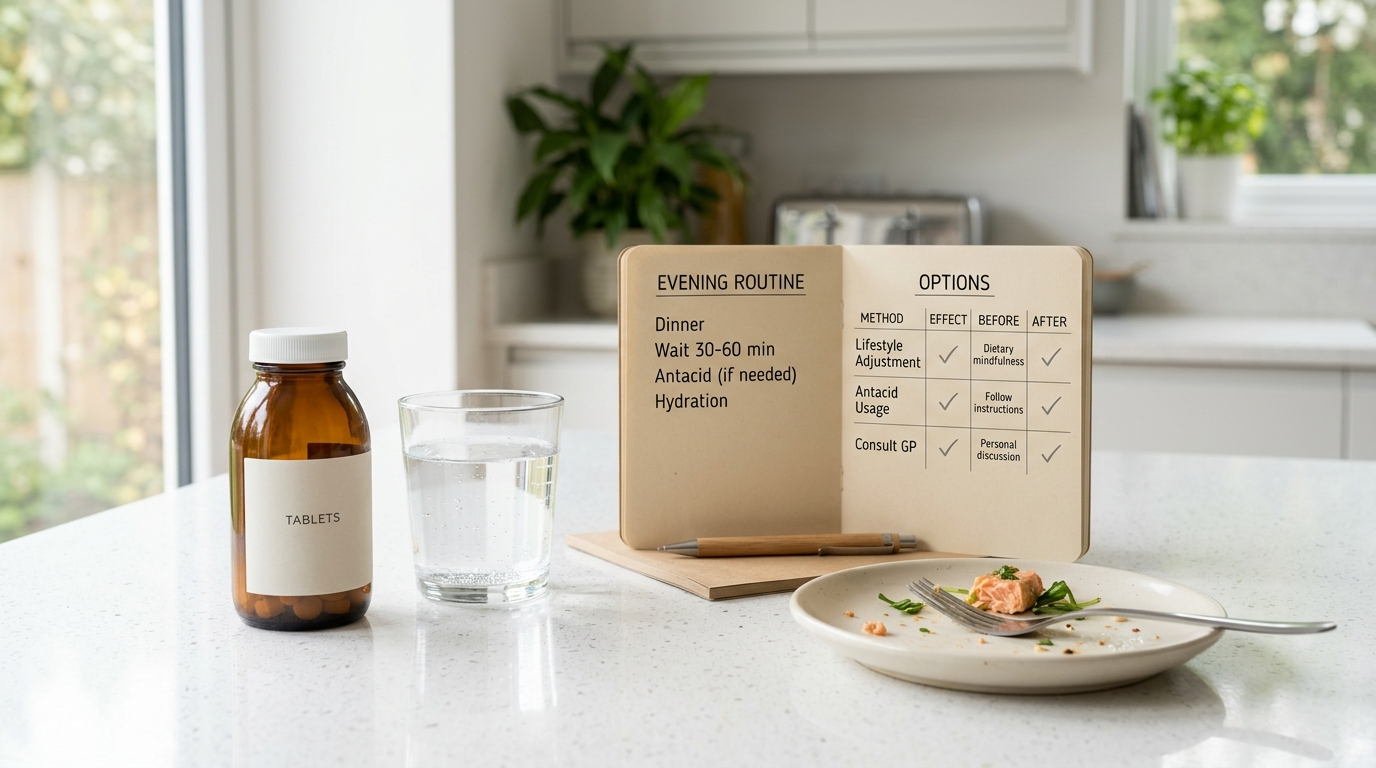
Pepcid can feel less effective when reflux triggers change, symptoms become more frequent, or acid suppression alone no longer matches the pattern. Compare correct famotidine timing, pharmacist-guided PPI options, alginate barriers, DGL chewables, meal timing, and daily digestion support. Persistent reflux or alarm symptoms need clinician review.
How did we evaluate options when Pepcid stops working?
We evaluated reflux-support options by separating symptom pattern, evidence strength, safety fit, and practical adherence. We prioritized clinical guidelines and human studies over ingredient marketing, including the American College of Gastroenterology GERD guideline on acid suppression and lifestyle care. We included H2 blockers, proton pump inhibitors, alginates, DGL licorice, meal timing, and daily digestion support because each category addresses a different part of the reflux experience. We excluded claims that a supplement can treat GERD, replace famotidine, or substitute for a clinician’s plan. This review is a comparison guide, not medical advice. We also checked medication-adjacent wording for label-direction safety and final wording. A pharmacist or gastroenterologist can help if reflux persists, appears several days per week, disrupts sleep, or comes with chest pain, trouble swallowing, vomiting blood, black stools, unexplained weight loss, or anemia.
Why might Pepcid feel less effective for acid reflux now?
Pepcid is famotidine, an H2 receptor antagonist that reduces stomach-acid production by blocking histamine-2 signaling in parietal cells. Pepcid may feel weaker when meal size, late eating, alcohol, pregnancy, weight change, NSAID use, stress, or hiatal hernia mechanics increase reflux pressure beyond what an H2 blocker covers. H2 blockers also fit intermittent symptoms better than frequent erosive GERD; the 2022 American College of Gastroenterology guideline positions proton pump inhibitors as stronger acid suppression for confirmed GERD patterns. Timing matters because famotidine usually works best before a known trigger meal or evening symptoms, not after reflux has already peaked. Rebound-style symptoms, chest symptoms, or swallowing problems should not be self-managed as “just reflux.” Clinician review matters when symptoms change, because persistent reflux can overlap with esophagitis, gastritis, gallbladder disease, cardiac symptoms, or medication side effects.
What options can you compare when Pepcid is not enough?
The main options are H2 blockers, proton pump inhibitors, alginate barriers, DGL licorice, meal timing changes, and daily digestion support. H2 blockers such as famotidine fit occasional breakthrough acid. Proton pump inhibitors such as omeprazole, esomeprazole, and pantoprazole provide stronger acid suppression when a clinician or pharmacist confirms that the pattern fits short-course OTC use or prescription care. Alginates form a floating raft above stomach contents; a 2017 systematic review in Diseases of the Esophagus found alginate therapy improved GERD symptoms versus placebo or antacids, though products vary by formula. DGL licorice is a supplement category aimed at upper-digestive comfort, not a GERD treatment. Meal timing reduces reflux pressure by lowering stomach volume near bedtime. Daily digestion support may help routine consistency, but it does not replace reflux medication. The table below separates mechanism from use case so readers do not compare unlike tools.
| Option | Best fit | Evidence strength | Main caution |
|---|---|---|---|
| H2 blockers, including famotidine | Occasional acid breakthrough | Established OTC drug category | May be insufficient for frequent symptoms |
| PPIs, including omeprazole or esomeprazole | Frequent acid symptoms after pharmacist or clinician review | Strong guideline support for GERD patterns | Use should match label or clinician direction |
| Alginates | Post-meal reflux and regurgitation | Moderate clinical evidence; formula-dependent | Sodium, calcium, and product differences matter |
| DGL licorice | Non-drug upper-digestive comfort support | Directional supplement evidence | Not a GERD treatment; check pregnancy and medication risks |
| Meal timing | Night reflux or large-dinner patterns | Guideline-supported lifestyle strategy | Requires consistent behavior change |
| Daily digestion support | Routine gut-wellness consistency | Ingredient-specific evidence varies | Does not treat reflux disease |
Which option is best for each reflux-support use case?
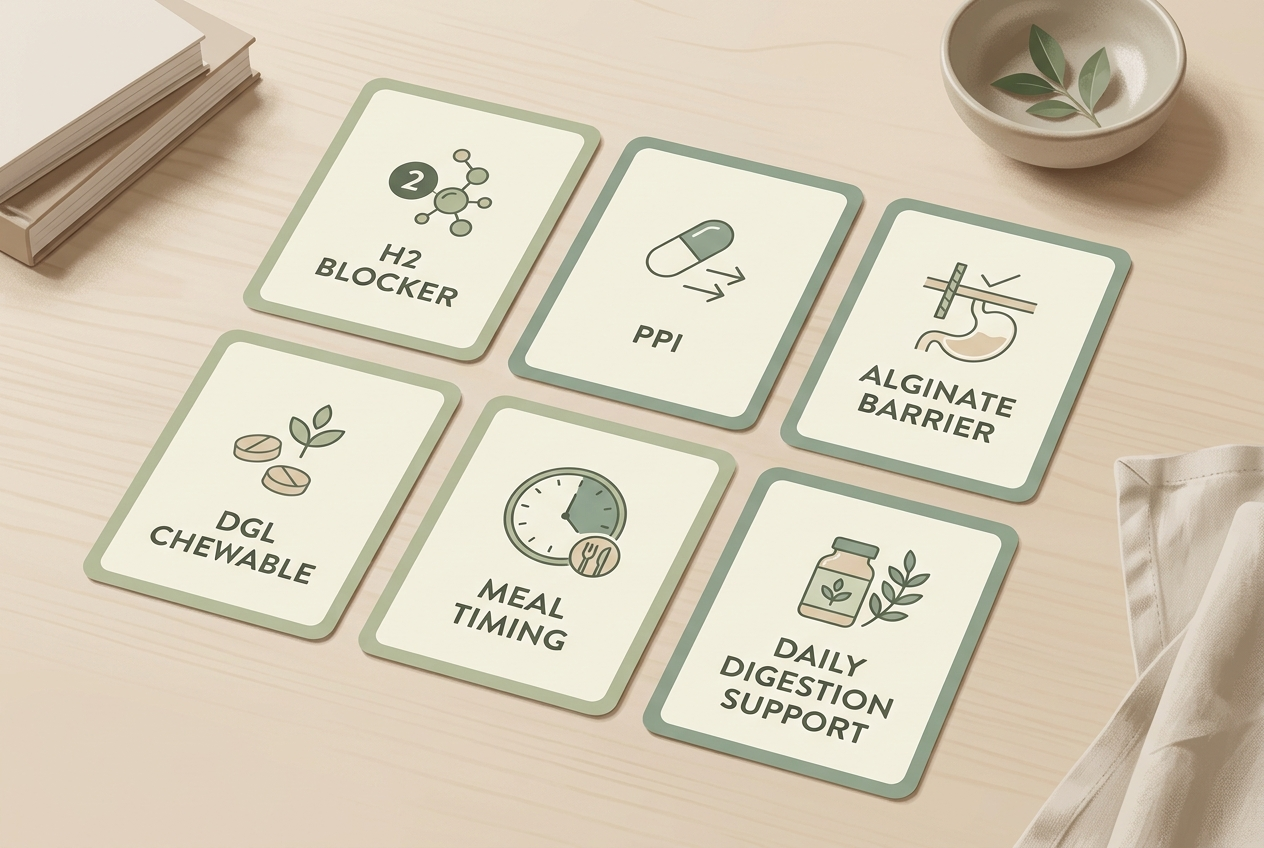
Best for occasional breakthrough acid: famotidine or another H2 blocker fits occasional symptoms when label directions match the pattern. Best for frequent acid symptoms: pharmacist-guided or clinician-guided PPI use fits stronger acid suppression, especially when symptoms occur several days per week. Best for post-meal regurgitation: alginate products fit mechanical reflux because alginate creates a raft barrier above stomach contents. Best for bedtime reflux: meal timing, smaller evening meals, and head-of-bed elevation fit pressure-related nighttime symptoms; the NIDDK lists weight management, trigger review, and not eating before bed as common GERD-care strategies. Best for non-drug digestive-comfort support: DGL licorice fits people comparing chewable botanical options, but DGL does not treat GERD. Best for daily routine consistency: probiotics, prebiotic fiber, enzymes, and hydration habits support general digestive wellness rather than acute reflux control. Keep medication choices tied to professional guidance.
Which products and categories are worth comparing?
Some links below are affiliate links. This does not influence our evaluation criteria or recommendations. Product comparison should start with the job-to-be-done, not the loudest claim. Reflux Gourmet and Gaviscon Advance-style alginate products fit people comparing raft-forming formulas for post-meal reflux; shoppers should compare sodium content, calcium content, and dosing instructions. Nature’s Way DGL Ultra and similar DGL capsules fit people who prefer non-chewable licorice formats, while Yuve DGL Licorice Chewables fit people who want a chewable DGL format for upper-digestive comfort support. Yuve’s broader digestive health collection also includes daily gut-wellness options, but those products should be evaluated as routine support, not reflux treatment. Selection should also account for pregnancy, sodium limits, and current medications. Glycyrrhizin-free DGL matters because whole licorice can affect blood pressure and potassium; the NCCIH notes safety concerns for licorice root products.
What do people often get wrong about Pepcid, PPIs, and supplements?
The common mistake is treating every reflux flare as the same problem. Pepcid reduces acid, but reflux symptoms can also reflect meal timing, stomach volume, esophageal sensitivity, medication effects, pregnancy, or a condition that needs evaluation. Another mistake is assuming stronger acid suppression is automatically better. PPIs can be appropriate, but OTC labels and clinician guidance matter because symptom duration, age, other medicines, and alarm symptoms change the risk calculation. A third mistake is asking DGL, probiotics, or digestive enzymes to perform like acid-suppressing drugs. DGL licorice may support upper-digestive comfort, and probiotics may support gut regularity, but neither category should be framed as GERD treatment. The better approach is pattern matching: acid breakthrough, post-meal regurgitation, nighttime reflux, and daily digestive routine each point to different tools. That framing prevents supplement overreach and medication guesswork.
For a closer look at clean-label options, see How Long Does DGL Licorice Take to Work?.
What questions do people ask about Pepcid not working anymore?
Can Pepcid stop working?
Pepcid can feel less effective when triggers change. Pressure, regurgitation, late meals, or new symptoms can overwhelm famotidine.
Should I switch from Pepcid to a PPI?
A pharmacist or clinician can judge whether OTC PPI use fits your pattern. Follow label directions and avoid unsupervised acid-reducer combinations.
Are alginates better than Pepcid?
Alginates and Pepcid do different jobs. Alginates create a raft; famotidine reduces acid production.
Does DGL licorice help acid reflux?
DGL licorice supports digestive comfort, not GERD treatment. Pregnancy, blood-pressure drugs, diuretics, kidney disease, or heart disease justify clinician review.
When should reflux symptoms be checked urgently?
Chest pain, trouble swallowing, vomiting blood, black stools, weight loss, vomiting, or anemia needs prompt care. Persistent reflux despite OTC care deserves clinician review.
Pepcid not working is a signal to compare the pattern, not to guess harder. Match the tool to the symptom pattern, ask a pharmacist or clinician when symptoms persist, and keep supplements in the safer lane of daily digestive-comfort support.
Leave a Reply