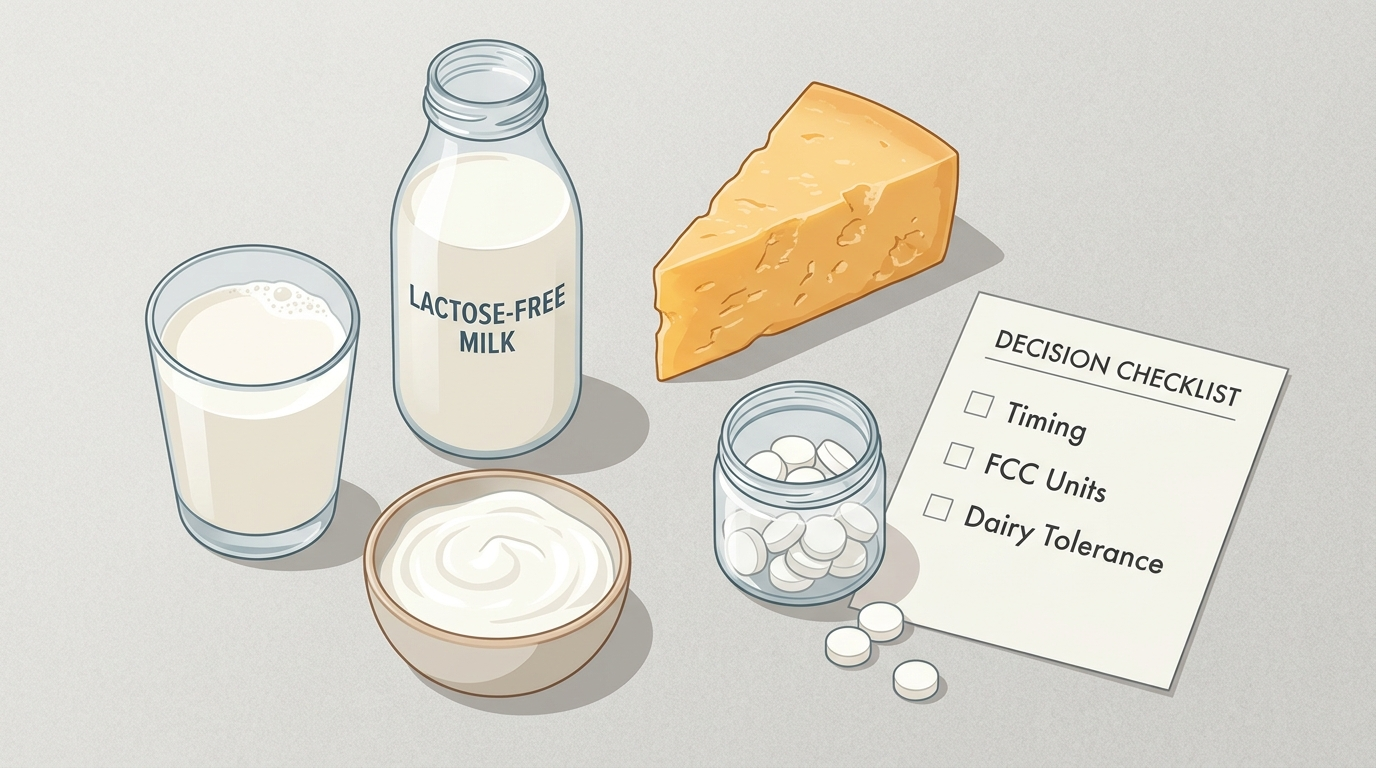
Most people with lactose intolerance do not have to give up all dairy. The better choice is usually a repeatable plan: use lactase pills for higher-lactose foods, choose naturally lower-lactose dairy when tolerated, and skip dairy when symptoms persist despite correct timing, dose, and serving-size control.
How we evaluated giving up dairy versus using lactase pills?
We evaluated dairy avoidance and lactase pills by comparing symptom fit, lactose exposure, FCC lactase units, timing instructions, nutrition tradeoffs, and product-label transparency. NIDDK guidance, Mayo Clinic clinical guidance, EFSA’s lactase claim opinion, and FDA dietary-supplement manufacturing rules carried more weight than forum anecdotes or brand copy. Product comparisons focused on label-visible details: lactase activity, format, allergen disclosures, serving flexibility, and whether the product supports lactose digestion without implying broader digestive treatment. This review excludes milk allergy, inflammatory bowel disease, celiac disease, unexplained weight loss, bleeding, severe pain, and persistent vomiting because those patterns need medical evaluation rather than supplement comparison.
Should you give up dairy or use lactase pills?
Use lactase pills when the problem is specifically lactose digestion, the dairy food is worth keeping, and the enzyme can be taken with the first bite or sip. Give up or reduce dairy when symptoms continue despite correct lactase timing, when milk protein allergy is possible, or when the food is not nutritionally or socially important enough to manage. The National Institute of Diabetes and Digestive and Kidney Diseases says lactose intolerance involves digestive symptoms after lactose-containing foods or drinks, often because the body does not make enough lactase for the lactose dose. That mechanism makes lactase a targeted tool, not a universal dairy shield. A practical plan uses lower-lactose foods, smaller servings, and lactase tablets for predictable meals, then tracks whether milk, ice cream, soft cheese, or whey-containing snacks still trigger symptoms.
What should you compare before choosing lactase pills?
Compare lactase pills by FCC units, timing directions, tablet format, inactive ingredients, vegan fit, and whether the label separates lactose support from broader digestive claims. FCC units measure lactase enzyme activity under standardized conditions, so a 9,000 FCC product usually provides more lactase activity than a lower-unit tablet, but the right amount still depends on grams of lactose in the meal. Mayo Clinic notes that nonprescription lactase tablets or drops may help some people digest dairy, while also noting that they do not help everyone. Chewables fit surprise dairy, capsules fit people who dislike chalky tablets, and drops fit people who pre-treat milk. Buyers comparing Yuve Lactase Enzymes, Lactaid Fast Act, NOW Dairy Digest Complete, and store brands should prioritize label clarity, allergen disclosures, expiration dating, and timing instructions over vague “digestive comfort” language.
How do common dairy strategies compare?
| Strategy | Best for | What to check | Main limitation |
|---|---|---|---|
| Use lactase pills with dairy | Predictable lactose-containing meals | FCC units, timing, serving size | Does not address milk protein reactions |
| Choose lower-lactose dairy | People who tolerate yogurt or aged cheese | Lactose amount, added ingredients | Tolerance varies by person |
| Use lactose-free milk | Daily milk drinkers | Nutrition panel, sweet taste, dairy proteins | Still contains cow’s milk proteins |
| Avoid dairy fully | Persistent symptoms or personal preference | Calcium, vitamin D, protein replacement | Nutrient planning matters |
The best strategy matches the actual food pattern. Someone who wants pizza once a week may need a different plan than someone who drinks milk every morning. A person with hives, wheezing, vomiting, or throat symptoms after dairy should treat that as possible allergy territory, not a lactase-shopping problem. A person who tolerates hard cheese but not ice cream may need portion control more than complete avoidance.
Which lactase options are best for specific use cases?
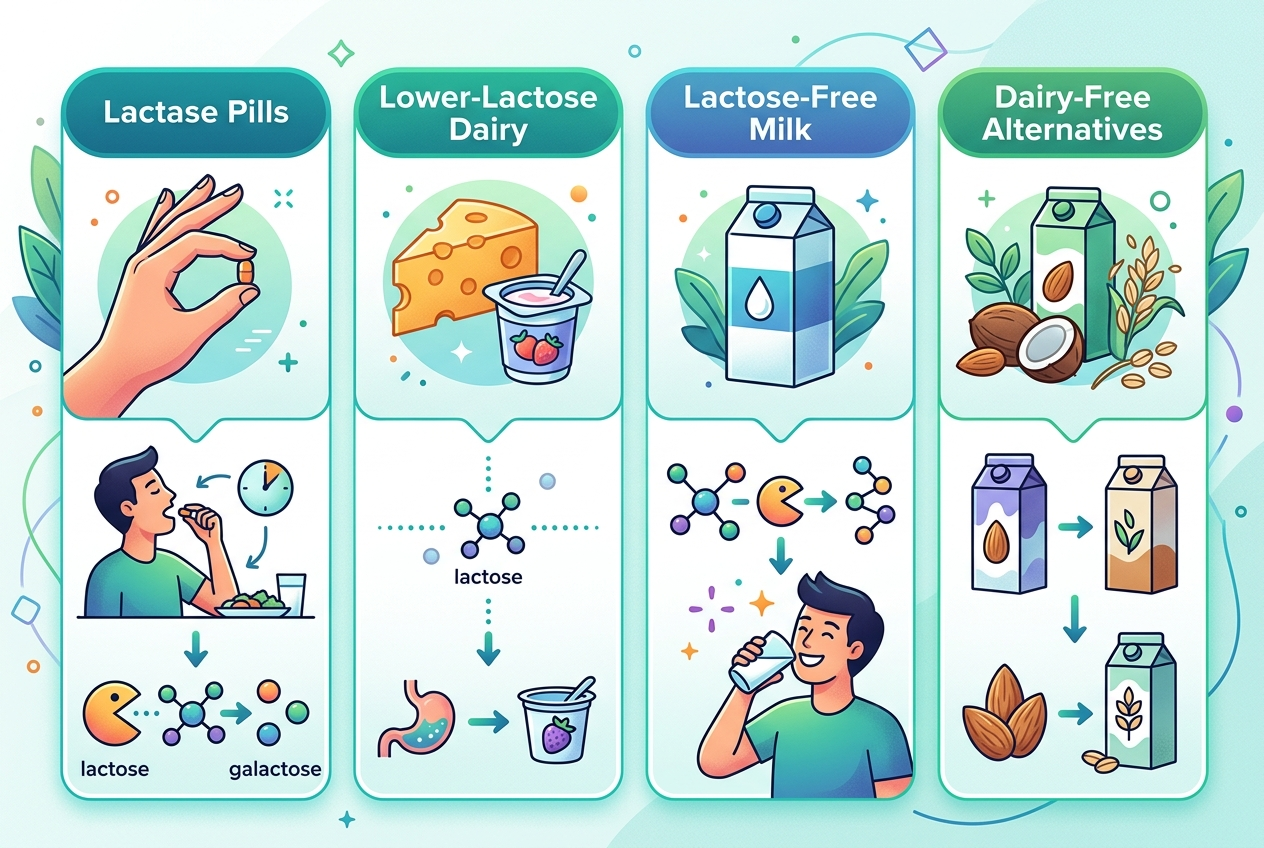
Best for lactase-focused simplicity: Yuve Lactase Enzymes 9,000 FCC, because the formula centers on lactase activity and a straightforward dairy-use case. Best for broad drugstore availability: Lactaid Fast Act, because the brand is widely stocked and familiar to lactose-intolerant shoppers. Best for people comparing multi-enzyme dairy blends: NOW Dairy Digest Complete, because the formula includes lactase plus other enzymes, though that makes lactase-only comparisons less direct. Best for budget testing: a store-brand lactase tablet with clearly labeled FCC units, current expiration dating, and allergen statements that match the user’s needs. Some links below are affiliate links. This does not influence our evaluation criteria or recommendations. EFSA concluded that lactase enzyme improves lactose digestion in people who have difficulty digesting lactose, but that claim depends on taking lactase with lactose-containing food, not after symptoms have already started.
When is avoiding dairy the better move?
Avoiding dairy is the better move when symptoms are severe, unpredictable, or not clearly tied to lactose dose. Lactase breaks lactose into glucose and galactose; it does not change casein, whey, milk fat, histamine load, food additives, or reflux sensitivity. NIDDK notes that lactose intolerance may affect nutrient intake if dairy avoidance reduces calcium and vitamin D, so full avoidance should include a replacement plan. Fortified soy milk, lactose-free cow’s milk, calcium-set tofu, canned salmon with bones, fortified orange juice, and leafy greens can help fill gaps, but nutrition profiles vary by product. People who remove dairy and still have bloating, diarrhea, pain, or nausea should stop treating lactose as the only suspect. A food-and-symptom log can separate lactose exposure from meal size, caffeine, alcohol, high-FODMAP foods, sugar alcohols, stress, and timing.
What product-quality signals matter for lactase supplements?
Product-quality signals matter because lactase pills are dietary supplements, not prescription drugs. FDA’s dietary supplement CGMP rule in 21 CFR Part 111 requires dietary supplement firms to follow current good manufacturing practice, but CGMP compliance does not prove that a product will work for every lactose exposure. Look for clear FCC units, lot number, expiration date, allergen statement, serving directions, and a Supplement Facts panel that avoids hiding the active lactase amount. Vegan shoppers should check capsules, flavors, and excipients because “lactase” can be microbial while other ingredients may not match vegan standards. People comparing Yuve, Lactaid, NOW, and store brands should use the same standard for each product: visible dose, practical timing, transparent ingredients, and a format they will actually carry when dairy appears.
FAQ?
Can lactase pills let you eat dairy normally?
Lactase pills can help with lactose-containing foods, but they do not guarantee normal tolerance. The dose, timing, lactose amount, meal size, and individual lactase deficiency all affect the result.
Is lactose-free milk better than lactase pills?
Lactose-free milk is often easier for daily milk use because the lactase enzyme has already split much of the lactose before drinking. Lactase pills are more flexible for restaurants, desserts, cheese plates, and mixed meals.
Do lactase pills work after symptoms start?
Lactase pills work best with the first bite or sip of dairy. Taking lactase after bloating, gas, or diarrhea starts is usually too late because undigested lactose may already be moving through the digestive tract.
Should you avoid dairy if lactase pills do not work?
Reducing or avoiding dairy is reasonable if correct lactase timing and serving control do not help. Persistent symptoms should also prompt a clinician conversation because lactose may not be the main trigger.
Are vegan lactase pills available?
Yes, some lactase supplements use microbial lactase and vegan-friendly excipients. Check the full Supplement Facts panel, capsule material, allergen statement, and manufacturing notes rather than relying only on front-label claims.
Can lactase pills help with milk allergy?
No. Lactase pills target lactose, while milk allergy involves immune reactions to milk proteins such as casein or whey. Allergy-type symptoms need medical guidance, not higher lactase dosing.
What is the simplest decision rule?
Use lactase for dairy you genuinely want, tolerate, and can dose predictably. Skip or reduce dairy when symptoms continue, the serving is not worth managing, or allergy-type symptoms appear.
What is the bottom line?
The practical middle path is not “all dairy” or “no dairy.” Keep lower-lactose foods that work, use a clearly labeled lactase product when dairy is worth it, and avoid dairy when symptoms, allergies, or nutrition goals point elsewhere.
Leave a Reply