
Some people still need lactase with lactose-free milk when the product is lactose-reduced, cross-contaminated, consumed in large servings, or paired with higher-lactose dairy. True lactose-free milk should contain little to no lactose, but individual tolerance varies, and symptoms can also come from milk protein, fat, FODMAPs, or unrelated gut sensitivity.
How did we evaluate lactase with lactose-free milk?
We evaluated lactase use by separating three questions: how much lactose remains in the dairy product, how much lactase enzyme reaches the meal, and whether the person’s symptoms actually track with lactose exposure. We prioritized NIDDK lactose-intolerance guidance, peer-reviewed lactose-intolerance trials, EFSA lactase health-claim review, and official product facts over forum anecdotes. We excluded claims that raw milk, probiotics, or enzymes permanently fix lactose intolerance because those claims overstate the evidence. The limitation is practical: U.S. “lactose-free” wording depends on truthful labeling and product testing, while consumer tolerance depends on serving size, timing, and total meal composition.
Why might lactose-free milk still cause symptoms?
Lactose-free cow’s milk usually starts as regular milk and receives lactase enzyme before sale. That lactase splits lactose into glucose and galactose, which is why lactose-free milk can taste sweeter than regular milk. A review of low-lactose dairy technology in Foods explains that commercial lactose-free milk commonly uses lactase hydrolysis rather than removing dairy protein or milk fat. NIDDK states that lactose intolerance comes from lactose malabsorption, where the small intestine makes too little lactase to digest all consumed lactose. If a product is only lactose-reduced, if a serving is large, or if the meal includes ice cream, soft cheese, whey, or milk powder, the total lactose load can still exceed personal tolerance. If symptoms occur after truly lactose-free milk alone, lactose may not be the only trigger; milk protein sensitivity, fat delayed emptying, IBS patterning, or anxiety-related gut motility can mimic a lactose problem.
When does extra lactase make sense?
Extra lactase makes the most sense when the label says lactose-reduced, when the person is eating mixed dairy, or when prior reactions happened after larger servings. NIDDK says lactase tablets or drops can break down lactose in foods and drinks and may lower the chance of lactose-intolerance symptoms. A randomized trial indexed in PubMed found that oral lactase reduced hydrogen breath test results and gastrointestinal symptoms after lactose ingestion, but that evidence applies to lactose exposure, not to milk protein, casein, whey, or dairy fat. The practical rule is narrow: use lactase when lactose is plausibly present. Lactase will not digest casein, neutralize reflux, fix gallbladder-related fat intolerance, or change a milk allergy. People who react to every dairy format should test smaller portions, compare lactose-free cow’s milk with fortified soy milk, and ask a clinician about non-lactose causes.
How should lactase options compare before you buy?
Some links below are affiliate links. This does not influence our evaluation criteria or recommendations. Compare lactase products by FCC lactase units per serving, timing instructions, format, ingredient simplicity, and cost per dairy occasion. EFSA reviewed lactase enzyme and concluded that lactase improves lactose digestion in people who have difficulty digesting lactose when enough enzyme is used with lactose-containing foods. Yuve Lactase Enzymes provide 9,000 FCC units per serving in a vegan tablet format. LACTAID Fast Act uses a familiar caplet format and clear dairy-focused directions. Store brands can be economical when they disclose FCC units and match the intended meal size. Multi-enzyme products such as NOW Dairy Digest Complete add protease and lipase, which may appeal to people comparing broader dairy digestion support, but lactase remains the ingredient tied most directly to lactose digestion.
| Option | Best for | What to verify |
|---|---|---|
| Yuve Lactase Enzymes 9,000 FCC | Vegan lactase users who want a simple dairy enzyme option | Serving size, 9,000 FCC lactase, and meal timing |
| LACTAID Fast Act | People who want a widely available dedicated lactase caplet | FCC units per serving and instructions for first dairy bite |
| Store-brand lactase | Budget shoppers comparing cost per 9,000 or 10,000 FCC units | Whether the label lists FCC units clearly |
| NOW Dairy Digest Complete | People comparing lactase plus other dairy-digestion enzymes | Whether added enzymes fit the actual dairy trigger |
What is the best way to test lactose-free milk tolerance?
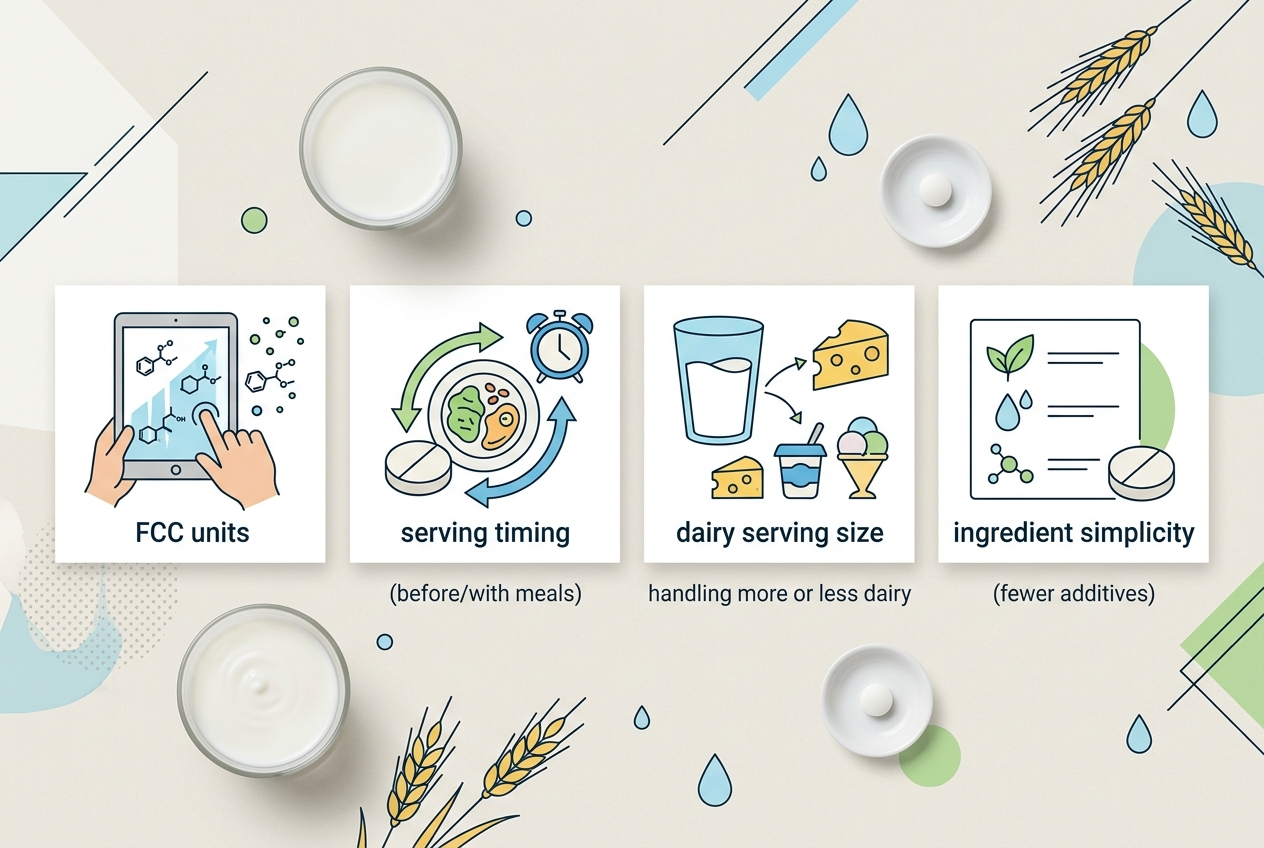
The cleanest test compares one variable at a time. Choose a day with stable meals, drink a small measured serving of lactose-free milk by itself or with a familiar low-fat meal, and track symptoms for 24 hours. Repeat the same serving with lactase only if the first test caused symptoms and the product may contain residual lactose or be lactose-reduced. Use the same brand, serving size, timing, and meal context because IBS-C, IBS-D, reflux, stress, and menstrual-cycle shifts can change symptom interpretation. If lactose-free cow’s milk causes symptoms but fortified soy milk does not, the pattern may involve dairy protein, fat, or another milk component rather than lactose. If both cause symptoms, the pattern may involve meal volume, gums, sweeteners, caffeine, or broader gut sensitivity. Severe pain, bleeding, weight loss, persistent vomiting, or new symptoms deserve medical review instead of supplement trial-and-error.
Which products meet these criteria?
Best for simple lactase support: Yuve Lactase Enzymes, because the formula focuses on a clear 9,000 FCC lactase serving and fits shoppers who prefer vegan digestive support. Best for maximum retail familiarity: LACTAID Fast Act, because the brand is easy to find and the use case is obvious for dairy meals. Best for price comparison: a store-brand lactase product, but only when the Supplement Facts panel lists FCC units, tablet count, and timing directions clearly. Best for broader dairy-enzyme comparison: NOW Dairy Digest Complete, because it includes lactase alongside other enzymes, though those extra enzymes should not be treated as proof that lactose is the problem. For Yuve shoppers, the lactase enzymes page and the digestive health collection are the most relevant next links.
What questions do people ask about lactase and lactose-free milk?
Is lactose-free milk the same as dairy-free milk?
No. Lactose-free cow’s milk still contains dairy protein and milk fat, while dairy-free milks such as soy, almond, oat, or pea milk come from plant ingredients. People with milk allergy or dairy-protein sensitivity need a different decision framework than people with lactose malabsorption.
Can lactose-free milk still contain lactose?
It can contain very low or non-detectable lactose depending on the product and testing standard. A lactose-reduced product is different from a lactose-free product, so shoppers should read the front label, ingredients, and nutrition panel carefully.
Should lactase be taken before or after milk?
Most lactase tablets are designed to be taken with the first bite or sip of lactose-containing food. Follow the product label because enzyme timing affects how well lactase contacts lactose during digestion.
Does lactase help with reflux from milk?
Lactase helps digest lactose; it does not directly address reflux mechanics, stomach emptying, or lower-esophageal sphincter function. If milk triggers reflux without gas, bloating, or diarrhea, fat content, meal size, caffeine, chocolate, or timing may matter more than lactose.
Are probiotics a substitute for lactase?
No probiotic is a direct substitute for lactase enzyme at a lactose-containing meal. Some yogurt cultures can help digest lactose within fermented dairy, but a probiotic capsule or gummy should not be expected to digest a glass of milk.
How many FCC units do people need?
There is no universal FCC number because tolerance depends on lactose dose, gastric emptying, and individual lactase activity. Many shoppers compare products around 9,000 to 10,000 FCC units per dairy occasion, then adjust according to label directions and real meal response.
When should symptoms prompt medical advice?
Medical advice matters when symptoms are new, severe, persistent, or paired with bleeding, unintended weight loss, fever, dehydration, or nighttime diarrhea. Lactose intolerance is common, but not every dairy reaction is lactose intolerance.
For a closer look at clean-label options, see FODZYME Alternatives That Are Not Powders: Capsules, Gummies, and Yuve Enzymes Compared.
For a closer look at clean-label options, see Lactose Intolerance or A1 Milk Sensitivity? When Yuve Lactase Fits—and When It Doesn’t.
What is the bottom line?
Lactase with lactose-free milk is usually unnecessary when the product is truly lactose-free and the serving is modest, but it can be reasonable when the label says lactose-reduced or the meal includes other dairy. The smarter comparison is not “lactase or no lactase”; it is lactose load, FCC units, timing, and whether symptoms actually track with lactose exposure.
Leave a Reply