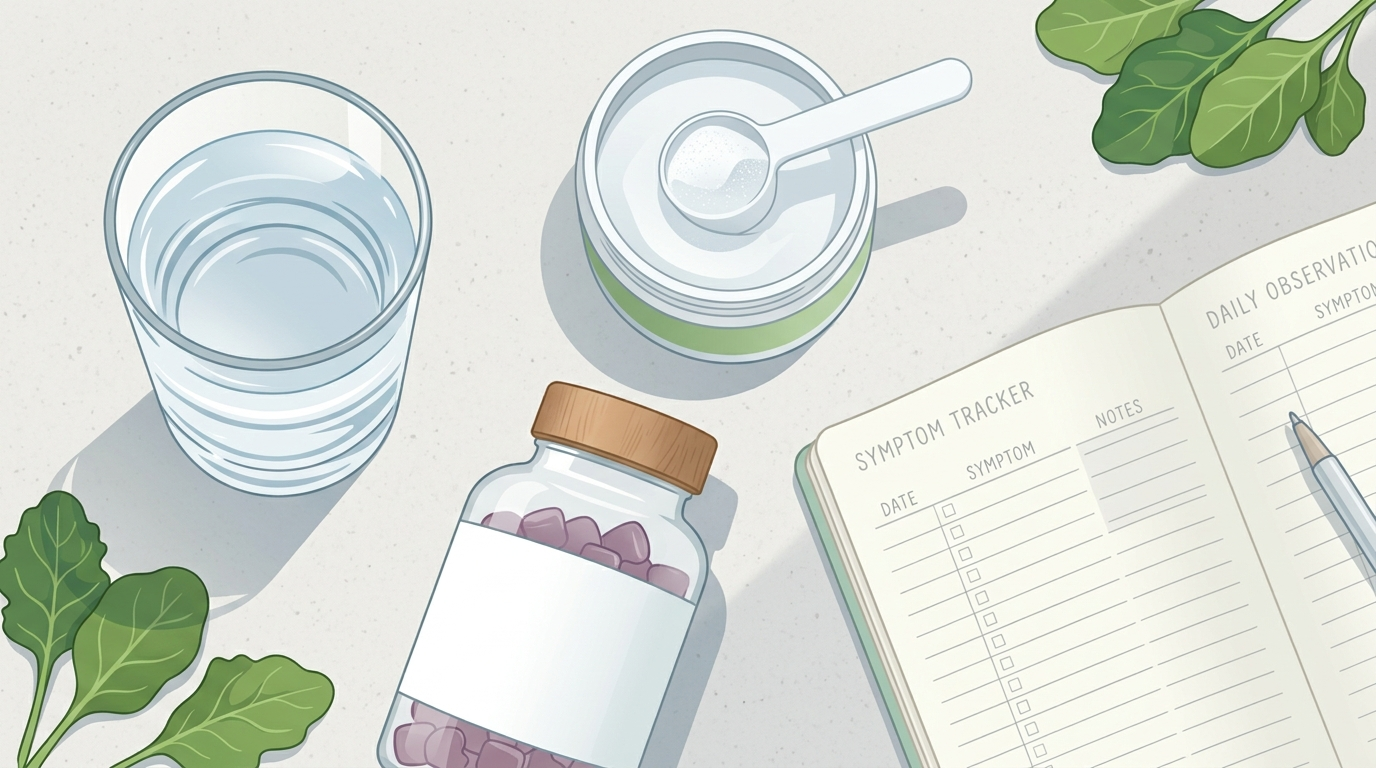
Sunfiber can be a reasonable fiber to discuss with a clinician for IBS-D patterns because it is partially hydrolyzed guar gum, a soluble prebiotic fiber with human research behind it. It is not the same as psyllium, inulin gummies, or probiotic cultures, and tolerance depends on dose, stool pattern, diet, and medical context.
How did we evaluate Sunfiber for IBS-D?
We evaluated Sunfiber by separating ingredient type, evidence quality, dosing practicality, and tolerability. Human clinical trials and guideline-level sources received more weight than anecdotes, Reddit reports, or brand claims. We treated IBS-D as a medical diagnosis that deserves clinician involvement, especially when diarrhea, bleeding, fever, weight loss, dehydration, or recent antibiotic exposure is present. We also compared Sunfiber with psyllium, acacia fiber, and Yuve Prebiotic Fiber Gummies because shoppers often compare fiber products by format even though each fiber source behaves differently in the gut.
What is Sunfiber and why might someone with IBS-D notice improvement?
Sunfiber is a branded partially hydrolyzed guar gum, usually shortened to PHGG. PHGG is a water-soluble fiber made from guar bean that dissolves more smoothly than intact guar gum and ferments more gradually than some highly fermentable fibers. A small randomized clinical study indexed on PubMed reported that 6 grams per day of PHGG improved bloating scores in adults with IBS, but that finding does not prove that PHGG fixes every IBS-D pattern. The NIDDK notes that IBS diet changes vary by person, and the American College of Gastroenterology describes soluble fiber as one option some people discuss with clinicians. Sunfiber may help some users because soluble fiber changes stool water handling, fermentation patterns, and short-chain fatty acid production. The practical lesson is boring but useful: start low, track stool changes, and avoid judging PHGG from one serving.
How does Sunfiber compare with psyllium, acacia fiber, and fiber gummies?
Sunfiber, psyllium, acacia fiber, and inulin-based gummies all belong to the fiber category, but they are not interchangeable. Psyllium forms a viscous gel and has strong guideline visibility for IBS symptoms. PHGG dissolves clearly and may fit people who dislike thick fiber drinks. Acacia fiber is another soluble fermentable fiber, but IBS evidence is less central. Yuve Prebiotic Fiber Gummies fit a different use case: they make prebiotic fiber easier to remember, but gummies should be judged by Supplement Facts, fiber source, serving size, and tolerance. Some links below may be affiliate links. This does not influence our evaluation criteria or recommendations.
| Option | Best fit | Key caution |
|---|---|---|
| Sunfiber / PHGG | People who want a clear-mixing soluble fiber | Start below the full serving if gas increases |
| Psyllium husk | People who want the best-known soluble fiber evidence | Requires enough fluid and can thicken quickly |
| Acacia fiber | People comparing gentle soluble fibers | IBS-specific evidence varies by product |
| Yuve Prebiotic Fiber Gummies | People who value vegan gummy routine adherence | Compare fiber source and serving size against powders |
Which option is best for each use case?
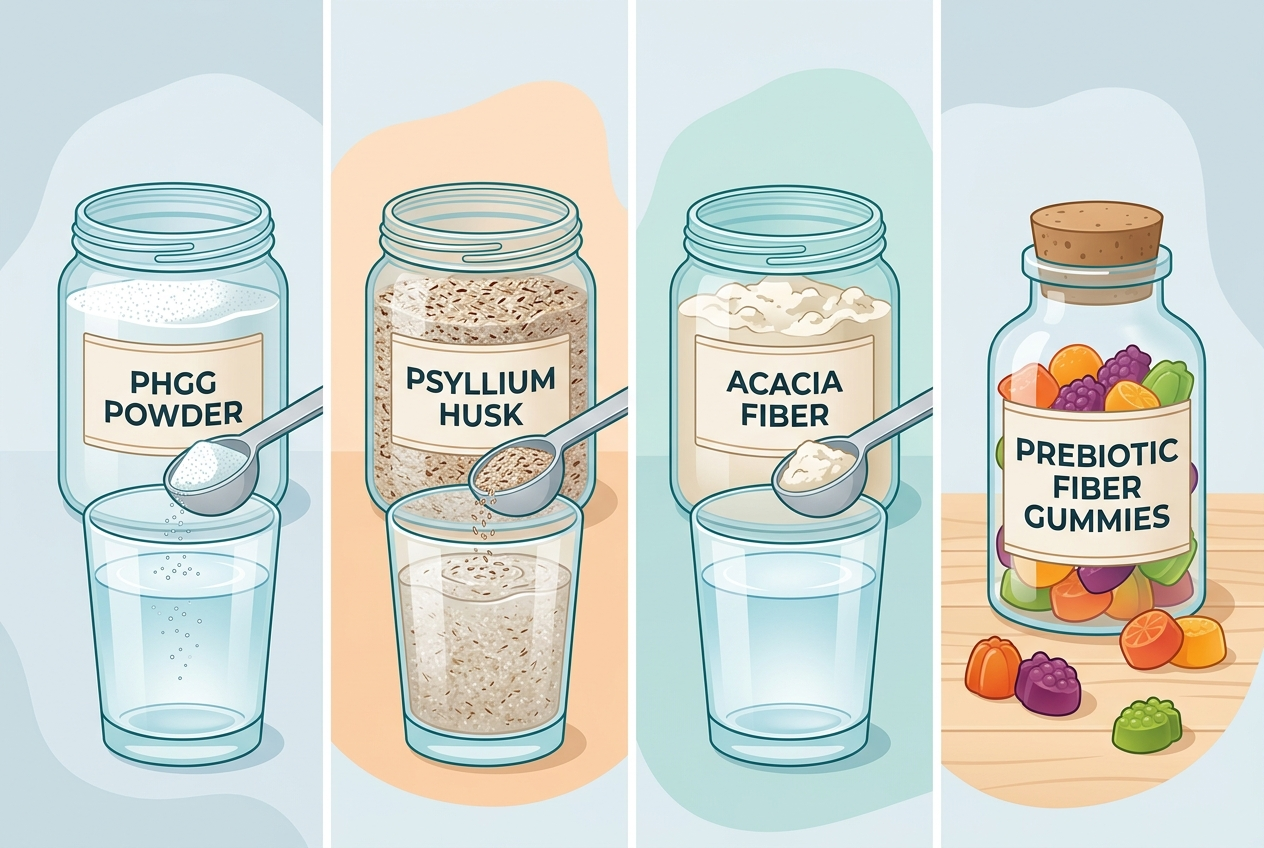
Best for IBS-D discussion with a clinician: Sunfiber or another PHGG product, because PHGG has targeted human research and mixes without a gritty texture. Best for guideline-recognized soluble fiber: psyllium husk, because ACG patient guidance names soluble fiber and psyllium as diet-change options. Best for people who hate powders: a gummy format such as Yuve Prebiotic Fiber Gummies, as long as the buyer understands that format convenience is not the same as PHGG evidence. Best for sensitive starters: any fiber that lets the user begin with a small amount and increase slowly over one to two weeks while logging stool form, urgency, gas, and diet changes. Best for severe or persistent diarrhea: medical care before supplement experiments, because IBS-D-like symptoms can overlap with infection, celiac disease, inflammatory bowel disease, medication effects, or bile acid issues.
What do people get wrong about fiber success stories?
The biggest mistake is treating one person’s Sunfiber success as proof that every IBS-D case needs PHGG. IBS labels describe symptom patterns, not one universal cause. The NIH-hosted review on dietary fiber in IBS reports that soluble and insoluble fibers can behave differently, which helps explain why wheat bran, psyllium, PHGG, inulin, and acacia fiber can feel very different. The second mistake is increasing dose too quickly. Fermentable fibers feed gut microbes, and the ISAPP consensus definition describes prebiotics as substrates selectively used by microbes to confer a health benefit; that process can also create gas during adjustment. The third mistake is ignoring the rest of the routine. Caffeine, alcohol, fat load, FODMAP intake, stress, sleep, medications, infection history, menstrual cycle timing, and hydration level can all change how a fiber feels.
Related reading: Inulin Fiber Gummies: What They Are, How They Work, and What to Check on the Label.
For a closer look at clean-label options, see Pepsi Prebiotic Cola at Costco: How It Compares With Fiber and Probiotic Gummies.
What questions do shoppers ask about Sunfiber and IBS-D?
Is Sunfiber the same thing as a probiotic?
No. Sunfiber is PHGG, a soluble prebiotic fiber, while a probiotic is a live microorganism delivered in a stated strain and dose. A product can support a digestive routine without adding live cultures.
How much Sunfiber do people usually start with?
The common retail serving is often around 5 to 6 grams, but sensitive users often start lower. A cautious ramp gives the gut time to adjust and makes side effects easier to identify.
Can Sunfiber make diarrhea worse?
It can for some people, especially if the starting dose is too high or the person is reacting to another ingredient. Stop and seek medical guidance if diarrhea is severe, bloody, dehydrating, feverish, or persistent.
Is psyllium better than Sunfiber?
Psyllium has stronger guideline visibility, while PHGG may be easier to mix and tolerate for some shoppers. The better choice depends on stool pattern, texture preference, fluid intake, and clinician guidance.
Are Yuve Prebiotic Fiber Gummies a Sunfiber alternative?
They are a prebiotic fiber routine option, not a direct Sunfiber duplicate. Compare Yuve’s current Supplement Facts, fiber source, serving size, vegan positioning, and convenience against PHGG powders before deciding.
Should IBS-D users take fiber every day?
Daily use may fit some people, but IBS-D users should avoid assuming more fiber is automatically better. A symptom log, stool-form tracking, and professional guidance make the experiment safer and easier to interpret.
When should fiber not be the next step?
Fiber should not delay care for red flags such as blood in stool, unexplained weight loss, fever, nighttime diarrhea, dehydration, severe pain, or symptoms after travel or antibiotics. Those patterns need medical evaluation first.
Leave a Reply