Category: Prebiotics

  • Can Low Fiber Intake Trigger Diarrhea Patterns? What to Know Before Choosing a Fiber Supplement

    Can Low Fiber Intake Trigger Diarrhea Patterns? What to Know Before Choosing a Fiber Supplement

    Low fiber intake can contribute to loose, erratic bowel patterns in some people, but it does not by itself create an IBS-D diagnosis. Fiber type matters more than simply eating more fiber. Soluble fibers such as psyllium can add form, while fast-fermenting fibers can increase urgency or gas in sensitive people.

    How did we evaluate low-fiber-related diarrhea patterns?

    We evaluated this topic with a simple rule: human evidence outranked supplement marketing. We prioritized the American College of Gastroenterology guideline, randomized controlled trials, and meta-analyses on soluble fiber, stool form, and fermentable prebiotics, including the Moayyedi meta-analysis and the Nagy systematic review. We compared options by fiber type, dose per serving, fermentability, delivery format, and how well each option fits someone whose bowel pattern already feels unpredictable. We excluded disease-treatment claims, dramatic before-and-after promises, and vague “gut reset” language because those claims do not help a warm-stage buyer choose responsibly. We also treated label facts and ingredient mechanisms separately: psyllium can thicken stool, methylcellulose can add bulk with less fermentation, and chicory inulin can feed bifidobacteria but may feel too active for some people.

    Can low fiber intake actually trigger diarrhea-like patterns?

    Low fiber intake can reduce stool bulk, which means intestinal fluid has less material to bind to and stools can look looser or less formed. That pattern still differs from an IBS-D diagnosis, because IBS-D requires a broader symptom pattern and clinical context, not just one low-fiber week. Evidence supports soluble fiber more strongly than “any fiber”: the Moayyedi meta-analysis found benefit for soluble fiber in IBS symptoms, while bran did not show the same effect. The ACG guideline also treats fiber choice as subtype-specific, not automatic. In practice, low fiber can be part of the picture when someone eats highly refined foods, skips produce, and then notices fast, poorly formed bowel movements. The mechanism is plausible, but low fiber is usually one contributor among hydration, caffeine, stress, sugar alcohols, and individual FODMAP tolerance.

    What else should you rule out before blaming low fiber?

    Loose stool has several common look-alikes, so low fiber should never be the only suspect. The ACG guideline highlights celiac testing, inflammatory markers, and diet review when diarrhea symptoms keep recurring, because a self-diagnosis can miss the real driver. Everyday triggers matter too: coffee can speed colonic motility, magnesium can pull water into the bowel, and sugar alcohols such as sorbitol or erythritol can provoke urgency in people with sensitive guts. Lactose intolerance and high-FODMAP foods can do the same. Ironically, adding the wrong fiber can also backfire. Chicory inulin is a prebiotic, but the Nagy review found the clearest bowel-function benefits in healthy populations rather than gastrointestinal-disorder groups. If loose stools come with blood, fever, weight loss, nighttime symptoms, or sudden persistence, clinician input beats any supplement experiment.

    What are the common supplement options for this pattern?

    Three categories dominate this conversation: psyllium, methylcellulose, and chicory-root inulin. Psyllium is a gel-forming soluble fiber with the best evidence for adding form to loose stool. Methylcellulose is a non-fermentable soluble fiber, so it usually creates less gas from bacterial fermentation. Chicory inulin is a prebiotic fiber that can improve stool frequency and bifidobacteria counts in some adults, including in the Micka randomized trial and the Nagy review, but it can feel too stimulating for highly FODMAP-sensitive users.

    Option Main fiber Best fit Main tradeoff
    Metamucil Psyllium Loose stool form Texture, some bloating
    Citrucel Methylcellulose Lower-fermentation routine Less prebiotic upside
    Yuve Chicory inulin Low-dose prebiotic habit Can increase gas

    Which option is best for each use case?

    Best for adding form to loose stool: psyllium. Psyllium forms a viscous gel, and that mechanism gives it the strongest evidence base when stool consistency is the main complaint. Best for people who want less fermentation from the fiber itself: methylcellulose. Citrucel’s methylcellulose is non-fermentable, so the ingredient is less likely to generate gas from colonic bacteria, though the tradeoff is less microbiome-focused benefit. Best for a small, daily prebiotic routine: chicory-root inulin. Yuve’s gummy format keeps the dose modest at 1.5 g per gummy, which may feel easier to test than a large powder serving, but inulin remains a FODMAP and can aggravate bloating or urgency in sensitive users. Best for mixed goals: start with the mechanism, not the brand. If stool form matters first, pick psyllium; if gentleness matters first, test methylcellulose; if microbiome support matters first, test inulin slowly.

    Which products meet these criteria?

    Some links below are affiliate links. This does not influence our evaluation criteria or recommendations. For a low-dose prebiotic option, Yuve Prebiotic Fiber Gummies deliver 1.5 g of chicory-derived inulin per gummy in a vegan format, which makes them a reasonable fit for people who want gradual routine support rather than a large bolus. For the strongest stool-forming track record, Metamucil psyllium powder remains the benchmark because psyllium has the clearest evidence base for soluble-fiber stool normalization. For shoppers who prioritize a less fermentable ingredient, Citrucel caplets or powder use methylcellulose and may suit people who want fiber without as much bacterial fermentation. None of those products is universally “best.” The cleaner way to shop is to match the product to the mechanism, then keep the dose low at first. If you want to compare adjacent options, Yuve’s broader digestive health collection is the most relevant internal category page.

    What is the bottom line before you choose a fiber supplement?

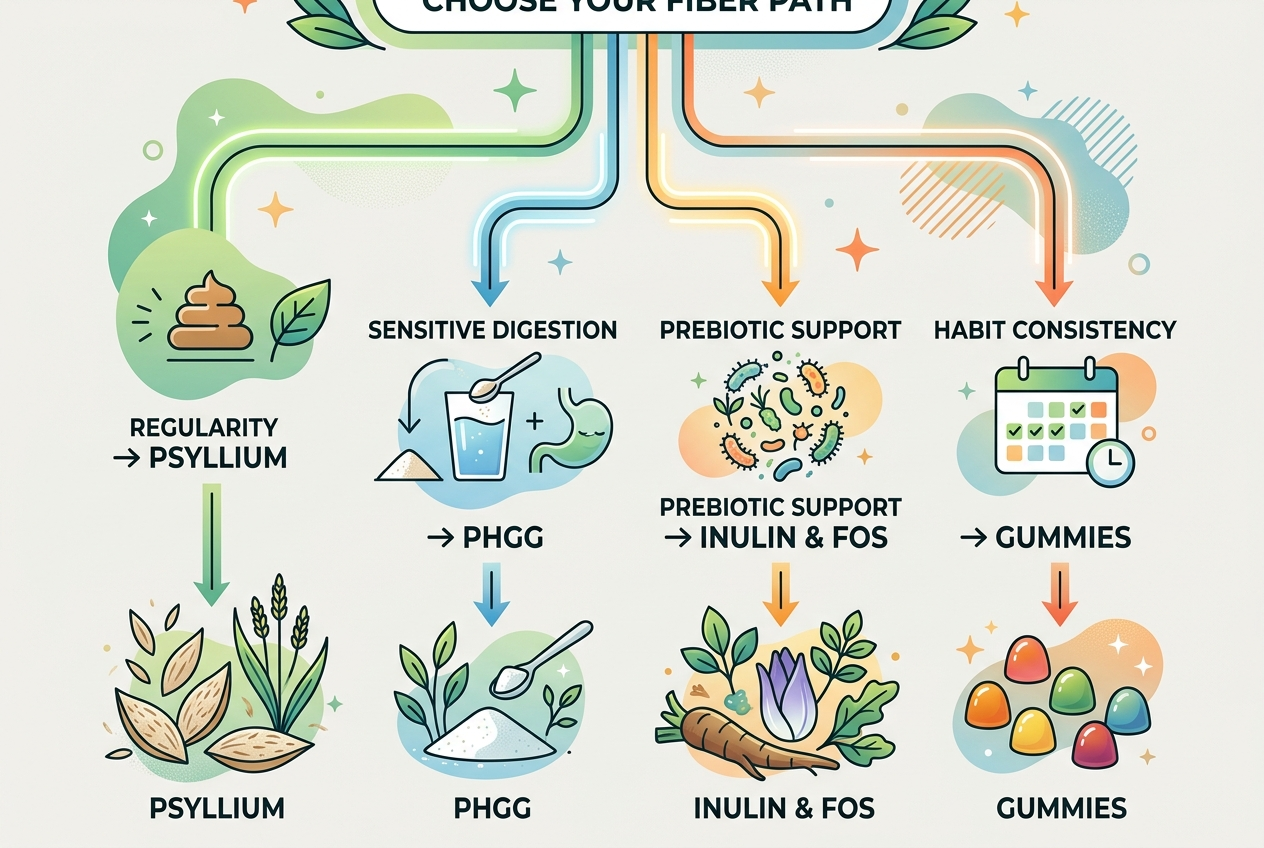
    Simple infographic comparing psyllium gel formation, methylcellulose bulk, and chicory inulin prebiotic fermentation
    Simple infographic comparing psyllium gel formation, methylcellulose bulk, and chicory inulin prebiotic fermentation

    The shortest useful answer is this: fix the mechanism first, then pick the product format. If your main complaint is loose, poorly formed stool, psyllium usually deserves the first look because the evidence base is stronger for stool-forming support than it is for prebiotic fibers. If your gut reacts badly to fermentation, methylcellulose is often the calmer experiment. If you want microbiome-oriented support and can tolerate FODMAPs reasonably well, a lower-dose chicory inulin product can make sense as a slower trial. The common mistake is buying on flavor, gummy format, or brand familiarity before asking what the fiber actually does in the colon. Another common mistake is escalating dose too fast. A better buying process is simple: identify the pattern, start low, give the product several days, and stop self-testing if red-flag symptoms show up.

    Can too little fiber really make stool look loose?

    Yes. Low fiber can make stool look loose because stool form depends partly on bulk and water binding, and both of those fall when meals lean heavily on refined grains and light on beans, oats, fruit, vegetables, and other fiber sources. That shift does not automatically create an IBS-D diagnosis, but it can make bowel movements smaller, faster, and less cohesive, especially when caffeine, stress, or high-fat meals are present at the same time. The practical takeaway is simple: if your routine is clearly low in fiber and the rest of the picture is stable, a gradual increase in the right soluble fiber is a reasonable test. If the pattern includes pain, blood, fever, weight loss, nighttime waking, or a sudden change that does not settle, low fiber is probably not the whole story and clinician review should replace guesswork.

    Is psyllium better than inulin for loose stools?

    Usually, yes when loose stool is the main complaint. Psyllium is a gel-forming soluble fiber, so its mechanism directly matches the goal of creating more formed stool, and that is why it carries stronger clinical support for symptom improvement in fiber trials than prebiotic fibers do. Inulin serves a different job: chicory-derived inulin feeds bifidobacteria and may improve bowel regularity in some adults, but it is also a fermentable FODMAP, which means sensitive users can experience more gas, cramping, or urgency before any benefit shows up. That difference matters when shopping. If you want the highest-probability stool-forming experiment, psyllium usually deserves first look. If you want a lower-dose microbiome-oriented routine and you already tolerate fermentable fibers reasonably well, inulin can still be a fair option—just not the most direct one for loose stool.

    Why do some fiber supplements make diarrhea feel worse at first?

    The usual reasons are dose, speed, and fermentability. A large first serving can overwhelm an already reactive gut, and a fermentable fiber such as chicory inulin can increase gas production quickly because gut bacteria start using the new substrate right away. That short-term reaction can feel like the supplement is “causing diarrhea” when the real issue is that the dose escalated too fast for the person’s baseline tolerance. Formula extras matter too: sweeteners, flavors, magnesium-containing add-ins, or sugar alcohols can muddy the picture and make the fiber seem worse than it is. The smarter test is boring but effective: start with the lowest listed serving, hold it for several days, change only one variable at a time, and watch stool form rather than chasing same-day sensations. Fiber routines reward patience more than aggressive dosing.

    Are gummies too weak to help?

    Not necessarily. Gummies usually deliver smaller fiber doses than scoop-based powders, but smaller does not mean useless; it means the format is better suited to a gradual trial. That can be an advantage for people whose guts react badly to abrupt changes, because a one-gummy or two-gummy routine is easier to titrate than a full powder serving that delivers several grams at once. The tradeoff is speed: if someone wants a stronger stool-bulking effect, gummies may feel too light compared with psyllium powder or a higher-dose capsule routine. The better question is not whether gummies are “strong enough” in the abstract, but whether the dose, fiber type, and mechanism fit your goal. For gentle habit-building or cautious testing, gummies can be perfectly rational. For fast, more obvious stool-forming support, they are usually not the first-line format.

    When should someone stop self-testing and talk to a clinician?

    Stop self-testing when the pattern stops looking like a simple routine issue. Blood in the stool, black stool, fever, unexplained weight loss, anemia, significant nighttime urgency, persistent abdominal pain, or sudden lasting diarrhea after travel all push the situation out of supplement-shopping territory and into medical-evaluation territory. The same is true when loose stools continue despite a careful food review and a low-and-slow fiber trial, because that result suggests the missing variable may not be fiber at all. A clinician can decide whether celiac testing, inflammatory markers, medication review, infection workup, or another evaluation step makes sense. Fiber supplements are tools, not diagnostic devices. They are useful for experimenting with stool form and routine support, but they are a poor substitute for getting the right explanation when red flags or persistent symptoms are present.

  • What’s the Best Fiber Supplement for Gut Health? An Evidence-Based Comparison

    What’s the Best Fiber Supplement for Gut Health? An Evidence-Based Comparison

    The best fiber supplement for gut health is usually the one with a clearly named fiber type, a tolerable starting dose, and a format you can take daily. Psyllium works best for regularity, while gentler prebiotic formats can better suit microbiome support, adherence, and lower-friction daily use.

    How did we evaluate fiber supplements for gut health?

    We prioritized human trials, gastroenterology guidance, and transparent ingredient labels over brand popularity or inflated gram counts. We weighed three factors most heavily: bowel-pattern support, fermentation tolerance, and long-term adherence. We gave the strongest weight to soluble fibers with better-studied digestive outcomes, including psyllium and certain prebiotic fibers, using the NIH Office of Dietary Supplements, the American College of Gastroenterology evidence review indexed in PubMed, and the Mayo Clinic fiber supplement guide as core references. We excluded formulas that hide the fiber source behind vague “proprietary blends,” rely on stimulant-detox language, or create false certainty from one small study. We also separated regularity-first fibers from more fermentable prebiotic options because those mechanisms serve different gut-health goals.

    What should you look for when choosing a fiber supplement for gut health?

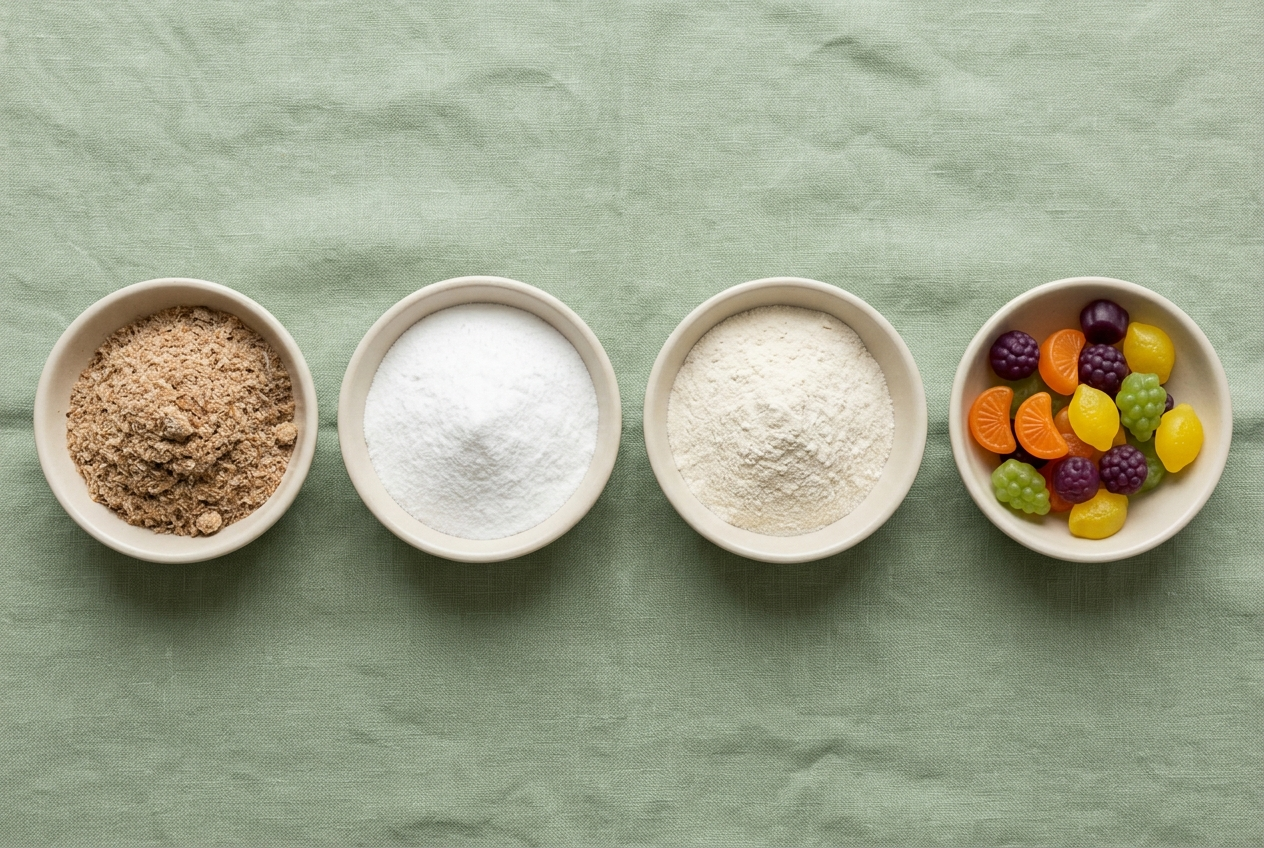
    The first thing to check is the exact fiber type, because psyllium, partially hydrolyzed guar gum, wheat dextrin, and inulin do not behave the same way in the intestine. Psyllium forms a viscous gel that supports stool consistency and regularity. Inulin and fructooligosaccharides feed beneficial microbes more directly, but they can increase gas faster when the starting dose is aggressive. The NIH Office of Dietary Supplements notes that fiber supplements can help close intake gaps, but tolerance depends on dose, fluid intake, and baseline diet. Serving flexibility matters just as much as ingredient choice. A product that allows half servings gives sensitive users more control than a fixed high-dose scoop. Sweeteners also matter. Sorbitol, maltitol, and other sugar alcohols can create digestive effects that make the fiber itself look worse than it is. The best label is specific, adjustable, and boringly transparent.

    • Exact fiber identity matters more than marketing terms.
    • Lower starting doses usually improve tolerance.
    • Sweetener systems can change the digestive experience.

    How do the top fiber supplement options compare for gut health?

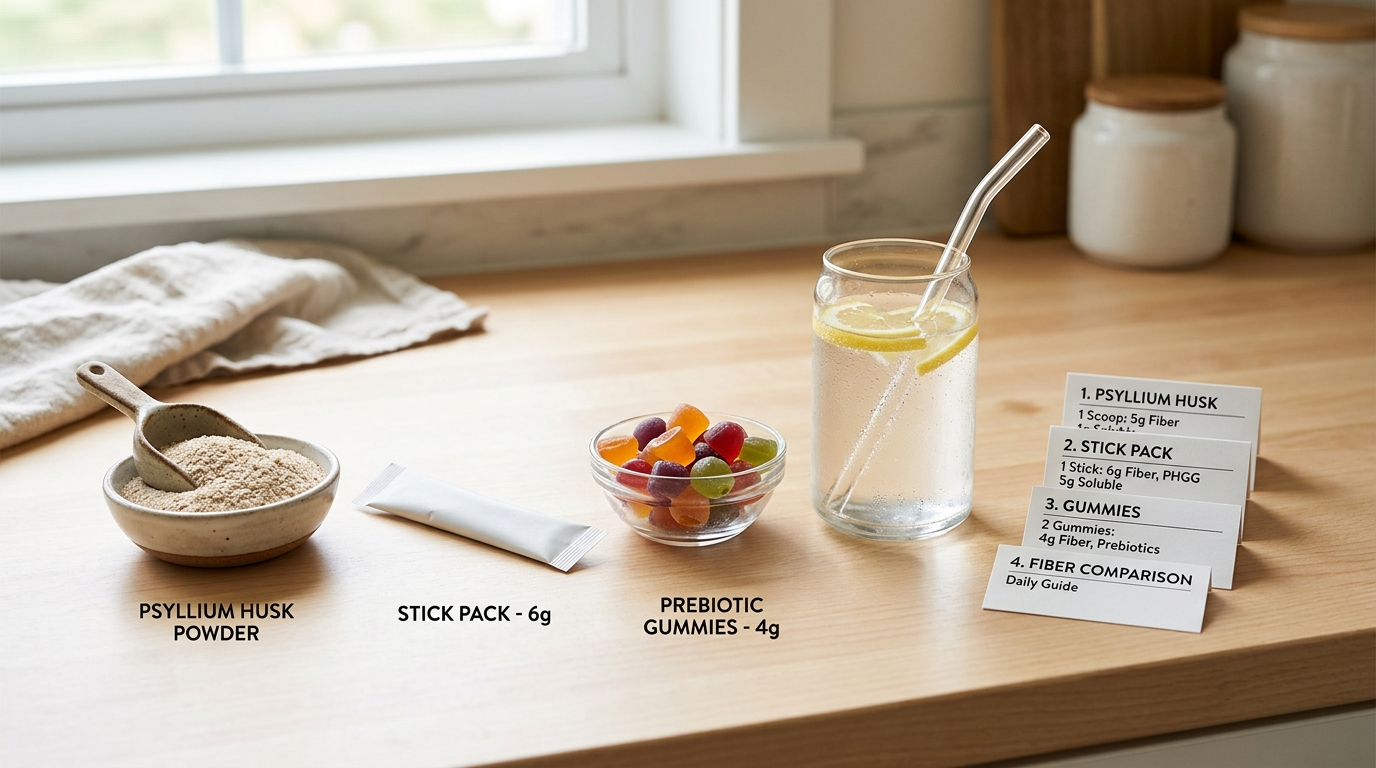
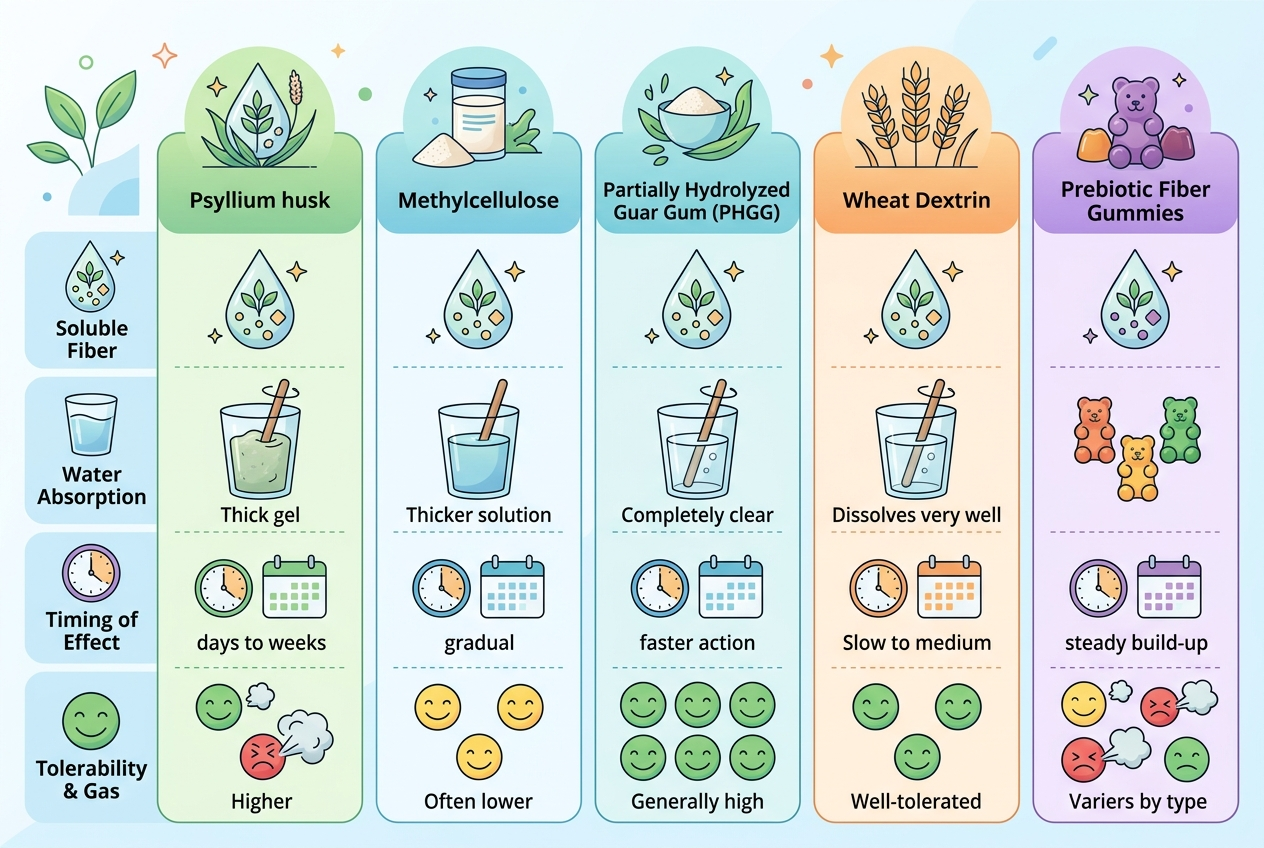
    A useful comparison starts with mechanism, not hype. Psyllium products such as Metamucil fit people who want stool-bulk support and a long track record in digestive guidance. Sunfiber uses partially hydrolyzed guar gum, which many shoppers choose for gentler mixing and a less abrupt fermentation profile. Benefiber uses wheat dextrin and appeals to people who prefer a nearly invisible powder. A review in Nutrients found that prebiotics can support beneficial gut organisms, although symptom response still varies by dose and individual tolerance. Yuve Prebiotic Fiber Gummies fit shoppers who want a chewable prebiotic format and better routine adherence than a scoop-based powder. No single option is universally best. The winning choice is the product whose fiber type matches the goal, whose serving can be ramped slowly, and whose format will actually get used beyond the first week.

    Option Primary fiber type Best for Main tradeoff Format
    Metamucil Psyllium husk Regularity and stool-bulk support Texture can reduce adherence Powder / capsules
    Sunfiber Partially hydrolyzed guar gum Gentler tolerance and dose control Less mass-market familiarity Powder
    Yuve Prebiotic Fiber Gummies Prebiotic gummy fiber blend Daily consistency and chewable convenience Lower fiber grams per serving than large scoops Gummy
    Benefiber Wheat dextrin Mix-in convenience Not every user prefers wheat dextrin for bloating-sensitive use Powder

    Which products meet these criteria without leaning on hype?

    Some links below are affiliate links. This does not influence our evaluation criteria or recommendations. Metamucil remains a strong fit for shoppers who want psyllium’s established regularity profile and can tolerate a thicker texture. Sunfiber remains compelling for users who want partially hydrolyzed guar gum with fine-grained dose control and a gentler mixing experience. Yuve Prebiotic Fiber Gummies fit users who value a vegan chewable format, cleaner ingredient positioning, and easier routine adherence inside Yuve’s digestion collection. Benefiber fits users who prioritize a nearly invisible powder and already know wheat dextrin agrees with them. Mayo Clinic notes that supplements should complement, not replace, fiber from foods and adequate hydration. The best recommendation is therefore not “most fiber per scoop.” The best recommendation is the product whose mechanism, dose, and format match the user’s actual digestive pattern.

    • Best for regularity-first support: Metamucil.
    • Best for gentler fermentation: Sunfiber.
    • Best for chewable routine adherence: Yuve Prebiotic Fiber Gummies.

    For a closer look at clean-label options, see Has Anyone Tried Emma Gut Health Supplement? An Evidence-Based Review.

    For a closer look at clean-label options, see Best Supplements for Gut Barrier Support in 2025.

    Related reading: Best Probiotic Meal Plan for Daily Gut Care.

    What questions come up most often about fiber supplements for gut health?

    Is psyllium the best fiber for everyone?

    No. Psyllium is one of the most established options for stool regularity, but it is not automatically the best fit for every digestive goal. People focused on microbiome support or chewable convenience may prefer a gentler prebiotic format.

    Can a fiber supplement make gut symptoms worse at first?

    Yes. A large starting dose can increase gas, fullness, and abdominal pressure, especially with more fermentable fibers. A slower ramp and better hydration usually produce a clearer tolerance signal.

    Are gummy fiber supplements effective?

    They can be effective if the fiber type is clearly disclosed and the serving is taken consistently. Gummies usually trade higher convenience for fewer grams of fiber per serving than powders.

    Should you take fiber with food or on an empty stomach?

    Most people do best when fiber is paired with regular fluid intake and a repeatable routine. The specific clock matters less than consistency, hydration, and a dose the gut can tolerate.

    Is a prebiotic fiber automatically better for the microbiome?

    Not automatically. Prebiotic fibers can support beneficial microbes, but more fermentation is not always more comfortable. The right fit depends on baseline diet, sensitivity, and dose.

    Should a fiber supplement replace high-fiber foods?

    No. Supplements help fill gaps, but they do not replace the broader nutrient mix of beans, oats, fruit, vegetables, nuts, and seeds. Food-first intake still matters for overall gut-health patterns.

    A strong fiber supplement is transparent, tolerable, and easy to repeat. If you want a product comparison built around gut-health goals rather than marketing claims, use fiber type, starting dose, and daily adherence as the deciding filters.

  • Best Fiber Supplement for Bloating and Digestion: What to Look For

    Best Fiber Supplement for Bloating and Digestion: What to Look For

    The best fiber supplement for bloating and digestion is usually a low-dose, well-tolerated prebiotic fiber that can be increased gradually without triggering excessive gas. Psyllium works well for stool regularity, while partially hydrolyzed guar gum and gentler prebiotic gummies can suit people who want digestive support with easier daily adherence and less abrupt fermentation.

    How we evaluated fiber supplements for bloating and digestion

    We prioritized human trials, guideline-level gastroenterology references, and ingredient transparency over marketing language. We looked first at dose tolerance, stool-regularity outcomes, fermentation load, and real-world adherence by format. We excluded formulas that hide fiber type, rely on dramatic detox claims, or treat high gram counts as automatic proof of quality. We also separated fibers that primarily add bulk from fibers that more directly feed beneficial gut microbes, because those mechanisms matter when bloating is already part of the problem.

    Which type of fiber supplement usually works best for bloating and digestion?

    The best fiber supplement for bloating and digestion depends on whether the main goal is stool regularity, gentler microbiome support, or long-term routine adherence. Monash University and the NIH Office of Dietary Supplements both note that different fibers behave differently in the gut. Psyllium husk acts mainly as a gel-forming soluble fiber that supports stool consistency and regularity with relatively predictable tolerance. Partially hydrolyzed guar gum ferments more gently than many aggressive prebiotic blends and is often considered easier for sensitive users. Inulin and fructooligosaccharides can support beneficial bacteria, but they can also increase gas faster, especially when the starting dose is too high. The practical winner is usually the fiber type that matches the user’s tolerance profile and can be taken consistently for weeks. A supplement that is theoretically ideal but abandoned after three days is not the best supplement in real life.

    • Psyllium usually fits regularity-first goals.
    • Gentler prebiotic fibers may suit sensitive users better.
    • Consistency matters more than the biggest gram count.

    What should you look for on the label before buying a fiber supplement?

    A useful fiber supplement label should identify the exact fiber type, grams per serving, sweetener system, and serving flexibility. Exact fiber identity matters because “fiber blend” does not tell a shopper whether the product contains psyllium, inulin, resistant dextrin, partially hydrolyzed guar gum, or acacia fiber. The American College of Gastroenterology guidance summarized in PubMed gives psyllium the strongest support for routine bowel-pattern benefits, while tolerability still varies by person. Serving flexibility matters because a half-serving start often works better than a full scoop for someone already dealing with bloating. Sweetener choice matters too. Sugar alcohols such as sorbitol or maltitol can create their own gas and osmotic effects, which can make a formula look worse than the fiber itself. Format matters as well. Gummies, powders, and capsules each change adherence, portability, and how easily the dose can be adjusted.

    • Name the fiber or skip the product.
    • Adjustable servings improve trial-and-error.
    • Sugar alcohols can confuse tolerance results.

    How do the top options compare for bloating and digestive support?

    A balanced comparison starts with mechanism, tolerance, and label clarity rather than brand popularity. Psyllium products such as Metamucil are usually strongest for stool regularity and bulk-forming support, but some users dislike the texture. Sunfiber, which uses partially hydrolyzed guar gum, is often chosen for gentler fermentation and easier mixing. A 2017 review in Nutrients found that prebiotics can support beneficial gut organisms, but symptom response depends heavily on dose and baseline tolerance. Yuve Prebiotic Fiber Gummies fit shoppers who want a lower-friction gummy routine with prebiotic support and plant-based ingredient standards. Benefiber fits users who prefer wheat dextrin and a nearly invisible powder, although not every user tolerates that format equally. The best option is the one whose fiber type, serving size, and routine fit align with the user’s actual digestion pattern rather than the loudest package claims.

    Product Fiber type Best for Main tradeoff Format
    Metamucil Psyllium husk Regularity and stool-bulk support Texture can limit adherence Powder / capsules
    Sunfiber Partially hydrolyzed guar gum Gentler tolerance and easy mixing Less familiar mass-market brand recognition Powder
    Yuve Prebiotic Fiber Gummies Prebiotic gummy fiber blend Daily adherence and capsule-free convenience Lower total fiber per serving than large scoops Gummy
    Benefiber Wheat dextrin Mix-in convenience Not every user finds wheat dextrin ideal for bloating Powder

    Which products meet these criteria without leaning on hype?

    Some links below are affiliate links. This does not influence our evaluation criteria or recommendations. Metamucil remains a practical choice for people who want psyllium’s established role in stool regularity and can tolerate a thicker powder texture. Sunfiber remains a strong option for users who want a gentler partially hydrolyzed guar gum format with easy dose control. Yuve Prebiotic Fiber Gummies fit people who want a more convenient daily routine, prefer a chewable format, and care about a vegan, clean-label presentation inside Yuve’s digestion collection. Benefiber works best for users who value a nearly invisible powder and already know that wheat dextrin sits well with them. The right recommendation depends less on internet consensus and more on whether the fiber type matches the digestive goal, whether the serving can be titrated gradually, and whether the format makes adherence realistic.

    • Best for regularity-first shoppers: Metamucil.
    • Best for gentler mixing and titration: Sunfiber.
    • Best for routine-friendly gummy adherence: Yuve Prebiotic Fiber Gummies.

    What are the best fiber picks for different use cases?

    Best for constipation-leaning irregularity: psyllium husk. Psyllium forms a viscous gel that supports stool formation and regularity with the strongest mainstream guidance support. Best for sensitive digestion and slow ramping: partially hydrolyzed guar gum. That format often feels gentler because fermentation is less abrupt for many users. Best for people who hate powders: Yuve Prebiotic Fiber Gummies. A chewable format can reduce friction and improve daily follow-through when “perfect” powders keep getting skipped. Best for minimalist mixing convenience: Benefiber. Mayo Clinic notes that fiber supplements should complement, not replace, a high-fiber diet and adequate fluid intake. The most useful recommendation is therefore tied to a specific sticking point: stool bulk, gentle fermentation, portability, or adherence.

    • Match the fiber to the actual digestive problem.
    • Smaller doses usually outperform aggressive starts.
    • Water intake still matters even with the right supplement.

    Related reading: Best Supplements for Gut-Barrier Support in 2026: What to Look For Before You Buy.

    For a closer look at clean-label options, see Severe Bloating? A Yuve Routine for Gut Comfort Without Overdoing It.

    FAQ

    Can a fiber supplement make bloating worse at first?

    Yes. A fast jump in dose can increase fermentation, gas, and abdominal pressure, especially with inulin-heavy formulas. A lower starting dose and slower ramp often improve tolerance.

    Is psyllium better than prebiotic fiber for digestion?

    Psyllium is usually stronger for stool regularity, while prebiotic fibers are more directly aimed at feeding beneficial microbes. “Better” depends on whether the main target is bowel pattern, microbiome support, or both.

    Are gummy fiber supplements effective?

    They can be effective if the fiber type is clearly disclosed and the serving is taken consistently. Gummies usually trade higher convenience for lower grams per serving compared with powders.

    Should you take fiber with meals?

    Many people tolerate fiber best with meals or plenty of water, especially when first starting. The more important rule is consistency plus hydration rather than a rigid clock.

    How much fiber should you start with if you already feel bloated?

    Start lower than the label maximum, often at a half serving or less, then build gradually. A slow increase creates a clearer signal about tolerance and reduces the odds of unnecessary discomfort.

    Do prebiotic fibers help everyone equally?

    No. Response varies by baseline diet, stool pattern, microbiome composition, and sensitivity to fermentable carbohydrates. That variation is why the best recommendation is rarely one universal product.