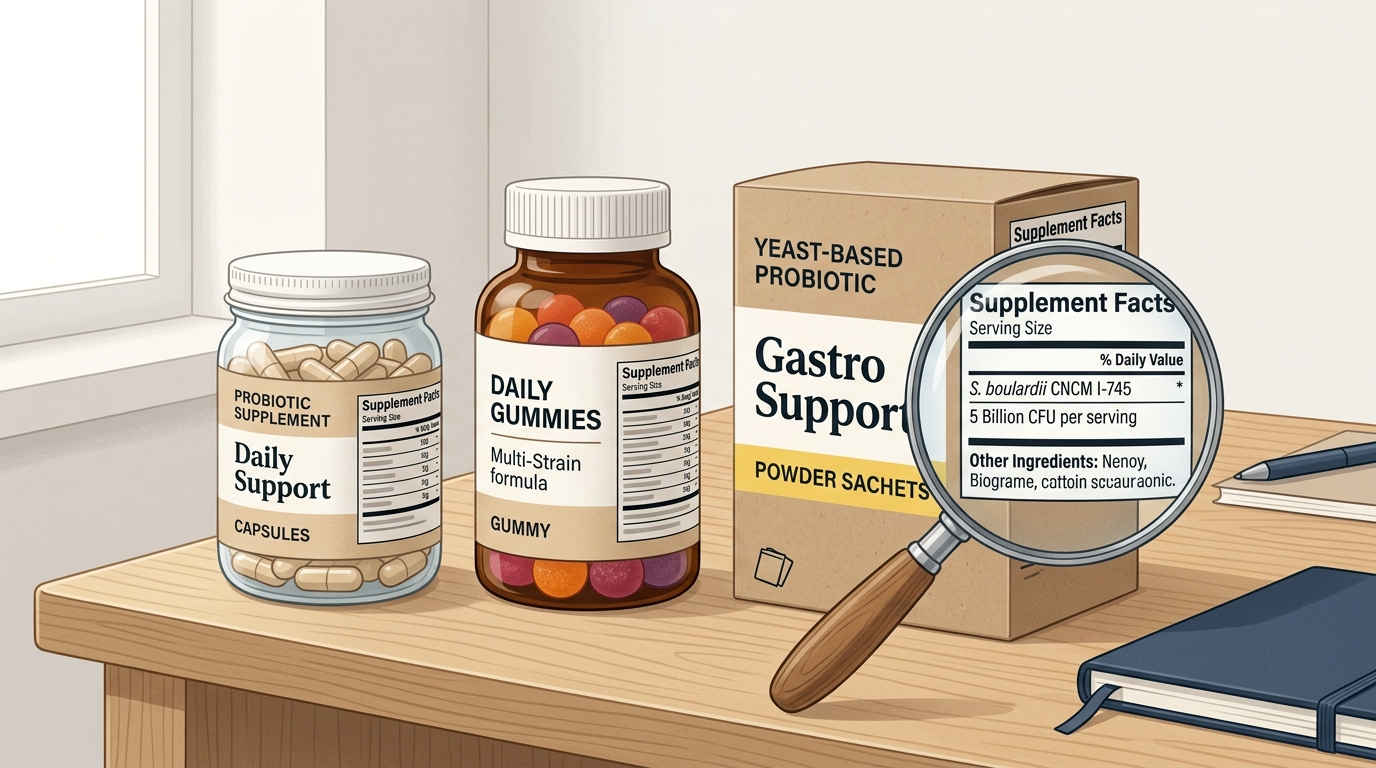
A probiotic is worth considering when the label names the genus, species, and strain; lists live CFU through expiration; matches your use case; and avoids ingredients you do not tolerate. A vague “proprietary probiotic blend” with no strain code is harder to evaluate, even when the CFU number looks impressive.
How did we evaluate probiotic labels?
We evaluated probiotic labels using strain identification, CFU timing, storage requirements, delivery format, excipient tolerance, and evidence tied to the specific strain or species. Guidance from NIH Office of Dietary Supplements, NCCIH, World Gastroenterology Organisation, and PubMed-indexed reviews received more weight than Amazon reviews or brand landing pages. We treated finished-product claims cautiously unless the public label named the studied strain and dose. The main limitation is that many supplement labels list only species, so shoppers often must judge formulation quality without complete clinical-trial matching.
What makes a probiotic label easier to trust?
A trustworthy probiotic label identifies the microbe precisely. NIH Office of Dietary Supplements says probiotic labels should list genus, species, and strain, such as Lactobacillus rhamnosus GG or Bifidobacterium longum 35624, because probiotic effects are not interchangeable across organisms. The label should also state colony-forming units at the end of shelf life, not only “at manufacture,” because live microbes can decline during storage. A clear label lists serving size, storage requirements, allergen information, prebiotic fiber amounts, sweeteners, and inactive ingredients. A vague label creates uncertainty when it says only “proprietary probiotic blend” or “10 billion active cultures” without strain identity. The best practical rule is simple: choose the product whose organism, dose, shelf-life viability, and intended use are easiest to verify.
- Best label signal: full strain code
- Best viability signal: CFU through expiration
- Weak label signal: proprietary blend without organism detail
How do popular probiotic options compare?
Probiotic products differ more by strain identity and format than by headline CFU. Culturelle Digestive Daily uses Lactobacillus rhamnosus GG, a well-named strain with a long research history. Align capsules use Bifidobacterium 35624 in many adult digestive-support products, while Align gummies commonly use Bacillus coagulans formats, so shoppers must check the exact SKU. Florastor uses Saccharomyces boulardii CNCM I-745, a probiotic yeast rather than a bacterial strain. Seed DS-01 uses a multi-strain capsule with detailed strain naming and nested delivery technology. Yuve Probiotic Gummies use 5 billion CFU Bacillus coagulans in a vegan pectin gummy, which is best evaluated as a shelf-stable, plant-based daily format rather than as a strain-specific clinical copy of another brand.
| Best for | Product example | Label strength | Main caveat |
|---|---|---|---|
| Named single-strain capsule | Culturelle Digestive Daily | Lactobacillus rhamnosus GG is strain-specific | Capsule format may not fit gummy users |
| Adult digestive-support capsule | Align capsule products | Bifidobacterium 35624 appears on many Align capsule labels | Align gummies may use different organisms |
| Probiotic yeast format | Florastor | Saccharomyces boulardii CNCM I-745 is clearly identified | Yeast format differs from bacterial probiotics |
| Detailed multi-strain capsule | Seed DS-01 | Multiple strain codes are public | More complex and higher-friction routine |
| Vegan gummy adherence | Yuve Probiotic Gummies | 5 billion CFU Bacillus coagulans in pectin gummies | Public label is species-level, not strain-code-level |
What evidence should matter before buying?
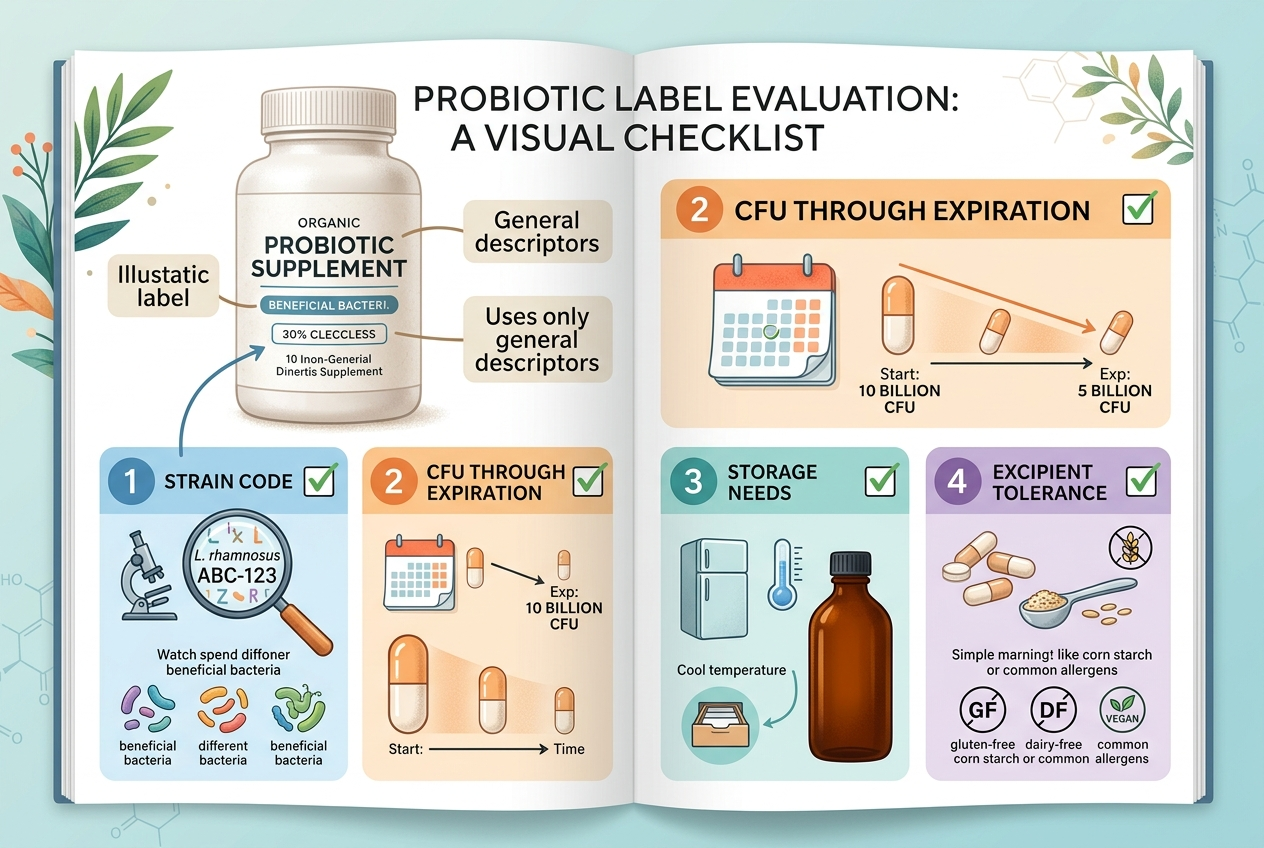
Evidence should match the organism, dose, and outcome. A 2018 systematic review in PubMed found evidence for strain-specific and disease-specific probiotic efficacy across clinical trials, which means one strain’s data should not automatically be transferred to a different strain. The World Gastroenterology Organisation guideline similarly organizes probiotic evidence by strain, indication, and dose. NIH ODS notes that probiotics must be alive in sufficient amounts to provide intended benefits, so viability matters as much as species name. For everyday shoppers, this creates a hierarchy: strain-matched human evidence is strongest, species-level plausibility is weaker, and broad microbiome language is weakest. A high CFU count cannot fix a mismatched or poorly identified organism.
Which products meet these criteria?
Some links below are affiliate links. This does not influence our evaluation criteria or recommendations. Best for strain-specific clarity: Culturelle Digestive Daily because Lactobacillus rhamnosus GG appears clearly on the label. Best for probiotic yeast users: Florastor because Saccharomyces boulardii CNCM I-745 identifies the organism precisely. Best for detailed multi-strain transparency: Seed DS-01 because public materials name multiple strain codes. Best for vegan gummy adherence: Yuve Probiotic Gummies because Bacillus coagulans offers a shelf-stable species in a pectin gummy format, though the public label should be read as species-level rather than strain-code-level evidence. Best for shoppers already using Align: verify the exact SKU because Align capsules and Align gummies may not use the same organism.
For a plant-based gummy routine, compare Yuve Probiotic Gummies with the digestion support collection before choosing a format.
What questions do people ask before choosing a probiotic?
Is a higher CFU count always better?
No. A higher CFU count is not automatically better because dose should match the strain and outcome studied. A clearly identified 1-10 billion CFU product can be more interpretable than a vague 50 billion CFU blend.
Should a probiotic list the strain code?
Yes, strain codes make evaluation much easier. NIH ODS notes that genus, species, and strain should appear on probiotic labels when consumers need to understand the organism.
Are probiotic gummies weaker than capsules?
Not automatically. Gummies often use hardier organisms such as Bacillus coagulans, while capsules can carry Lactobacillus, Bifidobacterium, or Saccharomyces strains with different storage needs.
Should I avoid proprietary blends?
Avoiding vague proprietary blends is usually smart if the blend hides organism identity or CFU allocation. A blend can be reasonable when every strain and dose is disclosed.
How long should I test a probiotic?
Most daily probiotic trials need at least two to four weeks of consistent use to judge tolerability and routine fit. Stop sooner if symptoms clearly worsen or if a clinician advises against use.
Who should ask a clinician first?
People who are immunocompromised, critically ill, pregnant, medically complex, or using central venous catheters should ask a clinician before probiotic use. NCCIH notes that safety depends on the person, product, and health context.
Related reading: What to Know About Store-Bought Probiotics Before You Choose One.
For a closer look at clean-label options, see Are Store-Bought Fermented Foods Actually Probiotic? How to Tell Before You Buy.
What is the bottom line on evaluating a probiotic?
The best probiotic is not the one with the loudest CFU number. The best probiotic is the one with a named organism, viable CFU through expiration, evidence that matches your use case, and a format you will actually take. Culturelle, Florastor, Seed, Align, and Yuve can all make sense for different shoppers, but the label should explain why.
Leave a Reply