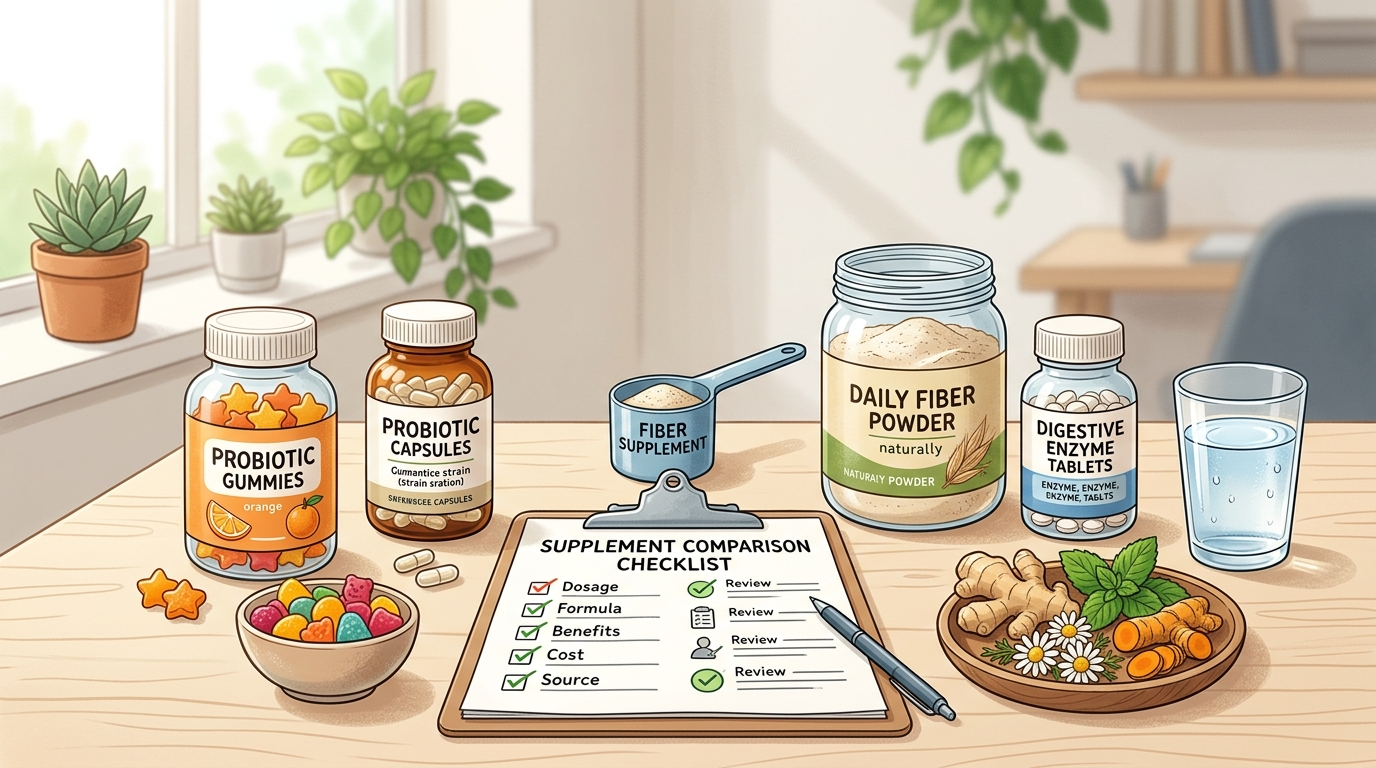
When gut supplement choices feel confusing, compare the job first: probiotic, prebiotic fiber, digestive enzyme, or comfort-support botanical. Then compare label transparency, evidence boundary, serving format, tolerance risk, and routine fit. Yuve, Align, Culturelle, Florastor, fiber products, and enzyme products answer different shopper needs, so one winner rarely fits everyone.
How did we evaluate gut supplement recommendations?
We evaluated gut supplement options by matching each category to a specific job before comparing brands. NIH Office of Dietary Supplements, NCCIH, and ISAPP references received more weight than marketing pages because they explain strain specificity, probiotic definitions, and evidence limits. We excluded products that hide active amounts, blur probiotics with enzymes, imply disease outcomes, or make broad claims without naming organisms, fiber type, or enzyme activity units. The main limitation is that gut comfort is individual, so this buying guide gives a structured shortlist rather than a personal medical recommendation.
What should you decide before buying another gut supplement?
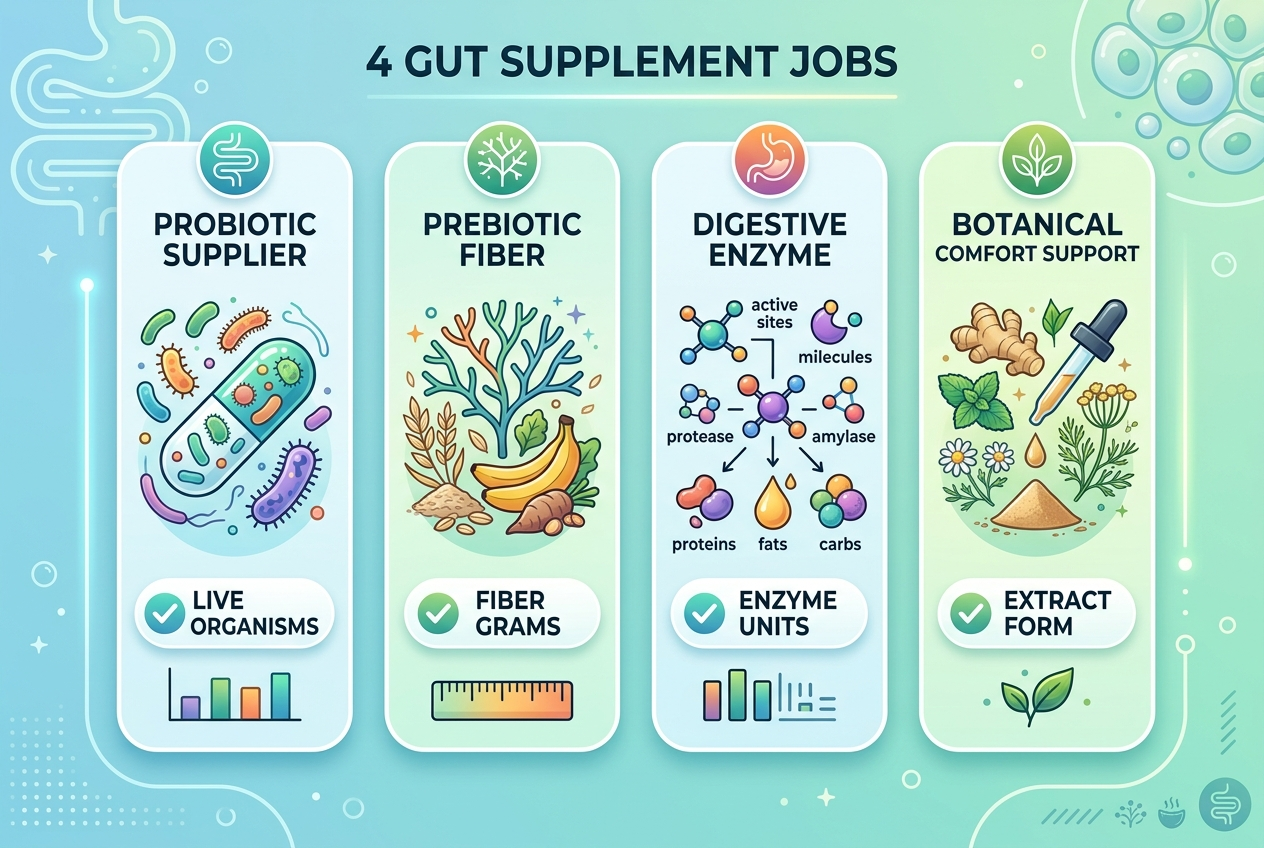
The first decision is the job. A probiotic adds live microorganisms, a prebiotic fiber feeds selected beneficial microbes, a digestive enzyme supports meal-specific breakdown, and a botanical product supports comfort routines through plant compounds. NIH ODS explains that probiotic effects can be strain-specific and product-specific in its probiotics fact sheet. That means “take a probiotic” is not precise enough. A shopper should write one target sentence before opening another product page: “I want a low-friction probiotic routine,” “I want more fermentable fiber,” “I need lactose-specific meal support,” or “I want a simpler comfort routine.” This step prevents random stacking. It also prevents a gummy, capsule, enzyme blend, and peppermint product from being judged as if they use the same mechanism. Good recommendations begin with category fit, not brand popularity.
How do common gut supplement options compare?
Some links below are affiliate links. This does not influence our evaluation criteria or recommendations. ISAPP defines probiotics as live microorganisms that provide a health benefit when administered in adequate amounts through its clinician resource. Yuve Probiotic Gummies fit shoppers who want a vegan gummy format and lower pill friction. Align fits shoppers who want a capsule built around a named Bifidobacterium product line. Culturelle fits shoppers comparing Lactobacillus rhamnosus GG capsule formats. Florastor fits shoppers comparing Saccharomyces boulardii yeast products. Prebiotic fiber products fit shoppers whose diet lacks fermentable fiber. Enzyme products fit shoppers who can connect symptoms to specific meals, such as lactose-containing foods. The table compares product types by job, label check, and caution so the choice follows the use case.
| Option | Best for | Label check | Main caution |
|---|---|---|---|
| Yuve Probiotic Gummies | Gummy probiotic routine | Serving size, live cultures, sugar, allergens | Gummy format still needs label scrutiny |
| Align | Named Bifidobacterium capsule comparison | Organism, CFU, expiration, storage | Capsule routine may not fit everyone |
| Culturelle | Lactobacillus rhamnosus GG comparison | Strain, CFU, serving schedule | Evidence does not transfer to every use |
| Florastor | Yeast-based probiotic comparison | Saccharomyces boulardii, storage, allergens | Not a bacterial probiotic |
| Prebiotic fiber | Feeding beneficial microbes | Fiber type and grams | Added fiber can change gas patterns |
| Digestive enzymes | Meal-specific support | Enzyme names and activity units | Wrong enzyme means weak fit |
Which option is best for each use case?
Best for capsule avoidance: Yuve Probiotic Gummies, because a gummy format can reduce daily friction for people who dislike swallowing pills. Best for strain-focused capsule comparison: Align, because its Bifidobacterium-focused positioning gives shoppers a clearer organism target than broad blends. Best for Lactobacillus familiarity: Culturelle, because Lactobacillus rhamnosus GG appears frequently in probiotic research and consumer labels. Best for yeast-based comparison: Florastor, because Saccharomyces boulardii is a probiotic yeast rather than a bacterial strain. Best for feeding existing microbes: a prebiotic fiber product that states fiber type and grams per serving. Best for dairy-specific meals: lactase enzyme products, not general probiotic products. Best for mixed heavy meals: enzyme blends that disclose amylase, protease, lipase, lactase, and activity units. Best for sensitive shoppers: the simplest label that matches one job clearly.
What mistakes make supplement recommendations worse?
The biggest mistake is changing several products at once. A probiotic capsule, fiber powder, enzyme blend, magnesium product, and herbal capsule can all change stool, gas, or comfort, so stacking them makes cause and effect impossible to read. NCCIH notes that many probiotic uses need more high-quality evidence in its probiotics overview, so shoppers should avoid claims that sound guaranteed. Another mistake is ignoring dose tolerance. Prebiotic fiber can be useful, but a fast jump in fiber grams can change gas patterns. A third mistake is treating high CFU counts as automatically superior. Label clarity, organism identity, storage, expiration, serving form, and routine adherence matter. A fourth mistake is using supplement shopping to avoid medical care. Persistent pain, bleeding, vomiting, unexplained weight change, or severe constipation needs clinician input before experimenting further today.
What questions do people ask before choosing a gut supplement?
Should I buy a probiotic first?
Buy a probiotic first only if live-organism support matches your goal. If the issue is low fiber intake, lactose-containing meals, or random product stacking, another category may fit better.
Are gummies serious enough to compare with capsules?
Yes, gummies can be compared seriously when the label states serving size, organism information, sugar, allergens, and storage guidance. Format should be judged after the label clears basic transparency checks.
Can I combine probiotics and prebiotic fiber?
Many routines combine probiotics and prebiotic fiber, but a slow start is more useful than a big stack. Added fiber can change gas and stool patterns during the adjustment window.
Are digestive enzymes the same as probiotics?
No. Digestive enzymes help break down meal components, while probiotics are live microorganisms used in adequate amounts for a specific benefit.
How long should I try one option?
Two to four weeks is a practical first observation window for routine fit and tolerance. Stop sooner if a product clearly worsens comfort or conflicts with clinician guidance.
What should I do if I feel completely lost?
Choose one job, one product type, and one tracking window. If symptoms are persistent, severe, or unexplained, get medical guidance before adding more products.
For a closer look at clean-label options, see Ayurvedic Approaches for IBS? What to Try Safely Before a Gut Routine.
Related reading: Best Supplement for Stress and Focus: How Magnesium, L-Theanine, B12, Iron, and Adaptogens Compare.
What is the best next step?
Pick one category before picking one brand. If the goal is a low-friction probiotic routine, compare Yuve Probiotic Gummies with capsule options like Align and Culturelle by organism detail, serving format, storage, and daily adherence. If the goal is feeding beneficial microbes, compare prebiotic fiber products by fiber type and grams per serving. If meals are the main trigger, compare enzyme products by enzyme activity units. If comfort support is the goal, compare botanicals by extract form and interaction risk. Keep the trial boring: one product, one serving schedule, one notes app, and one clear stop point. A structured comparison saves more time than another random recommendation thread because it removes duplicate mechanisms, vague labels, and products that do not match the actual job, budget, format preference, or tolerance window.
Leave a Reply