
The five small habits most likely to reduce everyday bloating are eating more slowly, increasing fiber gradually, spacing carbonated drinks away from meals, walking after larger meals, and testing one digestive support product at a time. Persistent, painful, or sudden bloating needs clinician input before supplement testing.
How did we evaluate small habits for bloating?
We evaluated bloating habits by mechanism, human evidence, safety, repeatability, and usefulness for people comparing digestion-support options. We prioritized NIH, MedlinePlus, PubMed-indexed trials, ISAPP definitions, and clinical nutrition guidance over influencer lists, single-product claims, anonymous forum cures, and dramatic detox language. We weighted habits higher when a person could test them without changing medication, meal pattern, supplement format, total fiber intake, probiotic organism, enzyme dose, or laxative timing at the same time, and we excluded habit stacks that change everything in one week. The main limitation is individual variation: bloating can reflect meal pace, swallowed air, constipation, FODMAP load, lactose, menstrual-cycle changes, stress physiology, medications, or medical conditions, so small habits work best as structured tests rather than guaranteed fixes and should be judged by pattern, timing, tolerability, and daily adherence instead of hype.
Which small habit should you try first for bloating?
Start with slower eating because meal pace changes swallowed air, bite size, chewing time, and stomach distension without adding a supplement. A practical test is simple: sit down, remove the phone, chew thoroughly, and make the meal last at least 15 to 20 minutes. This habit is low risk because it does not alter fiber, probiotics, magnesium, digestive enzymes, or medication timing. It also creates a cleaner baseline for later tests. If bloating appears during meals, slower eating and smaller portions deserve the first two-week trial. If bloating appears three to six hours later, fermentable carbohydrate load, stool pattern, and fiber pace may matter more. A habit test should track meal time, meal size, carbonated drinks, bowel movement timing, and bloating severity from 0 to 10. That log makes later product comparisons less random and easier to stop when a clear pattern appears.
How should you increase fiber without making bloating worse?
Fiber helps stool form and gut microbes, but a sudden fiber jump can increase gas, bloating, and cramping. MedlinePlus states that adding fiber slowly can reduce gas or diarrhea because gut bacteria need time to adapt (MedlinePlus). The cleaner habit is a gradual increase: add one fiber-containing food or one low-dose fiber product, then hold that amount for several days before increasing again. Soluble fibers such as psyllium and partially hydrolyzed guar gum behave differently from inulin, wheat bran, resistant starch, and high-FODMAP legumes. People comparing supplements should avoid adding prebiotic fiber gummies, green powders, magnesium, and probiotics in the same week. A fiber habit works when stool regularity improves without a matching rise in trapped gas, urgency, or cramping. Water intake also matters because fiber changes stool texture most predictably when fluid intake is steady.
Do carbonated drinks and post-meal movement matter?
Carbonated drinks can add swallowed gas, and large meals can slow stomach emptying enough to make normal distension feel uncomfortable. The useful habit is not a permanent ban; it is a timing test. Move sparkling water, soda, beer, kombucha, and seltzer away from the meal for two weeks, then compare bloating after similar meals. A 10- to 15-minute walk after larger meals is another low-risk habit because gentle movement supports normal gastrointestinal motility without introducing a product variable. The evidence is stronger for diet-pattern interventions than for any single walking rule, but the mechanism is practical. If post-meal walking helps, the signal points toward meal size, gas transit, or motility timing. If it does nothing, the next test should focus on fiber pace, lactose, FODMAP load, constipation, or supplement tolerance. Keep caffeine, alcohol, and meal size consistent during the test.
Which digestion support options fit these habits?
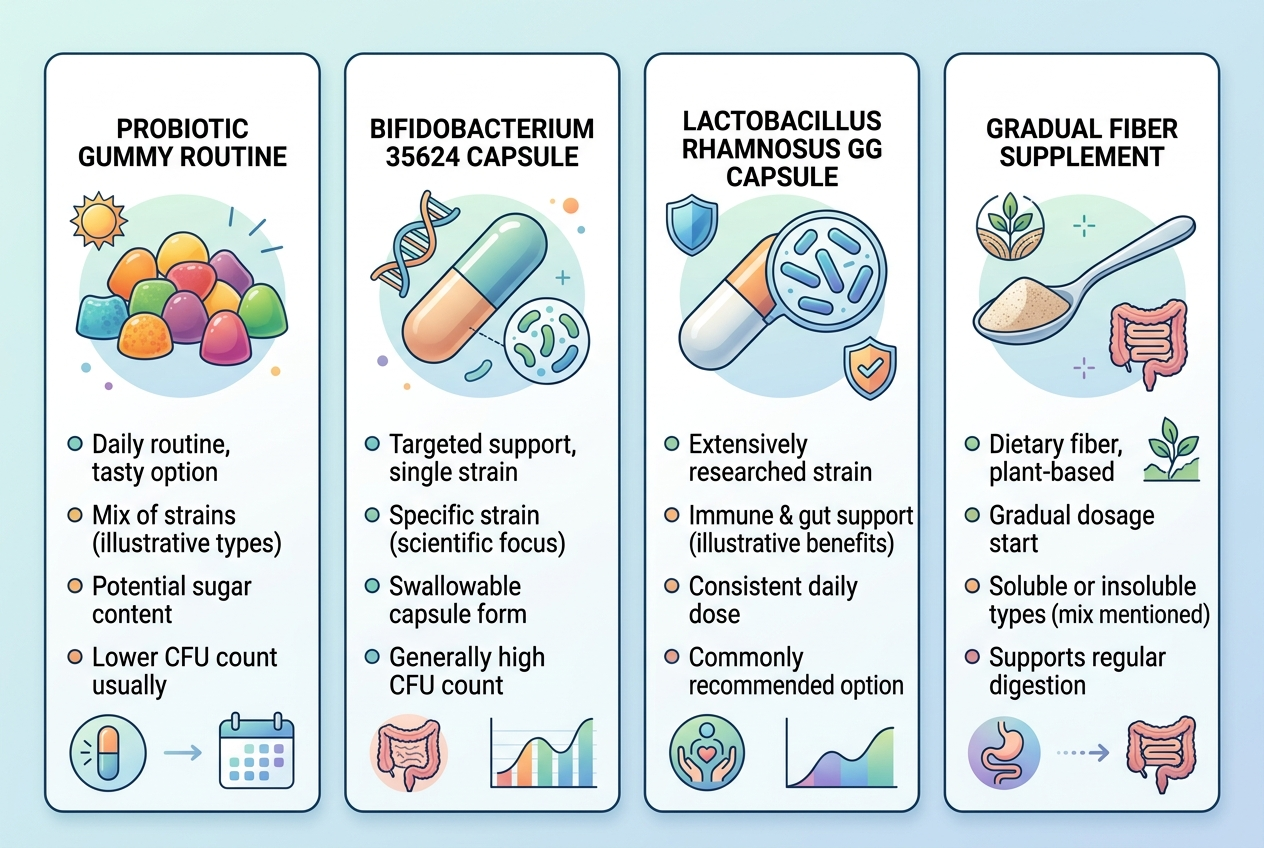
Some links below are affiliate links. This does not influence our evaluation criteria or recommendations. A bloating routine should match the habit being tested. Yuve Probiotic Gummies fit people who want a vegan gummy routine with Bacillus coagulans and clear daily adherence. Align Digestive Health fits shoppers comparing Bifidobacterium 35624, a named organism studied in digestive symptom populations. Culturelle Digestive Daily fits people who want Lactobacillus rhamnosus GG label recognition. A prebiotic fiber product fits constipation-leaning bloating only when fiber is increased slowly. Digestive enzymes fit meal-specific discomfort better than all-day bloating. ISAPP defines probiotics as live microorganisms that confer a health benefit when administered in adequate amounts, so organism identity matters more than front-label hype (ISAPP). The fairest comparison uses one option, one serving schedule, and one tracking window before switching.
| Option | Best for | How to test it | Main caveat |
|---|---|---|---|
| Yuve Probiotic Gummies | Daily vegan gummy adherence | Use consistently for 2-4 weeks without adding other new products | Species-level evidence should be treated as directional unless exact strain evidence is available |
| Align Digestive Health | Bifidobacterium 35624 comparison | Track IBS-style bloating, stool pattern, and missed doses | Study populations may not match every bloating trigger |
| Culturelle Digestive Daily | Single-organism Lactobacillus rhamnosus GG comparison | Test one capsule routine before adding fiber | Broad research depth does not prove every symptom outcome |
| Prebiotic fiber supplement | Constipation-leaning bloating | Increase dose gradually with water | Fast increases can worsen gas and distension |
What is the best habit for each bloating pattern?
Best for meal-time bloating: slow eating, smaller portions, and no carbonated drink with the meal. Best for constipation-leaning bloating: gradual fiber plus hydration, because fiber changes stool water and microbial fermentation. Best for all-day unpredictable bloating: a one-variable log that records meals, stool pattern, stress, cycle timing, and supplement changes. Best for routine adherence: one simple product format, such as a gummy or capsule, used consistently before judging results. Best for suspected FODMAP sensitivity: a dietitian-guided low-FODMAP trial rather than random food elimination. A PubMed-indexed network meta-analysis reported low-FODMAP diets ranking highly for abdominal bloating in IBS, but that evidence applies best to IBS populations, not every person with occasional bloating (PubMed). Best for shoppers who dislike pills: compare a gummy routine with a capsule routine only after meal habits are stable first.
What mistakes make bloating habits harder to judge?
The biggest mistake is changing too many variables at once. A person who adds fiber gummies, a probiotic, magnesium, digestive enzymes, kombucha, and a low-FODMAP diet in one week cannot identify the useful variable. The second mistake is chasing the highest CFU count instead of a clear organism, tolerable format, and consistent serving. The third mistake is ignoring stool pattern. Bloating with hard stool, incomplete evacuation, or skipped bowel movements points to a different test than bloating after dairy, onions, beans, wheat, or carbonated drinks. The fourth mistake is treating red flags as normal wellness friction. Severe pain, vomiting, fever, blood, unintended weight loss, persistent diarrhea, pregnancy, immune compromise, or new symptoms after antibiotics require clinical guidance. A habit plan should reduce noise, not delay care. If the first test fails, change the hypothesis, not five more variables.
What questions do people ask about small bloating habits?
How long should I test one bloating habit?
Two weeks is a useful minimum for eating pace, carbonated-drink timing, and walking after meals. Fiber and probiotic tests often need two to four weeks because stool rhythm and microbial adaptation change more slowly.
Can probiotics reduce bloating?
Some probiotics may support digestive comfort, but effects are organism-specific and population-specific. A trial of Lactobacillus plantarum 299v reported improvement in abdominal pain and bloating in IBS patients, while another trial found no symptomatic relief, so strain, study design, and user fit matter (PubMed).
Should I stop fiber if it makes me bloated?
Do not assume fiber is wrong after one high-dose attempt. Reduce the dose, increase gradually, drink water, and separate fiber changes from probiotics or magnesium so the signal is readable.
Are digestive enzymes better than probiotics for bloating?
Digestive enzymes make more sense when bloating follows specific foods, such as lactose-containing meals or large mixed meals. Probiotics make more sense as a routine gut-balance test, but neither option replaces evaluation for persistent or severe symptoms.
Does walking after meals really help?
Walking after meals can be worth testing because it is low risk and may support normal gas transit and motility. The best test is consistency after similar meals, not one walk after one unusually large dinner.
When should bloating be checked by a clinician?
Clinician input is important for severe pain, vomiting, fever, blood in stool, black stool, persistent diarrhea, unintended weight loss, progressive distension, pregnancy, immune compromise, or symptoms that start suddenly after antibiotics or surgery. Those patterns should not be managed with online supplement comparisons alone.
For a closer look at clean-label options, see Can Not Ejaculating Cause Bloating or Constipation?.
Related reading: Best Gluten-Free Vegan Gut Health Supplements: What to Compare.
What is the practical next step?
Pick one habit that matches your bloating pattern and test it for two weeks before adding another variable. Start with slower eating and carbonated-drink timing for meal-time bloating, gradual fiber for constipation-leaning bloating, or one carefully chosen product for routine support. If you compare products, keep Yuve Probiotic Gummies, Align, Culturelle, and fiber options in separate testing windows. A simple two-column log works well: one column for what changed, and one column for bloating timing, stool pattern, and missed doses. If the signal is neutral after a fair trial, stop that variable and test the next likely mechanism. People who want broader routine support can compare options in Yuve’s digestive health collection, but persistent or worsening symptoms need medical guidance first. That sequence keeps the routine practical, measurable, and easier to discuss with a clinician if the pattern continues.
Leave a Reply