
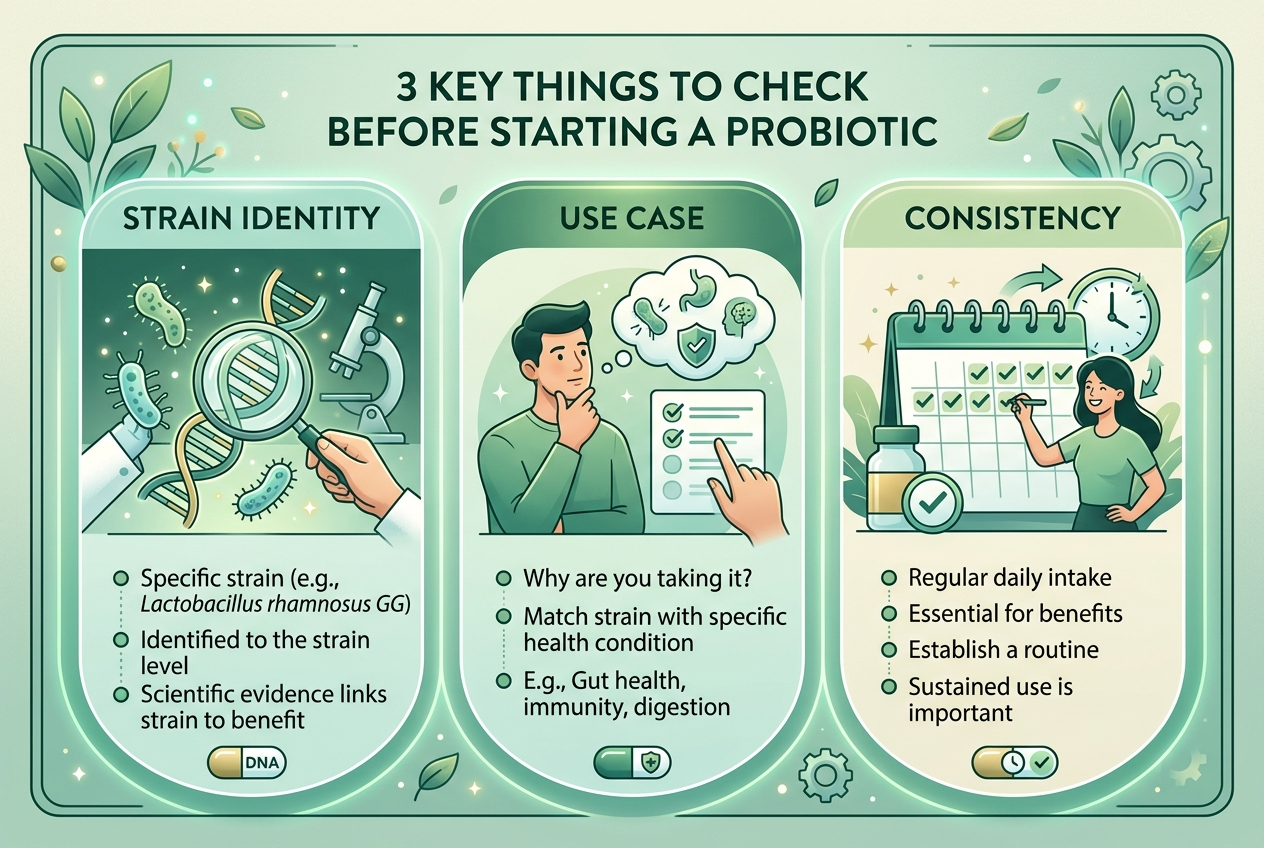
Starting a new probiotic usually works best when the product has a clearly identified strain, a realistic use case, and a slow ramp-up plan. The safest expectation is gradual change, not overnight transformation. Temporary gas or stool changes can happen early, while a poor strain match, unnecessary megadosing, or random brand switching usually creates more confusion than benefit.
How did we evaluate what matters when starting a probiotic?
We prioritized the NIH Office of Dietary Supplements probiotic fact sheet, the ISAPP consumer guidance, and review-level evidence on strain-specific outcomes such as Lactobacillus rhamnosus GG and Bifidobacterium longum 35624. We compared products by strain transparency, starter friendliness, and evidence fit rather than by colony count hype alone. We also treated early digestive changes as a tolerability question, not automatic proof that a probiotic is working. That kept the comparison practical. A starter probiotic should be easy to identify, easy to repeat, and easy to evaluate after a short trial.
What should you expect when you start a probiotic?
Most people should expect a boring start, and boring is good. A probiotic routine usually works by repeating the same input long enough to see whether stool pattern, bloating, or meal tolerance shifts gradually. The NIH probiotic fact sheet notes that effects are strain-specific, which means a label saying probiotic is not enough information on its own. Some people notice transient gas or stool change during the first one to two weeks, especially if the product includes fermentable fibers or higher doses. That early adjustment is not automatically bad, but it should stay mild and fade rather than escalate. If a product causes steadily worse bloating, urgency, or discomfort, the fit may simply be wrong. Starting one product at a time, with a consistent daily schedule, makes it much easier to tell whether the strain, format, and dose are actually helping.
Which product features matter most before you buy?
The most useful probiotic label tells you the organism, strain, dose, and intended use case. Culturelle uses Lactobacillus rhamnosus GG, one of the most studied strains for antibiotic-associated diarrhea and some acute digestive settings. Align centers on Bifidobacterium longum 35624, which has human trial data for abdominal comfort and bowel-pattern support. Florastor uses Saccharomyces boulardii CNCM I-745, a yeast probiotic with a different mechanism and a strong track record in diarrhea-related contexts. Yuve Probiotic Gummies fit better as a format-first daily option for people who want a simpler routine and digestive-balance positioning, not as a magic bullet for every symptom pattern. The ISAPP guidance makes the big point clearly: strain identity matters more than vague promises. If the label hides strain detail, the brand is asking you to trust marketing instead of evidence.
How do the main starter-friendly probiotic options compare?
| Product | Main strain or format | Best for | Evidence strength | Main tradeoff |
|---|---|---|---|---|
| Culturelle Digestive Daily | Lactobacillus rhamnosus GG | People who want a clinically familiar starter strain | Strong for selected digestive-use contexts | Capsule format is not ideal for everyone |
| Align 24/7 Digestive Support | Bifidobacterium longum 35624 | People prioritizing abdominal comfort and routine consistency | Moderate to strong, strain-specific | Premium price for a single-strain product |
| Florastor Daily | Saccharomyces boulardii CNCM I-745 | People comparing yeast-based probiotic support | Strong in diarrhea-related use cases | Not the first pick for every bloating complaint |
| Yuve Probiotic Gummies | Daily gummy format | People who want a lower-friction, everyday gut-balance routine | Format-forward, evidence depends on formula specifics | Less useful if you need a very specific studied strain |
A starter product should match the job. Convenience matters, but mechanism matters more.
Which probiotic approach makes the most sense if you are just starting?
Some links below are affiliate links. This does not influence our evaluation criteria or recommendations.
The best starter approach is usually the least chaotic one. If you want the cleanest strain-specific evidence, Culturelle, Align, and Florastor each give you a more explicit research anchor than a generic “20 billion CFU” blend. If your real problem is consistency, not supplement literacy, Yuve Probiotic Gummies can make more sense as a routine you will actually keep taking. The right choice depends on the use case. Best for strain specificity, Culturelle or Align. Best for comparing a yeast-based option, Florastor. Best for low-friction daily adherence, Yuve. The useful rule is simple: pick one product, take it consistently for two to four weeks, and do not stack three other changes on top. The Yuve digestion collection fits people exploring a broader daily routine, but the product still needs to match the pattern you are trying to improve.
What do people usually get wrong when starting a probiotic?
The biggest mistake is treating more CFUs like more certainty. Colony count matters only after strain identity and storage stability make sense. Another mistake is switching products too fast. A mild adjustment phase can happen, but it becomes uninterpretable when someone adds fiber powder, digestive enzymes, and a second probiotic in the same week. People also overread early discomfort. Temporary gas can reflect fermentation changes, while steadily worsening symptoms may reflect a poor fit or an unrelated issue. The NIH probiotic fact sheet also notes that benefits depend on the specific microorganism and outcome being studied, not on the category label alone. That is why “best probiotic” is usually a bad question. “Best probiotic for this exact goal, in a format I will actually stick with” is the smarter one.
Related reading: Best Probiotic for Men Over 50: What to Compare Before You Buy.
For a closer look at clean-label options, see Does Probiotic Strain Matter? How to Compare Yuve, Culturelle, Align, Florastor, and Seed.
What questions do people still ask about starting a probiotic?
How long should you give a probiotic before judging it?
Two to four weeks is a reasonable first window for a stable routine. That is long enough to notice whether the pattern is settling, staying neutral, or getting steadily worse.
Is temporary bloating normal at first?
Mild short-term bloating or gas can happen, especially with formulas that include prebiotic fibers. It should trend down, not keep escalating.
Should you start with the highest CFU possible?
No. Strain identity and use-case fit matter more than chasing the biggest number on the label. High CFU marketing is often louder than the evidence.
Is a gummy format less serious than a capsule?
Not automatically. A gummy can be the better product if it improves adherence and the formula is transparent, but it is weaker when the brand hides what strains are actually included.
Can you take two probiotics at once right away?
You can, but it usually makes self-testing worse. One product at a time gives cleaner feedback.
When should you stop and ask for clinical advice?
If symptoms become severe, persistent, or clearly worse, or if you notice weight loss, fever, or blood in stool, the situation deserves proper medical review rather than more supplement guessing.
Leave a Reply