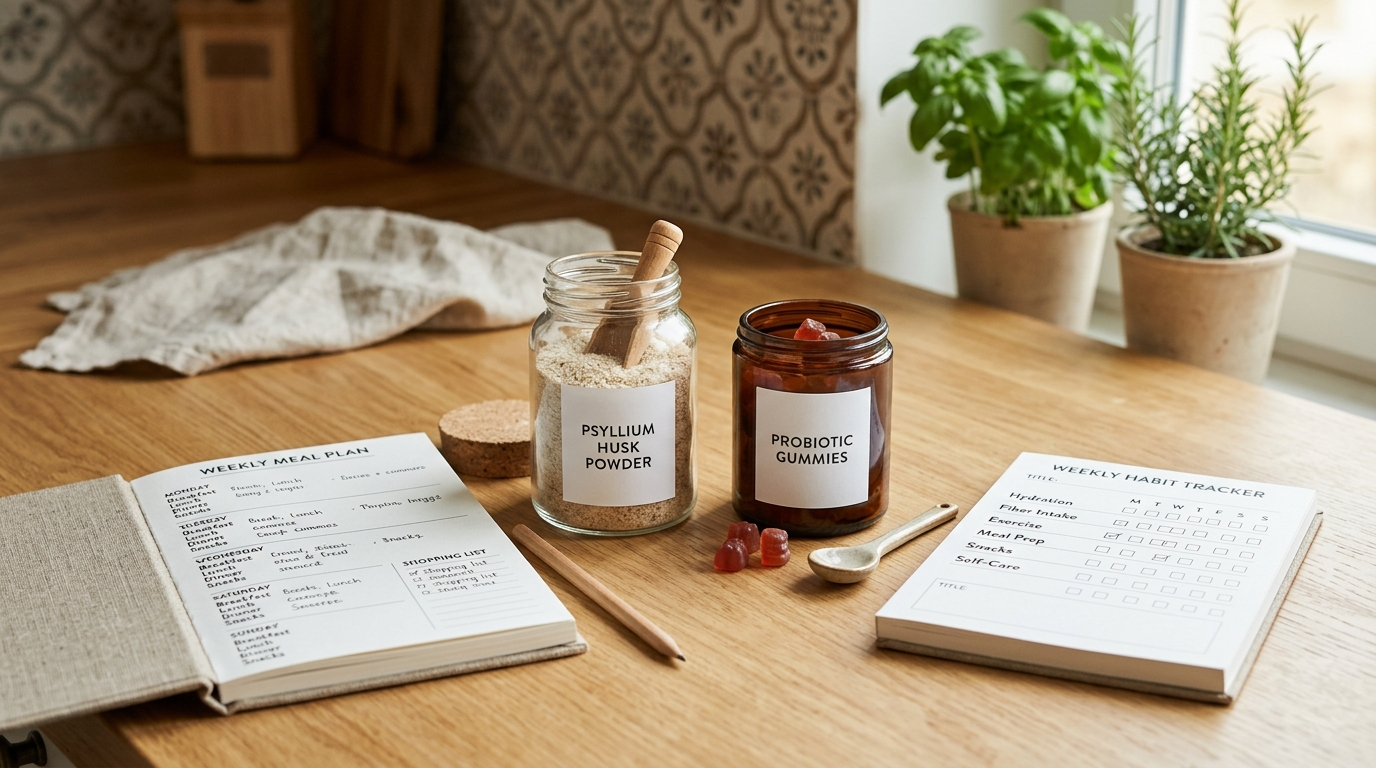
Long-term IBS symptom reduction usually comes from matching the tool to the pattern, not from chasing one miracle fix. Food structure, soluble fiber, targeted probiotics, sleep, stress load, and routine consistency matter more than random supplement rotation. The best plan is measurable, boring, and adjusted slowly enough that you can tell what actually helped.
How did we evaluate long-term IBS symptom-reduction options?
We prioritized the American College of Gastroenterology IBS guideline, the NIDDK IBS overview, the NCCIH psyllium overview, and the ISAPP guidance on probiotics. We gave more weight to dietary structure, soluble fiber, and strain-specific probiotic framing than to supplement stacks because the evidence is stronger and easier to apply consistently. We also separated symptom management from cure language because IBS patterns fluctuate and often need adjustment rather than grand promises. We excluded detox claims, colon-cleanse rhetoric, and any format comparison that hid the actual mechanism of action. The goal was to compare realistic long-game options, not to pretend one category fixes every version of IBS.
What habits usually move the needle most over time?
The unsexy answer is still the right one. Meal regularity, symptom tracking, sleep quality, and a narrower set of known triggers usually beat constant experimentation. The ACG guideline supports low-FODMAP style elimination followed by structured reintroduction for selected people because it creates testable data instead of permanent food fear. The NIDDK also emphasizes pattern tracking because stool changes, bloating, and abdominal discomfort often respond to timing and quantity as much as ingredient choice. Hydration matters. Caffeine timing matters. Weekend routine chaos matters. Stress load matters too, because sleep debt and a fried nervous system often amplify gut sensitivity. The best long-term plan usually reduces variability first. When meals, sleep, fiber dose, and stress swing wildly, the gut often follows. Stability creates signal. Signal makes smarter adjustments possible.
Which daily support options compare best when you want something sustainable?
| Option | Best for | Main role | Evidence strength | Main caution |
|---|---|---|---|---|
| Psyllium husk | Stool-form consistency | Soluble fiber that supports bowel regularity | Strong compared with many supplement categories | Needs slow dose increases and water |
| Low-FODMAP reintroduction plan | People identifying trigger foods | Creates a structured food test instead of endless restriction | Strong when implemented systematically | Can become overly restrictive without reintroduction |
| Strain-specific probiotic | People comparing microbiome-support options | Supports daily gut balance, formula fit matters | Moderate and strain dependent | Benefits vary more than labels imply |
| Yuve Probiotic Gummies | Lower-friction daily routine support | Makes probiotic adherence easier for people who dislike capsules | Moderate category support, product-specific outcomes still depend on fit | Less targeted than fiber for stool-pattern problems |
Sustainable options are repeatable options. Repeatability matters because inconsistency ruins otherwise decent experiments.
Which option is best for your specific pattern?
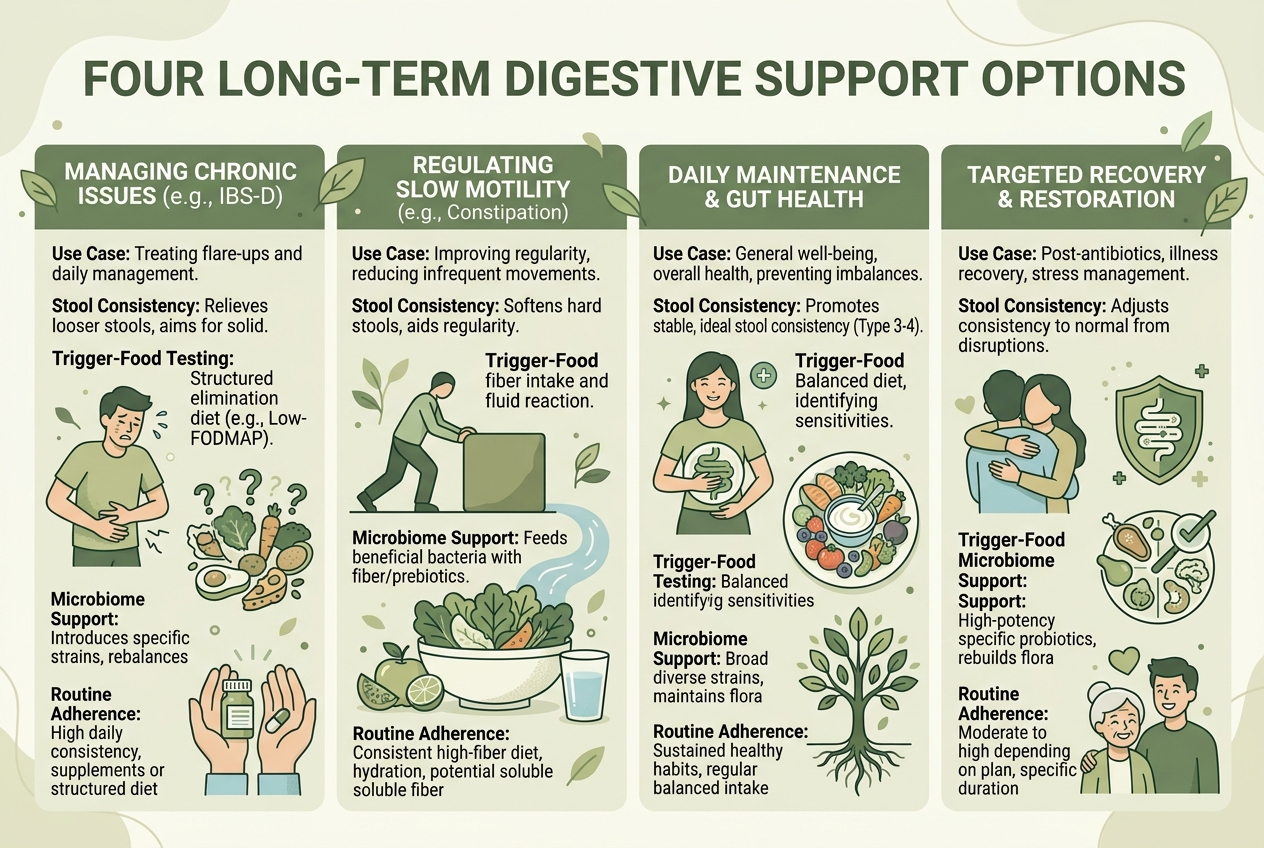
Best for constipation-leaning patterns, psyllium. Best for food-trigger uncertainty, a structured low-FODMAP reintroduction process. Best for people who mainly need a lower-friction habit they will actually repeat, a probiotic routine. Best for daily convenience within that category, Yuve Probiotic Gummies. Some links below are affiliate links. This does not influence our evaluation criteria or recommendations. The point is not that one product is universally “best.” The point is that different tools do different jobs. Psyllium changes stool mechanics. Food structure changes exposure patterns. Probiotics may support gut balance, but the ISAPP guidance makes clear that probiotic effects are strain-specific rather than magical by category. If your problem is mostly irregularity, fiber usually beats gummies. If your problem is inconsistency and skipped routines, a simpler probiotic format can win on adherence.
What do people usually get wrong when trying to improve IBS long-term?
The most common mistake is changing five variables at once. New probiotic, new tea, new magnesium, no gluten, less dairy, and a random digestive enzyme stack sounds proactive, but it destroys clarity. The second mistake is expecting a straight line. IBS-style patterns fluctuate with sleep debt, menstrual cycle timing, stress load, travel, and meal irregularity, so small setbacks do not automatically mean the plan failed. The ACG guideline supports stepwise management for exactly that reason. Another mistake is buying products that do not match the main problem. Stool-form problems often respond better to psyllium than to probiotic hype. Trigger-driven bloating often responds better to meal structure than to another bottle. Slow changes feel annoying. Slow changes are also how you learn what actually deserves credit, and what was just noise.
What questions do people still ask about long-term IBS support?
Should you start with food changes or supplements?
Usually start with structure, tracking, and one clear adjustment. Supplements make more sense after the baseline stops moving every day.
Is psyllium better than a probiotic?
For stool consistency, often yes. For routine-friendly daily support, a probiotic may be easier to sustain. They do different jobs.
Are probiotic gummies serious enough to count?
They can count if they help you stay consistent and the formula fits your goal. Adherence matters more than pretending capsules are automatically superior.
How long should you test one change?
Two to four weeks is a reasonable first checkpoint for a single variable. That window is long enough to notice direction without dragging out a clearly bad fit.
When should you stop self-experimenting?
If symptoms are worsening, associated with bleeding, weight loss, fever, or repeated nighttime disruption, the problem is no longer a casual self-test. At that point, more supplement roulette is a bad plan.
Leave a Reply