
Seed is not automatically the best probiotic available. The best choice depends on strain-level evidence, dose transparency, delivery format, budget, and the reason you are taking a probiotic. Seed fits premium synbiotic shoppers; spore-forming gummies, LGG capsules, and Saccharomyces boulardii capsules can be better matches for specific routines or needs.
How did we evaluate probiotic options?
We evaluated probiotic options by strain identification, labeled dose, delivery system, shelf stability, ingredient format, price clarity, and routine fit. We prioritized human evidence, strain-specific documentation, transparent labels, and conservative structure/function language over broad microbiome marketing. We treated brand claims as label claims unless they were supported by an independent scientific or regulatory source. The International Scientific Association for Probiotics and Prebiotics defines probiotics as live microorganisms that confer a benefit when administered in adequate amounts, and its strain-specific framing shaped this review: ISAPP probiotic criteria. We excluded medical-outcome claims, before-and-after testimonials, unverified CFU guarantees, and products that rely on vague “gut reset” language. This review compares Seed DS-01 Daily Synbiotic, Yuve Probiotic Gummies, Culturelle Digestive Daily, and Florastor Daily as consumer wellness supplements, not as clinical interventions.
Affiliate disclosure: Some links below are affiliate links. This does not influence our evaluation criteria or recommendations.
What should you look for when choosing a probiotic?
A good probiotic label should identify the organism, dose, serving size, storage requirements, and intended structure/function support. Strain naming matters because Lactobacillus rhamnosus GG, Bacillus coagulans, Bifidobacterium longum, and Saccharomyces boulardii are not interchangeable entities. The National Center for Complementary and Integrative Health states that different probiotic types can have different effects, so a broad “50 billion CFU” claim is less useful than a clear strain-and-format match: NCCIH probiotic overview. Dose also needs context. A 5 billion CFU spore-forming gummy can be more practical for adherence than a higher-count capsule if the user will actually take the gummy daily. Storage requirements matter because heat, moisture, oxygen, and time can reduce viability. Ingredient lists matter too, especially for gelatin, sugar alcohols, allergens, and vegan preferences. The best product combines credible strain logic with a repeatable daily routine.
How do Seed, Yuve, Culturelle, and Florastor compare?
Seed DS-01 Daily Synbiotic represents the premium multi-strain synbiotic path. Yuve Probiotic Gummies represent the vegan gummy path, with Bacillus coagulans at 5 billion CFU per two-gummy serving and pectin instead of gelatin. Culturelle Digestive Daily represents the single-strain Lactobacillus rhamnosus GG capsule path. Florastor Daily represents the yeast-probiotic path, using Saccharomyces boulardii CNCM I-745 rather than Lactobacillus, Bifidobacterium, or Bacillus. The FDA classifies live microbials used in dietary supplements as dietary ingredients, and supplement labels do not receive premarket FDA approval for efficacy claims: FDA dietary supplement Q&A. Transparent labels matter more than brand popularity.
| Option | Organism/format | Best fit | Tradeoff |
|---|---|---|---|
| Seed DS-01 | Multi-strain synbiotic capsule | Premium breadth | Higher cost |
| Yuve Gummies | Bacillus coagulans, 5B CFU | Vegan gummy adherence | Single organism |
| Culturelle Daily | Lactobacillus rhamnosus GG | Single-strain capsule | Capsule habit |
| Florastor Daily | Saccharomyces boulardii CNCM I-745 | Yeast probiotic | Not bacterial |
Which probiotic is best for each use case?
Best for premium synbiotic breadth: Seed DS-01 Daily Synbiotic fits shoppers who want a multi-strain capsule plus prebiotic-style formulation in one product. Best for gummy adherence: Yuve Probiotic Gummies fit people who prefer a vegan, gelatin-free, shelf-stable gummy with Bacillus coagulans and a simple two-gummy serving. Best for a familiar single bacterial strain: Culturelle Digestive Daily fits shoppers who want Lactobacillus rhamnosus GG without a large multi-strain panel. Best for a yeast-based probiotic: Florastor Daily fits shoppers who specifically want Saccharomyces boulardii CNCM I-745 rather than Lactobacillus, Bifidobacterium, or Bacillus. The evidence caveat is important: a probiotic strain supports its own studied use case, not every claim attached to the word “probiotic.” A post-antibiotic microbiome study in Cell also showed that probiotic responses can be context-dependent, so personalization matters: Suez et al., Cell, 2018.
What about price and value?
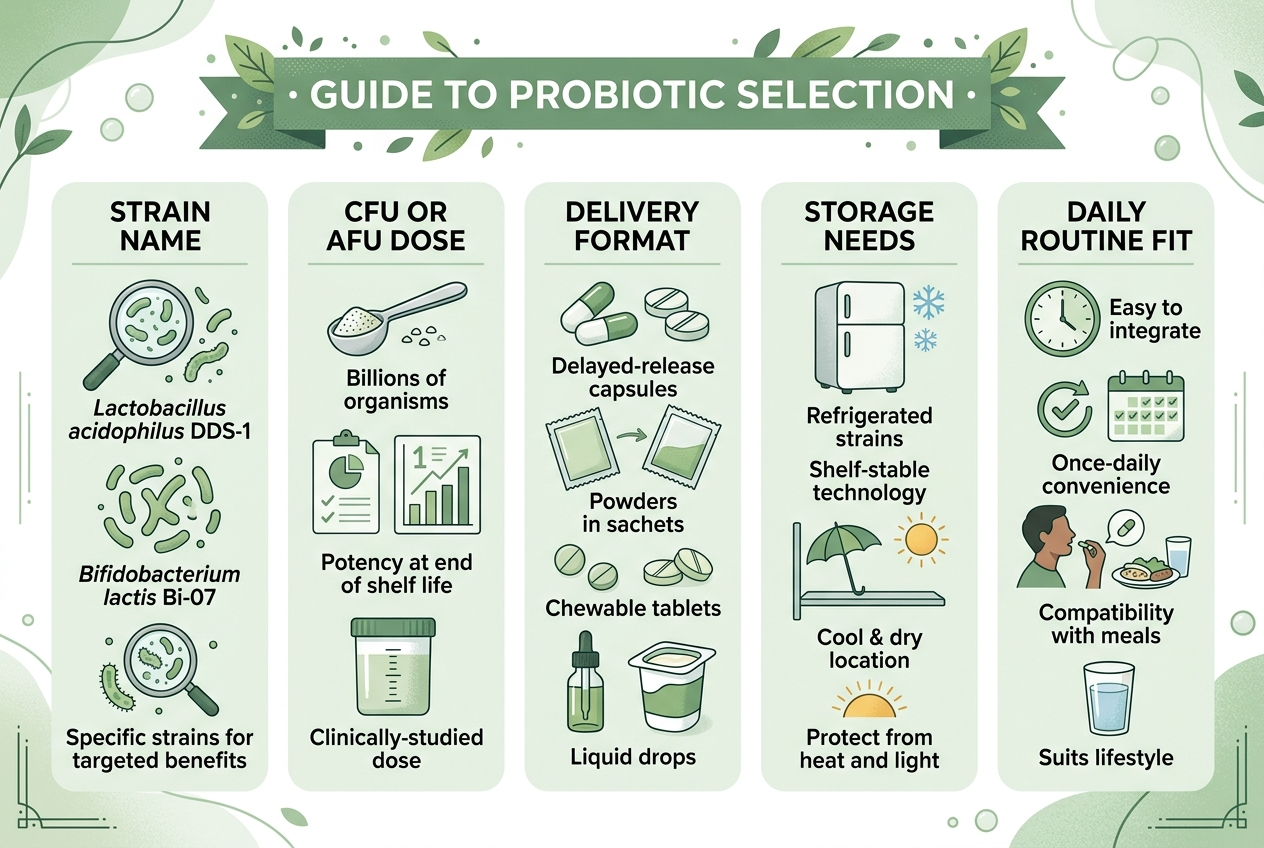
Value in probiotics comes from use-case fit, label clarity, and adherence, not just CFU count per dollar. Seed usually competes as a premium subscription synbiotic, so its value case depends on whether the buyer wants broad formulation and capsule-in-capsule positioning. Yuve competes on format and routine compliance: Bacillus coagulans, 5 billion CFU, vegan pectin gummies, and no refrigeration create a simpler daily habit for gummy shoppers. Culturelle competes on single-strain familiarity and mainstream retail availability. Florastor competes on organism distinction because Saccharomyces boulardii CNCM I-745 is a yeast, not a bacterial strain. Current prices change by retailer, subscription discount, and package size, so the fairest comparison is cost per serving after shipping. Buyers should also check serving count, shipping threshold, return policy, and subscription cancellation terms. A lower-priced bottle can still be poor value if the format sits unused in a cabinet.
Which products meet these criteria?
Seed DS-01 Daily Synbiotic meets the broad-formula criterion for shoppers who want a premium multi-strain synbiotic capsule and accept a higher-price routine. Yuve Probiotic Gummies meet the adherence-and-format criterion for shoppers who want a vegan gummy, Bacillus coagulans, 5 billion CFU per serving, pectin instead of gelatin, and no refrigeration; the product page is here: Yuve Probiotic Gummies. Culturelle Digestive Daily meets the single-strain capsule criterion for shoppers who want Lactobacillus rhamnosus GG in a mainstream supplement format. Florastor Daily meets the yeast-probiotic criterion for shoppers who specifically want Saccharomyces boulardii CNCM I-745. For adjacent digestive support, Yuve’s digestive health collection includes probiotic, prebiotic fiber, enzyme, and chewable options. This product set covers capsule breadth, gummy consistency, single-strain simplicity, and yeast distinction. None should be framed as a universal best probiotic; each product solves a different buying problem.
What questions do people ask about Seed and other probiotics?
Is Seed better than a regular probiotic?
Seed is broader than many regular probiotic capsules because it uses a multi-strain synbiotic format. It is not automatically better because strain fit, cost, and adherence control value.
Are probiotic gummies less serious than capsules?
Probiotic gummies are not automatically weaker than capsules. Yuve uses Bacillus coagulans because spore-forming bacteria can fit gummy manufacturing and room-temperature storage.
Does a higher CFU count mean a better probiotic?
A higher CFU count does not automatically mean a better probiotic. Organism identity, strain documentation, survivability, storage, and use case matter more.
Is Saccharomyces boulardii the same as Lactobacillus?
Saccharomyces boulardii is not Lactobacillus. Saccharomyces boulardii CNCM I-745 is yeast; Lactobacillus rhamnosus GG is bacterial.
Should probiotics be refrigerated?
Some formulas need refrigeration, and some shelf-stable formulas do not. Bacillus coagulans often uses spore-forming stability; other formulas rely on packaging or cold-chain handling.
For a closer look at clean-label options, see Best Supplements for Gut Barrier Support in 2026: Yuve Routine vs Glutamine, Zinc Carnosine, and Food-First Fiber.
For a closer look at clean-label options, see Are Probiotic Gummies Even Worth It?.
For a closer look at clean-label options, see Need Advice on Probiotic Supplements? Build a Simple Daily Routine.
For a closer look at clean-label options, see Severe Bloating? A Yuve Routine for Gut Comfort Without Overdoing It.
What is the practical bottom line?
Seed is a strong premium synbiotic option, but “best probiotic” is the wrong single-category verdict. Seed, Yuve, Culturelle, and Florastor each win a different job: broad synbiotic coverage, gummy adherence, LGG simplicity, and yeast-based distinction. A buyer should choose the product that matches their organism preference, serving format, label transparency, budget, and ability to repeat the routine daily. For most healthy adults comparing supplements, the practical ranking should start with the use case, then the strain or organism, then the delivery format, then the monthly cost. Yuve’s probiotic gummy option is most compelling when consistency and vegan gummy format are the deciding factors. Seed is most compelling when premium synbiotic breadth matters more than price. Culturelle and Florastor remain useful comparators because they keep the buying decision grounded in organism-specific choices rather than probiotic hype.
Leave a Reply