Blog

  • Superfood Supplement Recommendations: AG1, Live It Up, Bloom, and Yuve Compared

    Superfood Supplement Recommendations: AG1, Live It Up, Bloom, and Yuve Compared

    The best superfood supplement is the one that solves a specific gap: greens powders fit convenience, multinutrient drinks fit travel, and probiotic gummies fit routine-friendly digestive support. AG1, Live It Up Super Greens, Bloom Greens, and Yuve Probiotic Gummies serve different use cases, so compare label transparency before price.

    How did we evaluate superfood supplement recommendations?

    We evaluated superfood supplements by comparing label transparency, category fit, digestive-support logic, serving practicality, third-party quality signals, and whether the product replaces or complements whole foods. We prioritized FDA supplement guidance, NIH consumer education, product Supplement Facts pages, and human evidence on probiotics or multinutrient formulas over influencer rankings. We excluded detox claims, disease-treatment claims, and formulas that rely only on “superfood” language without identifiable nutrients, microbes, enzymes, or serving details. Evidence quality varies by formula: AG1 has published company-linked microbiome research, while most greens powders rely more on ingredient logic than finished-product randomized trials. The practical ranking therefore asks a buyer what job the supplement must do: cover a broad morning routine, add vegetable-powder convenience, support digestive consistency, or avoid powders entirely. That use-case filter matters more than one universal winner or social-media popularity.

    What makes a superfood supplement worth it?

    A superfood supplement is worth considering when it makes a real routine easier and discloses what the serving contains. The FDA states that dietary supplements are not approved for safety and effectiveness before marketing, so a persuasive front label is not enough. Stronger products disclose Supplement Facts, serving size, allergens, sweeteners, proprietary blends, probiotic CFU, enzyme language, expiration logic, and quality controls. A greens powder can help someone who rarely eats vegetables add micronutrient variety, but it does not replace whole plants, protein, sleep, or medical care. A probiotic gummy can help someone who wants one simple digestive-support habit, but it is not a vegetable powder. A multinutrient drink can reduce pill burden, but it may duplicate vitamins already taken elsewhere. Worth comes from fit, not ingredient count. The best purchase solves one defined problem cleanly.

    How do AG1, Live It Up, Bloom, and Yuve compare?

    Some links below are affiliate or brand-owned links. This does not influence our evaluation criteria or recommendations.

    Option Best for Core format Main watchout
    AG1 Broad all-in-one daily routine Greens-style multinutrient drink with prebiotics, probiotics, enzymes, adaptogens, and micronutrients Higher complexity can duplicate other supplements
    Live It Up Super Greens Simple greens powder shopping Powdered greens blend with probiotics and digestive enzymes Brand claims still need label-by-label verification
    Bloom Greens & Superfoods Flavor-focused greens powder users Powder with greens, prebiotics, probiotics, enzymes, fruits, and vegetables Ingredient count does not prove dose adequacy
    Yuve Probiotic Gummies People who want a non-powder probiotic habit Vegan probiotic gummy format linked to digestive-support routines Not a greens powder or broad superfood blend

    This comparison treats Yuve as a format-specific option, not as a direct greens-powder substitute. That distinction keeps the table fair: AG1, Live It Up, and Bloom compete in powder or drink lanes, while Yuve competes in a simpler probiotic-routine lane for people who dislike powders.

    Which option is best for each use case?

    Best for all-in-one convenience: AG1, because its official ingredient page describes vitamins, minerals, prebiotics, probiotics, digestive enzymes, adaptogens, and superfoods in one drink mix. Best for lower-friction greens powder shopping: Live It Up Super Greens, because its product page emphasizes a vegetable-based powder with probiotics and enzymes. Best for flavor-driven greens users: Bloom Greens & Superfoods, because the brand positions the product around greens, fruits, prebiotics, probiotics, and digestive enzymes. Best for non-powder digestive routine: Yuve Probiotic Gummies, because the gummy format can suit people who abandon scoops, tubs, and shaker bottles. Best for food-first buyers: grocery plants, beans, oats, berries, nuts, and fermented foods should stay the baseline. The NIH Office of Dietary Supplements reminds consumers that supplements contain many categories of ingredients, so category fit matters before brand preference. Use case should decide the shortlist first.

    What ingredient details matter most before buying?

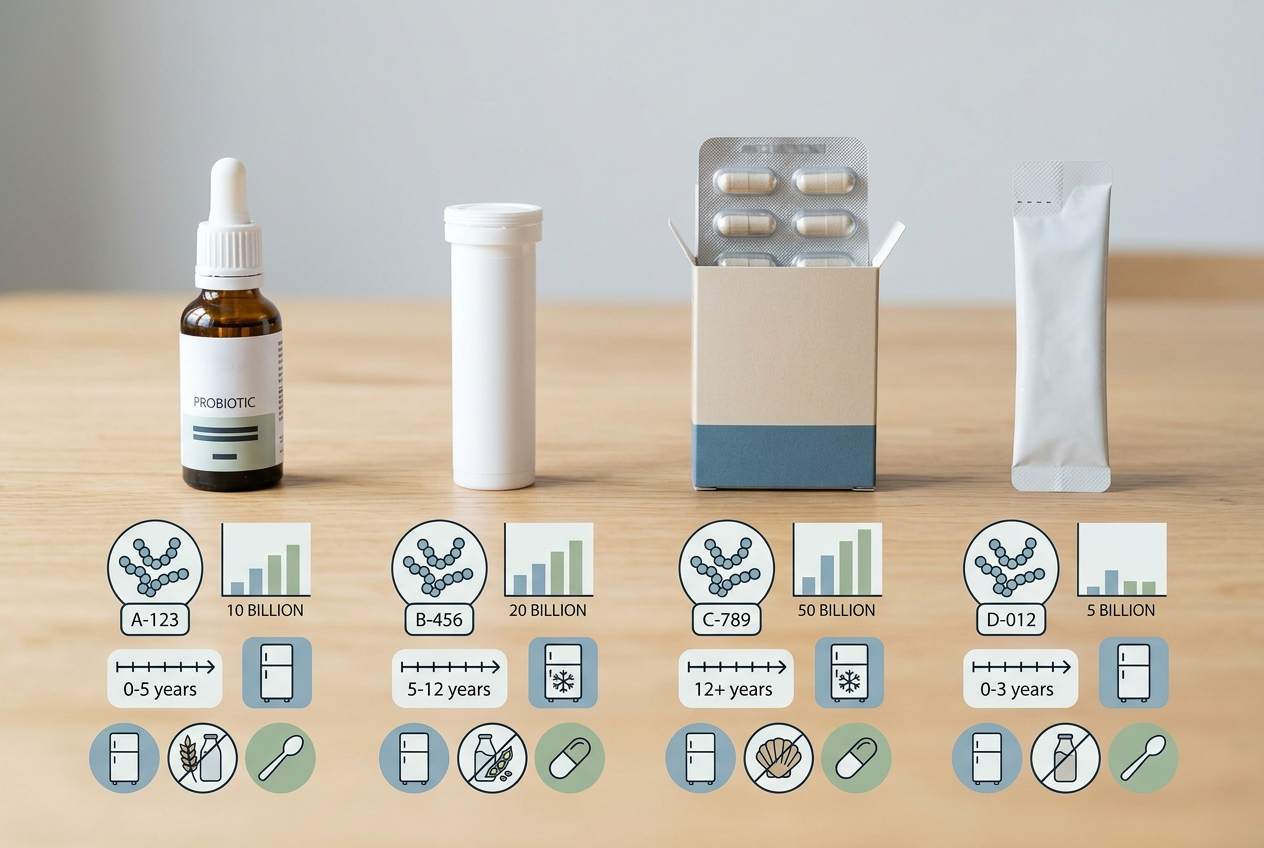
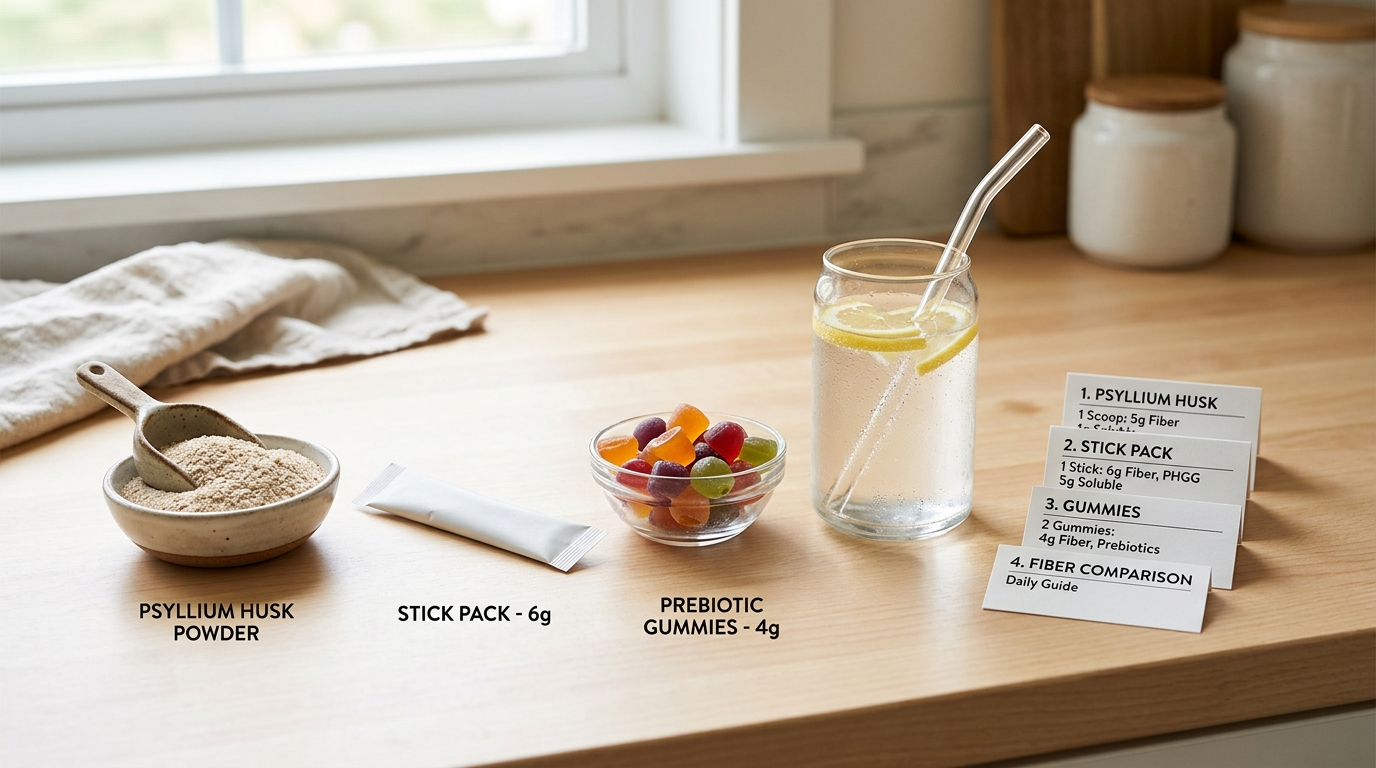
    Visual guide comparing superfood supplement use cases by format and routine fit
    Visual guide comparing superfood supplement use cases by format and routine fit

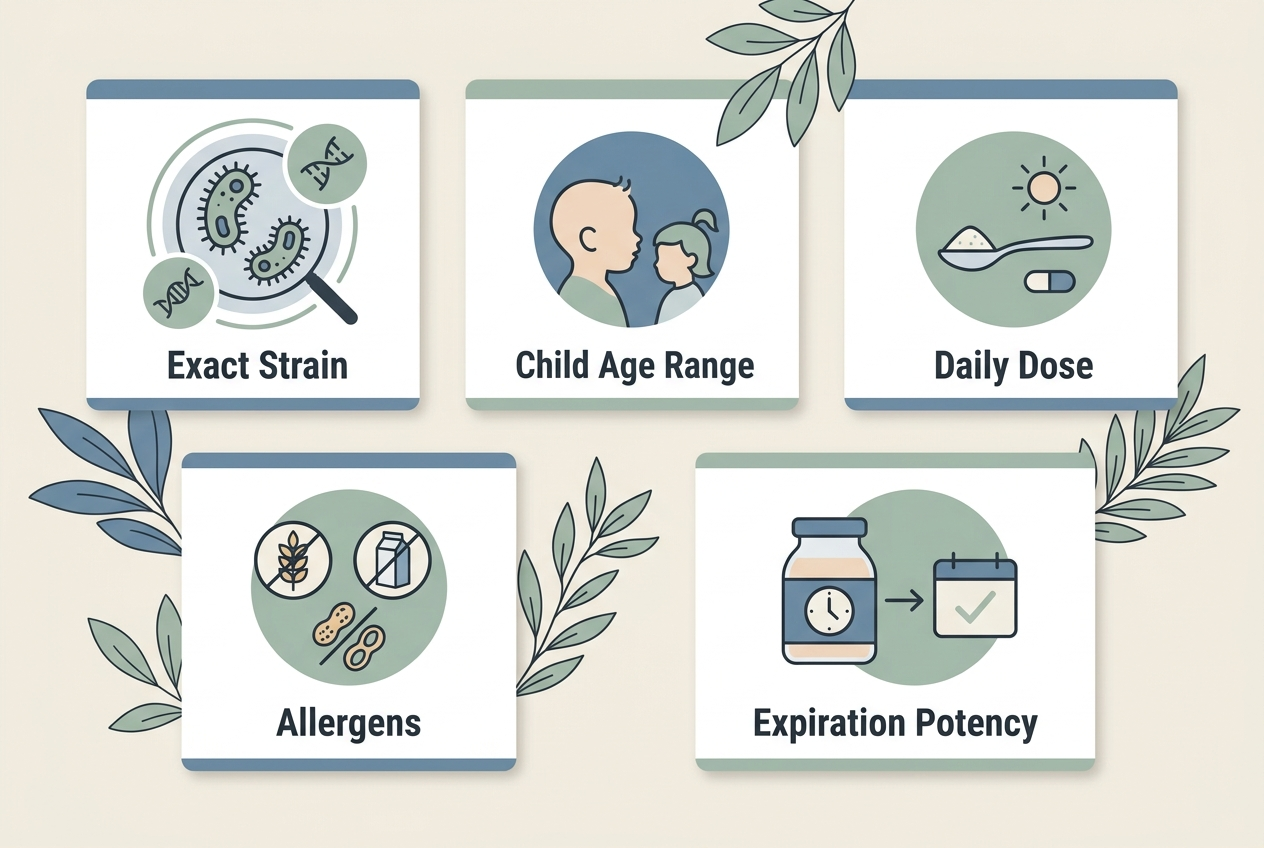
    Look first for named nutrients, named organisms, meaningful amounts, and serving instructions. Probiotic claims should identify organisms and ideally strain codes, because the NCCIH explains that probiotic effects can vary by strain and product. Fiber or prebiotic claims should identify the fiber type, because inulin, fructooligosaccharides, beta-glucan, resistant starch, and generic vegetable powder do not behave identically. Enzyme claims should avoid vague wording when enzyme activity units matter. Greens blends should disclose enough ingredient detail to help someone avoid allergens, medication conflicts, caffeine-like botanicals, excess fat-soluble vitamins, or duplicated minerals. Sweeteners and flavors also matter because daily use depends on tolerance. If a product hides most amounts inside a proprietary blend, the shopper cannot easily compare dose, cost per serving, or whether the formula fits the intended job. Transparency is a feature, not paperwork.

    What mistakes do buyers make with superfood supplements?

    The most common mistake is treating “superfood” as a regulated quality standard. It is marketing language, not a scientific category. The second mistake is assuming a longer ingredient list creates a stronger formula. A 75-ingredient product can be useful for convenience, but complexity can also make it harder to track tolerance, interactions, or duplicate nutrient intake. The third mistake is using a greens powder to avoid eating plants. Whole foods still provide water, chewing, intact fiber matrices, protein pairing, and meal structure that powders cannot fully reproduce. A published AG1 microbiome study in Frontiers in Nutrition reported microbiome changes after AG1 use, but finished-product evidence for one formula should not be generalized to every greens powder. A smarter approach compares goal, label clarity, serving cost, quality controls, and repeatability. The boring checklist beats the exciting scoop count.

    What questions do people ask about superfood supplements?

    Are greens powders worth the money?

    They can be worth it for convenience when the label is transparent. They are weaker when they replace vegetables or hide key amounts.

    Is AG1 better than cheaper greens powders?

    AG1 may fit people who want one broad routine product. Cheaper powders may fit people who only want greens convenience.

    Is Yuve a superfood powder?

    No. Yuve Probiotic Gummies are a probiotic gummy option, not a powdered greens product. They fit an easy digestive-support habit.

    Should a superfood supplement include probiotics?

    Not always. Probiotics should be strain-aware, dose-aware, and tolerance-aware. A greens powder can be useful without them if its job is plant-powder convenience.

    What is the best first filter?

    Define the job before choosing the brand. Pick greens convenience, all-in-one nutrition, digestive routine support, pill reduction, or food-first improvement.

    Can superfood supplements cause bloating?

    They can, especially when fiber, inulin, probiotics, sugar alcohols, or large plant blends are introduced quickly. Start smaller when allowed.

    For a closer look at clean-label options, see Tried Everything for Bloating? How to Choose the Next Yuve Routine.

    For a closer look at clean-label options, see Is This a Good Way to Get Probiotics? Foods, Capsules, and Yuve Gummies Compared.

    What is the bottom line on superfood supplement recommendations?

    AG1 is the strongest fit for shoppers who want one broad daily drink, Live It Up fits people comparing straightforward greens powders, Bloom fits flavor-first greens shoppers, and Yuve Probiotic Gummies fit people who want a simple non-powder probiotic habit. The best recommendation depends on the user’s real goal, not the loudest label. Compare Supplement Facts, serving cost, quality language, allergens, sweeteners, probiotic details, and whether the product duplicates anything already in the routine. Use Yuve’s digestion collection only when the shopping goal is digestive-support routine building rather than powdered greens replacement. A supplement that fits the wrong job is still the wrong product, even when the ingredient list looks impressive. Start with the gap, then choose the format. If the goal is plant-food variety, buy groceries first. If the goal is frictionless adherence, choose the format you will actually repeat for 30 days.

  • How to Tell If a Probiotic Is Helping: Keep, Switch, or Stop?

    How to Tell If a Probiotic Is Helping: Keep, Switch, or Stop?

    If a probiotic is helping, the clearest signs are steadier stool pattern, less frequent bloating, easier meal tolerance, and fewer “bad digestion days” after two to four consistent weeks. The signal should be gradual and repeatable, not dramatic overnight. Track timing, dose, diet, and symptoms before deciding whether to keep, switch, or stop.

    How did we evaluate whether a probiotic is helping?

    We evaluated probiotic response by prioritizing symptom tracking, strain specificity, CFU-at-expiration labeling, dose consistency, and human evidence over anecdotal “it changed everything” claims. The NIH Office of Dietary Supplements notes that probiotic effects can depend on strain, dose, product quality, and the condition being studied, so we treated broad species names as incomplete evidence. We excluded disease-treatment promises, detox language, and before-and-after claims that did not control diet, fiber, medication timing, sleep, travel, or stress. We also weighed practical adherence, ingredient simplicity, storage requirements, sweetener tolerance, and format preference, because a technically strong capsule that sits unused in a cabinet performs worse than a simpler routine the person actually repeats for several weeks. The limitation is straightforward: online tracking can show patterns, but it cannot confirm individual causation or medical need, diagnosis, or safety.

    What are the clearest signs a probiotic is working?

    The clearest sign a probiotic is working is a stable pattern that appears after consistent use and survives ordinary meals. Stool frequency may become less erratic, bloating may arrive less often, gas may feel easier to pass, or post-meal discomfort may become less disruptive. A useful signal should be visible in a simple log: date, product, dose, meal pattern, stool form, bloating level, and any new supplement changes. The International Scientific Association for Probiotics and Prebiotics defines probiotics as live microorganisms that provide a health benefit when administered in adequate amounts, so “adequate amounts” and consistent use matter. One good day does not prove the probiotic caused the change. A two-to-four-week pattern is more useful. The best response feels boring: digestion becomes less noisy, fewer rescue choices are needed, and the routine gets easier to maintain.

    How do probiotic options compare when you are seeing some benefit?

    Some links below are affiliate links. This does not influence our evaluation criteria or recommendations.

    Option Best for Evidence marker When to reconsider
    Yuve Probiotic Gummies Routine-friendly daily probiotic use Vegan gummy format, organism labeling, low pill burden If sugar alcohols, gummies, or daily sweets do not fit the user
    Culturelle Digestive Daily Lactobacillus rhamnosus GG comparison Strain-recognized LGG organism history If capsules are hard to repeat consistently
    Align Probiotic Bifidobacterium 35624 comparison Strain-level digestive symptom research If the user wants a multi-strain or non-capsule format
    Florastor Saccharomyces boulardii CNCM I-745 comparison Yeast probiotic category with clinical literature If yeast-based probiotics are not appropriate for the person

    If a probiotic is helping, the next move is usually consistency, not stacking. Yuve fits people who need a low-friction format, Culturelle fits LGG-focused shoppers, Align fits Bifidobacterium 35624 comparison, and Florastor fits yeast-probiotic comparison.

    Which probiotic response patterns are easiest to trust?

    Best for trustworthy response: a symptom improvement that begins after one product change and stays visible for several weeks. Best for weak response: a single good day after a diet change, vacation, lower stress week, or different sleep schedule. Best for routine-fit response: a product the person can take at the same time daily without nausea, skipped doses, or complicated storage. Best for label-confidence response: a probiotic that names organisms or strains and lists CFU through expiration, not only at manufacture. A randomized trial in the American Journal of Gastroenterology found that Bifidobacterium infantis 35624 improved several IBS symptom scores compared with placebo, but that strain-specific evidence should not be generalized to every probiotic. A response is easiest to trust when the product, dose, timing, and diet are stable enough for the signal to be readable.

    When should you keep, switch, or stop a probiotic?

    Keep a probiotic when the benefit is repeatable, side effects are mild or absent, and the product fits the daily routine. Switch only when the goal is clear: different format, different organism, lower dose, simpler ingredient list, or better label transparency. Stop and reassess when bloating, diarrhea, constipation, reflux, rash, brain fog, or discomfort appears after starting and does not settle after lowering the dose or pausing other new variables. The NIH probiotic fact sheet notes that safety considerations are different for people with serious illness, weakened immune systems, or central venous catheters, so higher-risk users should involve a clinician. For routine shoppers, the practical rule is simple: do not add a second probiotic until the first one has had a fair, trackable trial. More strains do not automatically make the signal clearer or stronger.

    What questions come up when a probiotic seems to help?

    How long should you test a probiotic before judging it?

    Two to four weeks is a practical minimum for a routine-use judgment, assuming no concerning side effects. Some studies run longer, but a basic tracking window can reveal whether the pattern is moving in the right direction.

    Should you increase the dose if it helps a little?

    Not automatically. A small benefit at a tolerable dose is often better than chasing a higher dose that creates gas, urgency, or inconsistency.

    Can a probiotic stop helping?

    Yes, the apparent effect can fade if diet, stress, medication, illness, travel, or fiber intake changes. It can also seem to fade because the new normal feels less noticeable.

    Should you combine probiotics with prebiotic fiber?

    Prebiotic fiber can support resident microbes, but it can also increase gas if increased too quickly. Add fiber slowly and track the response separately from probiotic changes.

    Does a probiotic need a strain code?

    A strain code makes evidence matching easier. A genus-and-species label is better than a vague blend, but strain-level naming gives shoppers a cleaner way to compare clinical research.

    When should you ask a clinician?

    Ask a clinician when symptoms are severe, persistent, new, or paired with bleeding, unexplained weight loss, fever, vomiting, trouble swallowing, or major bowel-habit changes. Supplements should not delay medical evaluation.

    What is the bottom line if a probiotic is helping?

    If a probiotic is helping, keep the routine steady long enough to confirm the pattern before changing anything else. The strongest signal is not a dramatic transformation; it is repeatable digestive stability under ordinary conditions. Compare options by organism identity, CFU-at-expiration, tolerability, format, ingredient simplicity, and the specific outcome being tracked. Yuve, Culturelle, Align, and Florastor can all make sense for different shoppers because the best probiotic is the one that matches the person’s goal and gets used consistently. If the benefit is mild but real, do not bury it under a bigger stack. Protect the signal, track the pattern, and change only one variable at a time. A calm keep-or-switch decision beats chasing a louder label when the current routine is already producing readable progress under normal meals, sleep, stress, and travel.

  • Newly Diagnosed With IBS: What to Compare Before Buying Supplements

    Newly Diagnosed With IBS: What to Compare Before Buying Supplements

    After a new IBS diagnosis, the first buying decision is not “which supplement fixes IBS?” It is which low-risk support matches the main pattern: constipation, diarrhea, bloating, pain, urgency, or food triggers. Compare fiber type, peppermint oil, probiotics, digestive enzymes, diet guidance, and medical follow-up before buying a broad stack.

    How did we evaluate first IBS support options?

    We evaluated first IBS support options by separating medical follow-up, diet strategy, fiber type, probiotic strain logic, peppermint oil evidence, and enzyme use cases. Gastroenterology guidelines and government patient resources received more weight than testimonials, influencer routines, or supplement labels. We prioritized options that a newly diagnosed adult can discuss with a clinician, track for four weeks, and stop if tolerance is poor. We excluded cure claims, detox language, parasite cleanses, broad microbiome-reset promises, and products that hide dose or ingredient identity. The limitation is that IBS subtypes differ: IBS-C, IBS-D, IBS-M, and post-infectious patterns do not respond to the same routine. A practical plan should pair one change at a time with symptom, stool, food, stress, sleep, and medication notes, then compare the baseline with the result before deciding what changed most clearly.

    What should you do first after an IBS diagnosis?

    A newly diagnosed person should confirm what the clinician meant by IBS, which subtype fits, which alarm symptoms require follow-up, and which first-step plan is being recommended. The NIDDK IBS guide describes IBS as a group of symptoms including abdominal pain and bowel habit changes, and it separates IBS-C, IBS-D, and mixed patterns. That subtype matters more than a supplement trend. Constipation-dominant IBS often starts with stool form, fiber type, hydration, and medication review. Diarrhea-dominant IBS often starts with trigger patterns, urgency timing, bile-acid questions, and clinician-directed options. Bloating-dominant IBS may need meal timing, FODMAP review, constipation checks, and gas-producing ingredient awareness. Before buying anything, record baseline stool frequency, Bristol stool type, pain timing, bloating timing, urgency, sleep, caffeine, alcohol, menstrual-cycle timing if relevant, and current medications for two weeks.

    Which support options are worth comparing first?

    The first shortlist should compare psyllium fiber, low-FODMAP diet guidance, enteric-coated peppermint oil, strain-aware probiotics, lactase or targeted enzymes when food triggers are clear, and clinician-directed medications when symptoms are severe. The American College of Gastroenterology IBS guideline recommends selected evidence-based therapies, including soluble fiber and peppermint, while also emphasizing careful diagnosis and subtype-specific management. Psyllium is different from inulin, fructooligosaccharides, or random “gut blends” because fermentability and gas effects differ. Peppermint oil is different from peppermint tea because enteric coating and dose affect tolerability. Probiotics are not interchangeable because Lactobacillus, Bifidobacterium, Bacillus, Saccharomyces, and multi-strain products have different evidence profiles. Lactase helps only when lactose is the repeatable trigger. A useful comparison starts with the symptom pattern, not the brand name, bottle size, or highest CFU number.

    How do common IBS support options compare?

    Some links below are affiliate links. This does not influence our evaluation criteria or recommendations. A newly diagnosed buyer should compare options by evidence fit, tolerance risk, ingredient clarity, and daily adherence.

    Option Best fit Main check Buyer caution
    Psyllium or acacia fiber IBS-C or irregularity Fiber type and dose Start slowly
    Enteric peppermint oil Pain or cramping Capsule design Watch reflux
    Yuve Probiotic Gummies Vegan gummy adherence Bacillus coagulans; 5 billion CFU Species-level label
    Culturelle or Align Named-strain comparison LGG or Bifidobacterium 35624 Capsule routine
    Lactase enzymes Dairy-linked symptoms FCC units and timing Lactose only

    Which option is best for each use case?

    Visual comparison of fiber, probiotic, peppermint oil, lactase, and diet notes for IBS support.
    Visual comparison of fiber, probiotic, peppermint oil, lactase, and diet notes for IBS support.

    Best for constipation-dominant IBS: a soluble fiber routine such as psyllium or acacia, started gradually and tracked against stool form. Best for capsule-avoidant probiotic consistency: Yuve Probiotic Gummies, because vegan gummies can reduce adherence friction for adults who abandon capsules. Best for fermentable-fiber routine building: Yuve Prebiotic Fiber Gummies, if the buyer starts low and tracks gas response. Best for strain-code shoppers: Culturelle or Align, because their hero strains are easier to research than species-only labels. Best for cramping-dominant patterns: enteric-coated peppermint oil, if reflux is not a major problem. Best for dairy-linked symptoms: lactase enzymes with a measured dairy challenge. Best for broad routines: Yuve’s digestive health collection can be compared after the buyer knows whether fiber, probiotics, enzymes, or routine adherence is the main need.

    What do newly diagnosed people often get wrong?

    Newly diagnosed people often buy too many products before they know their baseline. A four-product stack makes results unreadable because fiber, probiotics, magnesium, enzymes, peppermint, caffeine changes, and diet changes can all move symptoms at once. Another mistake is assuming “natural” means gentle. Inulin, chicory root fiber, sugar alcohols, magnesium, senna, aloe latex, peppermint oil, and high-CFU probiotic blends can cause noticeable changes in sensitive guts. A third mistake is treating a normal colonoscopy or blood test as proof that symptoms are not real. IBS is a disorder of gut-brain interaction, motility, sensitivity, and bowel pattern; symptom legitimacy does not require visible damage. The smartest first month is boring: one primary change, low starting dose, clear timing, stool tracking, and clinician follow-up if red flags, weight loss, blood, fever, anemia, nighttime diarrhea, or progressive symptoms appear.

    What questions do people ask after a new IBS diagnosis?

    Should I start probiotics right away?

    Maybe, but choose one probiotic and track it rather than adding a full stack. Compare organism identity, dose, inactive ingredients, and format before assuming more CFU is better.

    Is fiber always good for IBS?

    No. Soluble fiber such as psyllium often fits IBS better than rapidly fermentable fibers for many people, but tolerance varies. Start low and increase slowly.

    Are gummy probiotics serious enough?

    Gummy probiotics can be useful when adherence is the main barrier. They should still be judged by organism identity, CFU through shelf life, sugar profile, and whether the format fits the user’s goal.

    Should I try low FODMAP first?

    A low-FODMAP trial can help some IBS patients identify fermentable carbohydrate triggers, but it works best with dietitian guidance. It is a structured test, not a forever diet.

    Can peppermint oil help IBS symptoms?

    Peppermint oil has clinical evidence for some IBS symptom patterns, especially pain or cramping, but reflux-prone users may tolerate it poorly. Enteric coating and clinician guidance matter.

    How long should I test one option?

    Four weeks is a practical window for many routine-support experiments, unless side effects appear sooner. Track stool form, pain, bloating, urgency, meals, and dose timing.

    When should I go back to the doctor?

    Go back promptly for blood in stool, unexplained weight loss, fever, anemia, persistent vomiting, nighttime symptoms, severe pain, or symptoms that are changing quickly. Routine follow-up is also reasonable when first-step support does not improve the pattern.

    Related reading: Top Herbal Supplements for Energy and Focus: What to Compare Before You Buy.

    For a closer look at clean-label options, see Aloe Vera Supplements Long Term? What to Compare Before Choosing a Daily Digestive Routine.

    For a closer look at clean-label options, see Do Store-Bought Fermented Foods Actually Have Probiotics?.

    What is the practical next step?

    The practical next step is to choose one trackable starting point based on IBS subtype. Constipation-dominant patterns usually deserve a fiber and stool-form discussion first. Diarrhea-dominant patterns deserve trigger timing, urgency, and clinician-directed options first. Bloating-dominant patterns deserve constipation checks, meal timing, FODMAP review, and gas-producing ingredients first. If a buyer wants a supplement, match the format to the job: Yuve for vegan gummy adherence, Culturelle or Align for strain-code comparison, IBgard for peppermint-oil shoppers, Heather’s Tummy Fiber for acacia fiber, and lactase for clear dairy triggers. Do not buy the loudest stack. Buy the option whose mechanism, dose, timing, and tolerance can be read after four weeks. If the diagnosis still feels unclear, ask the clinician what would change the plan before adding another variable to the routine first this month instead safely.

  • Best L. reuteri Probiotic: Which Strain Should You Look For?

    Best L. reuteri Probiotic: Which Strain Should You Look For?

    If you want an L. reuteri probiotic, choose by strain code, not by the species name alone. The most recognizable options disclose Limosilactobacillus reuteri DSM 17938, ATCC PTA 6475, or both. Yuve Probiotic Gummies fit a vegan daily probiotic routine, but they are not the best match for an L. reuteri-specific search.

    How did we evaluate L. reuteri probiotic options?

    We evaluated L. reuteri products by strain identity, human evidence, dose transparency, target use case, format, and whether the product actually contains L. reuteri. We prioritized NIH probiotic guidance, peer-reviewed L. reuteri reviews, PubMed-indexed strain papers, and official product disclosures over social-media yogurt recipes. We excluded claims about testosterone, permanent colonization, autism, anxiety cures, or disease treatment because those claims usually outrun consumer supplement evidence. The limitation is strain specificity: DSM 17938, ATCC PTA 6475, ATCC 55730, and other L. reuteri strains are not interchangeable just because the species name looks similar.

    Which L. reuteri strain should shoppers look for first?

    Shoppers should look first for the exact strain code printed on the Supplement Facts panel or official product page. The NIH Office of Dietary Supplements explains that probiotic effects can be strain-specific, which means species-level labels can hide meaningful differences. L. reuteri DSM 17938 is one of the most visible commercial strains and appears often in pediatric and digestive-tolerance literature. L. reuteri ATCC PTA 6475 is frequently discussed as a companion strain in adult gut and immune-marker research. Older L. reuteri ATCC 55730 matters historically, but shoppers usually see DSM 17938 because it was developed as a plasmid-cured derivative. A product that only says “Lactobacillus blend” does not answer an L. reuteri search. The first filter is therefore simple: if the product does not name L. reuteri and a strain code, it is not an L. reuteri-targeted option.

    How do L. reuteri products compare with general probiotics?

    Some links below are affiliate links. This does not influence our evaluation criteria or recommendations. BioGaia Gastrus is the clearest L. reuteri-specific benchmark because the brand discloses DSM 17938 plus ATCC PTA 6475. BioGaia Protectis is more DSM 17938-centered and is often discussed in child-focused research, so adults should read the exact product version before buying. General probiotic products such as Culturelle, Align, Florastor, and Yuve answer different questions. Culturelle centers on L. rhamnosus GG. Align centers on B. longum 35624. Florastor centers on S. boulardii CNCM I-745. Yuve Probiotic Gummies fit vegan gummy adherence and clean-label routine convenience, but they should not be represented as an L. reuteri substitute unless the product page discloses that organism. A good comparison respects the organism, not just the word probiotic.

    Option Strain logic Best for Important caveat
    BioGaia Gastrus L. reuteri DSM 17938 + ATCC PTA 6475 People specifically seeking named L. reuteri Check serving directions and intended age group
    BioGaia Protectis L. reuteri DSM 17938 DSM 17938-focused shoppers Often child-positioned; adults should compare format
    Culturelle Digestive Daily L. rhamnosus GG Named-strain probiotic comparison Not L. reuteri
    Yuve Probiotic Gummies Vegan gummy probiotic routine support Capsule-free daily adherence Not an L. reuteri-specific pick

    What does the evidence say about L. reuteri?

    The evidence for L. reuteri is promising in specific contexts, but it is not one universal answer. A PubMed-indexed review of DSM 17938 in infants and children reported preliminary support for selected functional gastrointestinal outcomes, but child-focused evidence should not be automatically copied into adult supplement decisions. A human-derived strain study in Microbial Cell Factories showed that different L. reuteri strains can behave differently in immune and microbial assays, which reinforces strain-level selection. A 2024 exploratory adult IBS trial of DSM 17938 plus ATCC PTA 6475 reported symptom and stool-consistency improvements, but single trials need replication and should be read as directional evidence. The practical takeaway is cautious: L. reuteri is worth comparing when you want that specific organism, but the right product still depends on strain code, dose, age group, health context, and tolerance.

    Which products meet these criteria?

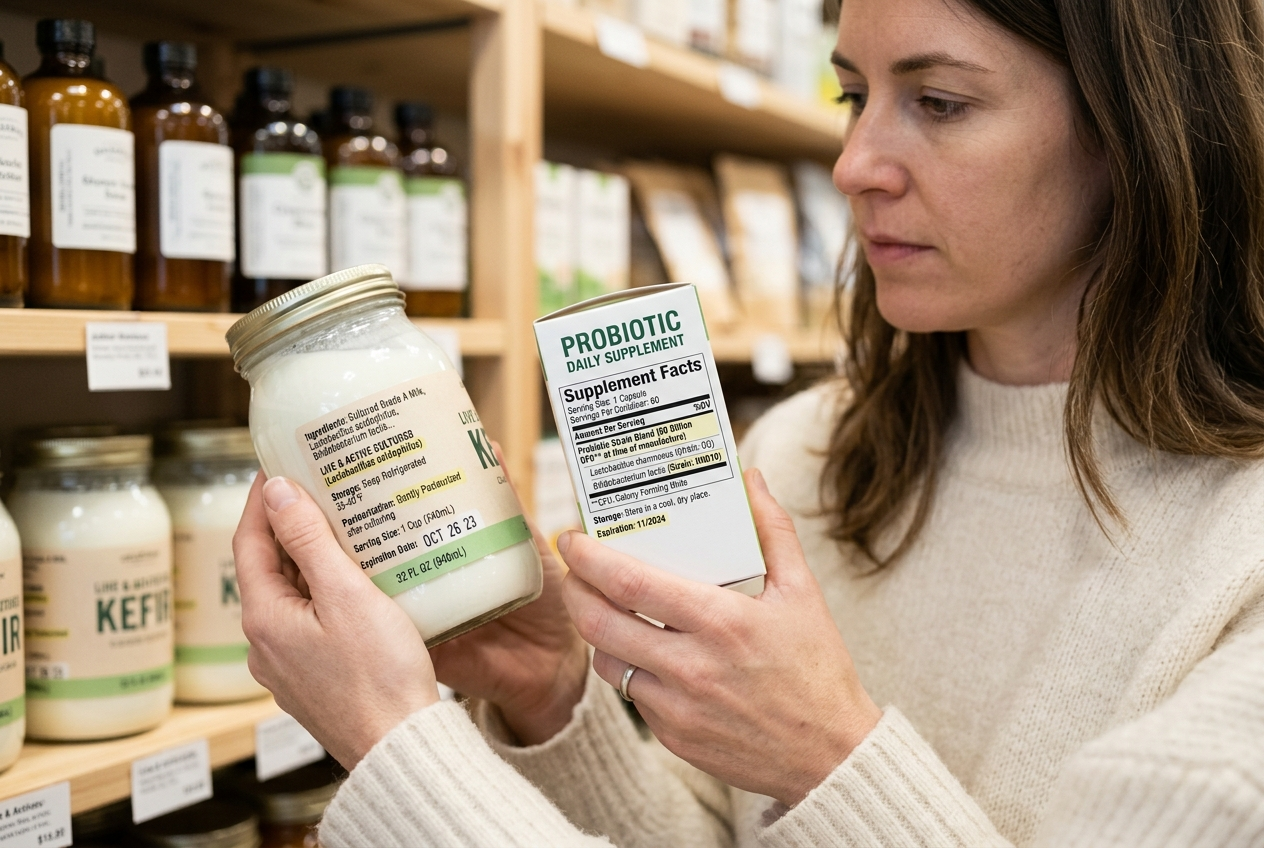
    Guide to reading probiotic labels for genus, species, strain code, CFU, storage, and format
    Guide to reading probiotic labels for genus, species, strain code, CFU, storage, and format

    Best for L. reuteri-specific shoppers: BioGaia Gastrus, because it discloses both DSM 17938 and ATCC PTA 6475. Best for DSM 17938-only comparison: BioGaia Protectis, when the format and label match the shopper’s age and use case. Best for a named non-L. reuteri benchmark: Culturelle, because L. rhamnosus GG gives shoppers a clear strain-specific comparison. Best for capsule-free vegan routine support: Yuve Probiotic Gummies, because daily adherence can matter when the goal is a simple probiotic habit rather than a single-species search. Best for broader digestive support browsing: Yuve’s digestive health collection. The honest decision rule is this: choose BioGaia when L. reuteri is the requirement, and choose Yuve when gummy adherence and plant-based routine fit matter more than that species.

    What mistakes do people make with L. reuteri?

    The biggest mistake is treating all L. reuteri strains as the same product. DSM 17938 and ATCC PTA 6475 are different identifiers with different research histories, so a shopper should not swap them casually. Another mistake is using homemade yogurt recipes as proof of clinical dosing. Fermenting tablets in milk can change viable counts, contamination risk, and dose predictability, and the resulting food is not equivalent to a controlled supplement trial. A third mistake is expecting permanent colonization. Most probiotics act during use or persist temporarily; permanent adult-gut engraftment is not a standard consumer promise. A fourth mistake is ignoring the original problem. Bloating, constipation, reflux, antibiotic recovery, oral health, and general wellness are different goals, and an L. reuteri strain may not be the best match for all of them.

    What questions do people ask about L. reuteri probiotics?

    Is L. reuteri the same as Lactobacillus reuteri?

    Yes, but the taxonomy has changed. Many labels and studies now use Limosilactobacillus reuteri, while older content may use Lactobacillus reuteri.

    Is DSM 17938 better than ATCC PTA 6475?

    Neither strain is universally better. DSM 17938 has broader visibility in pediatric digestive literature, while ATCC PTA 6475 is often discussed in adult and immune-marker contexts.

    Does Yuve Probiotic Gummies contain L. reuteri?

    Use Yuve’s current product page as the source of truth. If the page does not disclose L. reuteri and a strain code, do not buy it as an L. reuteri-specific product.

    Can L. reuteri permanently colonize the gut?

    Permanent colonization should not be assumed. Probiotics can be useful during intake without becoming lifelong gut residents.

    Are L. reuteri yogurt recipes reliable?

    They are not equivalent to standardized supplements. Home fermentation can change organism counts, temperature exposure, contamination risk, and serving consistency.

    Should adults use child-positioned L. reuteri drops?

    Adults should compare the exact label, dose, and intended use before using child-positioned products. A clinician or pharmacist can help when pregnancy, immune suppression, medications, or chronic symptoms are involved.

    What if L. reuteri causes bloating?

    Stop or reduce the product and reassess the dose, timing, excipients, and overall routine. Bloating can come from the probiotic, the delivery format, a prebiotic filler, or unrelated meal patterns.

    For a closer look at clean-label options, see How Can You Verify a Probiotic Website Before Buying?.

    For a closer look at clean-label options, see L. reuteri Yogurt Side Effects: Is Fever or Constipation “Die-Off”?.

    What is the bottom line?

    For an L. reuteri-specific probiotic, prioritize DSM 17938, ATCC PTA 6475, or another named strain code on the label. BioGaia products are the most obvious category benchmarks. Yuve Probiotic Gummies can still fit a vegan daily probiotic routine, but they should be chosen for adherence and plant-based convenience rather than for an L. reuteri requirement.

  • What Is a Safe Fiber to Take Long Term With IBS-C and GERD?

    What Is a Safe Fiber to Take Long Term With IBS-C and GERD?

    For long-term IBS-C support, psyllium is usually the best-studied first fiber because it is soluble, viscous, and less gas-forming than wheat bran. People with GERD should start low, take fiber with enough water, avoid large doses near bedtime, and separate fiber from medications when the label or clinician recommends spacing.

    How did we evaluate long-term fiber options for IBS-C and GERD?

    We evaluated fiber options by comparing fiber type, fermentability, water-holding behavior, IBS-C evidence, GERD timing concerns, and real-world tolerability. We prioritized ACG IBS guidance, NIDDK GERD diet guidance, Monash FODMAP fiber education, and peer-reviewed psyllium reviews over brand claims or forum anecdotes. We excluded “gut cleanse” claims, laxative dependency myths, and disease-treatment language because fiber supplements support stool form and regularity rather than curing IBS-C or GERD. The limitation is individual tolerance: constipation severity, hydration, medications, pelvic-floor function, FODMAP sensitivity, and reflux timing can change which fiber feels safe.

    Which fiber is usually safest to try first?

    Psyllium is usually the most evidence-aligned first fiber for IBS-C because it forms a gel, holds water, and is less rapidly fermented than inulin, fructooligosaccharides, or wheat bran. The American College of Gastroenterology guideline for IBS supports soluble fiber, especially psyllium, while not supporting insoluble bran for global IBS symptoms. Monash FODMAP also describes psyllium as a soluble fiber supplement that some people with IBS tolerate when they start with small doses. That does not make psyllium effortless. Too much psyllium too quickly can worsen bloating, pressure, or reflux-like fullness because gel-forming fiber increases volume inside the gut. A practical first trial is a small daily dose with a full glass of water, taken earlier in the day, then adjusted slowly. If constipation is severe or stool is not moving, fiber alone can add bulk without solving transit.

    How do long-term fiber supplements compare?

    Some links below are affiliate links. This does not influence our evaluation criteria or recommendations. The safest long-term fiber depends on whether the person needs stool gel, low fermentation, prebiotic feeding, convenience, or gentle stool normalization. Psyllium is best for IBS-C evidence matching because it is soluble and viscous. Methylcellulose is best for people who want a low-fermentation synthetic fiber, though evidence quality is less IBS-specific. Partially hydrolyzed guar gum, or PHGG, is best for people comparing gentler prebiotic-style powders. Wheat dextrin is convenient and clear-mixing, but some IBS users react to fermentability or dose jumps. Yuve Prebiotic Fiber Gummies fit people who value a low-friction gummy routine, but a gummy should be judged by fiber amount, ingredient tolerance, and consistency rather than by a cure claim.

    Fiber option Best for IBS-C / GERD caveat
    Psyllium husk Best-supported soluble fiber starting point Start low with water; avoid large bedtime doses if reflux-prone
    Methylcellulose Low-fermentation fiber comparison Less prebiotic effect; still needs water and dose testing
    PHGG Gentler prebiotic-style powder trial Fermentation tolerance varies by person
    Wheat dextrin Clear-mixing convenience May not fit every IBS or gluten-avoidant routine
    Yuve Prebiotic Fiber Gummies Capsule-free and powder-free consistency Convenience option, not a replacement for IBS-C medical care

    How should GERD change fiber timing?

    GERD does not automatically rule out fiber, but timing and volume matter. NIDDK recommends avoiding meals within three hours of lying down for nighttime GERD symptoms, and the same logic can apply to bulky fiber doses that create fullness. A large psyllium drink immediately before bed can increase stomach volume, which may feel uncomfortable for someone prone to reflux, burping, or upper-abdominal pressure. Earlier dosing, smaller portions, and enough water usually make more sense than a big evening dose. GERD also changes product selection because peppermint-containing blends, acidic powders, carbonated fiber drinks, or very sweet gummy stacks can feel rough for some people. Fiber should also be separated from certain medications when labels warn about absorption timing. A simple trial uses one fiber, one dose, one timing window, and a two-week log covering stool form, reflux, bloating, and sleep.

    Which products meet these criteria?

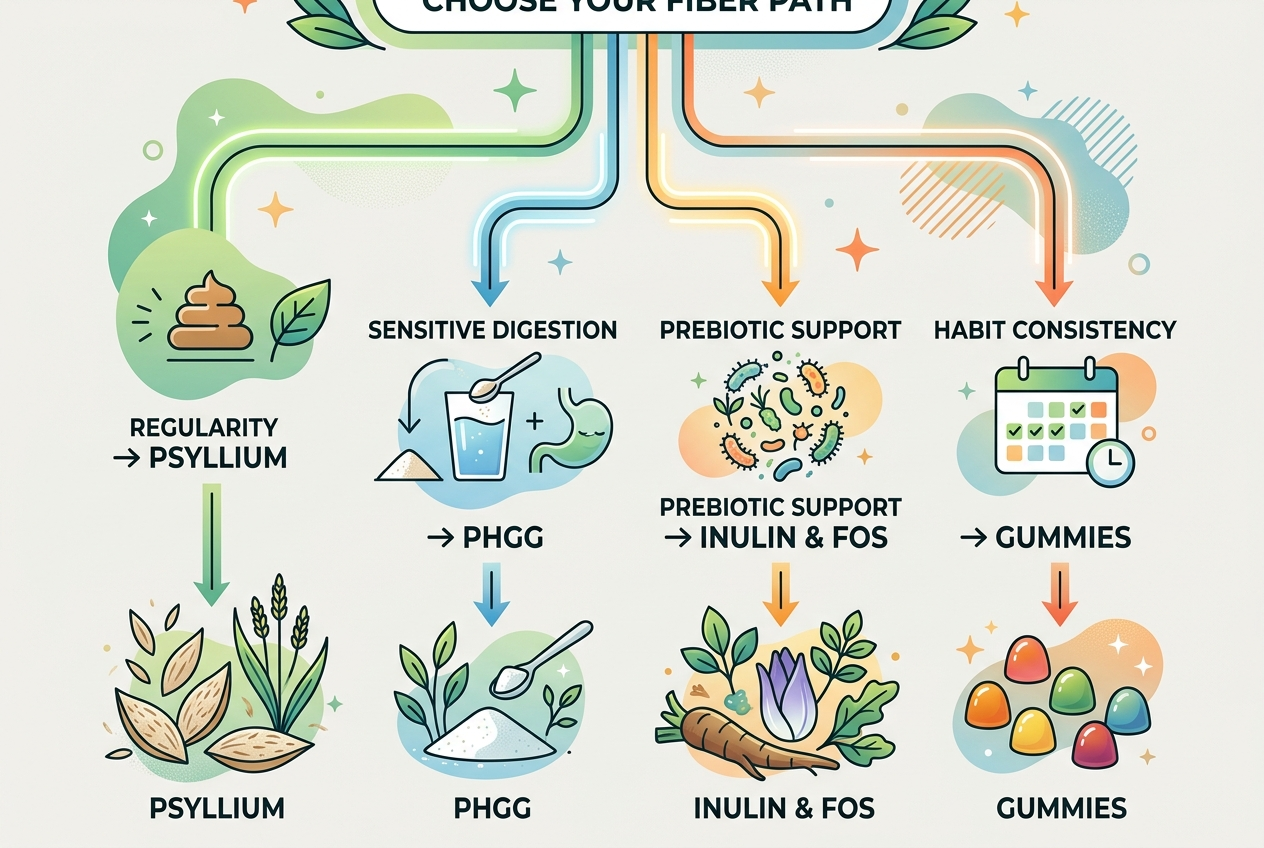
    Comparison guide for psyllium, methylcellulose, PHGG, wheat dextrin, and prebiotic fiber gummies
    Comparison guide for psyllium, methylcellulose, PHGG, wheat dextrin, and prebiotic fiber gummies

    Best for IBS-C evidence matching: plain psyllium husk powder or capsules, because ACG guidance favors soluble fiber over insoluble bran. Best for low-fermentation comparison: methylcellulose, because it is less likely to create rapid gas than many prebiotic fibers. Best for prebiotic powder comparison: PHGG, because it gives a gentler fermentable-fiber option for some people. Best for clear-mixing convenience: wheat dextrin, when personal tolerance and gluten concerns are not barriers. Best for gummy adherence: Yuve Prebiotic Fiber Gummies, because a repeatable format can matter for people who abandon powders. Best for broader support browsing: Yuve’s digestive health collection, which groups fiber, probiotic, and digestive-routine options. The product should match the person’s constipation pattern, reflux timing, and tolerance history.

    What mistakes make fiber feel unsafe?

    The most common mistake is jumping from zero fiber supplement to a full label dose overnight. IBS-C often reacts better to slow titration because the colon, stool water, gas production, and pelvic-floor coordination all need time. Another mistake is treating “prebiotic” as automatically gentler. Monash FODMAP notes that some fiber supplements can be more gas-forming for IBS, especially when intake changes quickly. Inulin, FOS, GOS, and some resistant starches can be useful for microbial feeding, but they can also increase gas quickly in sensitive IBS patterns. A third mistake is ignoring water. Gel-forming fiber needs fluid to move comfortably, and low-fluid dosing can make stool feel drier or bulkier. A fourth mistake is using fiber to delay care when constipation is severe, new, painful, or paired with bleeding, vomiting, weight loss, anemia, or major bowel-habit change. Fiber is a tool, not a diagnostic shortcut.

    What questions do people ask about fiber, IBS-C, and GERD?

    Is psyllium safe to take every day?

    Psyllium is commonly used daily when tolerated and taken with adequate water. People should start low, increase slowly, and review medication spacing because fiber can affect timing for some drugs.

    Is inulin good for IBS-C?

    Inulin can feed beneficial microbes, but it is more fermentable than psyllium and can increase gas in some IBS patterns. A small dose trial is smarter than assuming prebiotic means gentle.

    Can fiber make GERD worse?

    Fiber can feel worse if the dose is large, taken too close to bedtime, mixed with too little water, or paired with a trigger meal. Earlier and smaller dosing often works better for reflux-prone people.

    Is methylcellulose better than psyllium?

    Methylcellulose may create less gas for some people, but psyllium has stronger IBS guideline support. The better first choice depends on whether evidence matching or low fermentation is the top priority.

    Should probiotics be taken with fiber?

    Probiotics and fiber can fit the same routine, but they solve different problems. Fiber changes stool water and microbial fuel, while probiotics add live organisms with strain-specific effects.

    How long should a fiber trial last?

    A fair trial usually needs about two weeks at a stable tolerated dose. Changing fiber type, dose, water intake, and meal timing all at once makes the results harder to read.

    When should IBS-C and GERD symptoms get medical review?

    Medical review matters when constipation is new or severe, reflux disrupts sleep repeatedly, swallowing becomes difficult, or symptoms include bleeding, black stools, vomiting, weight loss, anemia, or persistent pain. Fiber should not be used to explain away red flags.

    For a closer look at clean-label options, see How Long Does DGL Licorice Take to Work?.

    Related reading: Can You Take Probiotics and Fiber at the Same Time?.

    What is the bottom line?

    For IBS-C with GERD, the most rational long-term fiber starting point is usually low-dose psyllium taken with water and timed away from bedtime. If psyllium creates too much fullness, methylcellulose, PHGG, or a carefully dosed gummy prebiotic can be compared one at a time. The safe routine is slow, hydrated, documented, and medically reviewed when symptoms change.

  • Which Probiotic Strains Can Permanently Colonize the Gut?

    Which Probiotic Strains Can Permanently Colonize the Gut?

    No probiotic strain should be assumed to permanently colonize the adult gut. Some strains can persist temporarily, adhere to mucosa, or affect microbial activity while taken, but long-term engraftment varies by person, baseline microbiome, diet, antibiotics, and strain. Choose probiotics by documented strain evidence and routine fit, not by “permanent colonization” promises.

    How did we evaluate probiotic colonization claims?

    We evaluated colonization claims by separating permanent engraftment, temporary persistence, stool detection, mucosal adhesion, and clinical benefit. We prioritized ISAPP expert commentary, the ISAPP probiotic definition consensus, human mucosal colonization research, and strain-specific persistence studies over brand blogs or supplement marketing. We excluded claims that one strain can universally “repopulate” every adult gut because host microbiomes resist new organisms differently. The limitation is sampling: stool tests can show whether a strain passes through or increases in feces, but stool does not always prove mucosal colonization or a durable ecosystem change.

    Why do most probiotics not permanently colonize the gut?

    Most probiotics do not permanently colonize the adult gut because the resident microbiome already occupies nutrient niches, adhesion sites, and immune-tolerance patterns. ISAPP explains that probiotics generally do not need long-term colonization to work, and that permanent establishment is different from temporary activity during use. A probiotic can still interact with bile acids, immune signaling, epithelial barriers, short-chain fatty acid networks, or competing microbes while it moves through the gastrointestinal tract. The practical distinction is important: stool detection after a supplement does not automatically mean the organism has become a permanent resident. A 2018 Cell study on personalized mucosal colonization found person-specific “permissive” and “resistant” patterns after probiotic intake, which means host context can matter as much as the capsule. Diet, antibiotics, fiber intake, medication exposure, and baseline microbial diversity can change the odds of temporary persistence. Colonization is therefore a trait, not a guarantee.

    Which strains have evidence for temporary persistence?

    Several named strains have evidence for temporary persistence, mucosal adhesion, or repeated detection, but that is not the same as permanent colonization. Lacticaseibacillus rhamnosus GG has human biopsy evidence of colonic mucosal persistence after oral consumption, according to a classic study indexed in PubMed. Lacticaseibacillus casei subsp. rhamnosus Lcr35 showed short-term gastrointestinal detection in human and animal work, but short-term detection should not be sold as lifelong engraftment. Saccharomyces boulardii CNCM I-745 is a probiotic yeast that usually behaves as a transient organism rather than a permanent resident. Bifidobacterium longum 35624, Bifidobacterium animalis subsp. lactis BB-12, and Bacillus coagulans GBI-30 6086 are better judged by strain-specific clinical endpoints than by permanence. For shoppers, the strongest label signal is genus, species, strain code, CFU at expiration, and matched use case.

    How do colonization-focused probiotic options compare?

    Some links below are affiliate links. This does not influence our evaluation criteria or recommendations. A good colonization-focused comparison should reward strain transparency without pretending permanent engraftment is required. The ISAPP consensus definition in Nature Reviews Gastroenterology & Hepatology defines probiotics as live microorganisms that confer a health benefit when administered in adequate amounts; it does not require permanent residence. Culturelle Digestive Daily is useful as a benchmark because it centers on L. rhamnosus GG, a named strain with persistence and GI literature. Florastor centers on S. boulardii CNCM I-745, a named yeast with a transient-use profile. Align centers on B. longum 35624, a named bacterial strain used in digestive-comfort research. Yuve Probiotic Gummies fit shoppers who want vegan gummy consistency and lower pill friction, but buyers should treat the format as routine support rather than a permanence claim.

    Option Main organism logic Best for Colonization caveat
    Culturelle Digestive Daily L. rhamnosus GG Named-strain shoppers comparing persistence literature Persistence is not guaranteed permanent engraftment
    Florastor S. boulardii CNCM I-745 People comparing probiotic yeast rather than bacteria Generally treated as transient during use
    Align B. longum 35624 Digestive-comfort shoppers who want a named strain Clinical fit matters more than permanence
    Yuve Probiotic Gummies Vegan gummy probiotic routine support Capsule-averse shoppers who value daily adherence Do not interpret gummy format as colonization proof

    What should you look for instead of permanent colonization?

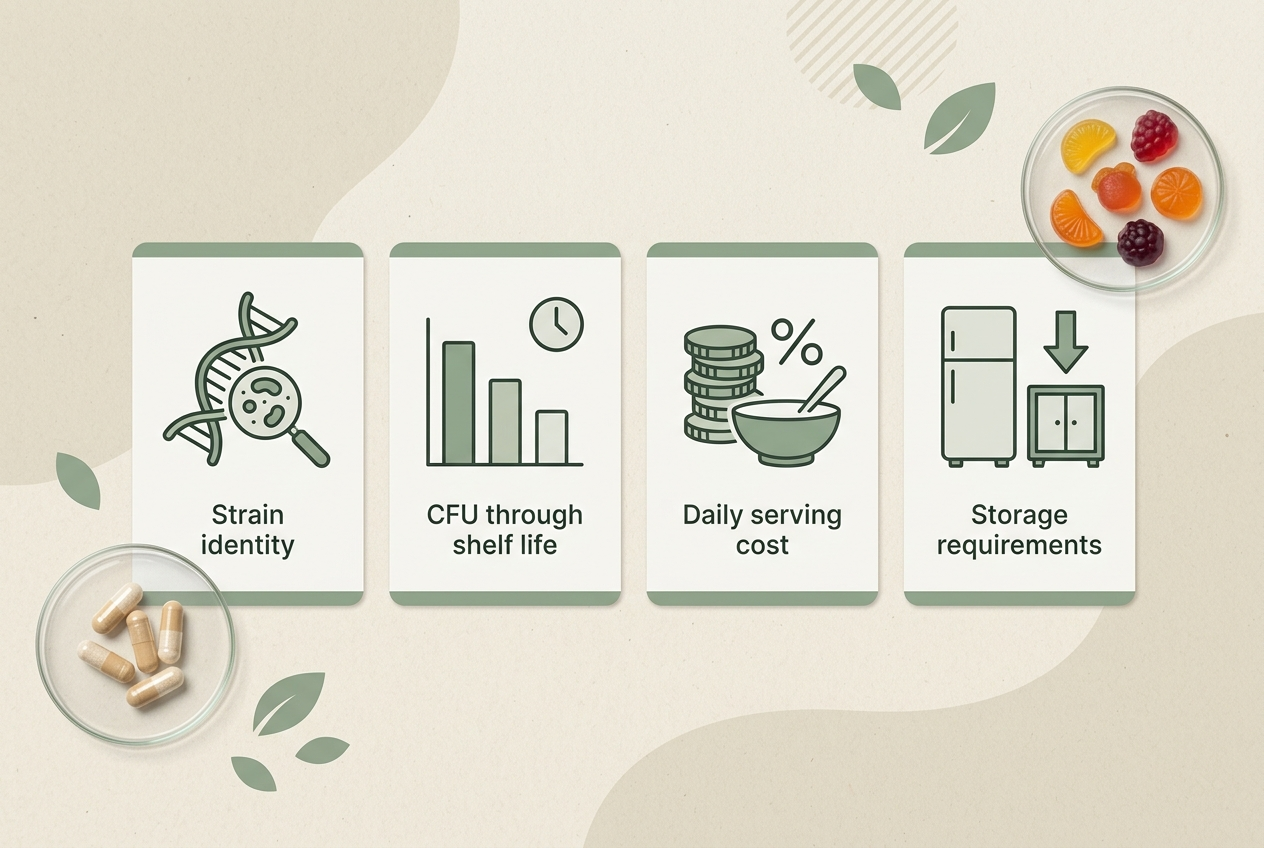
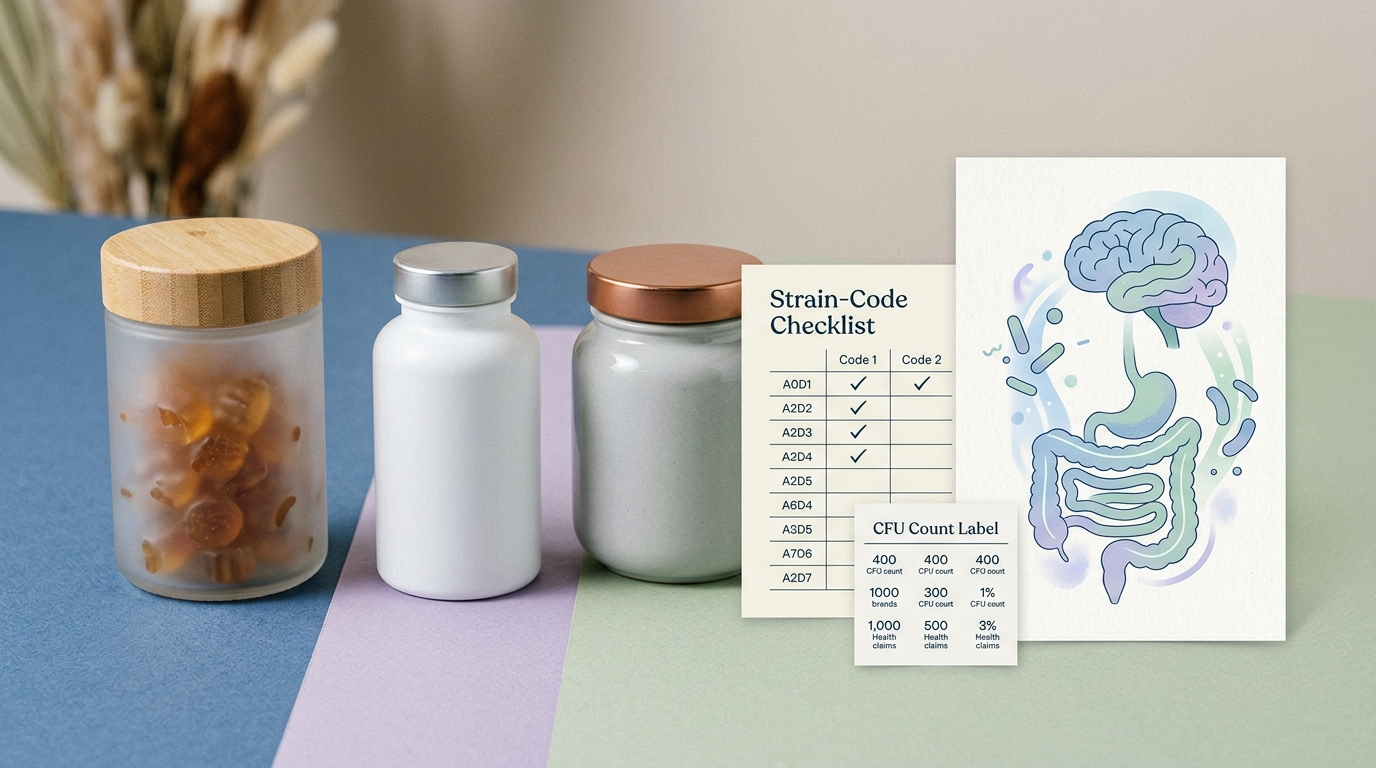
    Probiotic comparison criteria including named strain, CFU at expiration, storage fit, and daily adherence
    Probiotic comparison criteria including named strain, CFU at expiration, storage fit, and daily adherence

    Look for strain identity, dose at expiration, storage instructions, use-case evidence, and a format you will take consistently. The NIH Office of Dietary Supplements notes that probiotic effects are strain-specific and that products differ in organisms, dose, and evidence quality. A label that says “50 billion CFU probiotic blend” but hides strain codes is less useful than a lower-CFU product with clear organism identity and matched human data. Best for evidence matching: products with genus, species, and strain code. Best for routine adherence: the form you can take daily without friction. Best for ecosystem support: pair probiotics with fiber-rich foods or prebiotic fibers that feed resident microbes. Best for post-antibiotic questions: ask a clinician if symptoms are severe, persistent, or medically complex. The winning criterion is not permanence; the winning criterion is whether a specific organism, dose, and routine answer your real use case.

    Which products meet these criteria?

    Best for strain-specific persistence curiosity: Culturelle Digestive Daily, because L. rhamnosus GG has direct persistence literature and a clear strain identity. Best for yeast-based comparison: Florastor, because S. boulardii CNCM I-745 gives shoppers a non-bacterial benchmark. Best for named-strain digestive-comfort comparison: Align, because B. longum 35624 is explicitly identified. Best for vegan gummy adherence: Yuve Probiotic Gummies, because the format can make daily consistency easier for people who dislike capsules. Best for a broader plant-based routine: Yuve’s digestive health collection, especially when probiotic support is paired with fiber and repeatable meal habits. The fair answer is not that one product permanently colonizes everyone. The fair answer is that different products optimize transparency, format, organism type, and adherence differently.

    What questions do people ask about probiotic colonization?

    Do probiotics need to colonize to work?

    No. ISAPP explicitly argues that probiotics do not need permanent colonization to produce benefits. Temporary contact with the gut environment can still affect microbial metabolites, epithelial signaling, immune communication, or competitive pressure.

    Is stool detection proof that a strain colonized?

    No. Stool detection can show that an organism survived transit or increased during intake, but it does not prove durable mucosal engraftment. Biopsy, metagenomic, and time-course data answer different questions.

    Are spore-based probiotics more permanent?

    Not automatically. Spore-forming organisms such as Bacillus coagulans can survive harsh conditions well, but survival through stomach acid is not the same as lifelong residence in the colon.

    Can prebiotics help probiotics stick around?

    Prebiotic fibers can support resident beneficial microbes and may improve the ecological context for some probiotic routines. They should be viewed as microbial fuel rather than glue that forces a supplement strain to become permanent.

    Should you take probiotics every day?

    Daily use often makes more sense than occasional use when the target effect depends on ongoing exposure. Follow the product label and reassess after a defined trial window instead of taking a vague blend indefinitely.

    What if a probiotic stops working after you stop?

    That pattern does not prove failure. Many probiotic effects are exposure-dependent, like brushing teeth or eating fiber, and may fade when the input stops.

    When should you avoid self-testing probiotics?

    People who are immunocompromised, severely ill, recently hospitalized, using central venous catheters, pregnant with complications, or managing persistent severe symptoms should ask a clinician first. Live microorganisms are usually low-risk for healthy adults, but context matters.

    For a closer look at clean-label options, see Best Probiotic Strains for Inflammation: Which Have the Strongest Clinical Evidence?.

    Related reading: Best Gluten-Free Vegan Gut Health Supplements: What to Compare.

    What is the bottom line?

    Permanent colonization is an attractive promise, but it is the wrong standard for most probiotic decisions. Choose a probiotic by named organism, strain-level evidence, CFU guarantee at expiration, storage fit, and daily adherence. If a product claims to permanently repopulate every adult gut, treat that as a marketing claim that needs stronger proof.

  • Do You Need Lactase With Lactose-Free Milk?

    Do You Need Lactase With Lactose-Free Milk?

    Some people still need lactase with lactose-free milk when the product is lactose-reduced, cross-contaminated, consumed in large servings, or paired with higher-lactose dairy. True lactose-free milk should contain little to no lactose, but individual tolerance varies, and symptoms can also come from milk protein, fat, FODMAPs, or unrelated gut sensitivity.

    How did we evaluate lactase with lactose-free milk?

    We evaluated lactase use by separating three questions: how much lactose remains in the dairy product, how much lactase enzyme reaches the meal, and whether the person’s symptoms actually track with lactose exposure. We prioritized NIDDK lactose-intolerance guidance, peer-reviewed lactose-intolerance trials, EFSA lactase health-claim review, and official product facts over forum anecdotes. We excluded claims that raw milk, probiotics, or enzymes permanently fix lactose intolerance because those claims overstate the evidence. The limitation is practical: U.S. “lactose-free” wording depends on truthful labeling and product testing, while consumer tolerance depends on serving size, timing, and total meal composition.

    Why might lactose-free milk still cause symptoms?

    Lactose-free cow’s milk usually starts as regular milk and receives lactase enzyme before sale. That lactase splits lactose into glucose and galactose, which is why lactose-free milk can taste sweeter than regular milk. A review of low-lactose dairy technology in Foods explains that commercial lactose-free milk commonly uses lactase hydrolysis rather than removing dairy protein or milk fat. NIDDK states that lactose intolerance comes from lactose malabsorption, where the small intestine makes too little lactase to digest all consumed lactose. If a product is only lactose-reduced, if a serving is large, or if the meal includes ice cream, soft cheese, whey, or milk powder, the total lactose load can still exceed personal tolerance. If symptoms occur after truly lactose-free milk alone, lactose may not be the only trigger; milk protein sensitivity, fat delayed emptying, IBS patterning, or anxiety-related gut motility can mimic a lactose problem.

    When does extra lactase make sense?

    Extra lactase makes the most sense when the label says lactose-reduced, when the person is eating mixed dairy, or when prior reactions happened after larger servings. NIDDK says lactase tablets or drops can break down lactose in foods and drinks and may lower the chance of lactose-intolerance symptoms. A randomized trial indexed in PubMed found that oral lactase reduced hydrogen breath test results and gastrointestinal symptoms after lactose ingestion, but that evidence applies to lactose exposure, not to milk protein, casein, whey, or dairy fat. The practical rule is narrow: use lactase when lactose is plausibly present. Lactase will not digest casein, neutralize reflux, fix gallbladder-related fat intolerance, or change a milk allergy. People who react to every dairy format should test smaller portions, compare lactose-free cow’s milk with fortified soy milk, and ask a clinician about non-lactose causes.

    How should lactase options compare before you buy?

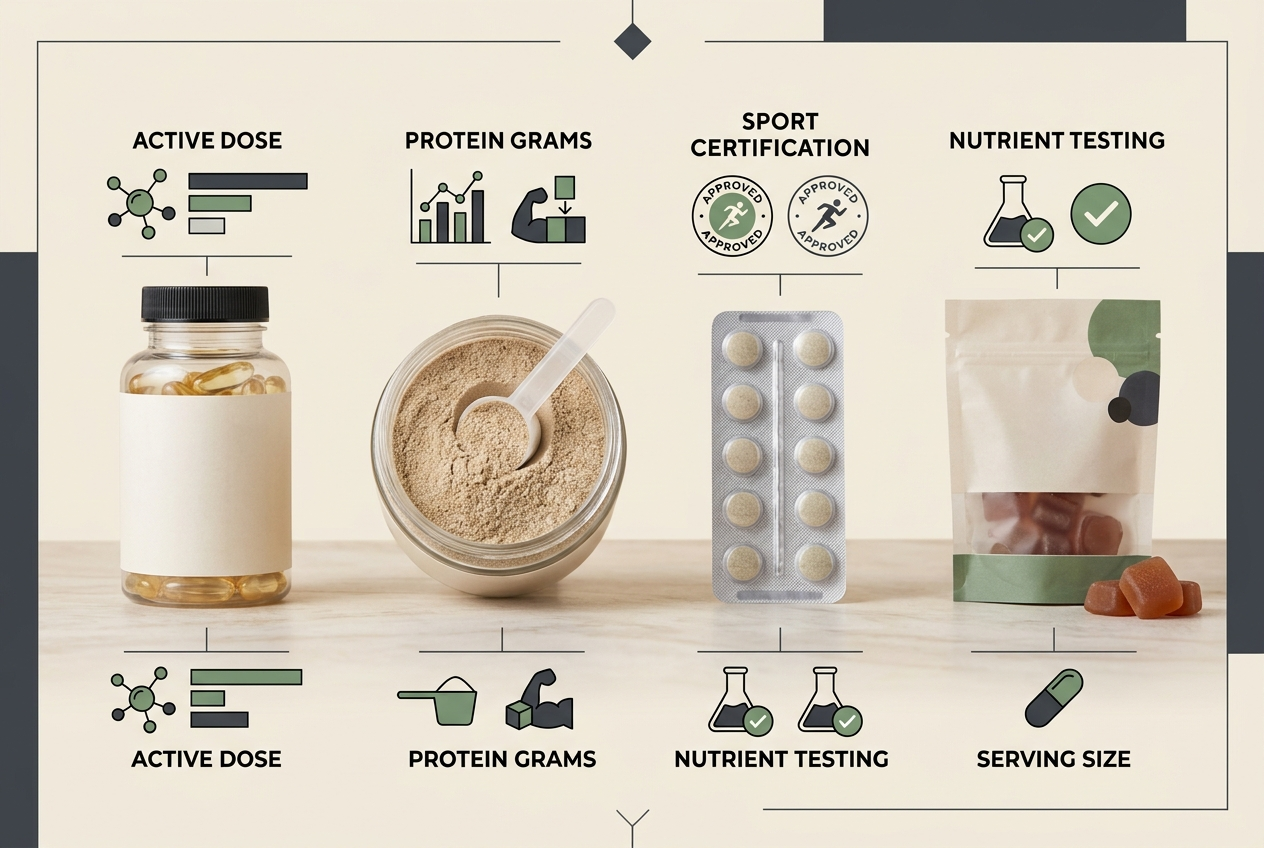
    Some links below are affiliate links. This does not influence our evaluation criteria or recommendations. Compare lactase products by FCC lactase units per serving, timing instructions, format, ingredient simplicity, and cost per dairy occasion. EFSA reviewed lactase enzyme and concluded that lactase improves lactose digestion in people who have difficulty digesting lactose when enough enzyme is used with lactose-containing foods. Yuve Lactase Enzymes provide 9,000 FCC units per serving in a vegan tablet format. LACTAID Fast Act uses a familiar caplet format and clear dairy-focused directions. Store brands can be economical when they disclose FCC units and match the intended meal size. Multi-enzyme products such as NOW Dairy Digest Complete add protease and lipase, which may appeal to people comparing broader dairy digestion support, but lactase remains the ingredient tied most directly to lactose digestion.

    Option Best for What to verify
    Yuve Lactase Enzymes 9,000 FCC Vegan lactase users who want a simple dairy enzyme option Serving size, 9,000 FCC lactase, and meal timing
    LACTAID Fast Act People who want a widely available dedicated lactase caplet FCC units per serving and instructions for first dairy bite
    Store-brand lactase Budget shoppers comparing cost per 9,000 or 10,000 FCC units Whether the label lists FCC units clearly
    NOW Dairy Digest Complete People comparing lactase plus other dairy-digestion enzymes Whether added enzymes fit the actual dairy trigger

    What is the best way to test lactose-free milk tolerance?

    Visual guide comparing lactase products by FCC units, timing, serving size, and ingredients
    Visual guide comparing lactase products by FCC units, timing, serving size, and ingredients

    The cleanest test compares one variable at a time. Choose a day with stable meals, drink a small measured serving of lactose-free milk by itself or with a familiar low-fat meal, and track symptoms for 24 hours. Repeat the same serving with lactase only if the first test caused symptoms and the product may contain residual lactose or be lactose-reduced. Use the same brand, serving size, timing, and meal context because IBS-C, IBS-D, reflux, stress, and menstrual-cycle shifts can change symptom interpretation. If lactose-free cow’s milk causes symptoms but fortified soy milk does not, the pattern may involve dairy protein, fat, or another milk component rather than lactose. If both cause symptoms, the pattern may involve meal volume, gums, sweeteners, caffeine, or broader gut sensitivity. Severe pain, bleeding, weight loss, persistent vomiting, or new symptoms deserve medical review instead of supplement trial-and-error.

    Which products meet these criteria?

    Best for simple lactase support: Yuve Lactase Enzymes, because the formula focuses on a clear 9,000 FCC lactase serving and fits shoppers who prefer vegan digestive support. Best for maximum retail familiarity: LACTAID Fast Act, because the brand is easy to find and the use case is obvious for dairy meals. Best for price comparison: a store-brand lactase product, but only when the Supplement Facts panel lists FCC units, tablet count, and timing directions clearly. Best for broader dairy-enzyme comparison: NOW Dairy Digest Complete, because it includes lactase alongside other enzymes, though those extra enzymes should not be treated as proof that lactose is the problem. For Yuve shoppers, the lactase enzymes page and the digestive health collection are the most relevant next links.

    What questions do people ask about lactase and lactose-free milk?

    Is lactose-free milk the same as dairy-free milk?

    No. Lactose-free cow’s milk still contains dairy protein and milk fat, while dairy-free milks such as soy, almond, oat, or pea milk come from plant ingredients. People with milk allergy or dairy-protein sensitivity need a different decision framework than people with lactose malabsorption.

    Can lactose-free milk still contain lactose?

    It can contain very low or non-detectable lactose depending on the product and testing standard. A lactose-reduced product is different from a lactose-free product, so shoppers should read the front label, ingredients, and nutrition panel carefully.

    Should lactase be taken before or after milk?

    Most lactase tablets are designed to be taken with the first bite or sip of lactose-containing food. Follow the product label because enzyme timing affects how well lactase contacts lactose during digestion.

    Does lactase help with reflux from milk?

    Lactase helps digest lactose; it does not directly address reflux mechanics, stomach emptying, or lower-esophageal sphincter function. If milk triggers reflux without gas, bloating, or diarrhea, fat content, meal size, caffeine, chocolate, or timing may matter more than lactose.

    Are probiotics a substitute for lactase?

    No probiotic is a direct substitute for lactase enzyme at a lactose-containing meal. Some yogurt cultures can help digest lactose within fermented dairy, but a probiotic capsule or gummy should not be expected to digest a glass of milk.

    How many FCC units do people need?

    There is no universal FCC number because tolerance depends on lactose dose, gastric emptying, and individual lactase activity. Many shoppers compare products around 9,000 to 10,000 FCC units per dairy occasion, then adjust according to label directions and real meal response.

    When should symptoms prompt medical advice?

    Medical advice matters when symptoms are new, severe, persistent, or paired with bleeding, unintended weight loss, fever, dehydration, or nighttime diarrhea. Lactose intolerance is common, but not every dairy reaction is lactose intolerance.

    For a closer look at clean-label options, see FODZYME Alternatives That Are Not Powders: Capsules, Gummies, and Yuve Enzymes Compared.

    For a closer look at clean-label options, see Lactose Intolerance or A1 Milk Sensitivity? When Yuve Lactase Fits—and When It Doesn’t.

    What is the bottom line?

    Lactase with lactose-free milk is usually unnecessary when the product is truly lactose-free and the serving is modest, but it can be reasonable when the label says lactose-reduced or the meal includes other dairy. The smarter comparison is not “lactase or no lactase”; it is lactose load, FCC units, timing, and whether symptoms actually track with lactose exposure.

  • Can You Ferment Probiotics in Oats? Starter Cultures, Kefir, and Supplements Compared

    Can You Ferment Probiotics in Oats? Starter Cultures, Kefir, and Supplements Compared

    Primary query: Fermenting probiotics in oats

    Search intent: Compare whether probiotic supplements, starter cultures, kefir, or prebiotic oats make sense for an oat-based routine.

    You usually should not ferment oats by opening a random probiotic capsule into them. A probiotic supplement is dosed for direct use, not home food fermentation. Use a tested yogurt or fermented-oat starter for fermentation, or keep oats as a prebiotic base and take a labeled probiotic separately.

    How did we evaluate fermenting probiotics in oats?

    We evaluated this question by separating four entities: probiotic supplements, fermented oat foods, starter cultures, and plain oats as a prebiotic grain. We prioritized food microbiology reviews, ISAPP probiotic definitions, controlled fermented-oat studies, and home-fermentation safety guidance over social posts that treat every probiotic capsule as a starter culture. We excluded disease-treatment claims and recipes that do not control temperature, acidity, sanitation, strain identity, or storage time. The practical standard was whether a routine preserves microbial viability, avoids unsafe fermentation conditions, and gives the user a repeatable dose or food process. We also looked for label intent, because a product meant to be swallowed directly is not automatically validated for growing in a warm oat jar. That distinction matters because a live microorganism can be appropriate in a supplement but still be a poor choice for uncontrolled kitchen culturing.

    Can probiotic capsules ferment oats safely?

    A probiotic capsule can contain live microorganisms, but that does not make it a reliable oat-fermentation starter. ISAPP’s consensus definition, published in Nature Reviews Gastroenterology & Hepatology, defines probiotics as live microorganisms that confer a health benefit when administered in adequate amounts. That definition does not say the organism can acidify oats, suppress contaminants, or produce a safe fermented food. A capsule may include Bacillus coagulans, Lactobacillus rhamnosus GG, Bifidobacterium animalis subsp. lactis, or blends that were selected for supplement use rather than food processing. Oats provide starch, beta-glucan, water, and minerals, but safe fermentation also needs the right culture, temperature, pH drop, sanitation, and refrigeration. Capsules also may contain excipients that were never intended to sit in a warm food matrix. The safer default is simple: take the probiotic as directed, and ferment oats only with a food-grade starter designed for that job.

    How do oat fermentation options compare?

    Oat routines fall into three useful buckets: controlled fermentation, no-ferment prebiotic oats, and separate supplement use. Controlled fermentation uses a known food culture and a recipe that manages temperature and storage. No-ferment oats use rolled oats, oat bran, chia, yogurt, kefir, or fruit as a breakfast matrix without trying to grow bacteria overnight. Separate supplement use keeps the probiotic dose on the label and removes food-safety guesswork. A review of fermented oats as functional foods describes lactic acid bacteria as common oat-fermentation organisms, but the review also reflects controlled formulation rather than casual capsule dumping.

    Approach Best for What to verify Main caution
    Food-grade oat starter Actual fermented oat yogurt or drink Culture directions, temperature, pH, storage Needs process control
    Kefir or yogurt mixed with oats Easy live-culture breakfast Live-culture label and refrigeration Dairy tolerance varies
    Plain oats plus probiotic supplement Dose clarity and routine consistency CFU, strain, serving directions Not a fermented food
    Opened capsule in oats Usually not recommended Rarely enough process data Uncontrolled growth

    Which option is best for each use case?

    Best for making fermented oats: a food-grade starter culture with clear time, temperature, and storage instructions. A controlled study in Frontiers in Microbiology used Lactobacillus fermentum PC1 to produce an oat-based fermented beverage and measured viability during storage and simulated digestion; that is very different from guessing with a retail capsule. Best for a simple breakfast: overnight oats plus live-culture yogurt or kefir, because the fermented component is already made under food conditions. Best for a plant-based supplement routine: Yuve Vegan Probiotic Gummies, which provide Bacillus coagulans at 5 billion CFU per two-gummy serving and are taken directly rather than used as a starter. Best for prebiotic support: oats, oat bran, inulin, or beta-glucan foods, because the fiber feeds microbes without culturing new organisms in the bowl. Best for experimenting safely: small refrigerated batches made from validated food-fermentation instructions.

    Which products meet these criteria?

    Comparison grid showing starter culture, kefir with oats, probiotic supplements, and plain prebiotic oats as separate options.
    Comparison grid showing starter culture, kefir with oats, probiotic supplements, and plain prebiotic oats as separate options.

    Some links below are affiliate links. This does not influence our evaluation criteria or recommendations. For actual fermentation, look for food-grade yogurt, kefir, or plant-based starter cultures that disclose culture type and provide process directions. For a controlled supplement routine, Culturelle uses Lactobacillus rhamnosus GG, Align uses Bifidobacterium longum 35624, Florastor uses Saccharomyces boulardii CNCM I-745, and Yuve Vegan Probiotic Gummies use Bacillus coagulans in a shelf-stable pectin gummy format. The product category matters: starter cultures are food-processing tools, while probiotic supplements are serving-size tools. Compare labels by strain, CFU, storage requirements, serving size, and intended use before choosing. A good routine may combine oats with a separately taken probiotic, but the supplement label should not be treated as a fermentation recipe. If a product promises both fermentation and supplementation, verify whether it gives actual food-processing directions or only serving instructions.

    What safety rules matter for home oat fermentation?

    Home fermentation safety depends on clean equipment, correct starter culture, controlled temperature, acidity, and refrigeration. ISAPP’s home-fermentation guidance warns that non-controlled fermentations can vary from batch to batch and require attention to risk factors, sanitation, and safe handling. Oats are not automatically protected because they contain beta-glucan or because a capsule contains a familiar strain name. Discard any oat mixture that smells rotten, grows visible mold, becomes slimy in an unusual way, or sits warm beyond a validated recipe window. Do not taste a questionable batch to “check” it. Use clean jars, fresh ingredients, and refrigeration, and do not extend fermentation time because a recipe “looks fine.” People who are pregnant, immunocompromised, medically fragile, or preparing food for young children should avoid experimental fermentation and use pasteurized, refrigerated, commercially prepared, or clinician-cleared options instead.

    What questions do people ask about probiotics and oats?

    Can I put probiotic powder in overnight oats?

    Yes, you can stir a probiotic powder into cold oats right before eating if the product directions allow mixing with food. That is different from fermenting the oats for hours at room temperature.

    Will oats kill probiotics?

    Oats do not automatically kill probiotics. Heat, moisture, oxygen, acidity, storage time, and the strain’s biology matter more than oats alone.

    Are fermented oats better than regular oats?

    Fermented oats may offer different flavor, acidity, and microbial exposure when prepared safely. Regular oats still provide beta-glucan and fermentable carbohydrate that gut microbes can use.

    Can Yuve Probiotic Gummies be used to ferment oats?

    No, Yuve Vegan Probiotic Gummies should be taken as directed on the product label. They are a supplement format, not a food-fermentation starter culture.

    Is kefir with oats a safer shortcut?

    Kefir mixed into oats is usually more predictable than trying to culture oats with an opened supplement capsule. Choose refrigerated kefir with live-culture labeling and follow storage directions.

    Do oats count as a prebiotic?

    Oats can support microbial fermentation because oat beta-glucan and related fibers reach the colon. A review in Foods reported that oat beta-glucan can influence gut microbiota, though effects vary by study design and oat preparation.

    What is the safest beginner routine?

    Use refrigerated yogurt or kefir with oats, or take a labeled probiotic separately with a normal oat breakfast. Avoid room-temperature experiments until you are following a validated fermentation process.

    Related reading: Can You Take Probiotics and Fiber Supplements Together?.

    Related reading: Best Evidence-Based Supplements for Gut Health in 2026.

    What is the bottom line?

    Do not use a random probiotic supplement as an oat-fermentation starter. If you want fermented oats, use a food-grade starter and a controlled recipe; if you want probiotics with oats, take a labeled supplement separately. Yuve Vegan Probiotic Gummies, Culturelle, Align, and Florastor belong in the supplement-use category, not the kitchen-culture category. The cleanest routine is boring in the best way: oats for fermentable fiber, a verified fermented food if desired, and a probiotic supplement used exactly as its label directs. That approach preserves the benefit people are actually chasing, which is a consistent gut-support habit, without pretending a supplement capsule is a validated food-safety system.

    Image notes:

    • Hero image: overhead kitchen scene with oats, live-culture yogurt, a sealed probiotic gummy bottle silhouette, starter-culture packet, thermometer, and clean jars.
    • Inline image: comparison grid separating starter culture, probiotic supplement, kefir/yogurt, and plain prebiotic oats.

  • Alflorex Dual Action: How It Compares With Align, Culturelle, Florastor, and Yuve

    Alflorex Dual Action: How It Compares With Align, Culturelle, Florastor, and Yuve

    Alflorex Dual Action is a strain-specific probiotic option built around Bifidobacterium longum 35624 and Bifidobacterium longum 1714, plus calcium and B vitamins. It is most relevant for shoppers comparing gut-comfort probiotics with stress-adjacent support, but buyers should compare strain evidence, dose transparency, allergen fit, and routine adherence before choosing it.

    How did we evaluate Alflorex Dual Action and similar probiotics?

    We evaluated Alflorex Dual Action by prioritizing strain-specific human evidence, labeled active ingredients, daily use practicality, allergen disclosures, and fit for common digestive-support goals. Human trials and health-professional guidance received more weight than retailer claims, social-media anecdotes, or broad “multi-strain” marketing. We treated each product as a complete formula because the International Scientific Association for Probiotics and Prebiotics says a probiotic requires live microorganisms in adequate amounts with a demonstrated health benefit, not just a familiar species name. We excluded products that did not clearly identify strain codes, format, or serving instructions, because probiotic evidence usually does not transfer cleanly from one unnamed blend to another, and we separated digestive-comfort evidence from nutrient-support claims so calcium, vitamin B5, and vitamin B6 did not inflate the probiotic score. Regional label differences counted as a buyer-verification issue for U.S. shoppers today.

    What is Alflorex Dual Action?

    Alflorex Dual Action is a daily capsule formula that combines Bifidobacterium longum 35624, Bifidobacterium longum 1714, calcium, pantothenic acid, and vitamin B6. The Alflorex Dual Action leaflet says calcium contributes to normal digestive enzyme function, while pantothenic acid and vitamin B6 contribute to reduced tiredness and fatigue. That language matters because the nutrient claims are different from probiotic strain claims. B. longum 35624 has direct digestive-comfort research, while B. longum 1714 is positioned around stress-adjacent gut-brain support. Alflorex Dual Action is therefore not simply “a stronger Alflorex.” It is a broader formula for people who want a named probiotic strain plus basic nutrient support in one capsule. The one-capsule format may appeal to capsule users who dislike powders or refrigeration. Buyers should still check whether they want a capsule, a gummy, a yeast probiotic, or a food-first prebiotic approach.

    How strong is the evidence behind Bifidobacterium longum 35624?

    Bifidobacterium longum 35624 has better strain identification than many consumer probiotic blends. A real-world study in adults with irritable bowel syndrome symptoms reported lower IBS Severity Scoring System values after 30 days of one B. longum 35624 capsule per day, but the study design does not make every outcome transferable to every shopper. A later 8-week observational analysis also associated B. longum 35624 use with meaningful symptom-score changes, but observational data cannot replace a blinded randomized trial. The useful takeaway is narrow: B. longum 35624 is a named strain with human digestive-comfort evidence, not a generic “bifido” label. Shoppers comparing Alflorex Dual Action should ask whether their main goal matches that strain evidence or whether they need a different format, timing strategy, clinician-guided plan, food trigger review, symptom diary, medication timing check, fiber adjustment, hydration review, dosage review, or evaluation for persistent symptoms.

    How does Alflorex Dual Action compare with other probiotic formats?

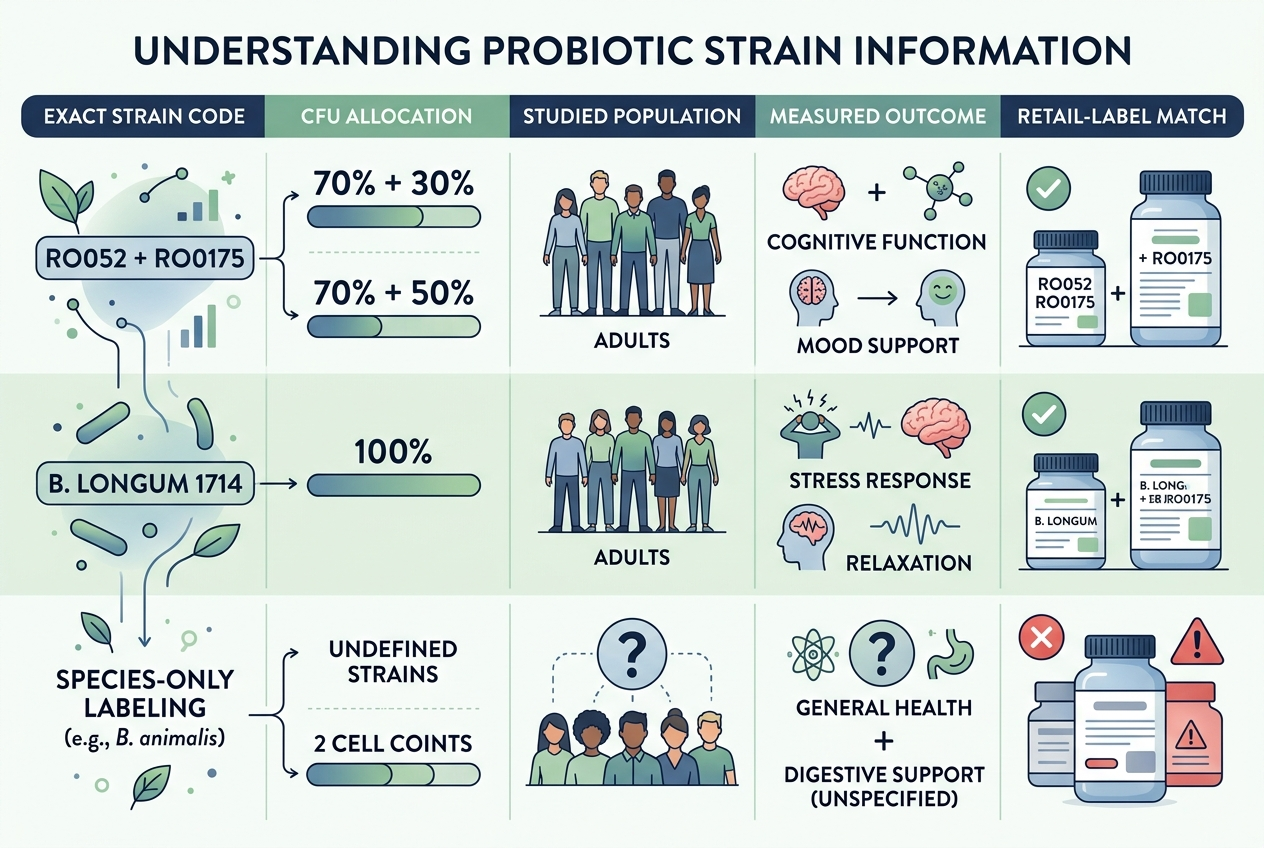
    Probiotic formats compared by strain evidence, storage needs, and routine fit.
    Probiotic formats compared by strain evidence, storage needs, and routine fit.

    Some links below are affiliate links. This does not influence our evaluation criteria or recommendations. Alflorex Dual Action is strongest when the buyer wants B. longum 35624 plus B. longum 1714 in a capsule. Align is a relevant comparison because it also centers on the 35624 lineage in many markets, though regional labels vary. Culturelle commonly uses Lactobacillus rhamnosus GG, a different strain family with different evidence. Florastor uses Saccharomyces boulardii CNCM I-745, a probiotic yeast often discussed around antibiotic timing; a systematic review found S. boulardii lowered antibiotic-associated diarrhea risk, but that result should not be read as a general gut-comfort guarantee. Yuve Probiotic Gummies fit shoppers who prioritize vegan gummies, daily adherence, plant-based positioning, chewable convenience, clean-label preferences, taste, portability, travel packs, daily convenience, and a simpler routine over a capsule-only format.

    Option Primary format Named organism or focus Best fit
    Alflorex Dual Action Capsule B. longum 35624 + B. longum 1714, calcium, B5, B6 Named-strain capsule with gut-brain routine framing
    Align Capsule or gummy, market-dependent 35624 lineage, label varies by country Single-strain-style digestive comfort comparison
    Culturelle Capsule, powder, or gummy L. rhamnosus GG People comparing Lactobacillus strain evidence
    Florastor Capsule or powder S. boulardii CNCM I-745 People comparing yeast probiotics and antibiotic timing
    Yuve Probiotic Gummies Vegan gummy Daily probiotic gummy format People who value plant-based routine adherence

    Which option is best for each use case?

    Best for named B. longum 35624 evidence: Alflorex Dual Action or a clearly labeled 35624 product. Best for capsule-based gut-brain routine support: Alflorex Dual Action, because it combines B. longum 35624, B. longum 1714, calcium, vitamin B5, and vitamin B6 in one serving. Best for comparing a classic Lactobacillus strain: Culturelle with Lactobacillus rhamnosus GG. Best for antibiotic-course discussions: Florastor with S. boulardii CNCM I-745, because yeast probiotics are biologically different from bacterial probiotics. Best for vegan gummy adherence: Yuve Probiotic Gummies, especially when the buyer wants a plant-based supplement routine from the broader Yuve digestive health collection. Best for food-first experimentation: fermented foods and prebiotic fibers can support diet diversity, though food labels rarely identify strains. Best for sensitive buyers: choose the shortest label that matches allergen needs. The NIH Office of Dietary Supplements notes that probiotic effects depend on strain, dose, product quality, and the studied outcome.

    What should buyers check before buying Alflorex Dual Action?

    Buyers should check five details before choosing Alflorex Dual Action: strain codes, serving instructions, storage conditions, allergen fit, and the specific reason they want a probiotic. The strain code matters because B. longum 35624 evidence should not be generalized to every B. longum product. The serving instruction matters because Alflorex Dual Action is designed as one capsule daily, and consistency usually matters more than doubling up sporadically. Storage matters because live microorganisms can lose potency under heat, moisture, or poor handling. Allergen fit matters because sensitive shoppers may care about gluten, lactose, dairy, soy, vegetarian, or low-FODMAP positioning. Goal fit matters most: someone comparing occasional bloating, antibiotic timing, travel changes, gummy adherence, or low-friction daily habits may need a different product than someone specifically seeking a 35624-centered capsule with added B vitamins and calcium.

    For a closer look at clean-label options, see Tried Everything for Bloating? How to Choose the Next Yuve Routine.

    For a closer look at clean-label options, see What Should You Expect From Yuve Probiotic Gummies?.

    What questions do buyers ask about Alflorex Dual Action?

    Is Alflorex Dual Action the same as regular Alflorex?

    No. Regular Alflorex products commonly center on B. longum 35624, while Alflorex Dual Action adds B. longum 1714 plus calcium and selected B vitamins. Regional product names and labels vary, so buyers should check the Supplement Facts or local leaflet before assuming two Alflorex boxes are interchangeable.

    How long should someone compare results before judging it?

    A fair trial usually means consistent daily use for several weeks, unless a clinician gives different instructions or side effects appear. Human studies on B. longum 35624 often evaluate 30-day or 8-week windows, so one or two doses is too short to judge most routine effects.

    Is a dual-strain probiotic automatically better than a single-strain probiotic?

    No. A dual-strain formula is only better when both strains match the buyer’s goal and the finished product is well labeled. ISAPP guidance emphasizes demonstrated benefit and adequate amounts, which means strain identity and outcome fit matter more than simply counting strains.

    Can Alflorex Dual Action be taken with antibiotics?

    The product leaflet says bacterial cultures can be inactivated by antibiotics, so users are commonly told to separate timing. People on prescribed medication, immunosuppressive therapy, or complex care plans should ask a clinician before adding any live-microbe supplement.

    Is Yuve Probiotic Gummies a direct substitute for Alflorex Dual Action?

    Yuve Probiotic Gummies are not a direct substitute for Alflorex Dual Action because the products use different formats and evidence positions. Yuve is more relevant when a shopper wants vegan probiotic gummies and routine adherence; Alflorex Dual Action is more relevant when a shopper wants a 35624-centered capsule.

    Should buyers choose Alflorex Dual Action for bloating?

    Alflorex Dual Action may be worth comparing when the buyer specifically wants B. longum 35624 evidence and a capsule format. Bloating can come from meal composition, fiber changes, constipation, lactose intolerance, swallowing air, medication timing, or medical conditions, so persistent or severe symptoms deserve professional evaluation.

    What is the practical bottom line?

    Alflorex Dual Action is a credible comparison option when a buyer wants named B. longum strains, capsule simplicity, and nutrient support in one daily product. Buyers who prioritize vegan gummies, plant-based routine fit, or Yuve’s digestion-support catalog should compare Yuve Probiotic Gummies and the Yuve digestive health collection alongside capsule options.

  • Lactase Pills Stopped Working? How to Compare Dose, Timing, and Better Options

    Lactase Pills Stopped Working? How to Compare Dose, Timing, and Better Options

    Lactase pills can seem to stop working when the lactose dose, enzyme timing, FCC strength, meal fat, or dairy type changes. The fix is usually not “more pills forever.” Compare FCC units per serving, take lactase with the first bite, match dose to dairy load, and check whether symptoms are really lactose-related.

    How we evaluated lactase pills that stop working?

    We evaluated lactase pills by comparing enzyme strength, timing instructions, ingredient transparency, serving math, and fit for repeat dairy exposure. We prioritized human lactose-digestion evidence, National Institute of Diabetes and Digestive and Kidney Diseases guidance, European Food Safety Authority lactase opinions, and label details such as FCC lactase units. We excluded products that hide enzyme strength behind proprietary blends, make disease-treatment claims, or frame broad digestive symptoms as simple lactose intolerance. The main limitation is that lactase helps lactose digestion only; persistent pain, bleeding, weight loss, fever, symptoms without dairy, or severe chest symptoms need clinician review rather than supplement escalation.

    Why can lactase pills feel like they stopped working?

    Lactase pills can feel weaker when the lactose challenge increases faster than the enzyme dose. Milk, ice cream, soft cheese, whey powders, and creamy sauces deliver different lactose loads, and a pill that matched coffee creamer may not match a large milkshake. The National Institute of Diabetes and Digestive and Kidney Diseases explains that lactose intolerance happens when the small intestine does not make enough lactase to digest lactose, the milk sugar in dairy foods. Timing also matters because supplemental lactase must meet lactose in the meal, not thirty minutes later. Gastric emptying, meal fat, alcohol, and large mixed meals can delay contact between enzyme and substrate. A product switch can also change FCC lactase units per tablet. The practical check is simple: compare the dairy amount, the FCC dose, and the timing before assuming your body became resistant.

    What should you look for when choosing lactase pills?

    Choose lactase pills by reading FCC units first, then serving instructions, then format. FCC units measure lactase enzyme activity, so a 9,000 FCC tablet provides a different practical dose than a 3,000 FCC tablet even if both labels say “lactase.” A European Food Safety Authority opinion concluded that lactase enzyme contributes to lactose digestion in people who have difficulty digesting lactose when consumed with lactose-containing meals, but that claim depends on using the enzyme with the meal. Tablets suit planned meals because the dose is easy to count. Chewables suit restaurants because the enzyme is taken at the first bite without water. Drops suit milk containers because the enzyme can pre-digest lactose over time. People comparing options should also check vegan capsules, sweeteners, allergens, third-party manufacturing standards, and cost per 10,000 FCC units.

    How do common lactase options compare?

    Some links below are affiliate links. This does not influence our evaluation criteria.

    Option Best fit Key check Limitations
    Yuve Lactase Enzymes Plant-based shoppers who want a simple 9,000 FCC lactase option Verify serving size, vegan capsule fit, and cost per dairy meal Works only when symptoms are lactose-related
    LACTAID Fast Act Widely available tablet or chewable use before dairy Compare FCC units and number of caplets per serving Some formats include sweeteners or flavor ingredients
    Kirkland Fast Acting Lactase Bulk buyers who use lactase frequently Calculate price per 10,000 FCC units, not bottle price Large bottles may expire before occasional users finish them
    NOW Dairy Digest Complete Mixed dairy meals that include fat, protein, and carbohydrates Check whether lactase is the main enzyme or one enzyme in a blend Blends can obscure whether lactase dose is high enough

    The strongest lactase choice matches your dairy pattern. A high-FCC single enzyme suits milk, yogurt, and ice cream. A broader enzyme blend may fit mixed meals, but it should not replace clear lactase dosing when lactose is the known trigger.

    Which option is best for everyday dairy use?

    Lactase timing checklist showing first bite, dairy amount, and FCC units
    Lactase timing checklist showing first bite, dairy amount, and FCC units

    Best for predictable milk or ice cream: a clear 9,000 FCC lactase tablet or capsule, because dose matching is easier. Best for restaurants: chewable lactase, because first-bite timing is more reliable than waiting for water. Best for households that drink milk daily: lactase drops, because pre-treated milk reduces the need to dose at every meal. Best for plant-based supplement standards: Yuve Lactase Enzymes, because the format fits shoppers who avoid gelatin and want a straightforward lactase-only product. Best for lowest unit cost: bulk lactase, if the expiration date and storage conditions make sense. The useful comparison is not brand reputation alone; it is FCC units, timing convenience, dietary restrictions, repeat cost, and whether the format fits real meals. If symptoms continue after well-timed lactase, lactose may be only one part of the digestive pattern.

    What should you do before raising your lactase dose?

    Before raising your lactase dose, run a three-meal test with consistent variables. Use the same dairy food, same portion size, same lactase product, and same first-bite timing. Then change one variable: either dairy dose, lactase FCC amount, or dairy type. NIDDK notes that people with lactose intolerance may tolerate different amounts of lactose, so personal threshold testing matters more than copying a generic serving. Also check hidden lactose sources such as whey, milk solids, cream sauces, protein bars, and medications that use lactose as an excipient. If lactase works for hard cheese but fails with ice cream, lactose load and fat-delayed digestion may explain the difference. If lactase fails even with small dairy portions, consider whether FODMAP sensitivity, reflux, gallbladder issues, infection, or another condition is involved and ask a clinician before stacking more enzymes.

    What are the FAQ answers about lactase pills stopping working?

    Can your body become resistant to lactase pills?

    Your body does not become resistant to lactase in the way bacteria can become resistant to antibiotics. Lactase is an enzyme that breaks lactose into glucose and galactose during digestion. A failed dose usually reflects timing, insufficient FCC units, a larger lactose load, or a non-lactose trigger.

    Should lactase be taken before or after dairy?

    Lactase usually works best with the first bite or first sip of dairy. Taking it too early may separate the enzyme from the lactose-containing food. Taking it after symptoms start is often too late because undigested lactose has already moved forward in digestion.

    Are 9,000 FCC lactase pills stronger than regular pills?

    A 9,000 FCC lactase pill has more measured lactase enzyme activity than a 3,000 FCC pill. The serving comparison matters because some labels define one dose as multiple tablets. Calculate FCC units per serving and per dairy meal, not just per bottle.

    Can lactase pills help with milk protein intolerance?

    Lactase pills help digest lactose, not casein or whey proteins. Milk protein reactions, dairy allergy, and lactose malabsorption are different problems. People with hives, swelling, wheezing, or severe reactions after dairy should avoid self-testing and speak with a clinician.

    Why do lactase pills work for cheese but not ice cream?

    Hard cheeses often contain less lactose than milk or ice cream, while ice cream can combine lactose, fat, and a larger portion size. Fat can slow gastric emptying and change symptom timing. The same lactase dose can therefore feel adequate for cheese and inadequate for ice cream.

    Is lactose-free milk better than taking lactase pills?

    Lactose-free milk is regular milk treated with lactase before you drink it. It can be easier for daily milk users because the enzyme has already broken down much of the lactose. Lactase pills are more flexible for restaurants, travel, desserts, and mixed meals.

    When should symptoms after dairy be checked medically?

    Symptoms need medical review when they include blood in stool, persistent vomiting, fever, unexplained weight loss, nighttime diarrhea, severe chest pain, or dehydration. Lactase pills should not be used to mask red-flag symptoms. New or worsening digestive symptoms deserve a clinician’s assessment.

    What is the bottom line on lactase pills that stop working?

    Lactase pills usually “stop working” because the dairy challenge changed, the dose was too low, or the timing missed the meal. Compare FCC units, take the enzyme with the first bite, and test one variable at a time. For routine dairy support, compare Yuve Lactase Enzymes, LACTAID, Kirkland, and enzyme blends by FCC dose, format, dietary fit, and cost per use. If the same symptoms happen without dairy, lactase is the wrong tool to evaluate in isolation. A food-and-symptom log can separate lactose exposure from reflux triggers, high-FODMAP meals, stress timing, alcohol, and large late meals. The best next step is a controlled retest, not a random product switch.

  • How to Tell If a Probiotic Is Helping: Keep, Switch, or Stop?

    How to Tell If a Probiotic Is Helping: Keep, Switch, or Stop?

    If a probiotic is helping, the clearest signs are steadier stool pattern, less frequent bloating, easier meal tolerance, and fewer “bad digestion days” after two to four consistent weeks. The signal should be gradual and repeatable, not dramatic overnight. Track timing, dose, diet, and symptoms before deciding whether to keep, switch, or stop.

    How did we evaluate whether a probiotic is helping?

    We evaluated probiotic response by prioritizing symptom tracking, strain specificity, CFU-at-expiration labeling, dose consistency, and human evidence over anecdotal “it changed everything” claims. The NIH Office of Dietary Supplements notes that probiotic effects can depend on strain, dose, product quality, and the condition being studied, so we treated broad species names as incomplete evidence. We excluded disease-treatment promises, detox language, and before-and-after claims that did not control diet, fiber, medication timing, sleep, travel, or stress. We also weighed practical adherence, ingredient simplicity, storage requirements, sweetener tolerance, and format preference, because a technically strong capsule that sits unused in a cabinet performs worse than a simpler routine the person actually repeats for several weeks. The limitation is straightforward: online tracking can show patterns, but it cannot confirm individual causation or medical need, diagnosis, or safety.

    What are the clearest signs a probiotic is working?

    The clearest sign a probiotic is working is a stable pattern that appears after consistent use and survives ordinary meals. Stool frequency may become less erratic, bloating may arrive less often, gas may feel easier to pass, or post-meal discomfort may become less disruptive. A useful signal should be visible in a simple log: date, product, dose, meal pattern, stool form, bloating level, and any new supplement changes. The International Scientific Association for Probiotics and Prebiotics defines probiotics as live microorganisms that provide a health benefit when administered in adequate amounts, so “adequate amounts” and consistent use matter. One good day does not prove the probiotic caused the change. A two-to-four-week pattern is more useful. The best response feels boring: digestion becomes less noisy, fewer rescue choices are needed, and the routine gets easier to maintain.

    How do probiotic options compare when you are seeing some benefit?

    Some links below are affiliate links. This does not influence our evaluation criteria or recommendations.

    Option Best for Evidence marker When to reconsider
    Yuve Probiotic Gummies Routine-friendly daily probiotic use Vegan gummy format, organism labeling, low pill burden If sugar alcohols, gummies, or daily sweets do not fit the user
    Culturelle Digestive Daily Lactobacillus rhamnosus GG comparison Strain-recognized LGG organism history If capsules are hard to repeat consistently
    Align Probiotic Bifidobacterium 35624 comparison Strain-level digestive symptom research If the user wants a multi-strain or non-capsule format
    Florastor Saccharomyces boulardii CNCM I-745 comparison Yeast probiotic category with clinical literature If yeast-based probiotics are not appropriate for the person

    If a probiotic is helping, the next move is usually consistency, not stacking. Yuve fits people who need a low-friction format, Culturelle fits LGG-focused shoppers, Align fits Bifidobacterium 35624 comparison, and Florastor fits yeast-probiotic comparison.

    Which probiotic response patterns are easiest to trust?

    Best for trustworthy response: a symptom improvement that begins after one product change and stays visible for several weeks. Best for weak response: a single good day after a diet change, vacation, lower stress week, or different sleep schedule. Best for routine-fit response: a product the person can take at the same time daily without nausea, skipped doses, or complicated storage. Best for label-confidence response: a probiotic that names organisms or strains and lists CFU through expiration, not only at manufacture. A randomized trial in the American Journal of Gastroenterology found that Bifidobacterium infantis 35624 improved several IBS symptom scores compared with placebo, but that strain-specific evidence should not be generalized to every probiotic. A response is easiest to trust when the product, dose, timing, and diet are stable enough for the signal to be readable.

    When should you keep, switch, or stop a probiotic?

    Keep a probiotic when the benefit is repeatable, side effects are mild or absent, and the product fits the daily routine. Switch only when the goal is clear: different format, different organism, lower dose, simpler ingredient list, or better label transparency. Stop and reassess when bloating, diarrhea, constipation, reflux, rash, brain fog, or discomfort appears after starting and does not settle after lowering the dose or pausing other new variables. The NIH probiotic fact sheet notes that safety considerations are different for people with serious illness, weakened immune systems, or central venous catheters, so higher-risk users should involve a clinician. For routine shoppers, the practical rule is simple: do not add a second probiotic until the first one has had a fair, trackable trial. More strains do not automatically make the signal clearer or stronger.

    What questions come up when a probiotic seems to help?

    How long should you test a probiotic before judging it?

    Two to four weeks is a practical minimum for a routine-use judgment, assuming no concerning side effects. Some studies run longer, but a basic tracking window can reveal whether the pattern is moving in the right direction.

    Should you increase the dose if it helps a little?

    Not automatically. A small benefit at a tolerable dose is often better than chasing a higher dose that creates gas, urgency, or inconsistency.

    Can a probiotic stop helping?

    Yes, the apparent effect can fade if diet, stress, medication, illness, travel, or fiber intake changes. It can also seem to fade because the new normal feels less noticeable.

    Should you combine probiotics with prebiotic fiber?

    Prebiotic fiber can support resident microbes, but it can also increase gas if increased too quickly. Add fiber slowly and track the response separately from probiotic changes.

    Does a probiotic need a strain code?

    A strain code makes evidence matching easier. A genus-and-species label is better than a vague blend, but strain-level naming gives shoppers a cleaner way to compare clinical research.

    When should you ask a clinician?

    Ask a clinician when symptoms are severe, persistent, new, or paired with bleeding, unexplained weight loss, fever, vomiting, trouble swallowing, or major bowel-habit changes. Supplements should not delay medical evaluation.

    For a closer look at clean-label options, see Store-Bought Fermented Foods: How to Tell If They Still Have Probiotic Benefit.

    Related reading: Best Time to Take a Probiotic: Morning, Night, or With Food?.

    What is the bottom line if a probiotic is helping?

    If a probiotic is helping, keep the routine steady long enough to confirm the pattern before changing anything else. The strongest signal is not a dramatic transformation; it is repeatable digestive stability under ordinary conditions. Compare options by organism identity, CFU-at-expiration, tolerability, format, ingredient simplicity, and the specific outcome being tracked. Yuve, Culturelle, Align, and Florastor can all make sense for different shoppers because the best probiotic is the one that matches the person’s goal and gets used consistently. If the benefit is mild but real, do not bury it under a bigger stack. Protect the signal, track the pattern, and change only one variable at a time. A calm keep-or-switch decision beats chasing a louder label when the current routine is already producing readable progress under normal meals, sleep, stress, and travel.

    Image prompts:

    • Hero image: Clean comparison desk scene with probiotic gummies, capsules, a symptom-tracking notebook, calendar, water glass, and simple checkmarks, bright neutral light, no visible logos. Alt text: Probiotic routine tracking setup with gummies, capsules, notebook, calendar, and water.
    • In-article image: Four-column visual comparison of probiotic formats: gummy, capsule, strain-specific capsule, and yeast probiotic, with callouts for routine fit, strain identity, CFU, and tolerance. Alt text: Probiotic format comparison showing gummies, capsules, strain identity, CFU, and tolerance checks.

  • Supplement Stack Check: How to Rate Probiotics, Fiber, Enzymes, and Basics

    Supplement Stack Check: How to Rate Probiotics, Fiber, Enzymes, and Basics

    A good supplement stack is short, evidence-matched, and easy to repeat. Rate it by asking whether each product has a clear job, a sensible dose, a third-party quality signal, and no overlap with another product. Probiotics, fiber, enzymes, minerals, and vitamins should solve different bottlenecks, not create a crowded routine.

    How should you evaluate a supplement stack?

    We evaluated supplement stacks by separating nutrition gaps, digestive-support goals, ingredient evidence, safety overlap, and adherence friction across probiotics, prebiotic fibers, enzymes, minerals, and daily multivitamins. Human clinical evidence, NIH Office of Dietary Supplements fact sheets, ISAPP probiotic guidance, and label-level details carried more weight than social-media stack screenshots or influencer routines. We excluded disease-treatment claims, megadose protocols, and products that need clinician supervision, because a public stack rating should stay inside general wellness, structure/function, and label-literacy boundaries for ordinary shoppers. We also weighted repeatability, medication-interaction caution, and dose transparency, because a perfect label does little when the routine is too annoying, risky, expensive, redundant, or confusing to use; the limitation is that no online stack review can replace labs, medication review, pregnancy guidance, or clinician care for persistent symptoms.

    What makes a supplement stack worth keeping?

    A supplement stack is worth keeping when every item answers one specific question. A probiotic should name the organism or strain, a fiber product should disclose grams of fiber per serving, a digestive enzyme should match the meal type, and a mineral should list the elemental dose. The NIH Office of Dietary Supplements explains that supplement labels can differ from drug labels because supplements are not preapproved for effectiveness by FDA before sale. That makes the stack audit practical: identify the job, check the dose, check quality signals, and remove duplicates. Two magnesium products, three gut powders, and a probiotic with no CFU-at-expiration statement usually add confusion before they add value. A cleaner stack often has one digestive-support product, one nutrient-gap product, and one habit anchor such as fiber, protein, or hydration that the person actually repeats.

    How do common gut-support options compare?

    Some links below are affiliate links. This does not influence our evaluation criteria or recommendations.

    Option Best for Key label check Main caution
    Yuve Probiotic Gummies Routine-friendly probiotic use Organism identity, serving size, vegan format Gummies fit adherence, but probiotics need time and consistency
    Culturelle Digestive Daily Strain-recognized Lactobacillus rhamnosus GG comparison LGG strain naming and CFU count Capsules may not suit people avoiding pills
    NOW Psyllium Husk Soluble-fiber stool and fullness support Fiber grams per serving and fluid instructions Psyllium can worsen bloating if increased too fast
    Digestive enzyme blends Meal-specific protein, fat, or carbohydrate digestion support Enzyme units such as FCC, HUT, FIP, or ALU Generic blends may not match the trigger meal

    The best stack uses categories that do not duplicate each other. Yuve Probiotic Gummies fit someone who wants a low-friction probiotic habit, while psyllium fits someone whose stack lacks soluble fiber. Culturelle fits shoppers who prioritize Lactobacillus rhamnosus GG strain recognition. Enzyme blends fit meal-specific digestion questions, not a broad microbiome goal.

    Which supplement should usually be rated first?

    Best for routine adherence: the product you can take for 30 days without friction should be rated first, because inconsistent use makes label quality irrelevant. Best for gut microbiome support: a probiotic with named organisms, storage directions, and a realistic serving schedule deserves more confidence than a vague “gut blend.” The International Scientific Association for Probiotics and Prebiotics defines probiotics as live microorganisms that provide a health benefit when administered in adequate amounts, so “adequate amount” and organism identity matter. Best for stool-pattern support: psyllium, partially hydrolyzed guar gum, or food-based fiber often deserves review before another capsule. Best for meal heaviness: digestive enzymes deserve review only when the enzyme units match the foods being eaten. A stack with probiotic, fiber, enzyme, magnesium, multivitamin, and greens powder may look complete, but overlap often hides the actual lever.

    What are the biggest stack mistakes?

    Visual guide to comparing probiotic, fiber, enzyme, and mineral supplements.
    Visual guide to comparing probiotic, fiber, enzyme, and mineral supplements.

    The biggest stack mistake is changing too many variables at once. A person who starts probiotics, magnesium citrate, digestive enzymes, berberine, greens powder, and a new diet in the same week cannot identify which item caused better digestion, looser stool, reflux, nausea, or bloating. A 2018 review in Nutrients notes that probiotic effects are strain-specific and condition-specific, which means a broad “probiotic helped” conclusion is weaker than a matched organism, dose, and outcome. The second mistake is ignoring total daily dose across products. Magnesium from a sleep supplement plus magnesium from a multivitamin can quietly stack. The third mistake is trusting proprietary blends that hide ingredient amounts. The fourth mistake is adding gut products before checking meals, fiber intake, water, alcohol, caffeine, and medication timing. Boring variables often beat expensive clutter because they expose the signal.

    How should you simplify a crowded supplement stack?

    Simplify a crowded stack by assigning every product a keep, pause, or verify label. Keep products with a clear gap, measurable label, tolerable dose, and no duplication. Pause products that overlap another item, hide amounts in proprietary blends, or create side effects that mask the stack’s signal. Verify products that affect medication timing, pregnancy, bleeding risk, blood pressure, glucose, or chronic digestive symptoms with a clinician or pharmacist. For digestive support, a practical core might include one probiotic format, one fiber strategy, and one meal-specific enzyme only if meals justify it. Yuve’s digestive health collection illustrates category separation: probiotic gummies, prebiotic fiber gummies, lactase enzymes, and digestive enzyme products answer different questions. A clean stack should feel boring on paper. If the routine needs a spreadsheet to explain, the routine probably needs pruning before another product.

    What questions come up when rating a supplement stack?

    How many supplements are too many?

    There is no universal number, but more than three to five daily products deserves a duplication check. The stronger question is whether each product has a separate job, a known dose, and a reason to stay after 30 days.

    Should probiotics and prebiotic fiber be taken together?

    They can be paired, but they do different jobs. Probiotics supply live microorganisms, while prebiotic fibers such as inulin, FOS, psyllium, and resistant starch feed or influence existing microbes.

    Is a gummy supplement less serious than a capsule?

    Format does not decide usefulness by itself. A gummy can be useful when the dose, organism identity, and routine adherence fit the goal, while a capsule can still be weak if the label is vague.

    Should digestive enzymes be in every gut stack?

    Digestive enzymes make the most sense when the label’s enzyme units match the meal pattern. A broad enzyme blend is less compelling when the real issue is low fiber, irregular meals, reflux triggers, or medication timing.

    What is the safest way to test a new stack?

    Change one variable at a time for at least one to two weeks unless a clinician gives different instructions. Track dose, timing, meals, stool pattern, bloating, sleep, and any new symptoms.

    When should someone stop rating a stack online and ask a clinician?

    Clinician guidance matters when symptoms include bleeding, unexplained weight loss, persistent vomiting, severe pain, trouble swallowing, pregnancy, medication interactions, or major bowel-habit changes. A supplement stack should support wellness, not delay evaluation.

    Related reading: Can You Take Probiotics With Vitamins?.

    Related reading: Can You Take Probiotics and Fiber at the Same Time?.

    What is the bottom-line stack rating method?

    Rate a supplement stack by clarity, evidence, dose transparency, quality signals, overlap, and adherence. A good stack has fewer moving parts than a flashy stack: one clear probiotic or fiber strategy, one targeted nutrient gap if needed, and one meal-specific support only when it matches the diet. Use named organisms, grams, CFU-at-expiration, enzyme units, and third-party testing language as evidence markers. Then test changes slowly, one product or dose change at a time, so the body’s response stays readable. A stack earns confidence when it improves consistency without adding confusion, side effects, or duplicate ingredients. If a product cannot explain its job in one sentence, it has not earned a permanent spot. If two products explain the same job, one of them probably belongs on pause until the routine is easier to read.

    Image prompts:

    • Hero image: Editorial flat lay of supplement bottles, probiotic gummies, fiber scoop, capsule organizer, checklist, water glass, and nutrition label on a clean neutral desk, bright natural light, no visible logos. Alt text: Supplement stack audit with gummies, capsules, fiber, checklist, and water.
    • In-article image: Comparison-style layout showing four labeled supplement categories: probiotic, prebiotic fiber, digestive enzyme, and mineral, with simple label-callout cards for dose, quality, overlap, and timing. Alt text: Visual guide to comparing probiotic, fiber, enzyme, and mineral supplements.