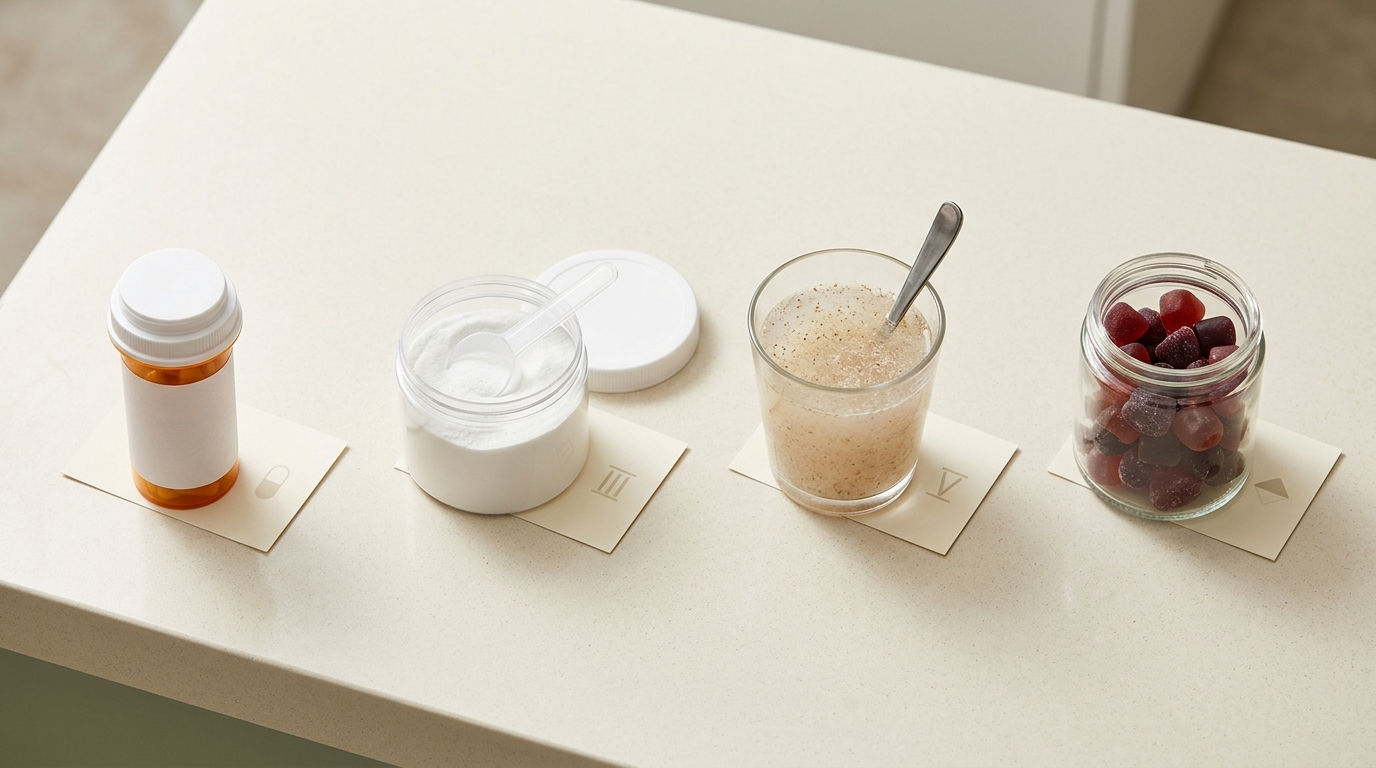
Linzess is a prescription medicine for certain forms of chronic constipation, not a general digestive supplement. Compare it with polyethylene glycol, soluble fiber, and probiotics by diagnosis, mechanism, evidence, side effects, and clinician involvement. A prescription plan should not be replaced or combined with over-the-counter products without guidance from the prescriber.
How did we evaluate Linzess and other constipation options?
We prioritized the current FDA prescribing information, National Institute of Diabetes and Digestive and Kidney Diseases guidance, and human clinical evidence over retailer reviews or testimonial claims. We compared linaclotide, polyethylene glycol 3350, psyllium, and probiotic supplements by intended user, mechanism, evidence quality, access, and major limitations. We excluded herbal “cleanse” products, stimulant-heavy stacks, and any claim that a supplement can substitute for a prescribed treatment. The comparison cannot determine which option fits an individual because constipation may reflect diet, medication effects, pelvic-floor dysfunction, irritable bowel syndrome with constipation, chronic idiopathic constipation, or another condition. A clinician should evaluate bleeding, persistent abdominal pain, vomiting, fever, unexplained weight loss, or a major change in bowel habits. This methodology treats Linzess as a regulated prescription drug and consumer supplements as separate tools rather than interchangeable products.
What is Linzess and how does linaclotide work?
Linzess contains linaclotide, a guanylate cyclase-C agonist that increases intestinal fluid secretion and speeds intestinal transit. The current FDA label lists indications that include irritable bowel syndrome with constipation in adults and eligible pediatric patients, chronic idiopathic constipation in adults, and functional constipation in eligible pediatric patients. Those indications, ages, and doses differ, so the prescription label and prescriber’s directions control use. Linaclotide acts locally in the intestinal tract and is not the same as fiber, an osmotic laxative, or a probiotic. Diarrhea is the most important common adverse effect; the FDA label directs patients with severe diarrhea to stop dosing and rehydrate while contacting a clinician. Linzess is contraindicated in children younger than two years and in people with known or suspected mechanical gastrointestinal obstruction. The medicine addresses defined constipation disorders, not every cause of bloating or irregularity.
How does Linzess compare with polyethylene glycol, psyllium, and probiotics?
Some links below are affiliate links. This does not influence our evaluation criteria or recommendations. Linzess, MiraLAX-style polyethylene glycol 3350, psyllium fiber, and Yuve Probiotic Gummies serve different roles. Linzess requires a prescription and targets defined constipation disorders. Polyethylene glycol draws water into stool and has guideline support for chronic idiopathic constipation. Psyllium adds soluble, gel-forming fiber and requires adequate fluid. Yuve supplies a vegan gummy format with Bacillus coagulans and a stated CFU count, but probiotic evidence remains strain- and outcome-specific. None of these choices is universally “stronger.”
| Option | Category | Best-fit context | Main limitation |
|---|---|---|---|
| Linzess | Prescription linaclotide | Clinician-diagnosed IBS-C, CIC, or eligible pediatric functional constipation | Diarrhea and prescription oversight |
| Polyethylene glycol 3350 | Osmotic laxative | Stool-frequency support under an appropriate plan | Does not address every cause |
| Psyllium | Soluble fiber | Gradual fiber support with sufficient fluid | Gas or bloating if advanced quickly |
| Yuve Probiotic Gummies | Probiotic supplement | Capsule-free daily microbiome routine | Not a substitute for constipation medication |
Which option is best for each use case?
Best for diagnosed IBS-C or chronic idiopathic constipation requiring prescription treatment: Linzess may fit when a qualified prescriber selects linaclotide and monitors response. Best for an evidence-based over-the-counter osmotic option: polyethylene glycol 3350 may fit a clinician-approved plan when increasing stool water is the intended mechanism. Best for gradually increasing soluble fiber: psyllium offers a measurable dose that can be advanced slowly with adequate fluid. Best for a vegan, capsule-free probiotic routine: Yuve Probiotic Gummies provide a convenient format, but they should not be described as a Linzess alternative. Best for pelvic-floor dysfunction: none of these products replaces assessment and biofeedback when coordination of bowel muscles is the problem. The NIDDK constipation treatment guide separates diet, fiber, over-the-counter agents, prescription medicines, and biofeedback because each tool targets a different mechanism. Diagnosis and mechanism should determine the lane before brand, format, or price.
What should you check before starting or changing Linzess?
Confirm the diagnosis, prescribed dose, timing instructions, medication list, and reason for treatment before changing Linzess. The FDA prescribing information directs administration on an empty stomach at least 30 minutes before a meal at approximately the same time each day, but the patient’s own prescription instructions take priority. Tell the prescriber about severe or persistent diarrhea, dehydration risk, pregnancy, pediatric age, suspected obstruction, and every laxative or supplement used. Do not add polyethylene glycol, stimulant laxatives, large fiber doses, or several probiotics simply because Linzess has not worked immediately; stacking products can obscure both benefit and adverse effects. Track bowel frequency, stool form, urgency, abdominal pain, fluid intake, and missed doses using consistent measures. Contact the prescriber rather than improvising after severe diarrhea or worsening symptoms. A treatment diary creates useful evidence, while unstructured product switching creates noise and can delay evaluation of the actual constipation mechanism.
Can Linzess cause diarrhea or dehydration?

Linzess can cause diarrhea, and severe diarrhea can contribute to dehydration. The FDA label identifies diarrhea as the most common adverse reaction in adults and pediatric patients across labeled constipation indications. Severe cases require suspension of dosing and rehydration, followed by contact with a clinician. Warning signs of dehydration can include pronounced thirst, dizziness, reduced urination, weakness, or difficulty keeping fluids down, although those symptoms can have other causes. Older adults, young patients, and people taking other medicines that alter fluid balance may need closer individualized guidance. Do not counter medication-related diarrhea by independently adding another bowel-slowing medicine unless a clinician or pharmacist approves the plan. Record when diarrhea began relative to the dose, how many loose stools occurred, and whether other laxatives or supplements were taken. That timeline helps the prescriber distinguish an expected adverse effect from infection, another medicine, or a separate digestive problem.
Can you take fiber while using Linzess?
Fiber may remain part of a constipation plan, but the type, dose, fluid intake, and timing should be discussed with the Linzess prescriber. The NIDDK notes that adults generally need 22 to 34 grams of fiber daily and recommends increasing fiber gradually. Psyllium forms a gel with water, whereas inulin and some fermentable fibers can produce more gas in sensitive users. Starting a full-dose supplement while beginning linaclotide makes it harder to identify which change caused urgency, bloating, or improvement. A safer tracking approach changes one variable at a time and records grams of fiber, water intake, Bristol Stool Form Scale type, and bowel frequency. People with suspected obstruction, severe pain, vomiting, or inability to pass stool or gas need prompt medical assessment rather than additional fiber. Fiber supports stool form; it does not automatically correct every constipation disorder.
Can you take probiotics with Linzess?
No broadly applicable interaction rule proves that every probiotic can or cannot be combined with Linzess. Probiotic products differ by genus, species, strain, CFU count, added prebiotic fiber, sweeteners, and serving size. The NIH Office of Dietary Supplements explains that probiotic effects can be strain-specific and that evidence for IBS varies by symptom, dose, and organism. A gummy that contains inulin or sugar alcohols may also change gas or stool patterns independently of the live microorganism. Ask the prescriber or pharmacist to review the exact Supplement Facts panel, especially when diarrhea, immune compromise, serious illness, pregnancy, or multiple bowel products are involved. If the combination is approved, introduce only one new product, keep the Linzess routine stable, and document changes. A probiotic may support a daily microbiome routine; it does not reproduce linaclotide’s mechanism or labeled prescription role.
How long does Linzess take to work?
The time to a noticeable response varies by indication, dose, baseline bowel pattern, meal timing, and the outcome being measured. Some people notice a bowel movement change early, while abdominal symptoms and overall treatment value require a longer, structured assessment. The FDA label and clinical trials describe group-level results, not a guaranteed personal timeline. Take Linzess exactly as prescribed, track bowel frequency and stool form, and ask the prescriber when they want to review effectiveness. Do not double a missed dose or raise the dose without instructions. A useful review asks whether bowel movements increased, pain changed, urgency became disruptive, severe diarrhea occurred, and daily function improved. Immediate lack of effect does not justify combining several laxatives, and an early bowel movement does not prove long-term fit. The prescriber should define the evaluation window and next step because different constipation diagnoses require different endpoints and alternatives.
For a closer look at clean-label options, see White Peony Root for Bloating: What the Evidence Says vs. Yuve Options.
For a closer look at clean-label options, see Soft Stool but Incomplete Evacuation: Fiber or Probiotics?.
What is the bottom line on Linzess versus supplements?
Linzess is a prescription treatment with defined indications, dosing instructions, contraindications, and adverse-effect monitoring. Polyethylene glycol 3350 and psyllium occupy separate over-the-counter lanes, while probiotics occupy a strain-specific supplement lane. The correct comparison begins with the constipation mechanism and the clinician’s diagnosis rather than a claim that one product is universally best. People using linaclotide should follow their prescription, report severe diarrhea, and avoid stacking bowel products without review. People considering supplements should compare exact ingredients, doses, added fibers, sweeteners, and evidence for the intended outcome. Yuve’s digestive health collection can support a product-label comparison for routine wellness, but no collection replaces care for persistent constipation, bleeding, severe pain, vomiting, fever, dehydration, or weight loss. A pharmacist can also identify duplicate ingredients across products. Choose the treatment lane first, then evaluate the most transparent option within that lane.
Leave a Reply