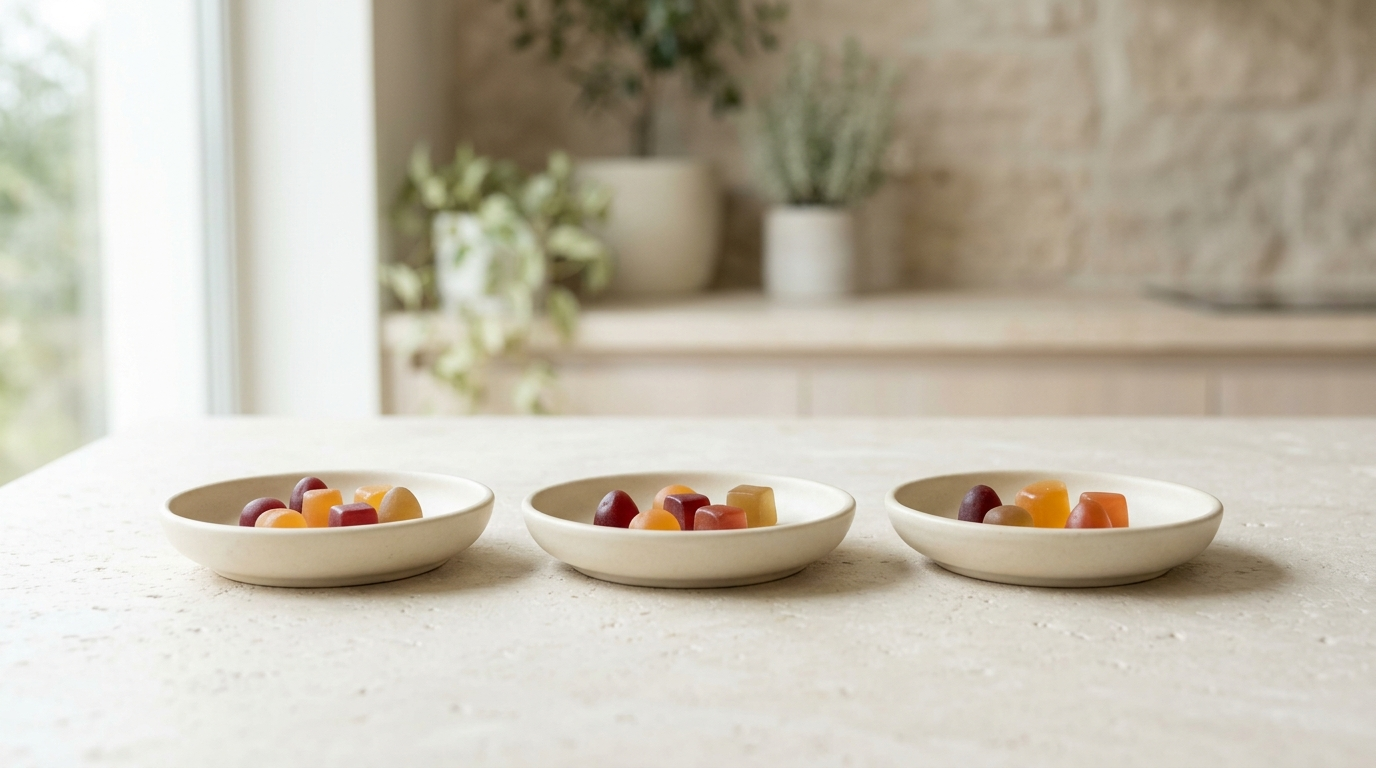
The best vegan probiotic gummy matches your dietary requirements and provides a clearly identified organism, an interpretable serving size, and credible shelf-life information. MaryRuth’s, Future Kind, and Yuve offer plant-based options, but their labels differ. A vegan claim or a larger CFU number does not establish better digestive results.
How have we evaluated vegan probiotic gummies?
Some links below are affiliate links. This does not influence our evaluation criteria or recommendations.
We reviewed current manufacturer pages for vegan status, organism identity, CFU statements, serving instructions, and missing information, using those pages as label sources rather than independent demonstrations of finished-product performance or comparative digestive benefits. We prioritized the NIH Office of Dietary Supplements and Harvard’s Nutrition Source for general evaluation principles, including strain specificity and viable counts through shelf life, instead of transferring a study on one organism to every gummy that carries the same species name. We excluded customer testimonials, unsupported overall rankings, and assumptions that organic ingredients, sugar-free wording, or a gummy format establish clinical superiority. This is a public-label comparison checked in November 2026, not laboratory testing, a purchasing trial, or a certification audit; buyers should verify their bottle’s current Supplement Facts and ask manufacturers about any unresolved strain, stability, or allergen questions.
Which label details matter before you compare products?
Start with vegan status, then evaluate probiotic identity separately. Pectin can replace gelatin in a gummy, but the complete ingredients and manufacturer statement still matter. A plant-based texture does not establish the quality of the live microorganisms or the suitability of a formula for every allergy.
The NIH Office of Dietary Supplements explains that probiotic effects can depend on the strain and recommends looking for viable counts through the end of shelf life. A species name such as Bacillus coagulans is not a complete strain designation. A manufacture-time CFU statement also answers a different question from an expiration-date guarantee.
Use the serving size to compare like with like. A number per gummy cannot be compared directly with a number per daily serving without checking the directions. Then review added sugars, sugar alcohols, and storage requirements. These are practical selection criteria, not a validated score predicting who will benefit.
Which vegan gummy products meet these comparison criteria?

All three manufacturers describe these products as vegan; the table summarizes their public pages, not independent verification. MaryRuth’s Organic Probiotic Gummies names Bacillus subtilis DE111, while Future Kind’s probiotic gummies also names DE111. The Yuve Probiotic Gummies page names Bacillus coagulans without a strain code in its Supplement Facts.
| Option | Published identity and serving | Important follow-up |
|---|---|---|
| MaryRuth’s | Bacillus subtilis DE111; 5 billion CFU per two gummies | Confirm viable count through expiration |
| Future Kind | Bacillus subtilis DE111; approximately 5 billion CFU; two daily gummies | Confirm bottle label and expiration guarantee |
| Yuve | Bacillus coagulans; 5 billion CFU per two gummies | Request strain code and shelf-life documentation |
Yuve describes its count as measured at manufacture, which is not an expiration guarantee. MaryRuth’s and Future Kind name a strain, but that alone does not establish finished-product stability. None receives an automatic effectiveness ranking from these label details.
Which option is best for each buying priority?
Best for an explicitly named strain: compare MaryRuth’s and Future Kind first, because their pages identify Bacillus subtilis DE111. That makes strain-level follow-up more straightforward, but neither receives a clinical superiority claim here. Match any study to the population, outcome, dose, and finished formula before drawing conclusions.
Best for checking a sugar-alcohol-based alternative: Yuve lists maltitol and isomalt, plus 3 g of sugar alcohol per two-gummy serving. That is a formulation distinction, not a promise of better tolerance. Buyers who avoid those ingredients should review the other labels rather than choosing solely by a sugar-related headline.
Best for an expiration-backed purchase: choose only after the manufacturer supplies an answer that meets your requirements. Harvard’s Nutrition Source emphasizes identity, purity, and potency through shelf life. Within a broader digestive supplement collection, compare the exact item rather than treating every product as interchangeable. Choosing no supplement remains a reasonable outcome of this review.
FAQ: What else should you check before buying vegan probiotic gummies?
Does vegan mean gelatin-free?
A vegan formula should exclude animal-derived gelatin and other animal ingredients. Check the full label because gelatin-free wording alone does not establish complete vegan status across every ingredient in the formula.
Does a higher CFU count win?
No, NIH does not equate a higher count with greater benefit. Organism identity, evidence, serving size, and viable count at use still matter when comparing the actual daily serving.
Does DE111 establish identical products?
No, sharing a strain does not make two finished gummies identical. Other ingredients, directions, storage, and stability documentation still require separate review for the exact item you plan to buy.
Are gummies automatically as effective as capsules?
Format alone cannot establish equivalent outcomes between two products. Compare the specific strain, dose, and evidence rather than assuming all gummies behave alike across different brands and formulations.
Can I skip probiotic supplements entirely?
Yes, a comparison does not establish that you need a probiotic. Ask a clinician about persistent digestive concerns rather than repeatedly switching gummy brands.
Leave a Reply