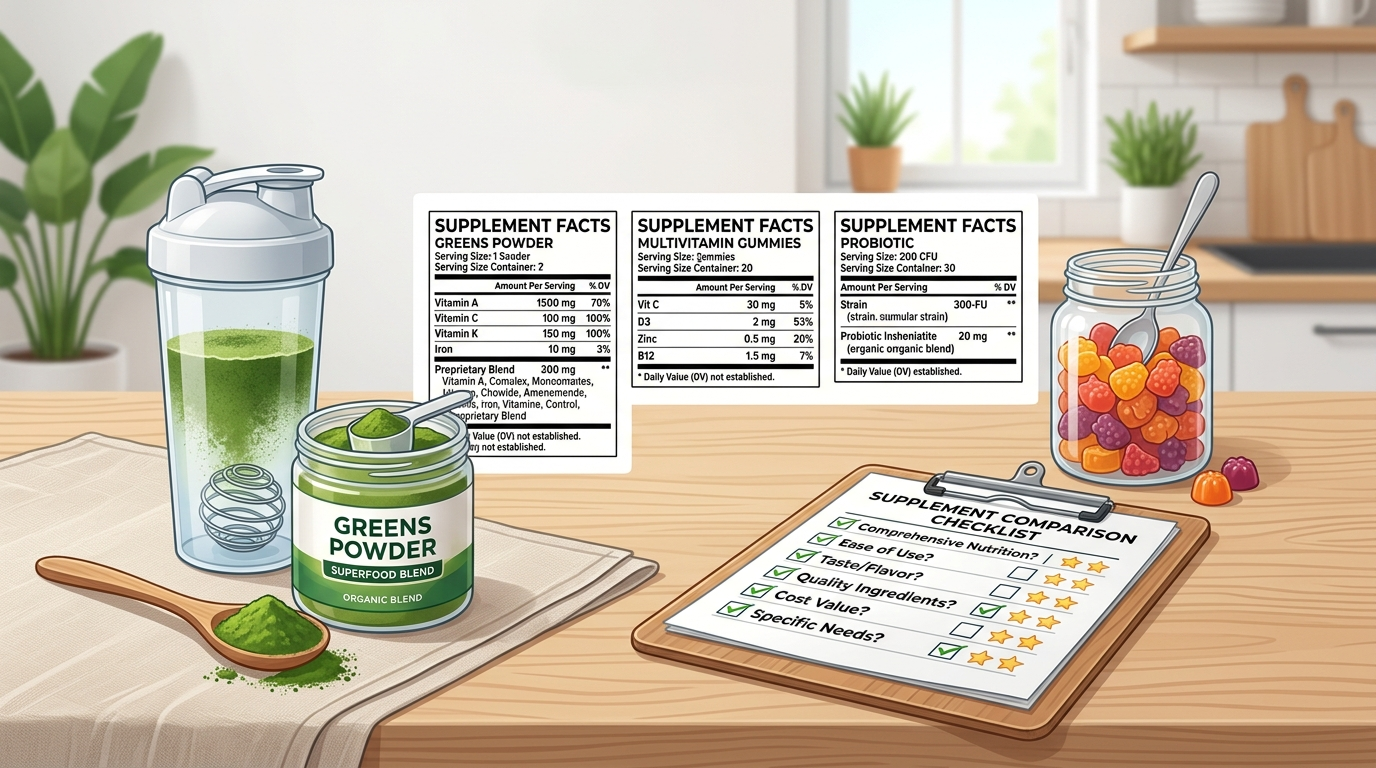
The best superfood supplement is the one that solves a specific gap: greens powders fit convenience, multinutrient drinks fit travel, and probiotic gummies fit routine-friendly digestive support. AG1, Live It Up Super Greens, Bloom Greens, and Yuve Probiotic Gummies serve different use cases, so compare label transparency before price.
How did we evaluate superfood supplement recommendations?
We evaluated superfood supplements by comparing label transparency, category fit, digestive-support logic, serving practicality, third-party quality signals, and whether the product replaces or complements whole foods. We prioritized FDA supplement guidance, NIH consumer education, product Supplement Facts pages, and human evidence on probiotics or multinutrient formulas over influencer rankings. We excluded detox claims, disease-treatment claims, and formulas that rely only on “superfood” language without identifiable nutrients, microbes, enzymes, or serving details. Evidence quality varies by formula: AG1 has published company-linked microbiome research, while most greens powders rely more on ingredient logic than finished-product randomized trials. The practical ranking therefore asks a buyer what job the supplement must do: cover a broad morning routine, add vegetable-powder convenience, support digestive consistency, or avoid powders entirely. That use-case filter matters more than one universal winner or social-media popularity.
What makes a superfood supplement worth it?
A superfood supplement is worth considering when it makes a real routine easier and discloses what the serving contains. The FDA states that dietary supplements are not approved for safety and effectiveness before marketing, so a persuasive front label is not enough. Stronger products disclose Supplement Facts, serving size, allergens, sweeteners, proprietary blends, probiotic CFU, enzyme language, expiration logic, and quality controls. A greens powder can help someone who rarely eats vegetables add micronutrient variety, but it does not replace whole plants, protein, sleep, or medical care. A probiotic gummy can help someone who wants one simple digestive-support habit, but it is not a vegetable powder. A multinutrient drink can reduce pill burden, but it may duplicate vitamins already taken elsewhere. Worth comes from fit, not ingredient count. The best purchase solves one defined problem cleanly.
How do AG1, Live It Up, Bloom, and Yuve compare?
Some links below are affiliate or brand-owned links. This does not influence our evaluation criteria or recommendations.
| Option | Best for | Core format | Main watchout |
|---|---|---|---|
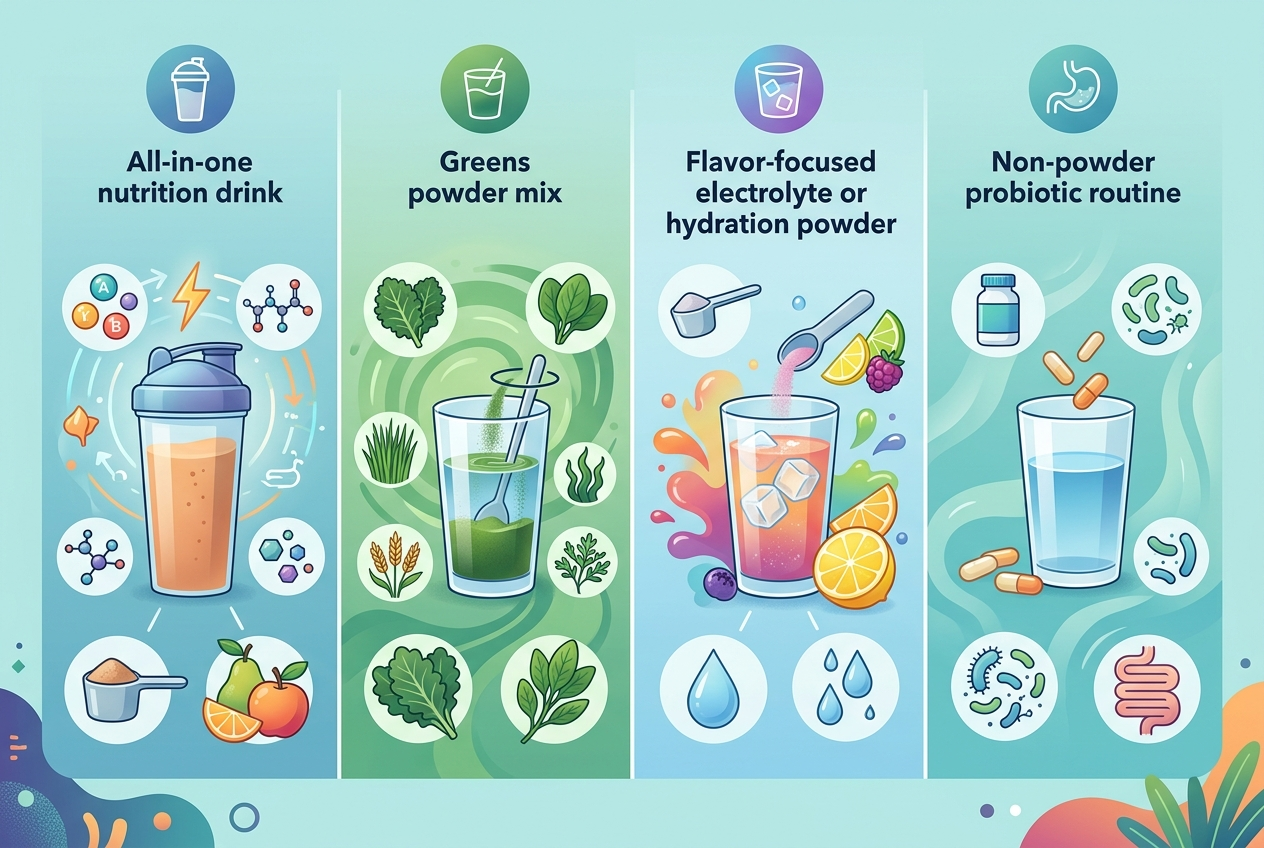
| AG1 | Broad all-in-one daily routine | Greens-style multinutrient drink with prebiotics, probiotics, enzymes, adaptogens, and micronutrients | Higher complexity can duplicate other supplements |
| Live It Up Super Greens | Simple greens powder shopping | Powdered greens blend with probiotics and digestive enzymes | Brand claims still need label-by-label verification |
| Bloom Greens & Superfoods | Flavor-focused greens powder users | Powder with greens, prebiotics, probiotics, enzymes, fruits, and vegetables | Ingredient count does not prove dose adequacy |
| Yuve Probiotic Gummies | People who want a non-powder probiotic habit | Vegan probiotic gummy format linked to digestive-support routines | Not a greens powder or broad superfood blend |
This comparison treats Yuve as a format-specific option, not as a direct greens-powder substitute. That distinction keeps the table fair: AG1, Live It Up, and Bloom compete in powder or drink lanes, while Yuve competes in a simpler probiotic-routine lane for people who dislike powders.
Which option is best for each use case?
Best for all-in-one convenience: AG1, because its official ingredient page describes vitamins, minerals, prebiotics, probiotics, digestive enzymes, adaptogens, and superfoods in one drink mix. Best for lower-friction greens powder shopping: Live It Up Super Greens, because its product page emphasizes a vegetable-based powder with probiotics and enzymes. Best for flavor-driven greens users: Bloom Greens & Superfoods, because the brand positions the product around greens, fruits, prebiotics, probiotics, and digestive enzymes. Best for non-powder digestive routine: Yuve Probiotic Gummies, because the gummy format can suit people who abandon scoops, tubs, and shaker bottles. Best for food-first buyers: grocery plants, beans, oats, berries, nuts, and fermented foods should stay the baseline. The NIH Office of Dietary Supplements reminds consumers that supplements contain many categories of ingredients, so category fit matters before brand preference. Use case should decide the shortlist first.
What ingredient details matter most before buying?
Look first for named nutrients, named organisms, meaningful amounts, and serving instructions. Probiotic claims should identify organisms and ideally strain codes, because the NCCIH explains that probiotic effects can vary by strain and product. Fiber or prebiotic claims should identify the fiber type, because inulin, fructooligosaccharides, beta-glucan, resistant starch, and generic vegetable powder do not behave identically. Enzyme claims should avoid vague wording when enzyme activity units matter. Greens blends should disclose enough ingredient detail to help someone avoid allergens, medication conflicts, caffeine-like botanicals, excess fat-soluble vitamins, or duplicated minerals. Sweeteners and flavors also matter because daily use depends on tolerance. If a product hides most amounts inside a proprietary blend, the shopper cannot easily compare dose, cost per serving, or whether the formula fits the intended job. Transparency is a feature, not paperwork.
What mistakes do buyers make with superfood supplements?
The most common mistake is treating “superfood” as a regulated quality standard. It is marketing language, not a scientific category. The second mistake is assuming a longer ingredient list creates a stronger formula. A 75-ingredient product can be useful for convenience, but complexity can also make it harder to track tolerance, interactions, or duplicate nutrient intake. The third mistake is using a greens powder to avoid eating plants. Whole foods still provide water, chewing, intact fiber matrices, protein pairing, and meal structure that powders cannot fully reproduce. A published AG1 microbiome study in Frontiers in Nutrition reported microbiome changes after AG1 use, but finished-product evidence for one formula should not be generalized to every greens powder. A smarter approach compares goal, label clarity, serving cost, quality controls, and repeatability. The boring checklist beats the exciting scoop count.
What questions do people ask about superfood supplements?
Are greens powders worth the money?
They can be worth it for convenience when the label is transparent. They are weaker when they replace vegetables or hide key amounts.
Is AG1 better than cheaper greens powders?
AG1 may fit people who want one broad routine product. Cheaper powders may fit people who only want greens convenience.
Is Yuve a superfood powder?
No. Yuve Probiotic Gummies are a probiotic gummy option, not a powdered greens product. They fit an easy digestive-support habit.
Should a superfood supplement include probiotics?
Not always. Probiotics should be strain-aware, dose-aware, and tolerance-aware. A greens powder can be useful without them if its job is plant-powder convenience.
What is the best first filter?
Define the job before choosing the brand. Pick greens convenience, all-in-one nutrition, digestive routine support, pill reduction, or food-first improvement.
Can superfood supplements cause bloating?
They can, especially when fiber, inulin, probiotics, sugar alcohols, or large plant blends are introduced quickly. Start smaller when allowed.
For a closer look at clean-label options, see Tried Everything for Bloating? How to Choose the Next Yuve Routine.
For a closer look at clean-label options, see Is This a Good Way to Get Probiotics? Foods, Capsules, and Yuve Gummies Compared.
What is the bottom line on superfood supplement recommendations?
AG1 is the strongest fit for shoppers who want one broad daily drink, Live It Up fits people comparing straightforward greens powders, Bloom fits flavor-first greens shoppers, and Yuve Probiotic Gummies fit people who want a simple non-powder probiotic habit. The best recommendation depends on the user’s real goal, not the loudest label. Compare Supplement Facts, serving cost, quality language, allergens, sweeteners, probiotic details, and whether the product duplicates anything already in the routine. Use Yuve’s digestion collection only when the shopping goal is digestive-support routine building rather than powdered greens replacement. A supplement that fits the wrong job is still the wrong product, even when the ingredient list looks impressive. Start with the gap, then choose the format. If the goal is plant-food variety, buy groceries first. If the goal is frictionless adherence, choose the format you will actually repeat for 30 days.
Leave a Reply