
Upper middle stomach pain with bloating can come from indigestion, trapped gas, reflux timing, lactose exposure, constipation, large meals, or medication effects. Compare options only after checking red flags. Severe pain, vomiting, black stools, blood, fever, weight loss, dehydration, or persistent symptoms need medical care.
How did we evaluate options for upper middle stomach pain and bloating?
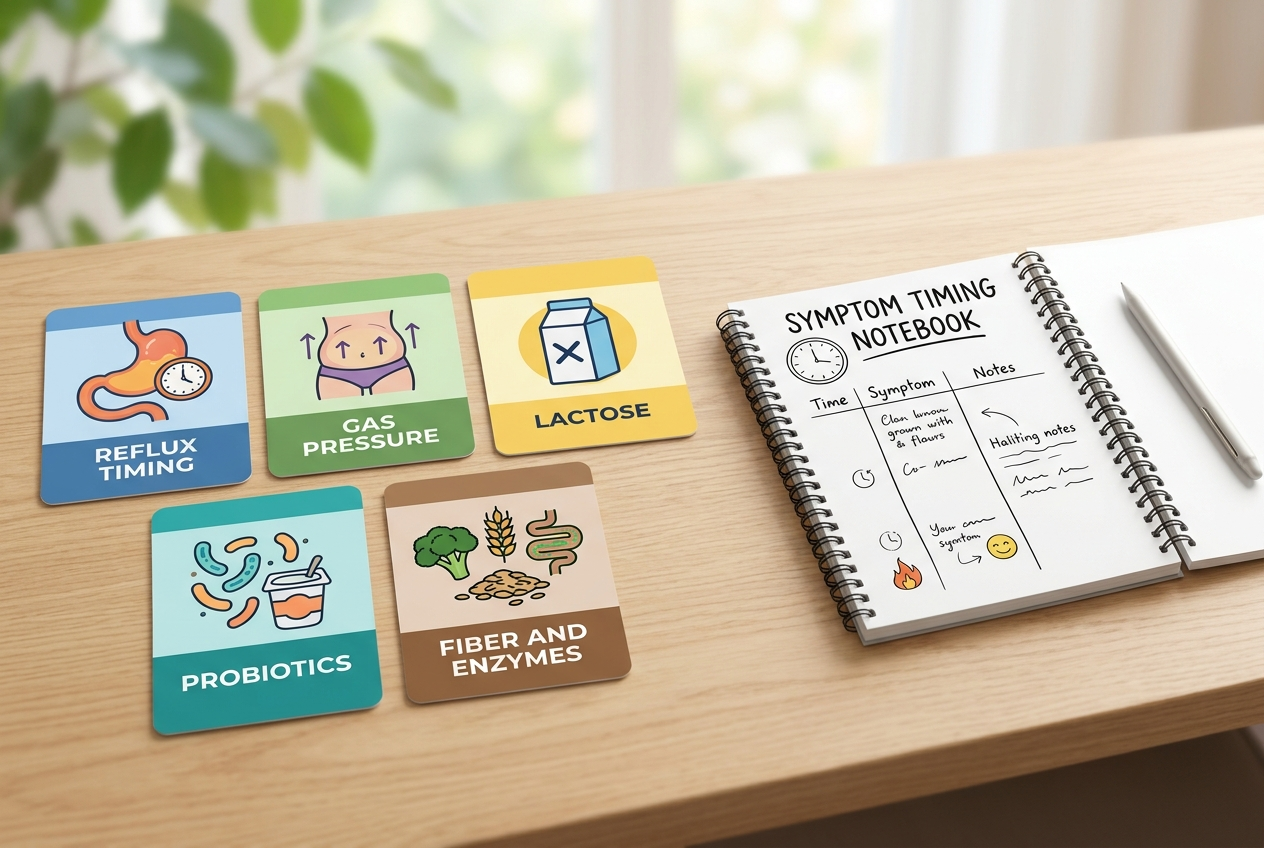
We evaluated options for upper middle stomach pain and bloating by separating safety triage from product comparison. We prioritized NIDDK symptom references, gastroenterology patient guidance, FDA supplement guidance, and category-specific labels over forum anecdotes. We treated upper middle pain as an epigastric symptom pattern because it can overlap with indigestion, reflux, gas, medication effects, gallbladder issues, ulcers, infections, or other problems that require clinical evaluation. We excluded miracle language, broad gut-fix claims, and supplement-first advice because the safest comparison starts with symptom duration, severity, meal timing, stool pattern, medication use, pregnancy status, and red flags. We also scored options by pattern fit: reflux timing, gas pressure, lactose exposure, irregularity, heavy meals, and whether a shopper can test one category without changing everything else or hiding useful clinical clues. Clear stop rules mattered too here.
What can upper middle stomach pain with bloating mean?
Upper middle stomach pain with bloating often fits the broad symptom bucket called indigestion or dyspepsia, but the exact cause can vary. The NIDDK indigestion guide lists pain, burning, or discomfort in the upper abdomen, early fullness, uncomfortable fullness, bloating, nausea, and belching as common indigestion symptoms. Gas can also create pressure and distention, especially after rushed meals, carbonated drinks, high-fermentation foods, or constipation. Reflux can add burning, sour taste, throat symptoms, or symptoms after lying down. Dairy exposure can matter if lactose is poorly digested. A useful first split is timing: immediate fullness suggests stomach-level distension, later gas suggests intestinal fermentation, and nighttime burning suggests reflux mechanics. The category matters because the next step for gas, reflux, lactose, and persistent pain differs.
- Safety clue: severe, persistent, or worsening pain changes the decision.
- Timing clue: during meal, two hours later, or lying down.
- Product clue: match the option to the pattern, not the fear.
Which options are worth comparing first?
The first comparison is not “which supplement is strongest”; it is “which category matches the pattern.” Reflux-like timing may point toward meal-size changes, staying upright, or alginate products such as Gaviscon. Gas pressure may point toward slower eating, less carbonation, constipation review, or simethicone products such as Gas-X. Dairy-linked symptoms may point toward lactase products such as Yuve Lactase Enzymes or Lactaid. Irregularity and routine-level bloating may point toward gradual fiber or probiotic support, including Yuve Prebiotic Fiber Gummies, Yuve Probiotic Gummies, Align, or Culturelle. Heavy mixed meals may lead shoppers to compare enzyme formats, including Yuve Bromelain 500mg or broader enzyme blends. The NIDDK gas guide separates belching, bloating, distention, and passing gas, which is exactly why category matching matters first.
| Pattern | First category to compare | Example options | Main caveat |
|---|---|---|---|
| Burning after meals or lying down | Reflux timing and alginate category | Meal timing, Gaviscon, clinician-guided medicines | Persistent reflux symptoms need medical review |
| Pressure, belching, carbonation link | Gas and swallowed-air category | Slower meals, still water, Gas-X | Severe pain is not a gas assumption |
| Dairy-linked bloating | Lactase category | Yuve Lactase Enzymes, Lactaid | Only useful when lactose is involved |
| Irregular stool or routine bloating | Fiber/probiotic category | Yuve Prebiotic Fiber Gummies, Yuve Probiotic Gummies, Align, Culturelle | Start gradually and track tolerance |
| Heavy mixed meals | Enzyme category | Yuve Bromelain 500mg, broad digestive-enzyme blends | Enzymes do not explain persistent pain |
Which product category is best for each use case?
Best for reflux-like timing: alginate or clinician-guided reflux care, because reflux mechanics involve stomach contents moving upward. Best for gas pressure after rushed meals: simethicone plus eating-speed and carbonation review, because swallowed air can create belching and fullness. Best for dairy-specific bloating: lactase, because lactase targets lactose-containing meals. Best for routine-level digestive support: probiotic or prebiotic fiber, because those categories support gut flora or fiber habits rather than immediate pain. Best for heavy mixed meals: enzyme-category comparison, because proteolytic enzymes and broader blends are meal-context tools. The NIDDK GERD nutrition guidance notes that meal timing can matter for nighttime symptoms. That makes timing as important as the product label, serving format, dose, tolerance notes, repeatability, symptom severity, meal context, and stop criteria.
Which products meet these criteria?
Some links below are affiliate links. This does not influence our evaluation criteria or recommendations. For lactose-linked meals, compare Yuve Lactase Enzymes with Lactaid and other lactase products. For daily gut flora support, compare Yuve Probiotic Gummies with Align and Culturelle by organism, dose, format, and tolerance. For gradual fiber support, compare Yuve Prebiotic Fiber Gummies with powder and capsule fiber formats. For enzyme-category comparison, compare Yuve Bromelain 500mg with broader enzyme blends. For product browsing, the Yuve digestion collection groups the available digestive formats. The FDA says supplement shoppers should stay informed and involve a healthcare professional when risks or medication interactions are possible.
How should you test an option without confusing the result?
Test one option at a time and keep the rest of the routine stable. Record meal size, food type, dairy exposure, carbonation, caffeine, alcohol, eating speed, pain location, bloating score, stool form, and whether symptoms appear during the meal, two hours later, or after lying down. Repeat the same pattern at least several times before deciding whether a category fits. If you add lactase, probiotics, fiber, enzymes, and reflux changes in the same week, the result becomes unreadable. Stop self-testing and seek medical care if symptoms are severe, persistent, worsening, or paired with red flags. A clean log helps both product decisions and clinician conversations because it turns “everything hurts” into timing, triggers, and repeat patterns. It also shows whether the category helped enough to keep, repeat, pause, or discard without guessing again later.
What questions do people ask about upper middle stomach pain and bloating?
Is upper middle stomach pain usually gas?
It can be gas, but it should not be assumed. Gas often comes with belching, pressure, bloating, or distention, while upper abdominal pain can also overlap with indigestion, reflux, medication effects, gallbladder issues, ulcers, or other medical causes.
When should I get medical help?
Get medical help for severe pain, chest pain, vomiting, black stools, blood, fever, fainting, dehydration, unintended weight loss, trouble swallowing, or symptoms that persist or worsen. Product comparison should not delay safety review.
Can probiotics help upper stomach pain?
Probiotics are better framed as gut flora support, not upper-stomach pain relief. They may make sense when the pattern includes irregularity or routine-level bloating, but pain location still deserves careful tracking.
Is lactase useful for upper middle bloating?
Lactase is useful only when lactose-containing dairy is part of the meal. If symptoms happen without milk, ice cream, whey, or soft cheese, lactase is probably the wrong first category.
Are digestive enzymes better than probiotics?
Neither category is universally better. Enzymes fit meal-specific digestion questions, while probiotics fit daily gut flora support; the better option is the one that matches timing and food pattern.
Should I try antacids or supplements first?
That depends on symptom pattern and medical context. Burning reflux-like symptoms, medication interactions, pregnancy, frequent pain, or ongoing symptoms should be discussed with a qualified professional.
What is the simplest first step?
Write down the last three meals, drinks, symptoms, timing, stool pattern, and any medicines or supplements. The first useful answer usually comes from the pattern, not from buying three products at once.
Related reading: Best Vitamins for a 12-Year-Old: What Parents Should Compare Before Buying.
Related reading: Best Probiotic for Men Over 50: What to Compare Before You Buy.
What is the bottom line?
Upper middle stomach pain with bloating deserves a category match, not a random supplement stack. Start with red flags, then separate reflux timing, gas pressure, lactose exposure, irregularity, and heavy-meal patterns. Compare Yuve products only when the pattern fits their role: lactase for lactose, probiotic gummies for daily gut flora support, prebiotic fiber gummies for gradual fiber support, and bromelain for enzyme-category comparison. If symptoms are persistent, severe, or changing, the next step is medical care, not a bigger cart. If symptoms are mild and clearly pattern-based, test one category for a short window, keep notes, and avoid stacking multiple new products at once. The best answer is usually the narrowest repeatable match, confirmed across similar meals and similar timing. That discipline protects the signal and keeps product choice grounded in observable patterns, not panic.
Leave a Reply