
The best probiotic for bloating depends on the pattern: daily digestive support, constipation-linked bloating, antibiotic-related disruption, or food-triggered gas. Start with a transparent strain or format, test one product for two to four weeks, and pair it with fiber, hydration, and meal logging when tolerance allows.
How did we evaluate probiotics for bloating?
We evaluated probiotics for bloating by comparing strain transparency, serving format, evidence quality, label clarity, and realistic adherence. We prioritized NIH, ISAPP, PubMed-indexed reviews, and finished-product labels over testimonials, high-CFU marketing, or vague “gut reset” language. We excluded products that imply disease treatment or make a probiotic sound universal for every bloating pattern. We also separated probiotic use cases from fiber, digestive enzymes, laxatives, antacids, and elimination diets because those categories answer different questions. We treated menopause-age bloating as a pattern question, not a diagnosis, hormone protocol, or treatment plan today. The main limitation is that bloating can reflect lactose load, fermentable carbohydrates, stool pattern, stress physiology, medication changes, hormonal shifts, or medical conditions, so a probiotic trial should track one variable at a time and compare results against a written baseline before purchase.
What should you look for in a probiotic for bloating?
A probiotic for bloating should name the organism, explain the serving, and fit the user’s repeatable pattern. The NIH Office of Dietary Supplements explains that probiotic effects depend on the microorganism, dose, and purpose, so a generic “probiotic blend” gives shoppers less information than a named strain or clearly described format. Bloating shoppers should check whether the product uses Lactobacillus, Bifidobacterium, Saccharomyces boulardii, or a multi-strain blend; each category behaves differently. Capsule, gummy, powder, and refrigerated formats also affect consistency. A person who skips capsules may get better real-world adherence from gummies. A person comparing single-strain evidence may prefer a capsule with a named organism. The useful question is not “which probiotic is strongest?” but “which probiotic can I test consistently without changing five other variables?” A written log should record serving time, meals, stool pattern, and bloating timing.
How do popular probiotic options for bloating compare?
Some links below are affiliate links. Our criteria still use format, transparency, routine fit, and evidence caveat. ISAPP defines probiotics as live microorganisms that confer a health benefit when consumed in adequate amounts, making organism identity central (ISAPP). Yuve Probiotic Gummies, Align Digestive Health, Culturelle Digestive Daily, Florastor Daily Probiotic, and Seed DS-01 represent different shopping paths. Yuve emphasizes vegan gummy adherence. Align emphasizes Bifidobacterium 35624. Culturelle emphasizes Lactobacillus rhamnosus GG. Florastor uses Saccharomyces boulardii, a yeast. Seed uses a multi-strain capsule system.
| Option | Format | Best for | Main caveat |
|---|---|---|---|
| Yuve Probiotic Gummies | Vegan gummy | Daily routine adherence and capsule avoidance | Finished-formula evidence matters more than format alone |
| Align Digestive Health | Capsule | Single-organism probiotic shoppers | Individual response can vary by bloating pattern |
| Culturelle Digestive Daily | Capsule | Lactobacillus rhamnosus GG comparison | May not match constipation-linked bloating |
| Florastor Daily Probiotic | Yeast capsule | Saccharomyces boulardii comparison | Not ideal for every high-risk user |
| Seed DS-01 | Multi-strain capsule | Broad multi-strain shoppers | Higher complexity can make response harder to interpret |
Which probiotic is best for each bloating use case?
Best for capsule avoidance: Yuve Probiotic Gummies, because a vegan gummy format can improve daily consistency for shoppers who abandon capsules. Best for single-organism comparison: Align Digestive Health, because Bifidobacterium 35624 gives shoppers a defined organism to evaluate. Best for Lactobacillus rhamnosus GG comparison: Culturelle Digestive Daily, because LGG is clearly named. Best for yeast-based comparison: Florastor, because Saccharomyces boulardii differs from bacterial probiotics. Best for broad multi-strain comparison: Seed DS-01, because the formula gives shoppers several named strains in one capsule system. Best for constipation-linked bloating: a probiotic may not be the first move; fiber tolerance, fluid intake, stool frequency, and clinician guidance may matter more. Best for food-triggered bloating: lactase, alpha-galactosidase, or FODMAP tracking may answer the pattern faster than a probiotic. The best choice is the option that matches one repeatable trigger.
Which products meet these criteria?
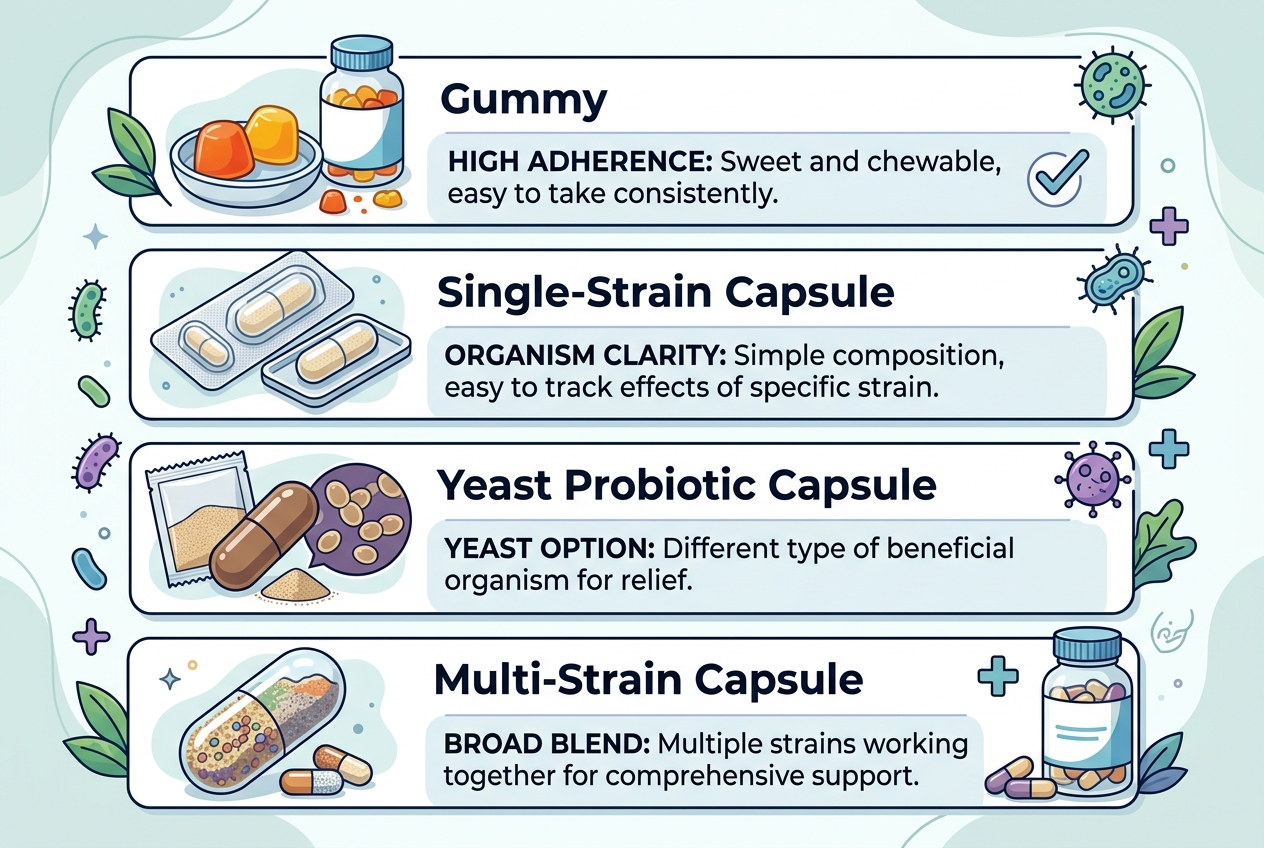
Some links below are affiliate links. This does not influence our evaluation criteria or recommendations. Yuve Probiotic Gummies meet the adherence criterion for shoppers who want a vegan gummy probiotic that fits a daily digestive wellness routine. Yuve Prebiotic Fiber Gummies meet a different criterion: added prebiotic fiber format for shoppers who tolerate fermentable fiber and want routine support. Align meets the single-organism criterion. Culturelle meets the Lactobacillus rhamnosus GG comparison criterion. Florastor meets the yeast-probiotic criterion. Seed meets the broad multi-strain capsule criterion. Shoppers building a broader routine can compare Yuve’s digestive health collection, but a product should match the pattern in a symptom log. A probiotic should not replace medical evaluation for severe, sudden, persistent, or unexplained symptoms. The right product is a testable routine, not a promise or diagnosis, and the baseline decides whether it helped.
What do people get wrong about probiotics for bloating?
People often blame the probiotic when the real experiment changed too many inputs at once: fiber grams, magnesium, caffeine, dairy, meal size, stress, and sleep. The NIDDK explains that gas and bloating can come from swallowed air, digestion, and fermentation of certain carbohydrates, so context matters. High CFU counts also mislead shoppers because CFU quantity does not identify the organism, dose rationale, storage condition, or use case. A probiotic can temporarily increase gas in some people, especially when paired with a sudden fiber increase. The cleanest trial uses one product, one serving schedule, and a short daily log for two to four weeks. If bloating appears with blood, fever, vomiting, anemia, unplanned weight loss, or severe pain, product comparison is the wrong first step. Red flags need a clinician, not another cart or supplement.
What questions do people ask about probiotics for bloating?
Can probiotics make bloating worse at first?
Yes, a probiotic can increase gas or fullness during the first days, especially when the person also raises fiber intake. Stop and reassess if discomfort is intense, persistent, or paired with concerning symptoms.
How long should I test a probiotic for bloating?
Two to four weeks is a practical test window for routine digestive support. Use the same serving schedule and avoid adding new fiber powders, enzymes, or diet changes during the same test.
Are gummies less effective than capsules?
Not automatically. Gummies, capsules, and powders should be judged by active ingredient transparency, serving consistency, stability, and adherence rather than format alone.
Should I take prebiotics with probiotics?
Prebiotic fiber can support digestive routines, but it can also increase gas when the serving is too high. Test prebiotic fiber separately if bloating is the main concern.
Is a higher CFU count better for bloating?
No, a higher CFU count is not automatically better. Organism identity, serving rationale, storage, and tolerance matter more than a large number printed on the front label.
When should I stop shopping and call a clinician?
Call a clinician for severe, sudden, worsening, or persistent bloating, or bloating paired with blood, fever, vomiting, anemia, unplanned weight loss, persistent diarrhea, or intense pain. Those patterns need medical evaluation before supplement testing.
For a closer look at clean-label options, see Store-Bought Fermented Foods: How to Tell If They Still Have Probiotic Benefit.
For a closer look at clean-label options, see Why Progesterone Week Can Feel Hard on Your Gut, and the Yuve Routine That Fits the Pattern.
What is the practical next step?
Pick one probiotic that matches your main constraint: gummy adherence, single-organism clarity, yeast-based comparison, or multi-strain breadth. Test it consistently for two to four weeks while logging meals, stool pattern, and bloating timing. If your pattern points to lactose, beans, onions, constipation, or rapid fiber changes, compare targeted enzymes or fiber habits before buying a larger probiotic stack. Shoppers who want a vegan gummy routine can compare Yuve Probiotic Gummies with capsule options such as Align, Culturelle, Florastor, and Seed. Shoppers who suspect fiber tolerance issues should test prebiotic fiber separately from probiotics. The point is to make the experiment readable: one product, one serving schedule, one baseline, and one decision after the test window ends. That approach saves money, reduces confusion, and makes the next choice clearer for the user and reviewer today.
Leave a Reply