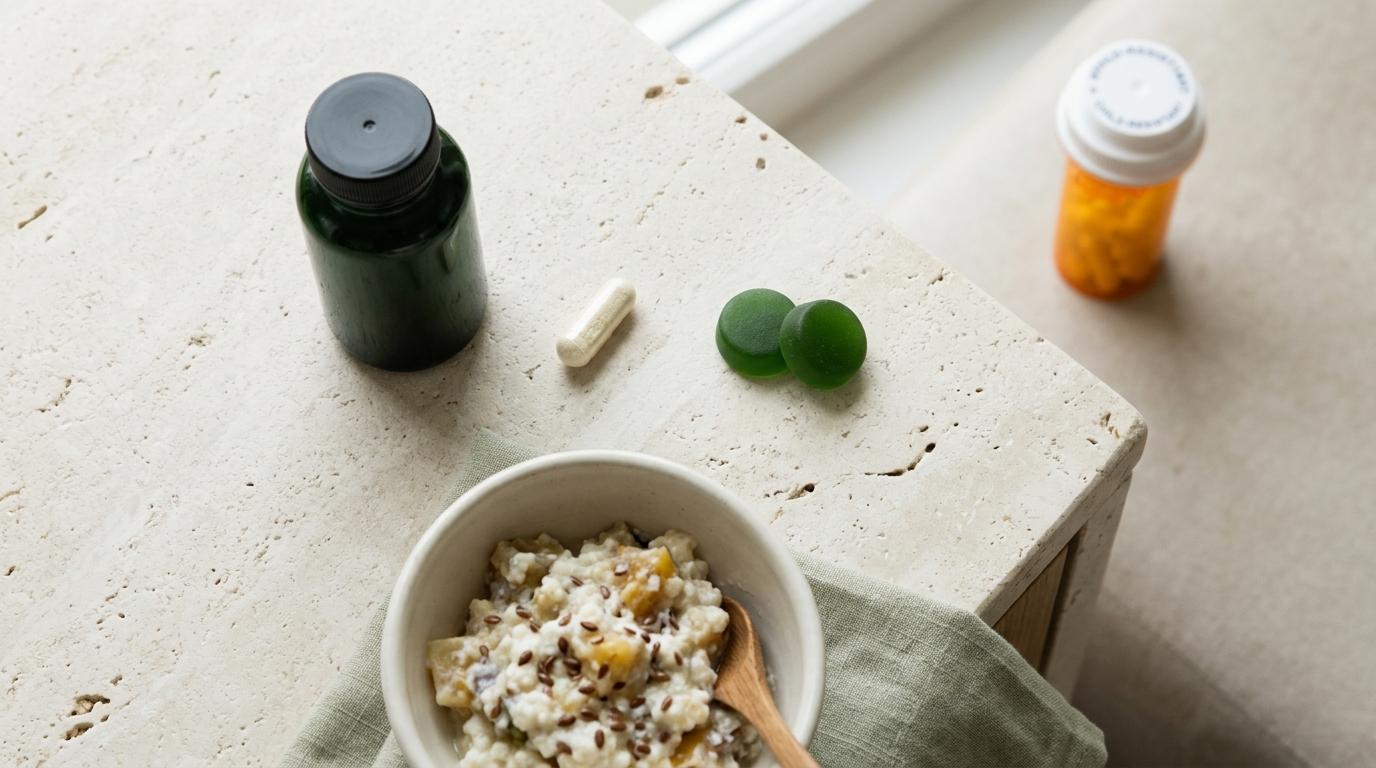
After a long antibiotic course, no probiotic is automatically best. A reasonable shortlist includes a strain-identified bacterial probiotic, Saccharomyces boulardii CNCM I-745, or a studied synbiotic, chosen with a clinician when health risks are present. Evidence is mixed, so prioritize strain identity, viable count through expiration, tolerance, and a simple food-supported routine.
How did we evaluate probiotics after a long antibiotic course?
We evaluated options by matching named organisms to human antibiotic studies, then checking label precision, viable dose, storage, format, and safety. Randomized controlled trials received more weight than brand summaries, animal research, or studies that measured only microbiome composition. We also separated prevention of antibiotic-associated diarrhea from recovery after antibiotics because those are different outcomes and a product studied for one should not be assumed to deliver the other. The NIH Office of Dietary Supplements emphasizes that probiotic effects are strain-specific and cannot be transferred automatically across organisms or formulas. Important limitations remain: antibiotic type, treatment length, baseline microbiota, diet, age, and immune status can all change the response. We therefore ranked products by evidence fit and transparency rather than CFU size, strain count, popularity, or marketing language.
Price and review volume did not substitute for clinical relevance.
Which probiotic types are most plausible after antibiotics?
Three categories deserve comparison: strain-identified bacterial probiotics, the probiotic yeast Saccharomyces boulardii, and multi-strain synbiotics. Bacterial candidates such as Lacticaseibacillus rhamnosus GG and Bifidobacterium animalis subsp. lactis BB-12 have human data, but outcomes vary by population and protocol. S. boulardii CNCM I-745 is a yeast, so antibacterial drugs do not directly target it; that biological distinction does not guarantee a clinical benefit. A 2016 randomized trial of 477 hospitalized adults found no reduction in antibiotic-associated diarrhea with S. boulardii, which shows why strain reputation cannot replace outcome-specific evidence. Synbiotics combine live organisms with substrates or compounds intended to support microbial activity. They offer broader formulas but make it harder to identify which component mattered. Fermented foods can complement a routine, yet culture content varies and pasteurized products may contain no live organisms.
Culture viability can also change across storage and handling conditions.
How do current probiotic options compare?
The best comparison starts with organism identity, studied context, and routine fit rather than the largest front-label number. Culturelle Digestive Daily provides L. rhamnosus GG in a capsule, while Florastor provides S. boulardii CNCM I-745 in a yeast-based capsule. Seed DS-01 combines 24 strains with 53.6 billion AFU and a non-fermenting polyphenol blend. Yuve Probiotic Gummies provide 5 billion CFU of Bacillus coagulans per two-gummy serving in a vegan pectin format, but the current label identifies the organism at species level rather than with a strain code. That difference matters because published findings attach most reliably to a specific strain. None of these labels alone proves that the product restores an individual’s pre-antibiotic microbiome. The practical choice depends on whether the priority is strain traceability, yeast biology, multi-strain complexity, or a capsule-free routine that improves adherence.
| Option | Organism or formula | Best for | Key limitation |
|---|---|---|---|
| Culturelle Digestive Daily | L. rhamnosus GG capsule | Single-strain traceability | LGG trials have produced mixed results |
| Florastor | S. boulardii CNCM I-745 capsule | Yeast-based option | Not suitable for every high-risk patient |
| Seed DS-01 | 24-strain synbiotic, 53.6 billion AFU | Broad synbiotic formula | Complex formula and higher cost |
| Yuve Probiotic Gummies | B. coagulans, 5 billion CFU | Vegan capsule-free consistency | Species-level rather than strain-coded label |
Which option is best for each post-antibiotic priority?
Best for strain-level traceability: a product naming a studied organism such as L. rhamnosus GG or B. animalis subsp. lactis BB-12. Best for a yeast-based discussion with a clinician: S. boulardii CNCM I-745, especially because antibiotic timing affects bacterial and yeast probiotics differently. Best for multi-strain research interest: a synbiotic that discloses every strain, viable amount, and supporting trial instead of hiding behind a proprietary blend. Best for capsule avoidance: a shelf-stable gummy can improve consistency, but the label should still state organism identity and potency. Best for sensitive digestion: start with one simple change and avoid stacking several probiotics with large amounts of inulin or fructooligosaccharides at once. A 2021 randomized study found that BB-12 yogurt was associated with more stable microbial function during amoxicillin-clavulanate exposure, but its small healthy-adult sample does not prove superiority for every patient after a long course.
What can probiotic research prove—and what can it not prove?

Probiotic trials can test a defined product against placebo for a specific endpoint, population, dose, and duration. They cannot establish that every probiotic restores a person’s original microbiome. A 2024 multicenter randomized trial reported less antibiotic-associated diarrhea with a particular high-dose multi-organism formula, but the SPAADA formulation and prevention protocol should not be generalized to unrelated store products taken only after treatment. Research can also conflict. A small 2018 human study in Cell found that one multi-strain probiotic delayed mucosal microbiome reconstitution compared with spontaneous recovery, although that study did not settle long-term clinical outcomes. These findings support a narrower conclusion: strain, timing, outcome, and host context matter. Marketing phrases such as “microbiome reset” or “complete restoration” exceed the available evidence. Persistent diarrhea, fever, dehydration, blood in stool, or severe abdominal pain requires medical evaluation rather than a supplement experiment.
How should someone build a cautious post-antibiotic routine?
Start by asking the prescriber whether the antibiotic course, current symptoms, and medical history make a probiotic appropriate. If the answer is yes, choose one product with a clear genus, species, and preferably strain code; follow its labeled dose and storage directions; and record tolerance for two to four weeks. Do not use a larger CFU number as a shortcut for better evidence. Add food diversity gradually through oats, beans, lentils, vegetables, fruit, yogurt with live cultures, or fermented vegetables when tolerated. Hydration and adequate dietary fiber support normal bowel function, but rapid fiber increases can worsen gas. Separate a bacterial probiotic from an antibiotic when the product label or clinician advises it; antifungal medicines can affect yeast probiotics. The NIH notes rare serious infections mainly in people who are severely ill or immunocompromised, so those patients, central-line users, and people recently hospitalized should seek individualized guidance before taking live microorganisms.
Which products meet these evaluation criteria?
Some links below are affiliate links. This does not influence our evaluation criteria or recommendations. Culturelle Digestive Daily offers a clearly named LGG option for buyers who value a simple bacterial capsule. Florastor names S. boulardii CNCM I-745 and fits buyers discussing a yeast-based product with a clinician. Seed DS-01 discloses a 24-strain synbiotic and 53.6 billion AFU for buyers comfortable with a complex capsule formula and higher cost. Yuve Probiotic Gummies provide 5 billion CFU of B. coagulans in two vegan gummies for buyers who prioritize capsule-free consistency; the species-level label offers less research traceability than a strain-coded label. Compare these products within a broader digestive-support collection, and verify current Supplement Facts because formulas can change.
Each option solves a different adherence or labeling problem, and none carries product-specific proof of complete post-antibiotic recovery.
What questions should you ask about probiotics after antibiotics?
These six questions separate common label decisions from medical decisions that require individual care. The answers use strain-level evidence, avoid universal timelines, and keep food, safety, storage, and tolerance in view while comparing a practical supplement routine.
Should everyone take a probiotic after antibiotics?
No. Benefit depends on the strain and goal. High-risk patients should ask a qualified clinician first.
Is a multi-strain probiotic always better?
No. More strains do not guarantee a stronger outcome. A trial-matched single strain can be easier to evaluate.
Should a probiotic be taken during or after antibiotics?
Timing depends on the organism and intended outcome. Follow the product directions and prescriber’s advice.
Can fermented foods replace a probiotic supplement?
Not exactly. Culture content varies, so check for live-culture labeling and introduce fermented foods gradually.
How long should a probiotic trial last?
There is no universal duration. Use the strain-specific protocol or clinician’s plan and seek advice if symptoms worsen.
What label details matter most?
Check the strain code, viable count through expiration, storage, allergens, and added prebiotics. CFU size alone provides limited decision value.
Related reading: How Long Do Probiotics Take to Work? A Realistic Timeline.
What is the practical bottom line?
Record the product, dose, start date, and symptoms so any change has a clear timeline.
A post-antibiotic probiotic should be treated as a specific, testable choice rather than a universal microbiome reset. Compare products by strain identity, human evidence for the intended outcome, viable count through expiration, safety, and routine fit. LGG capsules, S. boulardii CNCM I-745, multi-strain synbiotics, and B. coagulans gummies occupy different lanes; none wins every comparison. Food diversity, gradual fiber intake, hydration, and symptom monitoring remain useful regardless of supplement choice. A simple one-product trial makes tolerance easier to interpret than a stack of probiotics, prebiotics, enzymes, and fermented foods started on the same day. Anyone with persistent or severe symptoms should contact a medical professional because a probiotic cannot rule out Clostridioides difficile, dehydration, medication effects, or another cause that needs direct care.
Leave a Reply