
Digestive symptoms can slow gym progress when they reduce food intake, interrupt training, limit hydration, or make recovery meals hard to tolerate. Start by matching the pattern to the likely trigger: meal size and timing, lactose, fermentable fiber, or exercise intensity. Supplements work best when they target a repeatable pattern rather than replace adequate calories and protein.
How did we evaluate digestive support for training?
We prioritized sports-nutrition position statements, systematic reviews, controlled trials, and products with measurable active ingredients over testimonials or generic “gut health” claims. We evaluated meal timing, hydration, protein tolerance, fermentable carbohydrates, fiber dose, lactase activity in FCC units, and probiotic identification at the strain level. We favored changes that preserve adequate energy and protein intake because an easier stomach does not improve progress if the strategy creates an unintended calorie deficit. We excluded fat burners, stimulant laxatives, detoxes, and products that promise muscle gain through microbiome changes. Evidence for exercise-related gastrointestinal symptoms is stronger for training load, hydration, and meal composition than for any single probiotic. Product labels and formulas can change, so shoppers should verify the current Supplement Facts panel. The main limitation is symptom diversity: reflux, urgency, constipation, lactose maldigestion, and pain during intense running require different comparisons and may need clinical assessment.
Why can digestion interfere with gym progress?
Digestion can affect progress through four practical bottlenecks: inconsistent training, inadequate intake, poor hydration, and disrupted recovery. Exercise redirects blood flow toward working muscles, while impact, heat, dehydration, and high intensity can aggravate nausea, cramping, reflux, urgency, or diarrhea. A sports-medicine review in Sports Medicine reports that gastrointestinal complaints are common in athletes and classifies their drivers as physiological, mechanical, or nutritional. The symptom does not automatically prove that a person needs probiotics. A large preworkout meal may delay gastric emptying; whey concentrate may expose a lactose-sensitive person to lactose; a sudden fiber increase may add fermentation; running may create more mechanical stress than resistance training. Reduced intake then matters because the International Society of Sports Nutrition identifies total daily protein, not a digestive supplement, as a central training variable, with 1.4-2.0 grams per kilogram per day sufficient for many exercising adults.
How do meal timing, fiber, enzymes, and probiotics compare?
Some links below are affiliate links. This does not influence our evaluation criteria or recommendations. Match the intervention to the repeatable trigger, then change one variable for 10-14 days. Meal timing addresses fullness during training; lactase addresses lactose at that meal; fiber addresses low or inconsistent intake; probiotics require strain-level expectations and a longer trial. None directly replaces sufficient food, fluids, sleep, or progressive training.
| Option | Best for | Measurement to check | Main limitation |
|---|---|---|---|
| Smaller preworkout meal | Fullness or reflux near training | Meal size and 2-3 hour timing | Can reduce calories if not replaced later |
| Yuve Lactase Enzymes | Symptoms linked to dairy lactose | 9,000 FCC units per chewable | Does not address milk protein or reflux |
| Psyllium or Yuve fiber gummies | Low, inconsistent fiber intake | Grams per serving | Rapid increases can worsen gas |
| Strain-labeled probiotic | A defined, evidence-matched trial | Full strain code and CFU through shelf life | Athlete evidence remains mixed |
Which option is best for each training-related pattern?
Best for fullness during lifting: reduce the preworkout meal volume and move more calories after training before buying a supplement. Best for symptoms after milk-based shakes: compare a lactose-free protein, whey isolate with verified lactose content, or a 9,000-FCC lactase chewable taken with the first bites. Best for low fiber across the day: increase food or a measured fiber product gradually, away from the session if preworkout fermentation is a problem. Best for constipation with a low-fiber diet: plain psyllium offers a clearly measurable gram dose, while a gummy may improve adherence at a lower serving volume. Best for a probiotic experiment: choose a product that identifies a strain rather than only listing a species or a large total CFU. Best for exercise-triggered urgency: adjust meal timing, hydration, intensity, and fermentable carbohydrate load first. Preliminary runner research found that a short low-FODMAP intervention reduced daily symptoms, but the small study does not justify permanent restriction.
Which products meet these comparison criteria?
Yuve Lactase Enzymes states 9,000 FCC lactase units per chewable, which makes the active dose auditable for dairy-containing meals. Yuve Prebiotic Fiber Gummies states 3 grams of fiber per gummy, which gives shoppers a measurable dose but still requires gradual introduction. Yuve Probiotic Gummies states 5 billion live cultures on its product page, yet shoppers should confirm the current label’s complete strain identification because species-level or culture-count information cannot predict a strain-specific outcome. Culturelle products commonly use Lacticaseibacillus rhamnosus GG, and Align products commonly use Bifidobacterium longum 35624; verify the exact strain and CFU on the selected current SKU because brand families contain multiple formulas. A plain psyllium powder can provide a more adjustable fiber dose than a fixed gummy serving. Equal rigor means each option receives the same questions: What is the active ingredient, how is activity measured, what problem does it target, how long is a fair trial, and does it fit a broader digestive-support comparison?
When is meal timing more useful than a supplement?
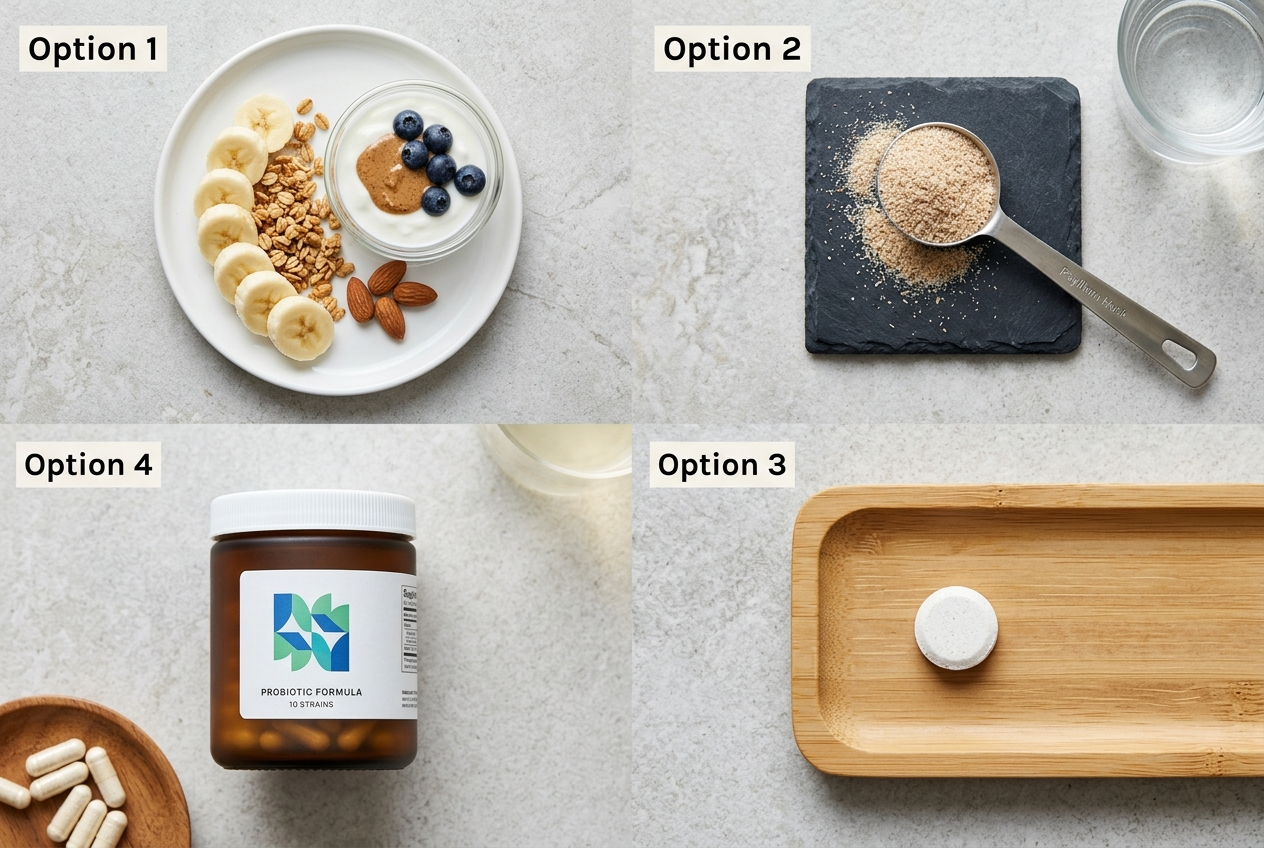
Meal timing is more useful when symptoms reliably appear after a large meal, during high-intensity work, or when training starts before the stomach feels empty. Move a larger meal two to three hours before training, then test a smaller familiar carbohydrate-and-protein snack closer to the session if needed. Replace calories later so symptom control does not quietly reduce weekly energy intake. High-fat, very high-fiber, and highly concentrated drinks often empty more slowly or feel heavier, but individual tolerance determines the useful cutoff. Hydration also needs calibration: dehydration can aggravate exercise-related gastrointestinal stress, while rapidly chugging a large volume can create sloshing and fullness. Keep the workout, food, and fluid variables stable for several sessions before judging the result. If meal timing fixes the pattern, adding a probiotic creates cost and uncertainty without a clear target. If symptoms occur at rest, wake you at night, or persist regardless of training, timing alone is an incomplete explanation.
Can protein shakes cause bloating without ruining muscle gain?
Protein shakes can cause bloating when the serving is large, consumed rapidly, contains lactose, includes sugar alcohols or inulin, or lands too close to training. The response does not mean protein prevents progress; it means the selected format or timing may not fit. Compare half servings, slower drinking, lactose-free dairy, whey isolate, or a plant blend while keeping total daily protein constant. Do not change the powder, serving, sweetener, and meal timing simultaneously. The ISSN range of 1.4-2.0 grams per kilogram per day describes an overall daily target for many exercising adults, not a requirement to force one large shake. Food sources can supply part or all of that amount when tolerated. Repeated vomiting, swallowing difficulty, hives, wheezing, blood, weight loss, or severe pain requires medical evaluation rather than another powder. A controlled format comparison protects both digestive comfort and the nutrition needed for adaptation.
Do probiotics directly improve strength or muscle growth?
Probiotics do not reliably increase strength or muscle growth by themselves. They may influence gastrointestinal symptoms, immune measures, or nutrient handling in specific populations, but product effects depend on the exact strain, dose, duration, and athlete group. A 2022 systematic review of randomized trials found only slight evidence that probiotics improved gastrointestinal symptoms in athletes during training, exercise, or competition. That result supports cautious testing, not a performance promise. A probiotic is most rational when the label identifies the strain, the goal is defined, and training, energy intake, protein, hydration, and sleep are already addressed. Track one or two outcomes, such as symptom frequency and completed sessions, for a predetermined trial. Stop if symptoms worsen or the product adds no measurable value. Progressive overload and adequate nutrition drive adaptation; probiotics remain an optional digestive experiment rather than a substitute for the training plan.
Should you take fiber before a workout?
Fiber before a workout is useful only when the timing and dose match personal tolerance. A normal mixed meal several hours before lifting may be comfortable, while a large psyllium drink, multiple fiber gummies, or a high-inulin bar immediately before running can increase fullness, gas, or urgency. Fiber still matters across the day, so the solution is usually redistribution rather than elimination. Start with a documented daily baseline, increase by a small measured amount, and keep fluids consistent. Test the change away from an important session first. Psyllium provides an adjustable gram dose; a gummy provides convenience; food provides fiber plus other nutrients. None deserves the label “best” without the actual serving and schedule. Persistent constipation despite adequate intake, blood in stool, vomiting, severe pain, or an inability to pass stool or gas requires medical assessment. Preworkout comfort and long-term fiber adequacy are separate goals that can be scheduled together.
Related reading: Can You Take Fiber With Probiotics? Timing and Tolerance Guide.
When should digestive symptoms be medically assessed?
Medical assessment is appropriate when symptoms are severe, progressive, new, or accompanied by bleeding, black stool, fever, repeated vomiting, fainting, chest pain, anemia, unexplained weight loss, nighttime waking, dehydration, difficulty swallowing, or a major bowel-pattern change. Exercise-associated bloody diarrhea or intense abdominal pain is not a routine supplement problem. A clinician can evaluate reflux, lactose maldigestion, celiac disease, inflammatory conditions, medication effects, infection, pelvic-floor dysfunction, or another cause before a shopper builds an expensive stack. A registered sports dietitian can help preserve energy, protein, carbohydrate, and micronutrient intake while testing meal timing or fermentable carbohydrates. Bring a two-week log containing training type, intensity, meal composition, timing, fluid intake, supplements, symptoms, and stool pattern. That record turns “digestion is hurting my progress” into testable variables. Supplements belong after the pattern is defined; alarm signs and persistent under-fueling move the decision from product comparison to professional care.
Leave a Reply