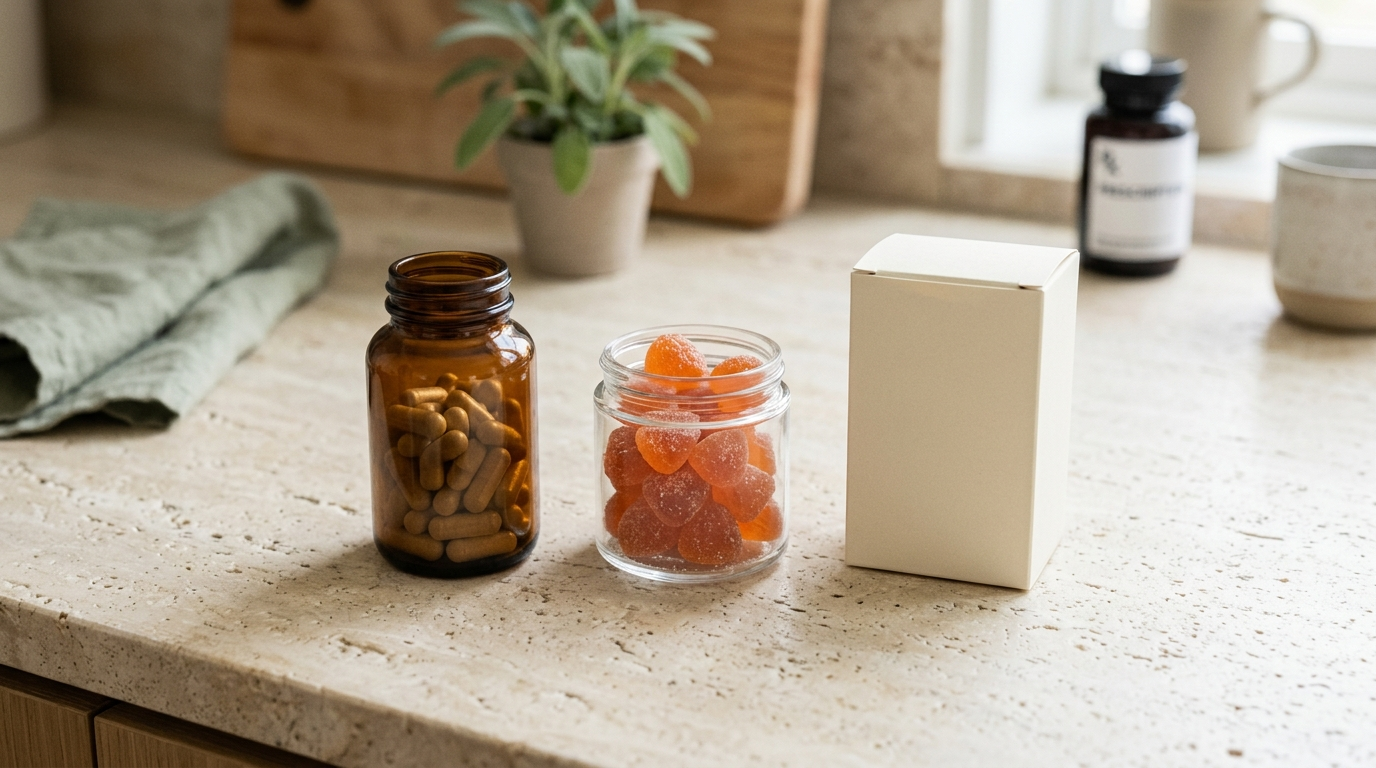
After a long antibiotic course, choose a probiotic by its exact strain and evidence, not by the largest CFU number. Lacticaseibacillus rhamnosus GG and Saccharomyces boulardii CNCM I-745 have the clearest evidence around antibiotic-associated diarrhea. Evidence is stronger for starting during antibiotics than for “restoring” the microbiome afterward.
How did we evaluate probiotics for use around antibiotics?
We ranked human randomized trials and systematic reviews above animal studies, test-tube findings, and manufacturer explanations. We evaluated each option by exact strain identification, studied outcome, dose transparency, viability labeling, antibiotic compatibility, format, and safety limits; a species name alone did not earn the same evidence rating as a documented strain code. We excluded products that rely mainly on a high colony-forming-unit count, a long strain list, or promises to “reset” the gut because those features do not establish a clinically relevant benefit. The main limitation is timing: most trials studied probiotics started with or shortly after antibiotics, while fewer trials tested people beginning a product only after a very long course had ended. This guide therefore compares evidence fit and label quality rather than promising that any supplement will reconstruct a person’s original microbiome.
Which probiotic strains have the strongest evidence around antibiotics?
Lacticaseibacillus rhamnosus GG, often shortened to LGG, and Saccharomyces boulardii CNCM I-745 have the most recognizable strain-specific evidence for antibiotic-associated diarrhea. A 2021 systematic review of 42 trials and 11,305 adults found that probiotics given with antibiotics reduced relative risk overall, but benefits varied by baseline risk, dose, and organism. A separate network meta-analysis of 51 articles ranked LGG highly, although indirect comparisons cannot prove that one strain is universally best. A strain-specific review of S. boulardii also found lower antibiotic-associated diarrhea risk across adult and pediatric trials. These findings apply to the tested strains and protocols, not automatically to every Lactobacillus, Bacillus, or yeast product. A person starting after antibiotics should treat this evidence as directional because the strongest studies began supplementation earlier. Species-level labels can conceal meaningful genetic and functional differences between strains sold under the same category.
How do leading probiotic products compare?
Some links below are affiliate links. This does not influence our evaluation criteria or recommendations. Culturelle Digestive Daily identifies LGG and lists 10 billion CFU per capsule, making its strain-to-study connection relatively easy to audit. Florastor Daily identifies S. boulardii CNCM I-745, a probiotic yeast that antibiotics do not directly kill, though antifungal medicines can affect it. Yuve Probiotic Gummies provide 5 billion CFU of Bacillus coagulans per two-gummy serving in a vegan pectin format; Yuve lists the organism at species level rather than publishing a strain code, so antibiotic-specific evidence cannot be matched as precisely. CFU totals do not make these products interchangeable. The best comparison asks whether the exact organism, formulation, and studied use match the buyer’s goal, then checks storage directions, expiration dating, allergens, added fibers, sugar alcohols, and clinician guidance.
| Option | Organism shown on label | Best fit | Main limitation |
|---|---|---|---|
| Culturelle Digestive Daily | L. rhamnosus GG, 10 billion CFU | Strain-specific bacterial capsule | Separate from antibiotic dosing when practical |
| Florastor Daily | S. boulardii CNCM I-745 | Antibiotic-compatible probiotic yeast | Not appropriate for some medically vulnerable people |
| Yuve Probiotic Gummies | B. coagulans, 5 billion CFU per two gummies | Vegan, capsule-free daily routine | No strain code disclosed for study matching |
Which probiotic is best for each use case?
Best for strain-specific bacterial evidence: Culturelle Digestive Daily, because its LGG identifier connects the finished product label to a widely studied organism. Best for use while taking an antibacterial drug: Florastor Daily, because S. boulardii CNCM I-745 is a yeast rather than a bacterium; medical vulnerability and antifungal use still require clinician review. Best for a vegan, capsule-free habit: Yuve Probiotic Gummies, because the pectin gummy supplies shelf-stable B. coagulans and may reduce adherence friction, although its species-level label provides less research precision. Best for food-first recovery: yogurt or kefir with named live cultures, if dairy is tolerated, plus beans, oats, vegetables, nuts, and seeds to restore dietary variety gradually. No option is best for everyone. The International Scientific Association for Probiotics and Prebiotics clinician guide emphasizes matching a probiotic to evidence for a defined benefit rather than treating all strains as equivalent.
When should you take a probiotic around antibiotics?

Evidence generally favors beginning a studied probiotic as soon as practical after antibiotic treatment starts rather than waiting until the entire course ends. ISAPP’s clinician resource notes that successful trial protocols commonly started before or within one to two days of the first antibiotic dose and often continued for seven to fourteen days afterward. A two-hour gap between a bacterial probiotic and an antibacterial dose is a prudent practical rule because some antibiotics can inactivate susceptible bacteria, although direct trials comparing spacing schedules are limited. S. boulardii is a yeast, so antibacterial drugs do not act on it in the same way; antifungal medicines are a different issue. Anyone whose long course has already finished can still discuss a trial with a pharmacist or clinician, but expectations should stay modest. Follow the product label and prescription schedule, and never delay, skip, or change an antibiotic dose to accommodate a supplement.
What should you know after a very long antibiotic course?
A long antibiotic course can alter gut microbial composition, but a probiotic does not reliably restore a person’s exact pre-antibiotic ecosystem. Recovery also depends on the antibiotic class, treatment duration, baseline diet, age, health status, and repeated exposures. A practical plan uses one change at a time: confirm that urgent symptoms are absent, choose a strain-linked product if a defined outcome matters, and rebuild food variety gradually with tolerated plant foods. The Yuve digestive health collection includes probiotic and prebiotic formats, but combining several products immediately makes tolerance harder to interpret. Gas or stool changes can come from the probiotic, added inulin, sugar alcohols, or the underlying recovery process. Track the product, dose, bowel pattern, and symptoms for a limited trial. If no clear benefit appears, stop adding complexity and review the plan with a registered dietitian, pharmacist, or physician.
Which safety signals mean you should contact a clinician?
Contact a clinician promptly for frequent watery diarrhea, blood or black stool, severe abdominal pain, fever, dehydration, fainting, or symptoms that worsen after antibiotics. The U.S. Centers for Disease Control and Prevention notes that Clostridioides difficile can occur during antibiotics or not long afterward and needs medical evaluation rather than supplement experimentation. People with severe immune suppression, critical illness, damaged intestinal barriers, implanted vascular devices, or central venous catheters should ask their care team before using live bacteria or probiotic yeast because rare bloodstream infections have been reported in vulnerable patients. Pregnancy, infancy, older age with frailty, and complex medication regimens also justify individualized advice. Mild transient gas may occur with some products, but persistent pain, vomiting, worsening diarrhea, or allergic symptoms are not a signal to “push through.” A probiotic complements appropriate care; it does not replace testing, hydration guidance, or prescribed treatment.
Related reading: Can I Take Probiotics on an Empty Stomach?.
What are the most common questions about probiotics after antibiotics?
The most useful questions focus on strain, timing, label quality, food, and safety rather than on finding the largest CFU number. Evidence from antibiotic-associated-diarrhea trials cannot prove that a supplement rebuilds the entire microbiome, and results from one strain cannot be transferred automatically to another. Product format matters mainly because it affects viability, ingredients, storage, and whether a person can follow the routine consistently. A pharmacist can compare the probiotic label with the specific antibiotic, while a clinician can evaluate persistent symptoms or medical risk factors. The answers below provide general education for otherwise stable adults, not a substitute for individualized care. When a label omits the strain code, shoppers should interpret organism-level research cautiously. When a product adds inulin, fructooligosaccharides, or sugar alcohols, those ingredients can influence gas and stool patterns independently of the live microorganism.
Should I take a probiotic during antibiotics or only afterward?
Most positive clinical protocols began during antibiotic treatment, often within one or two days, and continued briefly afterward. If treatment is already complete, ask a pharmacist or clinician whether a time-limited trial still fits your goal and health history.
How far apart should an antibiotic and probiotic be?
A two-hour gap is a reasonable precaution for bacterial probiotics, but research has not established one perfect spacing schedule. S. boulardii is not killed by antibacterial drugs, although antifungal medication can affect probiotic yeast.
Does a higher CFU count mean a better probiotic?
No. CFU count describes viable organisms, not whether the strain has evidence for the intended outcome. Strain identity, dose used in trials, viability through expiration, and storage conditions matter more than a front-label number alone.
Can fermented foods replace a probiotic supplement?
Yogurt, kefir, kimchi, sauerkraut, and other fermented foods can add dietary variety, but many products do not identify strains or guarantee a studied dose. Food can support a broader recovery pattern without functioning as a direct substitute for a strain-specific trial product.
How long should I continue a probiotic after antibiotics?
Seven to fourteen days after the final antibiotic dose is common in successful study protocols, but the optimal duration remains uncertain. Follow the product directions and revisit the plan if symptoms persist or the supplement causes problems.
Can probiotics cause gas or bloating?
Probiotics, prebiotic fibers, and sugar alcohols can each change gas or stool patterns. Introduce one product at a time, check the full ingredient list, and stop for persistent or severe symptoms rather than assuming discomfort proves that the product is working.
Leave a Reply