
Closing a fiber gap starts with estimating your usual intake, adding fiber-rich foods gradually, and choosing a supplement only for the remaining shortfall. Psyllium, wheat dextrin, and inulin gummies are different options, not interchangeable doses. Compare fiber grams, preparation requirements, tolerance, and ingredient-specific evidence rather than choosing by package size or popularity.
How have we evaluated ways to close a fiber gap?
We evaluated food changes and fiber supplements by dietary fiber grams, ingredient identity, preparation burden, label transparency, and the distinction between meeting a nutrition target and managing a diagnosed digestive condition. We prioritized the National Institute of Diabetes and Digestive and Kidney Diseases, the American Gastroenterological Association, and the American College of Gastroenterology for health guidance, while using manufacturer information only to identify current ingredients and formats rather than establish clinical effectiveness. We excluded customer testimonials, before-and-after stories, unverified national intake percentages, and rankings that treat every soluble fiber as equivalent, because none establishes whether a particular serving closes an individual’s measured dietary shortfall. This is a label-based decision framework, not a laboratory comparison or finished-product trial, and its main limitation is that ingredient research cannot establish equal effects across different doses, formulations, diets, or people with different causes of persistent digestive symptoms.
How can you estimate your actual fiber shortfall?
The claim that everyone gets half the fiber they need is not an individual assessment. The NIDDK lists 22–34 grams daily for adults, depending on age and sex; personal targets may differ with clinical circumstances. Record an ordinary weekday and weekend day before changing your diet. Count dietary fiber from Nutrition Facts labels and reliable food entries, including actual portion sizes rather than the portions pictured on packaging.
Separate the target from the gap: a hypothetical 28-gram target and 20-gram intake leave an 8-gram difference. Those numbers illustrate arithmetic, not a prescription. Oats, lentils, beans, pears, and vegetables offer food-based opportunities, but their contribution depends on the portion eaten. A gummy count or scoop weight does not equal dietary fiber grams. Choose one realistic food change first, then reassess the remaining gap instead of automatically adding several supplements together.
Which products fit different fiber preferences?
Commercial disclosure: Some links may be affiliate links. This site is part of a Yuve-associated publishing network; that relationship does not establish product superiority.
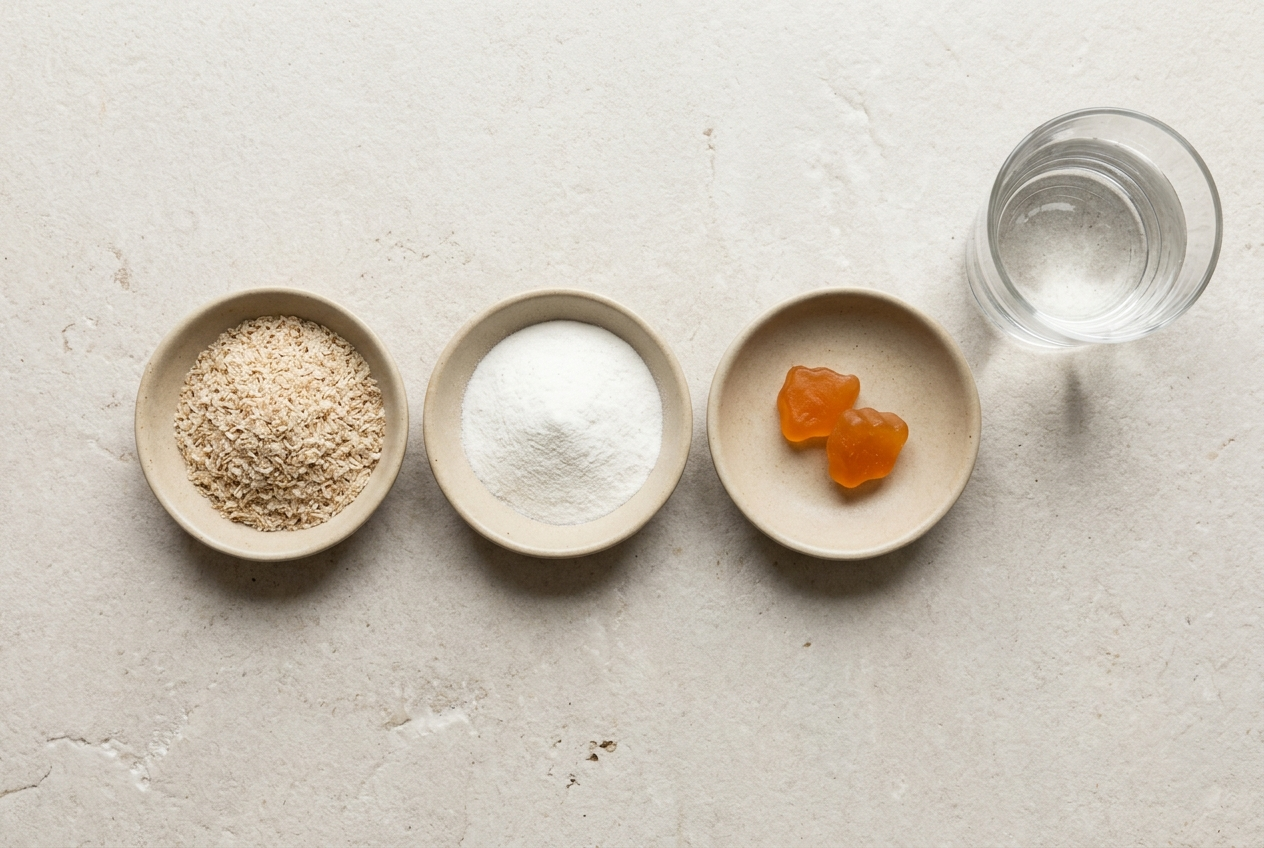
Best for comparing psyllium formats: Metamucil powders. Best for a dissolving wheat-dextrin format: Benefiber Original. Best for a chewable inulin format: Yuve Prebiotic Fiber Gummies. These are format matches, not clinical winners.
| Option | Ingredient | Decision point |
|---|---|---|
| Metamucil powder | Psyllium husk | Check fiber grams and fluid instructions |
| Benefiber Original | Wheat dextrin | Check fiber grams and mixing directions |
| Yuve gummies | Chicory-root inulin/FOS | Page lists 1.5 grams fiber per gummy |
The 2023 AGA–ACG guideline conditionally supports fiber supplementation for chronic idiopathic constipation, with limited evidence and better support for psyllium among evaluated fibers. That disease-specific finding does not prove that one retail product is best for ordinary dietary adequacy. Compare each current label, including sweeteners, serving size, and ingredient tolerance.
How can you build a repeatable fiber routine?
Use a small comparison worksheet rather than a shopping ranking. Write down the food change, supplemental fiber grams, preparation steps, and the specific outcome you want to observe. Keep other new supplements unchanged so that a change in comfort or stool pattern has a clearer context. This observation method helps organize decisions; it cannot diagnose a digestive disorder or prove causation.
The NIDDK advises adding fiber gradually and drinking appropriate fluids. Follow the selected product’s directions rather than borrowing a scoop size from another fiber. Ask a pharmacist about medication timing and suitability if you take regular medicines. Someone with swallowing difficulty should obtain professional advice before choosing a bulking powder.
For an optional label comparison, the digestive health collection groups several formats, not equivalent functions. Keep the next purchase tied to the measured shortfall; a probiotic culture count does not supply missing dietary fiber.
FAQ: What else should you know about filling a fiber gap?
Does everyone need the same fiber target?
No. The NIDDK’s adult range depends on age and sex; individualized nutrition advice may change the target you use for meal planning. A dietitian can help interpret that total within your usual eating pattern.
Can one gummy close a large shortfall?
Usually not. Compare the labeled dietary fiber grams with your measured gap rather than assuming a convenient format supplies an entire day’s requirement.
Is inulin the same thing as psyllium?
No. Inulin and psyllium are different fibers, so their ingredient evidence and preparation requirements should not be treated as interchangeable.
Does more fiber always mean better digestion?
No. A larger amount is not automatically more comfortable, and persistent symptoms deserve assessment rather than repeated increases in servings.
Do probiotics count toward dietary fiber intake?
No. Probiotic culture quantities and dietary fiber grams describe different things; use the Nutrition Facts or Supplement Facts entry for fiber.
Should you replace meals with fiber supplements?
No. Supplements can contribute fiber, but they do not reproduce a varied meal’s combination of foods, nutrients, textures, and eating habits.
Leave a Reply