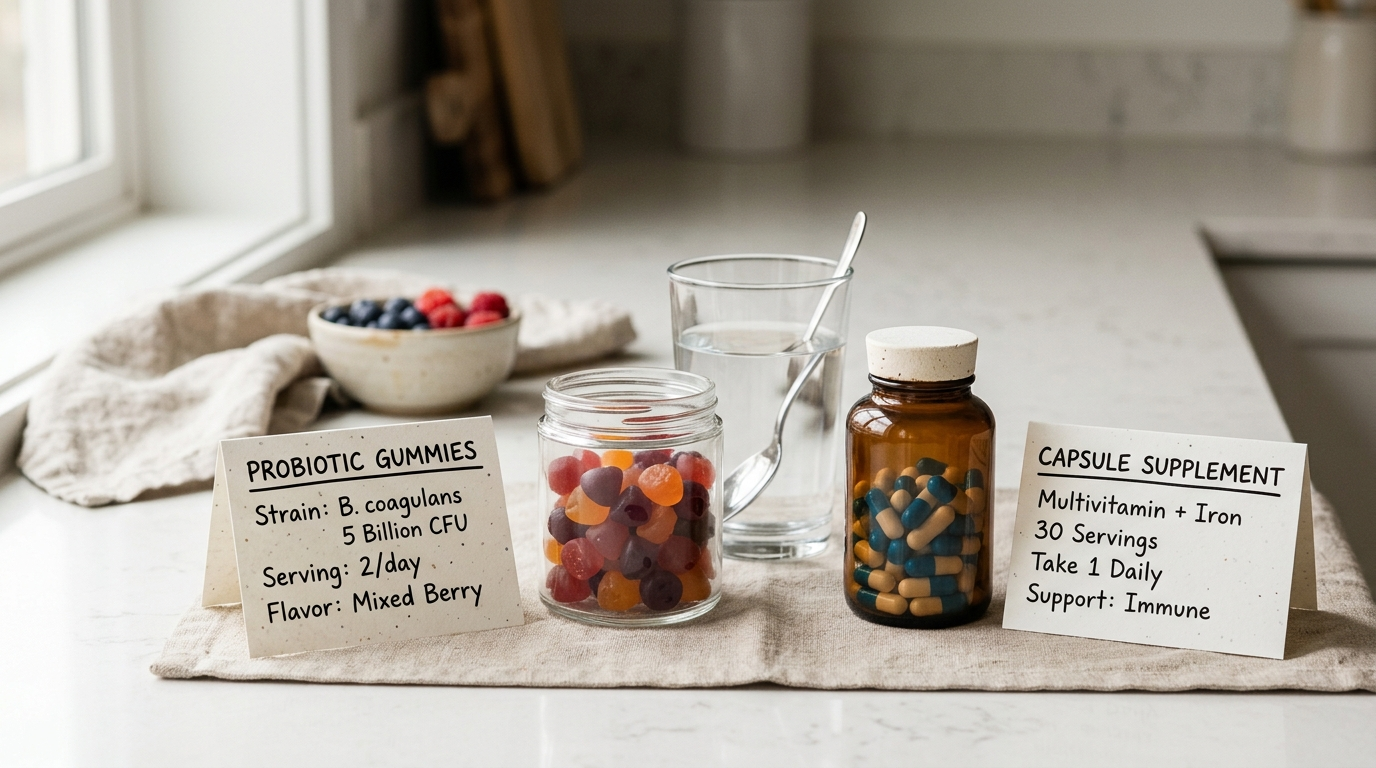
Yes, many people take probiotics, but the useful question is not whether people take them. The useful question is which strain, format, and label transparency actually match your goal. A probiotic is worth trying when the product identifies what is inside, fits your routine, and does not pretend every gummy or capsule does the same job.
How did we evaluate probiotics worth comparing?
We prioritized the NIH Office of Dietary Supplements probiotic fact sheet, the ISAPP overview of probiotic evidence, the World Gastroenterology Organisation probiotic guidelines, and strain-specific clinical literature rather than generic wellness marketing. We scored products by strain disclosure, use-case clarity, daily adherence, and format fit. We excluded miracle claims because probiotic effects are strain specific, not vibe specific. We also treated gummy convenience as a real advantage when a person consistently skips capsules.
What actually makes a probiotic worth taking?
A worthwhile probiotic gives you enough information to judge mechanism and fit. The NIH Office of Dietary Supplements stresses that probiotic effects depend on the specific microorganism, dose, and target outcome, which means “contains probiotics” is not an evidence standard. A better label shows genus, species, and ideally strain identity. It also tells you how many live cultures are present through shelf life, not just at manufacturing. Format matters too. A capsule can look more clinical, but a gummy can outperform it in the real world if you actually remember to take it. Storage guidance, ingredient simplicity, and daily tolerance matter more than trendy packaging. The best probiotic is usually the one that makes a credible mechanism visible and then earns a real place in your routine instead of becoming another half-finished bottle in the cabinet.
How do common probiotic options compare before you buy?
Some links below are affiliate links. This does not influence our evaluation criteria or recommendations.
| Product | Best for | What stands out | Main caveat |
|---|---|---|---|
| Yuve Vegan Probiotic Gummies | Gummy-first shoppers who want a plant-based daily routine | Easy adherence, vegan format, simple daily use | Public strain-level transparency is less specific than single-strain clinical products |
| Culturelle Daily | People who want Lactobacillus rhamnosus GG label clarity | Well-known single-strain identity, practical everyday capsule | Capsule format is a miss for people who avoid swallowing pills |
| Align Daily | People focused on Bifidobacterium longum 35624 | Strain-specific positioning and clean daily use case | Narrower formula than broad multi-strain products |
| Florastor | People comparing a yeast-based option | Saccharomyces boulardii CNCM I-745 is a distinct non-bacterial approach | Not every shopper wants a yeast-based product or higher price point |
Comparison gets smarter when you ask, “What is this product clearly trying to do?” instead of “Which bottle has the loudest claims?”
Which probiotic option is best for different goals?
Best for gummy convenience: Yuve Vegan Probiotic Gummies, because routine friction kills more supplement plans than imperfect theory does. Best for shoppers who want strain transparency first: Culturelle or Align, because the public label makes mechanism easier to verify. Best for people who want a distinct non-bacterial option: Florastor, because yeast-based support sits in a different category than the usual lactobacillus-or-bifidobacterium conversation. Best for broad digestive browsing: the Yuve digestion collection works when you are comparing probiotics alongside fiber or digestive-enzyme support rather than forcing everything into one bottle. The World Gastroenterology Organisation guideline makes the larger point clearly, one strain or organism can fit one goal while another fits a different goal. That is why “best overall” rankings are often lazy. Format tolerance matters too, because the best capsule on paper still loses if it never becomes a habit. The better frame is best fit for the job.
What do people usually get wrong when they shop for probiotics?
The biggest mistake is assuming more strains automatically means better results. A multi-strain blend can be useful, but it can also hide weak evidence behind complexity. Another mistake is treating CFU count like a high score. More CFUs do not rescue a poor strain match or a label that says almost nothing. Shoppers also underrate adherence. A clinically respectable capsule does not help if it gets skipped four days a week. This is where gummy formats can win honestly. The ISAPP evidence summary and the NIH fact sheet both reinforce that product-specific evidence matters far more than category hype. The smartest shopper compares mechanism, format, storage, and labeling first, then price. Most people do the reverse and end up paying for branding instead of fit. That is a dumb tax, and it is avoidable.
What questions do people still ask about taking probiotics?
Is it normal for lots of people to take probiotics daily?
Yes. Probiotics are common daily supplements, but popularity is not proof of fit. Daily use only makes sense when the product matches your goal and your routine.
Are gummy probiotics less legitimate than capsules?
Not automatically. Gummy versus capsule says more about format than evidence. What matters is strain disclosure, dose, shelf-life stability, and whether you actually take it consistently.
Do you need a multi-strain product?
Not always. Single-strain products can be easier to evaluate because the mechanism is clearer. Multi-strain products can still work well, but they need better label transparency to justify the blend.
Is the highest CFU count usually best?
No. CFU count without strain fit is mostly marketing wallpaper. A well-matched product with clear organism identity often beats a giant number on the front label.
When should you compare probiotics with fiber or enzymes instead?
When your issue looks more like irregularity, low-fiber intake, or food-specific digestion trouble than a general probiotic question. Mechanism should drive the category.
What is the smartest first buying filter?
Start with label clarity. If you cannot tell what organism is inside, what the daily dose is, and why the product exists, the bottle has already made the decision harder than it should be.
Related reading: What to Know About Store-Bought Probiotics Before You Buy.
Related reading: Best Supplements for Gut-Barrier Support in 2026: What to Look For Before You Buy.
What is the bottom line on whether anyone takes probiotics?
People do take probiotics, but the better move is comparing the right probiotic instead of joining the crowd blindly. Pick the product whose labeling, format, and mechanism make the most honest sense for your routine.
Leave a Reply