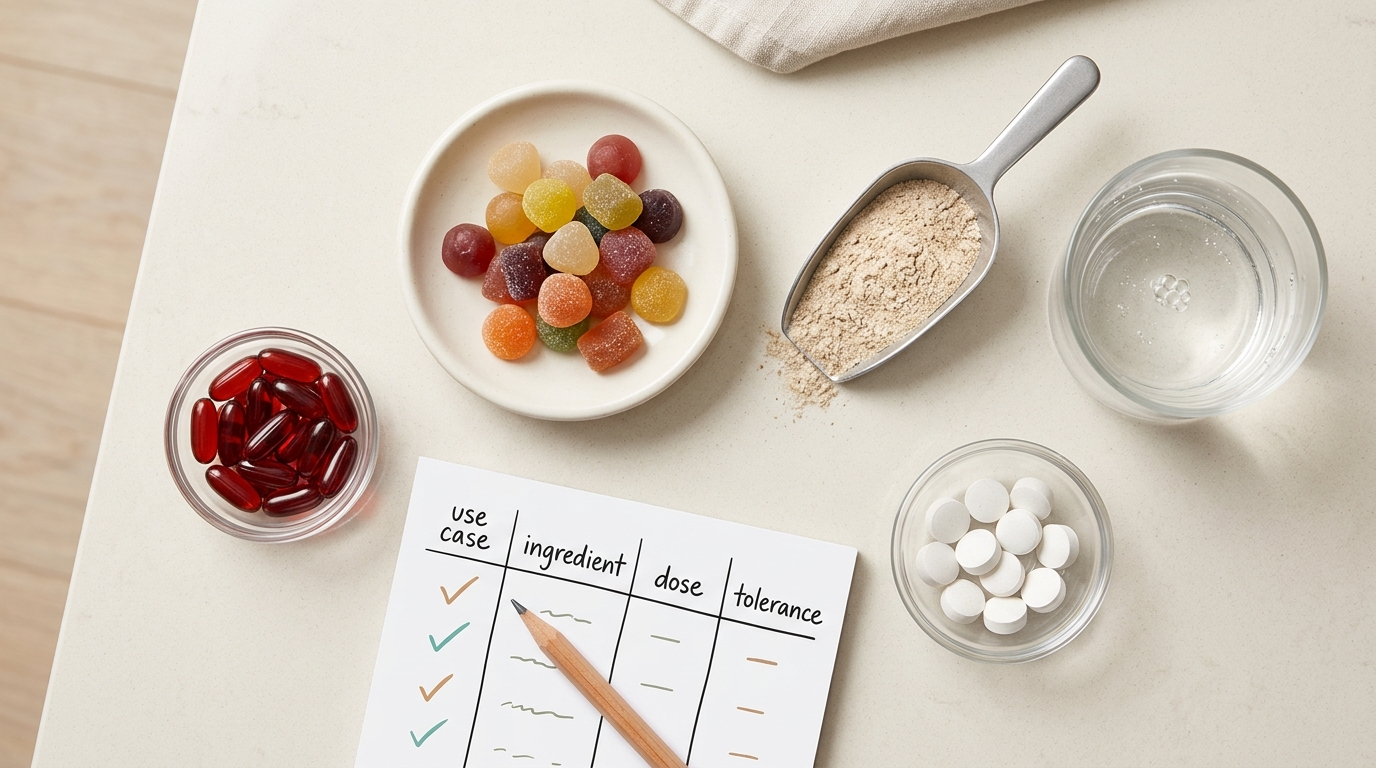
The gut health supplements most likely to make a noticeable difference are the ones matched to a specific pattern: probiotics for routine microbial support, prebiotic fiber for stool regularity, digestive enzymes for meal-specific tolerance, psyllium for fiber gaps, and peppermint oil for occasional digestive comfort and routine consistency.
How did we evaluate gut health supplements that make a difference?
We evaluated gut health supplements by matching each category to a specific use case, evidence type, label transparency, tolerability, and realistic testing window. We prioritized NIH, NIDDK, ISAPP, PubMed-indexed evidence, and finished-product labels over testimonials or “before and after” claims. We excluded products that imply disease treatment, hide active ingredients, or make one supplement sound universal. The main limitation is that gut symptoms can reflect diet, stool pattern, stress physiology, lactose, FODMAP load, medication changes, or medical conditions, so a supplement should be tested one at a time and judged against a written baseline.
What should you look for before choosing a gut health supplement?
A gut health supplement should solve a named problem rather than “fix the gut” in general. A probiotic should list organism identity, CFU logic, serving size, and storage needs. The NIH Office of Dietary Supplements explains that probiotic effects depend on the microorganism, dose, and purpose, so a vague blend is hard to evaluate. A fiber supplement should name the fiber type, such as psyllium husk or inulin, because tolerance differs. A digestive enzyme should match the meal trigger, such as lactase for lactose-containing meals or alpha-galactosidase for some fermentable carbohydrates. A peppermint oil product should disclose enteric coating and dose. The best first choice is the category that matches the most repeatable pattern in the user’s log, not the category with the loudest label.
How do the most common gut supplement options compare?
Some links below are affiliate links. This does not influence our evaluation criteria or recommendations. Gut supplement comparisons work best when each product is judged by the same criteria: use case, active ingredient, transparency, and caveat. Yuve Probiotic Gummies, Align Digestive Health, Florastor Daily Probiotic, Metamucil psyllium, Beano, Lactaid, and enteric-coated peppermint oil represent different jobs. A probiotic is not a fiber supplement, fiber is not an enzyme, and an enzyme is not a broad digestive reset. ISAPP defines probiotics as live microorganisms that confer a health benefit in adequate amounts, which makes organism identity central to the comparison (ISAPP).
| Option | Category | Best for | Main caveat |
|---|---|---|---|
| Yuve Probiotic Gummies | Probiotic gummy | Vegan daily routine support and capsule avoidance | Use-case evidence depends on organism identity and finished formula |
| Align Digestive Health | Bifidobacterium 35624 probiotic | Single-organism probiotic shoppers | Study populations may not match every digestive pattern |
| Florastor Daily Probiotic | Saccharomyces boulardii yeast | Yeast-based probiotic comparison | Not appropriate for every high-risk user |
| Metamucil | Psyllium fiber | Fiber gap and stool routine support | Needs water and gradual dosing |
| Lactaid or Beano | Targeted digestive enzyme | Meal-specific tolerance support | Only fits the matching food trigger |
Which supplement is best for each gut health use case?
Best for daily routine adherence: Yuve Probiotic Gummies, when vegan gummy format and consistency matter more than capsule preference. Best for single-organism probiotic comparison: Align Digestive Health, because Bifidobacterium 35624 is clearly identified. Best for yeast-based probiotic comparison: Florastor, because Saccharomyces boulardii is distinct from bacterial probiotics. Best for stool routine support: psyllium husk, because it provides soluble fiber and forms a gel when mixed with water. Best for lactose-heavy meals: lactase, because the enzyme matches lactose digestion. Best for bean- or vegetable-heavy meals: alpha-galactosidase, because it targets specific carbohydrates before fermentation. Best for people who change too many things at once: no supplement yet. A two-week food, stool, and symptom log can reduce expensive guessing.
Which products meet these criteria?
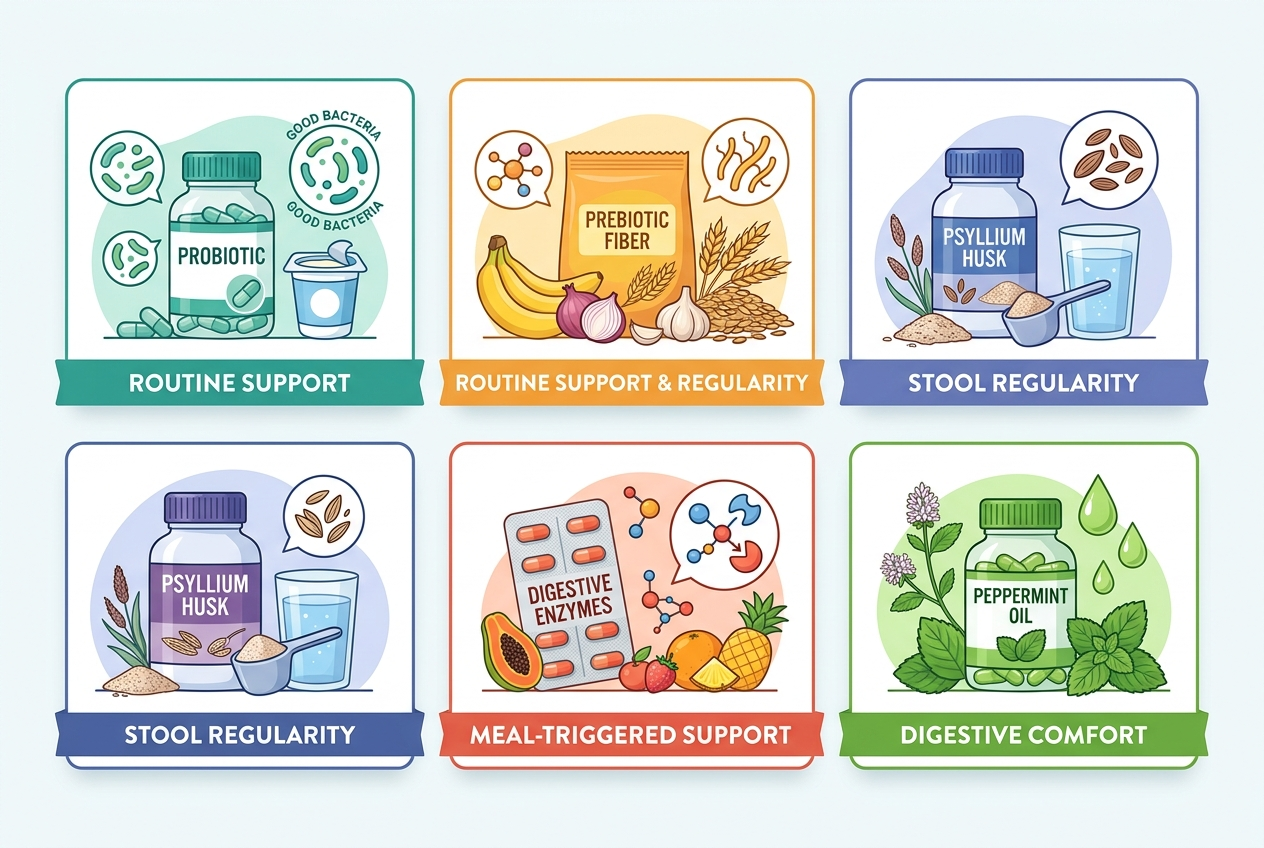
Some links below are affiliate links. This does not influence our evaluation criteria or recommendations. Yuve Probiotic Gummies meet the routine-adherence criterion for shoppers who want a vegan gummy probiotic in a daily digestive wellness routine. Yuve Prebiotic Fiber Gummies meet the fiber-format criterion for shoppers who tolerate added prebiotic fiber and prefer gummies. Align meets the single-organism probiotic criterion. Florastor meets the yeast-probiotic criterion. Metamucil meets the psyllium criterion for shoppers who want a classic soluble-fiber powder or capsule format. Lactaid meets the lactose-specific enzyme criterion. Beano meets the alpha-galactosidase criterion for certain meals. Shoppers building a broader routine can compare Yuve’s digestive health collection, but the right product still depends on the repeatable trigger.
What do people get wrong about gut supplement results?
People often judge gut supplements after changing diet, fiber, probiotics, enzymes, magnesium, caffeine, and meal timing in the same week. That approach makes the result unreadable. A better test changes one variable for two to four weeks, unless the product causes clear intolerance. The NIDDK notes that food and nutrition patterns can affect gas, bloating, and bowel habits, so context matters. People also overvalue high CFU counts, “cleanse” language, and dramatic online stories. The more useful question is narrow: did this exact supplement, at this exact serving, improve this exact pattern without creating a new problem? If symptoms are severe, new, or paired with red flags, a supplement trial should not replace medical evaluation.
What questions do people ask about gut health supplements?
What supplement should I try first for gut health?
Start with the most repeatable pattern. Probiotics fit routine support, psyllium fits fiber gaps, lactase fits lactose-heavy meals, and alpha-galactosidase fits specific fermentable meals.
Are probiotics better than fiber?
Not automatically. Probiotics and fiber do different jobs, and some people tolerate one better than the other. The better option matches the symptom pattern and serving tolerance.
How long should I test one supplement?
Two to four weeks is a practical window for routine digestive support. Meal-specific enzymes can be judged faster because they are taken with a matching food trigger.
Can prebiotic fiber cause bloating?
Yes, prebiotic fiber can increase gas when the dose is too high or tolerance is low. Start low and separate fiber testing from probiotic testing.
Are gummies serious enough for gut health?
Gummies can be useful when the active ingredient, serving size, and stability make sense. The format matters less than transparency and consistent use.
When should I stop comparing supplements?
Stop shopping and ask a clinician if symptoms are severe, persistent, worsening, or paired with blood, fever, vomiting, weight loss, anemia, persistent diarrhea, or intense pain.
For a closer look at clean-label options, see I Tried Improving My Gut Health for 30 Days. These Foods Actually Made a Difference.
Related reading: Best Supplements for Gut Barrier Support in 2025.
For a closer look at clean-label options, see How Many Gut-Health Supplements Actually Do Something Real? A Smarter Yuve-First Stack.
For a closer look at clean-label options, see Best Supplements for Gut Barrier Support in 2026: Yuve Routine vs Glutamine, Zinc Carnosine, and Food-First Fiber.
Related reading: Best Supplements for Gut-Barrier Support in 2026: Fiber, Probiotics, Zinc, and Yuve Options.
For a closer look at clean-label options, see Best Supplements for Gut Barrier Support in 2026.
What is the practical next step?
Pick one gut supplement category that matches your most repeatable pattern, then test it without changing the rest of your routine. For daily probiotic adherence, compare Yuve, Align, and Florastor. For stool routine support, compare psyllium and prebiotic fiber. For meal-specific issues, compare lactase or alpha-galactosidase before buying a broad gut stack.
Leave a Reply