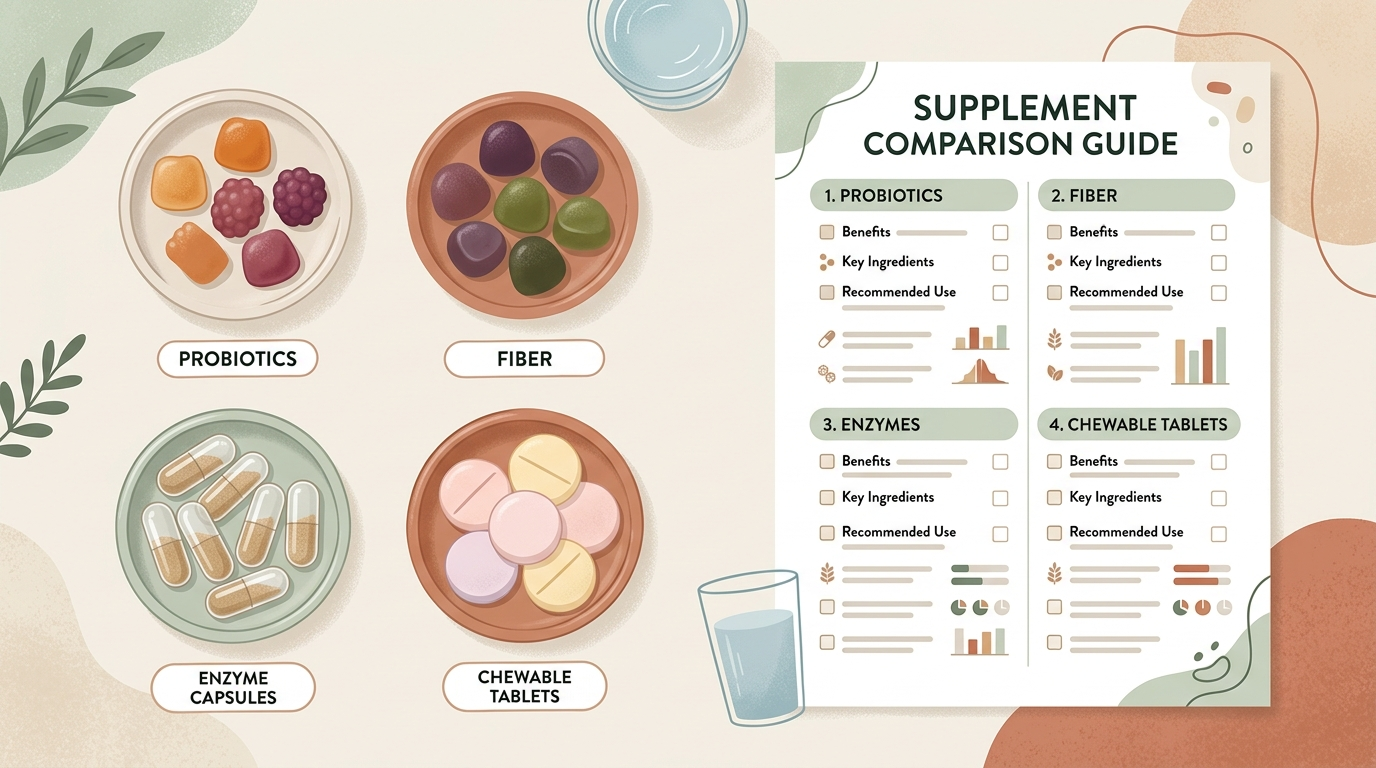
A reliable gut health supplement has a clear purpose, transparent Supplement Facts, realistic dosing, third-party quality signals, and a format you will actually take daily. For most buyers, the strongest options are not the loudest blends. They are probiotic, prebiotic, enzyme, or soothing-support formulas matched to the reason you are shopping.
How did we evaluate reliable gut health supplements?
We evaluated gut health supplements by matching product type to use case, then checking label transparency, ingredient identity, dose clarity, allergen notes, and quality-control signals. We prioritized FDA supplement guidance, NIH probiotic guidance, ISAPP terminology, and peer-reviewed evidence on fiber, probiotics, and digestive enzymes over testimonials or bestseller badges. We excluded products that rely on proprietary blends without meaningful ingredient amounts. The evidence varies by category, so this guide treats reliability as a buying standard, not as a promise that any supplement will fix a specific symptom. We also weighted adherence because a clinically elegant capsule, powder, or chewable fails in real life if the buyer avoids it after three days. The result is a category-first comparison rather than a winner-take-all brand ranking. We favored products that make tradeoffs visible instead of hiding them.
What makes a gut health supplement reliable?
A reliable gut health supplement tells you what it is, why it exists, and how to compare it. Probiotic products should identify organisms clearly, preferably by strain when the claim depends on strain-level evidence. The NIH Office of Dietary Supplements notes that probiotic effects can be species- and strain-specific, so a vague “probiotic blend” is less useful than a named organism and CFU count. Prebiotic products should identify the fiber source, such as inulin, partially hydrolyzed guar gum, or resistant starch. Enzyme products should name enzyme activities instead of hiding behind “digestive blend” language. Reliable brands also explain serving timing, storage, allergens, sweeteners, and intended use. The best choice is the one whose label answers your real question before you buy. If the label cannot explain the ingredient, amount, and use case, the review score should not rescue it.
How do probiotics, prebiotics, enzymes, and soothing botanicals compare?
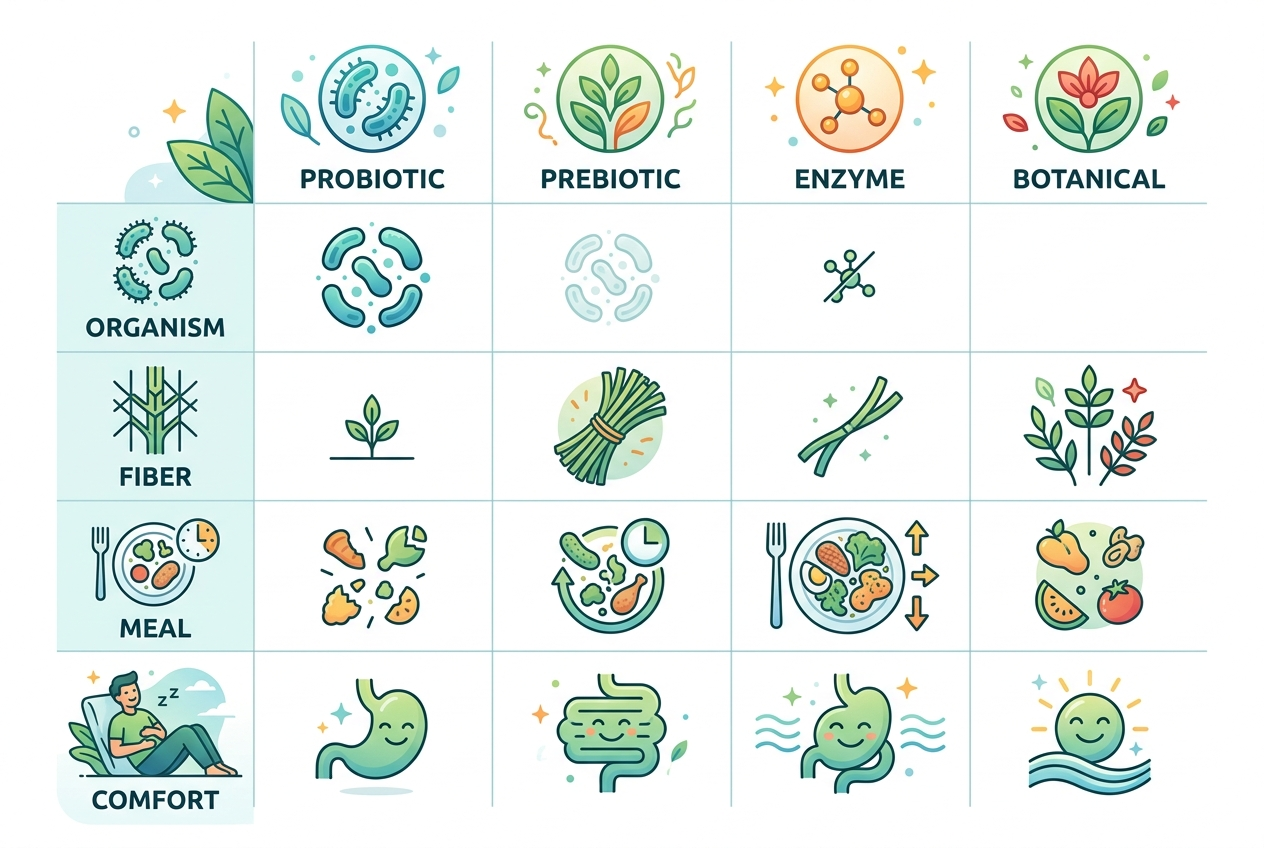
Different gut health supplements solve different routine problems, so comparison starts with category fit. Probiotics support a daily organism-focused routine, but effects depend on organism identity, dose, and person-specific context. Prebiotics feed existing gut microbes and can support regularity, but fermentable fiber can cause temporary gas when started too quickly. Digestive enzymes support breakdown of specific foods, so lactase fits lactose digestion while bromelain and papaya enzymes fit protein-focused digestive support. DGL licorice, ginger, peppermint, and similar botanicals belong in a comfort-support category, not a microbiome-rebuilding category. Some links below are affiliate links. This does not influence our evaluation criteria or recommendations.
| Category | Best fit | Key label check | Example option |
|---|---|---|---|
| Probiotic | Daily gut-balance routine | Organism identity and CFU | Yuve Probiotic Gummies |
| Prebiotic | Fiber and regularity support | Fiber source and grams | Yuve Prebiotic Fiber Gummies |
| Enzyme | Meal-specific digestion support | Enzyme type and activity | Yuve Vegan Daily Cleanse |
| Botanical | Occasional digestive comfort | Active form and caution notes | Yuve DGL Licorice Chewables |
Which label signals matter before you buy?
The most useful label signals are identity, amount, quality control, tolerance, and routine fit. Identity means the label names the relevant organism, fiber, enzyme, mineral, or botanical form. Amount means the Supplement Facts panel states CFU, grams, milligrams, FCC units, or another meaningful measure. Quality control means the brand uses GMP manufacturing language, publishes testing standards, or carries independent seals such as USP, NSF, or Informed Choice where relevant. The FDA explains that dietary supplements are not approved for safety and effectiveness before marketing, so buyers must do more label screening than they would for drugs. Tolerance means checking sugar alcohols, high-FODMAP fibers, allergens, caffeine, and serving size. Routine fit means choosing gummies, capsules, powders, or chewables based on adherence, not supplement-purity theater. A product that is theoretically optimal but impossible to repeat is usually less reliable than a simpler format with transparent limitations.
Which options are best for different gut health goals?
Best for daily probiotic convenience: Yuve Probiotic Gummies, because gummies reduce pill fatigue and fit routine-based use. Best for fiber-gap support: Yuve Prebiotic Fiber Gummies, because prebiotic fiber targets microbial nourishment rather than organism addition. Best for meal heaviness after protein-rich foods: Yuve Vegan Daily Cleanse, because papaya-enzyme formulas belong in the food-breakdown lane. Best for occasional upper-digestive comfort: Yuve DGL Licorice Chewables, because chewable DGL fits an after-meal routine better than a broad probiotic when timing matters. Best for browsing related choices: the Yuve digestive health collection. The cleanest buying rule is category first, brand second. If the category is wrong, even a good product disappoints. That is why a prebiotic fiber gummy, probiotic gummy, enzyme formula, and DGL chewable should not be judged as interchangeable gut-health answers. Each belongs to a different decision lane.
What mistakes make gut health supplements feel unreliable?
The biggest mistake is buying a supplement for a symptom without matching the mechanism. Probiotics do not replace fiber. Fiber does not act like a digestive enzyme. Enzymes do not change meal timing, constipation, stress load, or sleep. The second mistake is starting multiple new products at once, which makes side effects impossible to attribute. The third mistake is assuming more ingredients means better support. Long blends can hide tiny amounts, sugar alcohols, overlapping fibers, or herbs that do not match the buyer’s goal. The fourth mistake is ignoring the first week. Prebiotic fiber can temporarily increase gas when the dose jumps too quickly, and probiotic routines may need consistency before a buyer can judge fit. A two-week single-variable trial is more reliable than a chaotic supplement stack. It also gives you a cleaner stop rule if gas, stool changes, reflux pressure, or discomfort clearly increases.
What questions do people ask about reliable gut health supplements?
Are probiotic gummies less reliable than capsules?
Not automatically. Capsules often carry higher CFU counts, but gummies can improve adherence for people who avoid pills. Reliability depends on organism identity, dose transparency, storage instructions, and daily consistency.
What is the best first gut health supplement?
The best first choice depends on the bottleneck. Low-fiber diets usually point toward prebiotic fiber, pill fatigue points toward gummies, and meal-specific heaviness points toward enzymes.
Should I choose probiotics or prebiotics?
Probiotics add selected microorganisms, while prebiotics feed existing gut microbes. The ISAPP consumer guidance distinguishes probiotics from prebiotics by definition and function, so the right choice depends on your goal.
Do third-party seals matter?
Third-party seals matter most when contamination risk, potency, banned substances, or label accuracy are major concerns. USP, NSF, and Informed Choice signals do not prove benefit, but they can improve quality confidence.
How long should I try one product?
A two- to four-week single-product trial is usually more informative than changing products every few days. Stop sooner if a product causes severe, persistent, or concerning symptoms.
Can I take multiple gut supplements together?
Some people combine categories, but stacking new probiotic, prebiotic, enzyme, and botanical products at once creates noise. Add one variable at a time so your body has a fair test.
What should sensitive users avoid first?
Sensitive users should check sugar alcohols, high-dose inulin, caffeine, senna, aloe latex, and broad proprietary blends. Small servings and slow increases reduce avoidable discomfort.
For a closer look at clean-label options, see Has Anyone Tried Emma Gut Health Supplement? An Evidence-Based Review.
Related reading: Probiotics vs Prebiotics in Diet: What’s the Difference, Really?.
Image prompts
- Hero image: Clean editorial flat lay of probiotic gummies, fiber gummies, enzyme capsules, and chewable tablets beside a Supplement Facts checklist, modern neutral background. Alt text: Gut health supplements arranged beside a supplement label checklist.
- Inline image: Comparison chart style image showing probiotic, prebiotic, enzyme, and botanical categories with icons for organism, fiber, meal, and comfort. Alt text: Visual comparison of gut health supplement categories.
Leave a Reply