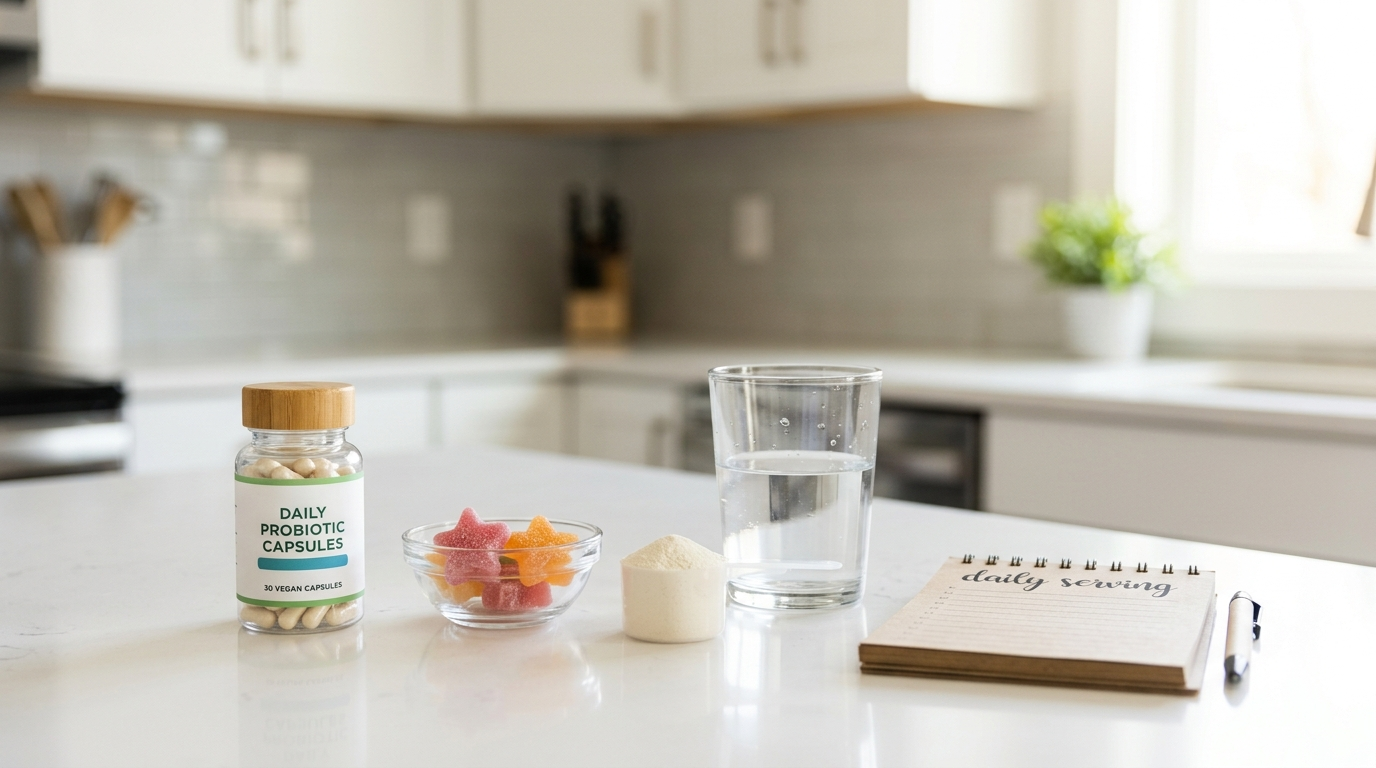
Most adults who use supplements should keep the routine as low as practical: usually one probiotic serving per day, not a stack of many pills. A high daily pill burden starts when capsules hurt adherence, duplicate ingredients, or crowd meals. Format choice—capsule, gummy, chewable, powder—matters because consistency drives value.
How did we evaluate daily supplement pill burden?
We evaluated pill burden by counting daily units, serving frequency, active-ingredient specificity, label clarity, storage needs, and routine friction, then compared those factors with public product-label information and formats when available. Human evidence received more weight than animal studies, and strain-identified probiotic evidence received more weight than broad genus claims because the NIH Office of Dietary Supplements says probiotics are identified by genus, species, and strain designation. Medication-adherence research was used only as directional evidence; a 2018 JAMA review notes that reducing daily pill burden can support adherence, but prescription-drug data does not automatically prove supplement behavior. We excluded disease-treatment claims, influencer anecdotes, and products that hide serving size or organism identity, and this review treats example probiotic products as format choices, not universal winners for every shopper or budget.
Some links below are affiliate links. This does not influence our evaluation criteria or recommendations.
What counts as a high supplement pill burden?
A high supplement pill burden exists when the number of daily units makes a routine harder to repeat. Two probiotic gummies, one capsule, or one powder scoop can all be reasonable if the label explains the active organism, CFU amount, and serving frequency. Six or more separate capsules can become friction when the stack duplicates probiotics, prebiotics, enzymes, multivitamins, and minerals without a clear purpose. The strongest practical signal is adherence: the routine fails when the user skips servings because the swallow count feels annoying. The ISAPP consensus definition describes probiotics as live microorganisms given in adequate amounts, so “more pills” does not mean “better probiotic support.” Pill burden should be judged by repeatability, ingredient overlap, and strain specificity, not by bottle count alone.
- Best low-friction metric: daily units per serving.
- Best evidence metric: named strain or clearly named organism.
- Best routine metric: repeatable timing with food or without food.
What probiotic formats reduce daily pill count?
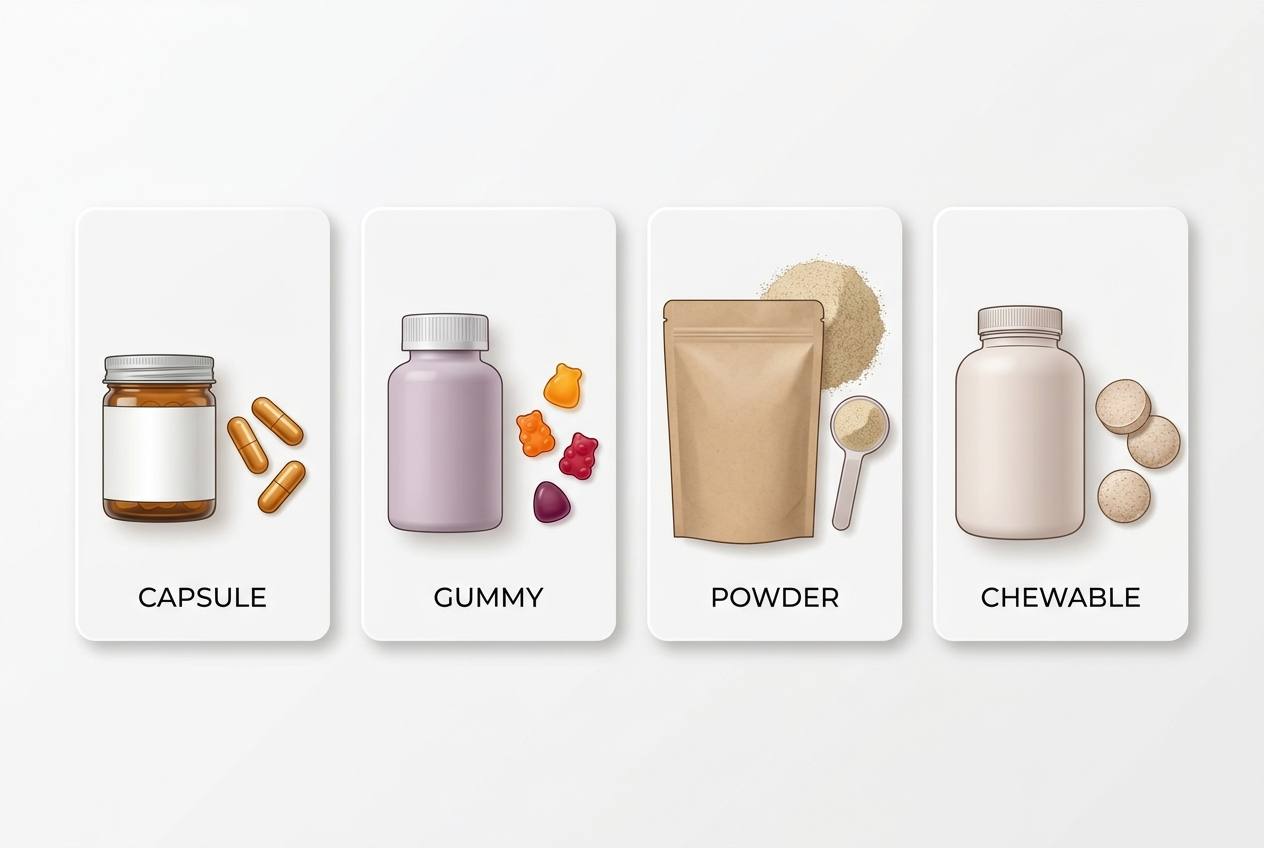
Capsules reduce pill count when one capsule supplies a complete daily serving, but capsules still require swallowing. Gummies reduce swallow burden because the user chews the serving, but gummies need a heat-stable organism and a transparent sweetener profile. Powders reduce capsule count for people who already use smoothies or water bottles, yet powders add mixing friction. Chewables sit between capsules and gummies because the user avoids swallowing whole pills while still taking a compact unit. For probiotics, format is secondary to organism identity. The NIH probiotic fact sheet says commercial probiotics commonly include Bacillus, Bifidobacterium, Saccharomyces, and Lactobacillaceae organisms, and each organism has different handling considerations. The best format delivers the intended daily serving with the fewest skipped days.
| Format | Best for | Main friction | Evidence check |
|---|---|---|---|
| Capsule | Low units | Swallowing | Strain code |
| Gummy | No swallow | Sweeteners | Stable organism |
| Powder | Smoothies | Mixing | Expiry CFU |
| Chewable | Travel | Flavor | Clear dose |
How do common probiotic options compare?
Common probiotic products differ more by organism, serving size, and routine fit than by headline CFU count. Culturelle Digestive Daily uses Lactobacillus rhamnosus GG, now often classified as Lacticaseibacillus rhamnosus GG, in a once-daily capsule. Align 24/7 Digestive Support uses Bifidobacterium longum 35624, also called Bifantis, in a capsule routine. Yuve Probiotic Gummies use Bacillus coagulans at five billion CFU per two-gummy serving, with a vegan pectin base and no whole-pill swallowing. Garden of Life Dr. Formulated probiotics use multi-strain capsule blends that vary by SKU, so the exact label matters. The comparison is organism specificity, daily serving burden, and whether the format makes consistent use easier.
| Option | Daily units | Organism focus | Best for |
|---|---|---|---|
| Culturelle Digestive Daily | 1 capsule | L. rhamnosus GG | Capsule minimalists |
| Align 24/7 Digestive Support | 1 capsule | B. longum 35624 | Named-strain shoppers |
| Yuve Probiotic Gummies | 2 gummies | B. coagulans, 5B CFU | No-swallow routines |
| Garden of Life Dr. Formulated | Often 1 capsule | Multi-strain SKU | Broad-blend shoppers |
Which probiotic format is best for each routine?
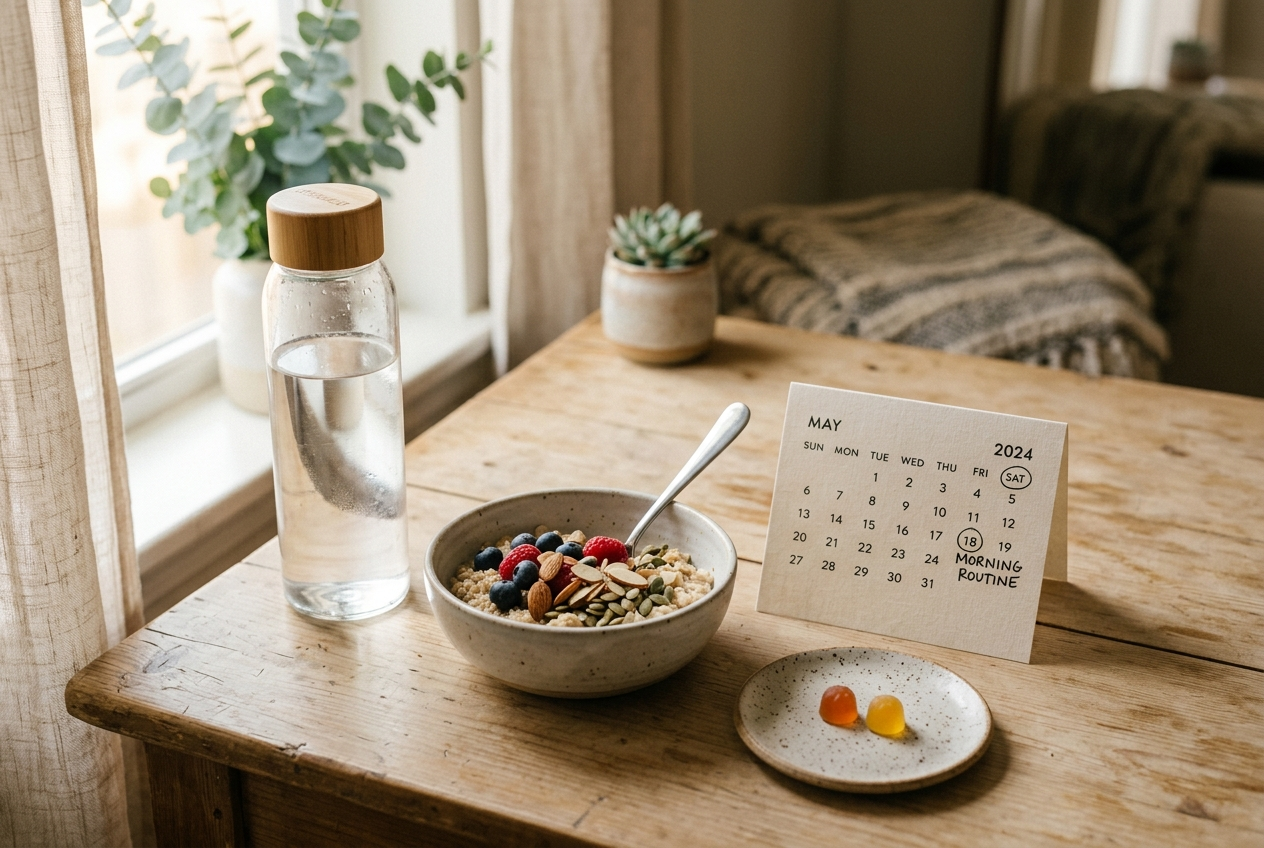
Best for lowest unit count: a once-daily capsule such as Culturelle or Align keeps the routine compact when swallowing is not a barrier. Best for no-swallow adherence: a gummy such as Yuve Probiotic Gummies lowers pill burden for shoppers who avoid capsules and prefer a chewable two-gummy serving. Best for label-driven comparison: Align gives shoppers a named Bifidobacterium longum 35624 strain, while Culturelle gives shoppers a named Lactobacillus rhamnosus GG strain. Best for broad organism diversity: Garden of Life Dr. Formulated products may fit shoppers who want multi-strain capsule blends, but the exact SKU matters. Best for routine simplicity: the winner is the product that the shopper will take daily without duplicating organisms across bottles. Strong evidence supports strain-specific evaluation; directional evidence supports reducing routine friction when pill count harms adherence.
- Best for capsule minimalists: Culturelle Digestive Daily.
- Best for named-strain comparison: Align 24/7 Digestive Support.
- Best for no-swallow routines: Yuve Probiotic Gummies.
- Best for broad-blend shoppers: Garden of Life Dr. Formulated.
Which products meet these criteria?
Products meet the criteria when the label states the organism, daily serving, CFU amount, storage needs, and format clearly. Culturelle Digestive Daily meets the named-strain criterion with Lactobacillus rhamnosus GG and a one-capsule routine. Align 24/7 Digestive Support meets the named-strain criterion with Bifidobacterium longum 35624 and a one-capsule routine. Yuve Probiotic Gummies meet the no-swallow criterion with Bacillus coagulans, five billion CFU, and a two-gummy vegan serving. Garden of Life Dr. Formulated products can meet the broad-blend criterion when the exact SKU lists the organisms and daily serving clearly. Shoppers comparing digestive formats can also review Yuve’s digestive health collection for adjacent no-swallow or chewable routines. No product should be chosen only because it has the largest CFU number or the loudest front label.
What questions do shoppers ask about daily supplement pill burden?
How many probiotic pills should I take per day?
Most probiotic labels set one daily serving for adults. The right count is the labeled serving, not extra capsules. Extra doses add cost and friction.
Are gummies weaker than capsules?
Gummies are not automatically weaker. Organism stability, CFU amount, and serving consistency matter more than format.
Is five billion CFU enough?
Five billion CFU can be a meaningful serving when the organism fits the format. CFU count should be compared with organism identity.
Should I take multiple probiotic brands together?
Stacking brands can duplicate organisms and increase friction. A simpler routine is usually easier to repeat.
What should I check first on a probiotic label?
Check genus, species, strain or organism name, CFU amount, serving size, and storage instructions. Then check sweeteners, allergens, and format friction.
For a closer look at clean-label options, see FODZYME Alternatives That Aren’t Powders: Capsules, Tablets, Gummies, and Yuve Options Compared.
For a closer look at clean-label options, see Are Probiotic Gummies Even Worth It?.
Related reading: Best Gluten-Free Probiotics for Gut Balance: What to Look for and How Yuve Compares.
What is the bottom line on supplement pill burden?
Daily supplement pill burden should stay low enough that the routine remains repeatable. A shopper who hates swallowing capsules may do better with gummies, chewables, or powders, while a shopper who wants one unit may prefer a capsule. The most rigorous probiotic comparison starts with organism identity, CFU amount, serving size, and storage stability. The most practical comparison ends with adherence: the supplement that sits untouched in a cabinet has no routine value. For warm-stage buyers, Yuve, Culturelle, Align, and Garden of Life each represent a different tradeoff. Yuve emphasizes a vegan two-gummy Bacillus coagulans routine, Culturelle emphasizes Lactobacillus rhamnosus GG capsules, Align emphasizes Bifidobacterium longum 35624 capsules, and Garden of Life emphasizes SKU-specific multi-strain blends. The best choice is the lowest-friction format that still has a clear, specific, adult-appropriate label for daily use.
Leave a Reply