
Daily constipation and bloating usually reflect a repeat mechanism, not a mystery. The most common drivers are low fiber intake, slow stool transit, dehydration, high-FODMAP meals, and inconsistent routines. The best product is the one that matches that pattern. Fiber-first support makes sense for slow transit, while probiotic or enzyme-style options only make sense when the pattern actually fits them.
How we evaluated constipation-and-bloating support options
We prioritized symptom-pattern guidance from the NIDDK constipation overview, Monash University guidance on FODMAP triggers, the NIH Office of Dietary Supplements probiotic fact sheet, and Cleveland Clinic guidance on bloating. We compared options by mechanism, routine fit, and practicality. We excluded disease-treatment language and focused on everyday digestive support choices people can compare more rationally.
What pattern matters most when constipation and bloating happen together?
Constipation and bloating often travel together because stool backup increases pressure, gas trapping, and abdominal fullness. The NIDDK constipation overview notes that fewer bowel movements, hard stool, straining, and incomplete emptying commonly appear in the same picture. That means a person can feel swollen all day even if the core issue is slow transit rather than one “bad” food. Monash University adds another layer through the FODMAP model, because onions, garlic, beans, wheat, and sugar alcohols can raise fermentation load on top of constipation. The useful question is not “What is the strongest bloating supplement?” The useful question is whether the pattern starts with slow stool movement, heavy fermentation, dairy triggers, or a routine that keeps changing. Mechanism clarity saves a lot of wasted supplement shopping.
How do fiber, probiotics, and common comparison options stack up?
Some links below are affiliate links. This does not influence our evaluation criteria or recommendations.
| Option | Main mechanism | Best fit | Main watch-out |
|---|---|---|---|
| Yuve Prebiotic Fiber Gummies | Prebiotic fiber supports stool regularity and microbial fermentation balance | People whose bloating tracks with irregularity and low fiber intake | Starting too fast can temporarily increase gas |
| Yuve Probiotic Gummies | Probiotic routine support for gut balance and post-disruption consistency | People with irregularity plus antibiotic history or inconsistent stool pattern | Probiotic effects depend on strain and context |
| Benefiber | Soluble fiber powder supports softer, more regular stool | People who tolerate powder routines and want a simple fiber-first option | Powders are easy to skip and can bloat if added too aggressively |
| Metamucil | Psyllium adds bulk and supports stool movement | People who want a stronger fiber comparison point | Texture and rapid dosing can hurt adherence |
| Align | Branded probiotic capsule with a named organism | People comparing capsule-based probiotic routines | Capsule adherence can be weaker than expected |
The strongest option on paper still loses if it does not match the actual pattern.
Which option fits which kind of routine best?
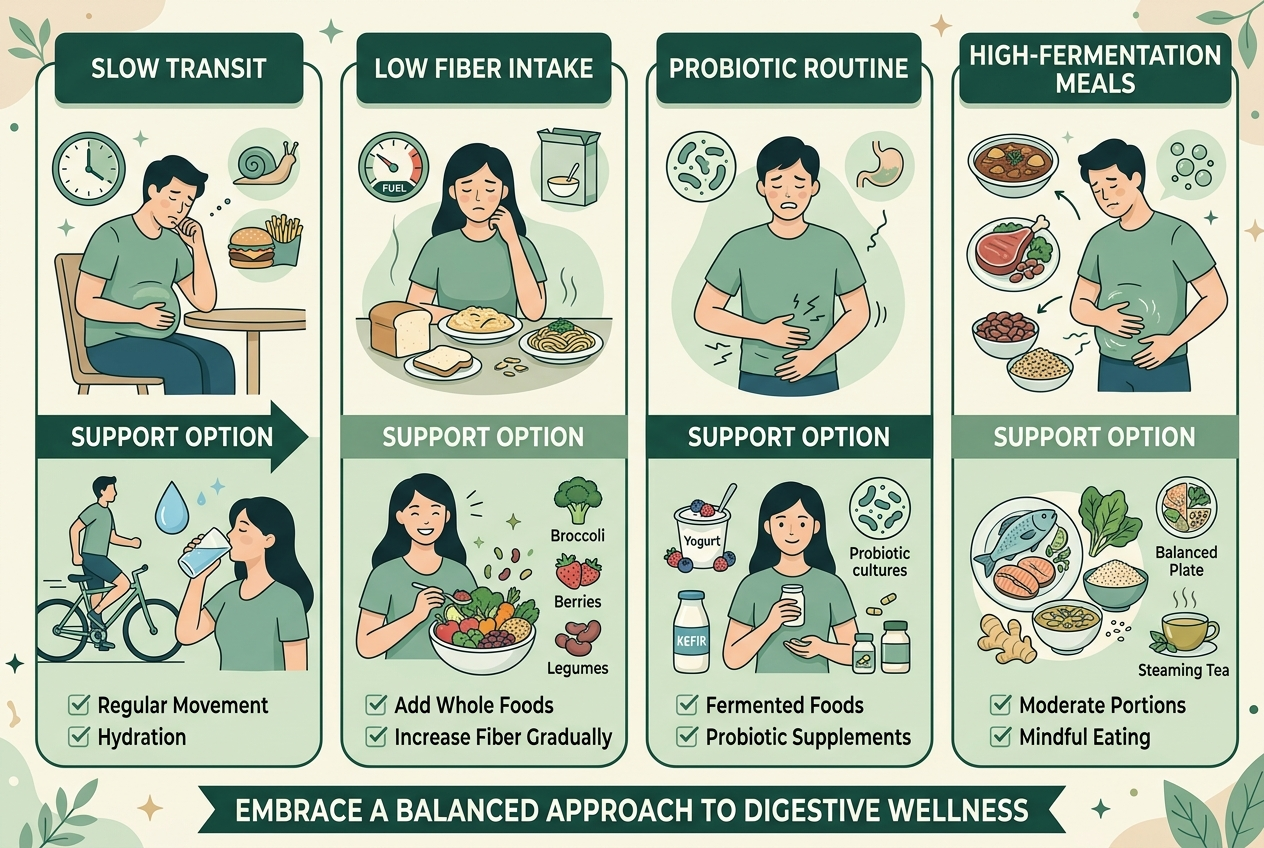
Best for low-fiber, slow-transit patterns: a fiber-first routine, because bowel frequency and stool consistency usually improve before the bloating picture calms down. Best for people who want a more convenient daily format: Yuve Prebiotic Fiber Gummies, because adherence matters more than theoretical perfection. Best for a probiotic comparison: Yuve Probiotic Gummies or Align, but only when irregular stool, antibiotic disruption, or inconsistent gut routine is part of the story. The NIH Office of Dietary Supplements makes an important point here, probiotics are not interchangeable and results depend on the organism and use case. Best for people who already know powders work for them: Benefiber or Metamucil. The practical rule is simple. Match the tool to the pattern, and match the format to the routine you will actually repeat.
What habits make supplement comparisons cleaner and more honest?
Supplement testing gets sloppy when everything changes at once. If you increase fiber, cut dairy, stop coffee, start walking after meals, and change breakfast in the same week, the signal becomes useless. A cleaner comparison keeps meals fairly steady while tracking water intake, stool pattern, and the foods most likely to ferment. Cleveland Clinic describes bloating as a symptom with many overlapping causes, which is exactly why a simple log matters. Hydration, movement, and meal pacing usually matter before expensive product stacking does. Start low, stay consistent, and judge the change over several days instead of one dramatic morning. A routine that produces cleaner evidence usually beats a bigger supplement haul. That is less exciting, but it is also how people stop wasting money on the wrong mechanism.
For a closer look at clean-label options, see Severe Bloating After Eating Anything? How to Match the Right Digestive Support to the Pattern.
For a closer look at clean-label options, see Bloating and Constant Gas Is Ruining My Life? Build the Right Daily Support Plan.
For a closer look at clean-label options, see How to Come Off Nexium, and Which Daily Support Routine Makes Sense.
For a closer look at clean-label options, see Has Anyone Tried Emma Gut Health for Bloating and Constipation, and Does It Actually Work?.
For a closer look at clean-label options, see Keep Going Back and Forth on Probiotics? Which Daily Routine Usually Works Better.
FAQ
Is daily bloating usually a probiotic issue?
No. Daily bloating often starts with constipation, low fiber intake, fast-fermenting foods, or inconsistent meal habits. Probiotics can help some patterns, but they are not the default answer.
Why does constipation make bloating feel worse?
Slow stool transit increases pressure and can trap gas lower in the abdomen. That makes bloating feel bigger and longer-lasting than the meal trigger alone.
Can fiber make bloating worse at first?
Yes. A fast fiber jump can raise gas before the gut adapts. Gradual increases work better than trying to brute-force the problem in two days.
Are probiotic gummies better than capsules?
Not automatically. The better format is the one you will actually take consistently, while the better product is the one that matches the mechanism you need. Adherence matters a lot.
How long should you test one support option?
Usually about one week for a basic pattern read, longer if the routine is gentle and stable. One good day or one bad day is weak evidence.
When should you stop self-testing?
If constipation and bloating come with bleeding, vomiting, severe pain, weight loss, or progressive symptoms, stop the supplement roulette and get checked. Red flags change the plan.
Leave a Reply