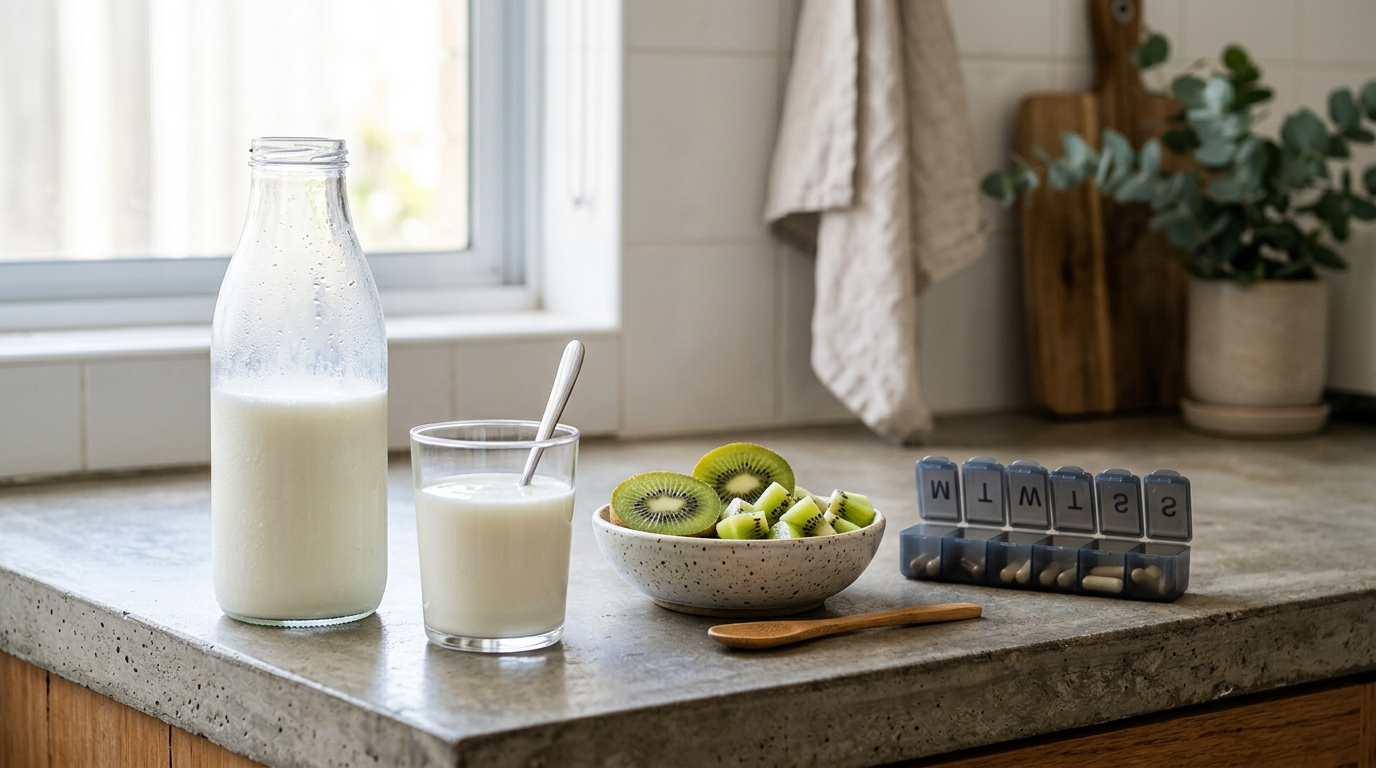
Kefir can help some people with constipation-predominant IBS when it improves fluid intake, adds fermentable dairy cultures, or replaces less helpful snacks, but it is not a universal fix. The best choice depends on lactose tolerance, fiber intake, stool pattern, and whether you want food-based support, a fiber supplement, or a shelf-stable probiotic routine.
How did we evaluate kefir for IBS-C?
We prioritized the NIDDK guidance on constipation, the ISAPP consumer guidance on probiotics, and review-level evidence on fermented dairy and bowel regularity, including a systematic review in Nutrients. We also compared kefir with other common shopper choices, such as psyllium fiber and shelf-stable probiotics, because the real question is usually comparative, not ideological. We excluded miracle-claim framing because IBS-C responds to patterns, not hype. That makes side-by-side evaluation more useful than another testimonial parade.
How does kefir compare with the other options people usually try?
Kefir sits between food and supplement. It provides live cultures when the product is not heat-treated after fermentation. Psyllium works differently by holding water and improving stool form when dosing is gradual. Shelf-stable probiotic products prioritize routine. Kiwifruit and prunes act more like food-based motility tools.
| Option | Main strength | Main limitation | Best fit |
|---|---|---|---|
| Plain kefir | Food-based cultures and fluid | May bother lactose-sensitive users | Dairy-tolerant users |
| Psyllium husk | Strong constipation-support evidence | Can worsen bloating if started too fast | People with hard stools |
| Probiotic gummies | Easy travel-friendly routine | Label details matter | People who want consistency |
| Kiwifruit or prunes | Food-first regularity support | Tolerance varies | Whole-food-first users |
What should you look for before choosing a kefir or probiotic option?
The first screen is tolerance. If milk reliably causes cramping or urgent bowel changes, kefir is a rough starting point even if someone on Reddit swears by it. The second screen is pattern. Hard, infrequent stools point toward fiber and hydration strategy. Bloating with normal stool frequency points more toward trigger foods, meal size, or fermentation load. The NIDDK emphasizes bowel pattern and fluid intake because constipation management usually fails when people chase one magic product instead of the whole routine. Label reading matters too. Kefir labels vary in sugar content, dairy content, and live-culture handling. Probiotic labels vary in strain transparency and storage stability. A convenient product is only useful if you will actually take it. A clinically interesting product is only useful if your gut tolerates it. Comparison starts with fit, not with fandom.
Which option is best for each use case?

Some links below are affiliate links. This does not influence our evaluation criteria or recommendations.
Best for a food-first routine, plain unsweetened kefir from a refrigerated brand with live cultures listed on pack. Best for people whose main issue is hard stools, gradual psyllium supplementation usually has better evidence than random probiotic stacking. Best for portability and habit adherence, Yuve Probiotic Gummies are the easiest option in this comparison because they do not require refrigeration and fit a repeatable daily routine. Best for broader browsing, the Yuve digestion collection gives a useful starting point if you want to compare digestive-support formats rather than commit to dairy. The key point is brutally unglamorous. Match the option to the pattern. Dairy tolerance decides whether kefir is sensible. Stool form decides whether fiber should come first. Routine consistency decides whether a shelf-stable product will actually win in real life.
What do people usually get wrong about kefir and IBS-C?
The biggest mistake is treating one person’s dramatic success as universal evidence. IBS-C is a pattern label, not one mechanism. Some people are constipated because they are under-fibered. Some are constipated because stool withholding, pelvic floor issues, or meal patterns slow things down. Some have bloating that feels like constipation but behaves more like food-trigger fermentation. Kefir can help when it improves consistency, hydration, and tolerated microbial exposure, but it can also backfire if lactose, sugar load, or dairy proteins are part of the problem. The ISAPP guidance is useful here because probiotic benefit is strain-specific and context-specific, not mystical. The second mistake is adding three new things at once. If you start kefir, magnesium, and fiber together, you learn nothing. A clean trial beats a chaotic supplement pile every time.
For a closer look at clean-label options, see How to Tell if Fermented Foods Actually Contain Live Cultures, and When a Probiotic Routine Makes More Sense.
What questions do people still ask about kefir for IBS-C?
Is kefir better than yogurt for constipation?
Sometimes, but not automatically. Kefir is thinner, often easier to drink daily, and usually contains multiple cultures, but yogurt can work just as well if it is better tolerated.
Should you choose dairy kefir or water kefir?
Dairy kefir has the better-studied culture profile for this use. Water kefir may suit people avoiding dairy, but the products vary more and the evidence base is thinner.
Can probiotics replace fiber for IBS-C?
Usually not. Fiber and fluid often matter more when stools are hard or infrequent. Probiotics may support routine, but they do not replace basic constipation mechanics.
How long should you test kefir before judging it?
About two weeks is a reasonable first pass if symptoms stay tolerable. A fair trial needs consistency, not one glass followed by dramatic conclusions.
What is the simplest way to compare options?
Pick one intervention, track stool frequency, bloating, and tolerance, and keep the rest of the routine stable. Everything else should stay boring.
Leave a Reply