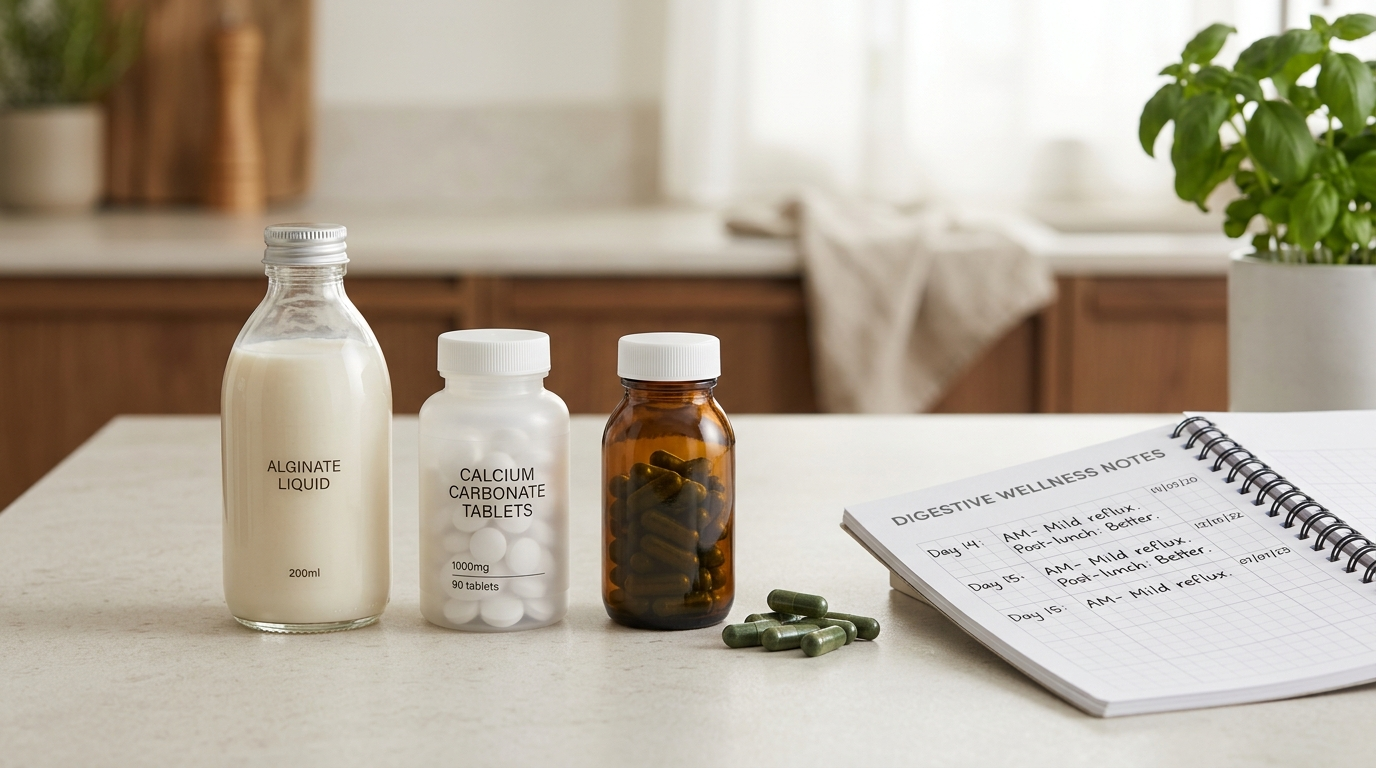
Heartburn, belching, nausea, and upper-abdominal discomfort cannot reliably tell you whether stomach acid is “low” or “high.” Reflux often reflects stomach contents moving upward, not excessive acid production. Avoid self-testing with betaine hydrochloride. Compare symptom pattern, red flags, medicines, and clinician-directed testing before choosing acid suppression or digestive-support products.
How did we evaluate low- versus high-acid claims?
We prioritized the National Institute of Diabetes and Digestive and Kidney Diseases, peer-reviewed reflux guidelines, systematic reviews, and randomized human trials over home-test instructions and supplement testimonials. We compared each option by mechanism, evidence quality, symptom fit, label transparency, interaction risk, likely duration of use, and whether it requires a confirmed diagnosis. We excluded the baking-soda “burp test,” lemon-juice challenges, and symptom checklists because they do not measure gastric pH or establish hypochlorhydria. Important limitations remain: heartburn, functional dyspepsia, ulcer disease, medication effects, and nonacid reflux can overlap, while one person may experience more than one mechanism. This guide therefore compares categories without diagnosing acid output. Trouble swallowing, gastrointestinal bleeding, persistent vomiting, anemia, unexplained weight loss, severe chest pain, or symptoms that continue despite appropriate care require clinical assessment rather than another over-the-counter experiment.
Can symptoms distinguish low stomach acid from high stomach acid?
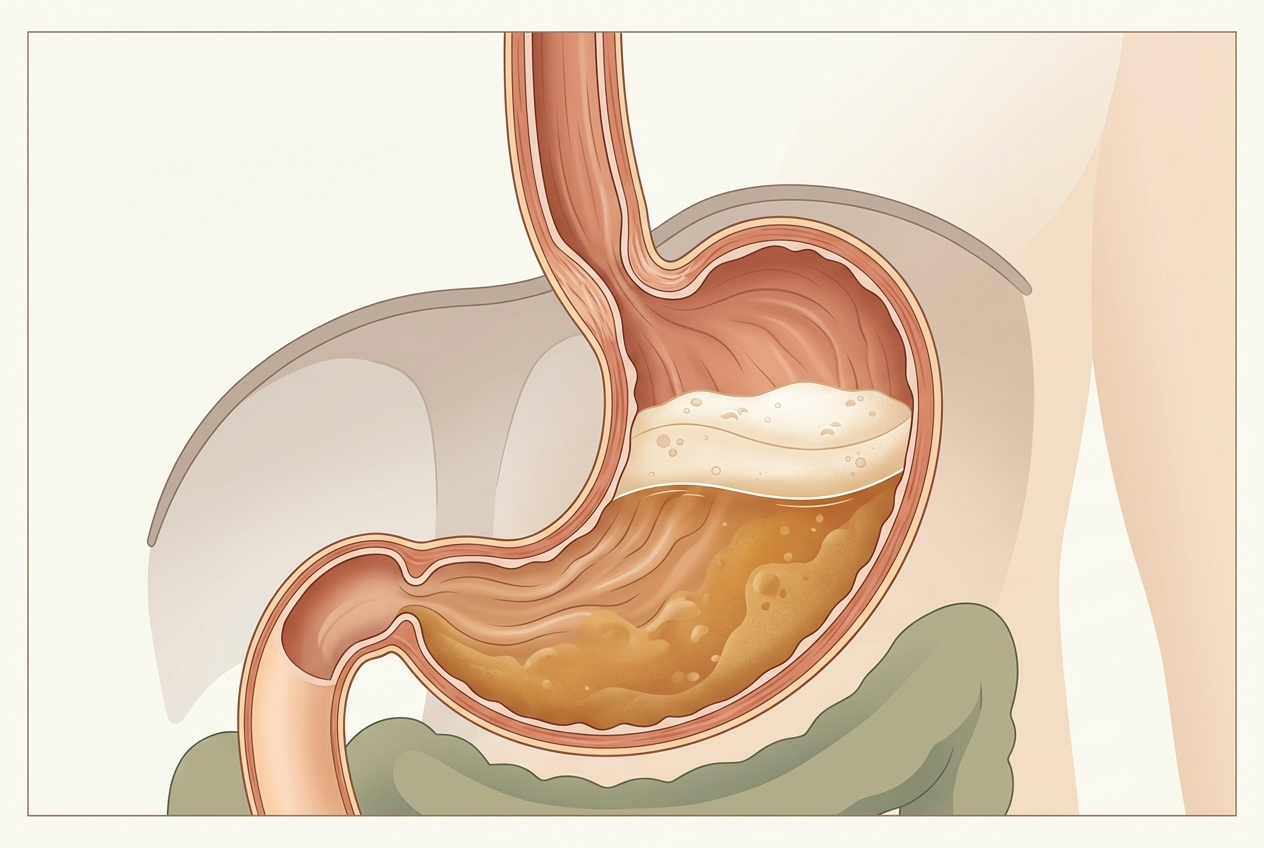
Symptoms alone usually cannot separate low gastric acid from acid reflux. Gastroesophageal reflux occurs when stomach contents travel into the esophagus; the material can irritate tissue even when the stomach does not produce unusually large amounts of acid. Belching, early fullness, burning, nausea, and bloating also appear in functional dyspepsia and medication-related conditions. The NIDDK diagnostic overview explains that clinicians begin with symptoms and history, then use endoscopy or esophageal pH monitoring when complications, competing conditions, or treatment failure make testing appropriate. Esophageal pH monitoring detects acid reaching the esophagus; it is not the same as guessing stomach-acid production from a kitchen test. Medicines matter too: proton-pump inhibitors, H2 blockers, antacids, iron, and some antimicrobials can change symptoms or digestion. A useful first step is documenting timing, meals, position, medicines, and alarm signs, not assigning yourself an acid label.
How do common acid and digestive-support options compare?
Some links below are affiliate links. This does not influence our evaluation criteria or recommendations. Gaviscon-type alginate products create a floating barrier above stomach contents. Calcium-carbonate antacids such as Tums neutralize existing acid for short-term labeled use. Proton-pump inhibitors such as omeprazole reduce acid production and belong in a clinician- or label-guided plan, especially when symptoms persist. DGL products remove most glycyrrhizin from licorice; Yuve DGL Licorice currently lists 760 milligrams of DGL extract plus 100 milligrams of glycine per two-capsule serving. DGL is a digestive-comfort option, not a test for low acid and not an acid suppressor.
| Option | Best for | Mechanism | Main limitation |
|---|---|---|---|
| Alginate | Post-meal reflux barrier | Forms a raft above contents | Formulas and sodium content vary |
| Calcium-carbonate antacid | Occasional short-term burning | Neutralizes acid | Does not diagnose the cause |
| Proton-pump inhibitor | Confirmed or suspected acid-mediated disease | Reduces acid secretion | Needs appropriate indication and review |
| Yuve DGL Licorice | Non-suppressive digestive-comfort routine | DGL extract with glycine | Ingredient evidence does not prove reflux treatment |
What is each option best for?
Best for a mechanical, after-meal approach: an alginate formula, because it acts on the refluxate barrier rather than claiming to correct acid production. A 2017 systematic review and meta-analysis found alginates improved symptom resolution versus placebo or antacids, although later reviews reported uncertainty across formulations and comparators. Best for occasional, label-directed neutralization: a calcium-carbonate antacid, provided kidney disease, mineral interactions, sodium restrictions, and frequent use are discussed with a pharmacist or clinician. Best for documented acid-mediated disease: an appropriately selected acid-suppressing medicine, not a supplement chosen from a symptom quiz. Best for a capsule-based, non-suppressive comfort routine: Yuve DGL Licorice, whose current label identifies DGL dose and glycine. A small randomized trial of a standardized licorice extract reported improvement in functional-dyspepsia scores, but that ingredient-level finding does not establish that every DGL product treats reflux or changes gastric acidity.
Why should you avoid betaine HCl home testing?
Betaine hydrochloride challenges do not provide a validated diagnosis of hypochlorhydria. Feeling warmth after a capsule, failing to burp after baking soda, or tolerating vinegar does not quantify gastric pH, acid output, ulcer status, or esophageal exposure. Supplemental acid can worsen burning or injure irritated tissue, particularly when a person has gastritis, an ulcer, reflux injury, or medicines that affect the gastrointestinal tract. It can also confuse the response to prescribed acid suppression. Clinicians who genuinely need acid-related information use the history, medication review, endoscopy, reflux monitoring, laboratory testing, or specialized gastric analysis according to the suspected condition. The practical comparison is therefore asymmetric: alginates and antacids have labeled short-term mechanisms, PPIs have established medical indications, and DGL has limited ingredient-level research; a home acid challenge offers neither a reliable measurement nor a safe shortcut. Record symptoms and bring the pattern to a clinician instead of escalating capsule doses until discomfort appears.
How should you test one option without obscuring the result?
Choose one defined goal, such as fewer post-meal regurgitation episodes, and record a seven-day baseline before changing the routine. Note meal size, alcohol, caffeine, late eating, body position, medicines, bowel pattern, and symptom timing. Follow the product label or clinician plan exactly; do not combine an alginate, antacid, PPI, DGL, and betaine HCl on the same day simply to see what works. Review the outcome at a time appropriate to the intervention, because an antacid acts differently from a daily prescription medicine or a supplement studied over several weeks. Stop and seek advice for worsening pain, swallowing difficulty, black stool, vomiting blood, faintness, unexplained weight loss, persistent vomiting, or chest pressure. Pregnant people and anyone with kidney disease, hypertension, electrolyte problems, or multiple medicines should ask a clinician or pharmacist before testing products. A symptom log improves comparison, but it cannot determine acid output or replace diagnosis.
What questions do shoppers ask about stomach-acid remedies?
Does reflux mean I make too much stomach acid?
Not necessarily. Reflux describes stomach contents moving into the esophagus, and the movement can cause symptoms without unusually high acid production.
Can baking soda diagnose low stomach acid?
No validated clinical threshold turns burp timing into a diagnosis. Gastric emptying, swallowed air, meal timing, and the baking-soda amount can all alter the result.
Is DGL the same as whole licorice root?
No. DGL is processed to remove most glycyrrhizin, the component associated with blood-pressure and electrolyte effects; labels and residual amounts still deserve review.
Does DGL neutralize stomach acid?
DGL is not an antacid and does not function like omeprazole. Limited trials concern specific licorice extracts and digestive symptoms, not proof that DGL corrects low or high acid.
Are alginates and antacids interchangeable?
No. Alginates form a physical raft above stomach contents, while antacids chemically neutralize acid; combination formulas can contain both mechanisms.
When should persistent heartburn be evaluated?
Frequent symptoms, treatment failure, swallowing difficulty, bleeding, anemia, persistent vomiting, unexplained weight loss, or new chest pain warrant medical assessment. Severe chest pressure or breathing difficulty requires urgent care.
Related reading: How Do You Ease Stomach Cramps? Safe First Steps and Warning Signs.
What is the bottom line?
The low-acid-versus-high-acid framing is too crude for overlapping digestive symptoms in real life. Reflux history and clinician-directed testing provide more useful information than baking soda, vinegar, or betaine HCl challenges. Alginate products offer a mechanical barrier, antacids neutralize acid, prescription or over-the-counter acid suppressors reduce secretion, and DGL products occupy a non-suppressive digestive-comfort category with narrower ingredient-level evidence. Compare one mechanism at a time and keep the intended outcome measurable. Yuve DGL Licorice provides a transparent capsule label and fits shoppers seeking that format, but it does not diagnose acid output and should not be presented as a substitute for GERD evaluation. For a wider view of routine formats, use the Yuve digestion collection as a label-comparison page rather than a self-diagnosis tool. Persistent or alarming symptoms belong with a clinician, not a longer supplement stack.
Leave a Reply