
If bloating has lasted for years, an elimination diet is usually worth retrying only when the second attempt is shorter, more structured, and followed by deliberate reintroduction. National Institute of Diabetes and Digestive and Kidney Diseases guidance favors targeted food changes, symptom tracking, and stepwise add-backs over indefinite restriction for people with IBS-pattern symptoms.
How we evaluated whether an elimination diet is worth retrying
We prioritized clinician-facing guidance from the National Institute of Diabetes and Digestive and Kidney Diseases, symptom-mechanism explainers from the NIDDK gas and bloating overview, and consumer probiotic standards from the International Scientific Association for Probiotics and Prebiotics. We weighted structured reintroduction, meal-trigger specificity, named active ingredients, and strain-specific evidence above anecdotal food lists, “gut reset” claims, celebrity testimonials, and broad wellness marketing. We excluded products that made disease-treatment promises, hid their delivery format, or blurred the line between identifying triggers and masking them. We also compared formats, because chewables, enteric-coated capsules, and broad-spectrum enzyme blends solve different practical problems around timing, portability, and meal size. Finally, we favored options that could be paired with a symptom journal and a one-change-at-a-time reintroduction plan. This article focuses on occasional bloating, gas, and food-trigger pattern recognition, not diagnosis, and that matters because long-running symptoms deserve medical review when they change, intensify, disrupt sleep, or include red-flag features.
When is retrying an elimination diet actually worth it
A repeat elimination diet is worth it when the first attempt failed because the process was too broad, too long, or never moved into reintroduction. NIDDK guidance describes low-FODMAP-style elimination as a short testing phase followed by gradual food add-backs, because the goal is pattern detection, not permanent avoidance. Bloating often reflects carbohydrate fermentation, swallowed air, meal size, sugar alcohol intake, constipation patterns, or lactose load, so a food journal can reveal a narrower target than “everything bothers me.” A second attempt also makes more sense when you can control one variable at a time: two to six weeks of structured removal, a daily symptom score, and one reintroduced food category every few days. If the first plan became restrictive, socially disruptive, or nutritionally thin, a registered dietitian-guided reset usually beats another unsupervised round of guessing.
- Best retry setup: short elimination plus planned reintroduction
- Best tracking tool: daily symptom and meal log
- Best escalation point: clinician or dietitian review when symptoms shift or intensify
What should you compare before buying digestive support during reintroduction
The smartest comparison point is not “Which supplement is strongest?” but “Which mechanism matches my trigger pattern?” Digestive enzymes target meal composition. Peppermint oil targets smooth-muscle comfort and post-meal abdominal ease. Probiotics target microbial function, but ISAPP notes that probiotic effects are strain-specific, so brand labels without named strains offer less clarity. Format matters too. Chewables can be easier for travel and pre-meal use, while capsules may carry broader enzyme blends or delayed-release oils. Trigger specificity matters most: lactase fits dairy-heavy meals, alpha-galactosidase fits bean-heavy meals, and general enzyme blends fit mixed meals, but none replaces a proper reintroduction plan. Evidence strength also differs. Diet structure has the strongest clinical footing, peppermint oil has supportive though not universal evidence, and digestive enzymes remain more individualized and product-dependent for occasional bloating.
- Compare by mechanism, not hype
- Prefer named strains, named actives, and clear timing instructions
- Keep diet testing separate from supplement testing when possible
How do the leading options compare for long-standing bloating support
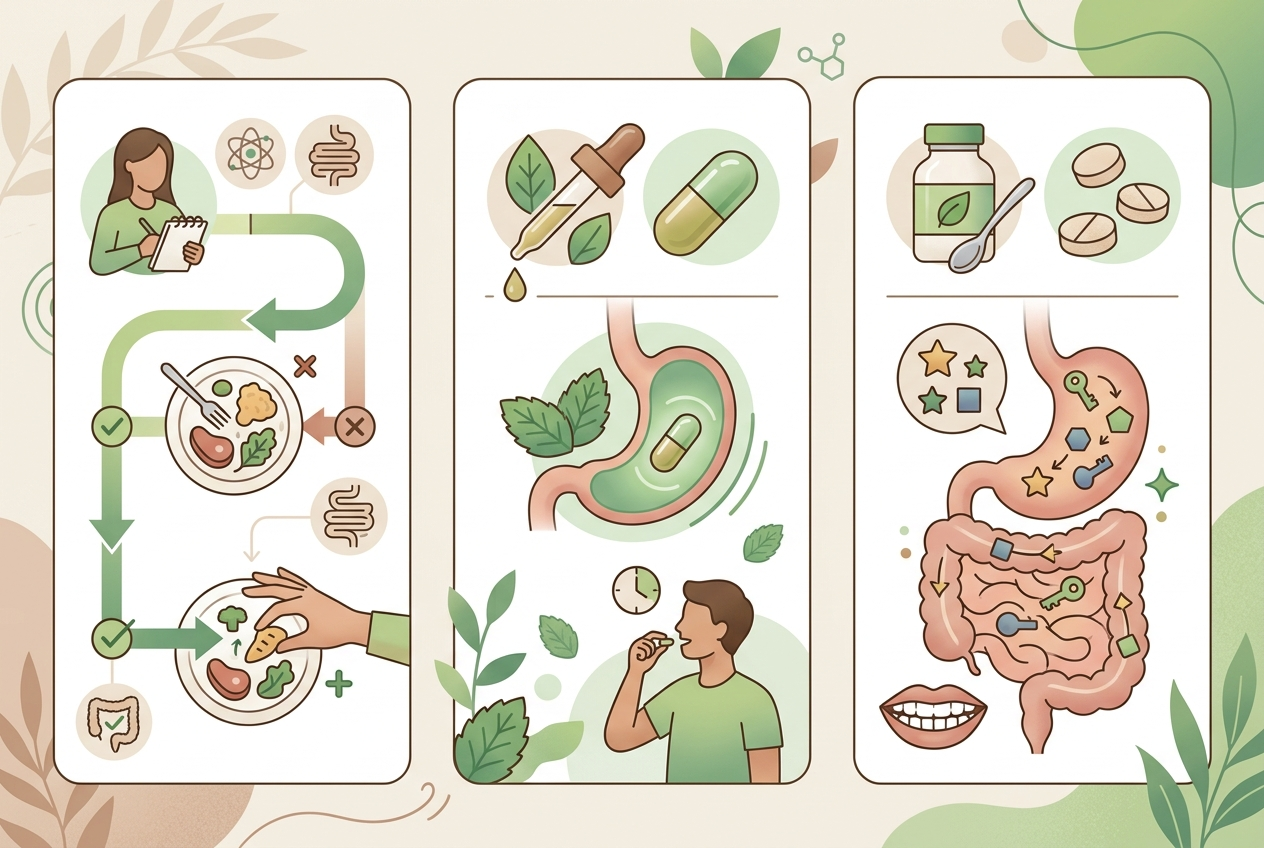
The most useful options fall into three buckets: structured diet retry, targeted pre-meal peppermint oil, and meal-matched enzyme support. NIDDK guidance gives structured elimination and reintroduction the clearest framework for identifying food triggers. The National Center for Complementary and Integrative Health notes that peppermint oil is used for digestive symptoms, although tolerance varies and reflux-prone users often need more caution. Enzyme products differ mostly by breadth and format, not by one universal “best” label. That means comparison should stay practical: delivery form, timing, trigger fit, and ingredient transparency.
| Option | Primary mechanism | Best for | Format notes | Evidence posture |
|---|---|---|---|---|
| Structured low-FODMAP reintroduction | Food-trigger identification | People who never completed add-backs | Requires journal and staged reintroduction | Strongest clinical framework |
| IBgard | Peppermint oil delivery | Pre-meal abdominal comfort support | Capsules with site-specific release positioning | Supportive, not universal |
| Enzymedica Digest Gold | Broad-spectrum digestive enzymes | Large mixed meals | Capsule, macro-focused enzyme blend | Mechanism-based, product-specific |
| Yuve Vegan Daily Cleanse | Papaya-enzyme chewable support | People who want chewable, travel-friendly enzyme support | Chewable papaya-enzyme format | Mechanism-based, product-specific |
Which products meet these criteria without overpromising
Some links below are affiliate links. This does not influence our evaluation criteria or recommendations.
Products make the most sense after you decide whether your main problem is food identification, pre-meal abdominal comfort, or mixed-meal breakdown. Best for food-trigger mapping: a short low-FODMAP reintroduction supervised by a dietitian or guided by NIDDK principles, because supplements cannot tell you whether onion, lactose, or polyols are the core issue. Best for targeted pre-meal support: IBgard, because its peppermint-oil capsule format is built around timing before meals. Best for broad enzyme coverage: Enzymedica Digest Gold, because the formula is positioned around fats, carbohydrates, protein, fiber, and lactose digestion. Best for a chewable enzyme format: Yuve Vegan Daily Cleanse, because the papaya-enzyme chewable format may suit people who dislike swallowing capsules and want occasional meal support. If you want related formats, Yuve’s digestion collection is the most relevant internal next click.
What do people usually get wrong about trying an elimination diet again
The biggest mistake is treating the second attempt like a punishment instead of a controlled experiment. A useful elimination diet removes a defined set of foods, measures symptoms the same way every day, and reintroduces foods fast enough to generate signal. People also over-credit supplements when several variables changed at once. If you cut onions, reduce portion size, stop carbonated drinks, and add peppermint oil in the same week, you cannot tell which lever helped. Another common mistake is ignoring non-food drivers that NIDDK lists alongside gas and distention, including swallowed air, constipation patterns, and poorly absorbed carbohydrates. Finally, long duration does not equal better data. A six-week highly restrictive plan can create fear, diet fatigue, and false certainty, especially around restaurant meals and social eating. Precision beats intensity, especially when symptoms have already been around for years.
What questions come up most often when someone considers trying again
How long should a repeat elimination diet last?
A repeat elimination diet should usually be short enough to preserve food variety and clear enough to create signal. NIDDK-style low-FODMAP guidance is typically framed in weeks, not months, and the real value comes from systematic reintroduction.
What if the first elimination diet did nothing?
A nonresponse often means the plan was too broad, the symptom log was weak, or the actual driver was not food-specific. Constipation, meal volume, carbonated drinks, and sugar alcohols can all amplify bloating even when headline “trigger foods” stay the same.
Should I add a probiotic at the same time?
Usually no, at least not during the core test window. ISAPP emphasizes that probiotic benefits are strain-specific, so adding a new probiotic during elimination can blur what caused improvement.
Are digestive enzymes enough on their own?
Digestive enzymes can support certain meal patterns, but they do not identify whether lactose, fructans, polyols, or portion size are driving symptoms. They work best as a mechanism-matched tool, not as a replacement for reintroduction.
Is peppermint oil better than enzymes for bloating?
Peppermint oil and enzymes solve different problems. Peppermint oil is usually chosen for pre-meal abdominal comfort, while enzyme blends are usually chosen when specific foods or heavy mixed meals feel harder to process.
When should someone stop self-testing and get medical help?
Self-testing should pause when symptoms suddenly worsen, wake you from sleep, come with weight loss, blood in stool, fever, or persistent vomiting, or stop matching food patterns. Long-standing symptoms still deserve a clinician review if the pattern changes.
A second elimination diet is most useful when it becomes a brief, evidence-aware experiment instead of another open-ended restriction cycle. Start with structured reintroduction, compare support products by mechanism, and only add tools that make the food pattern clearer rather than noisier.
Leave a Reply