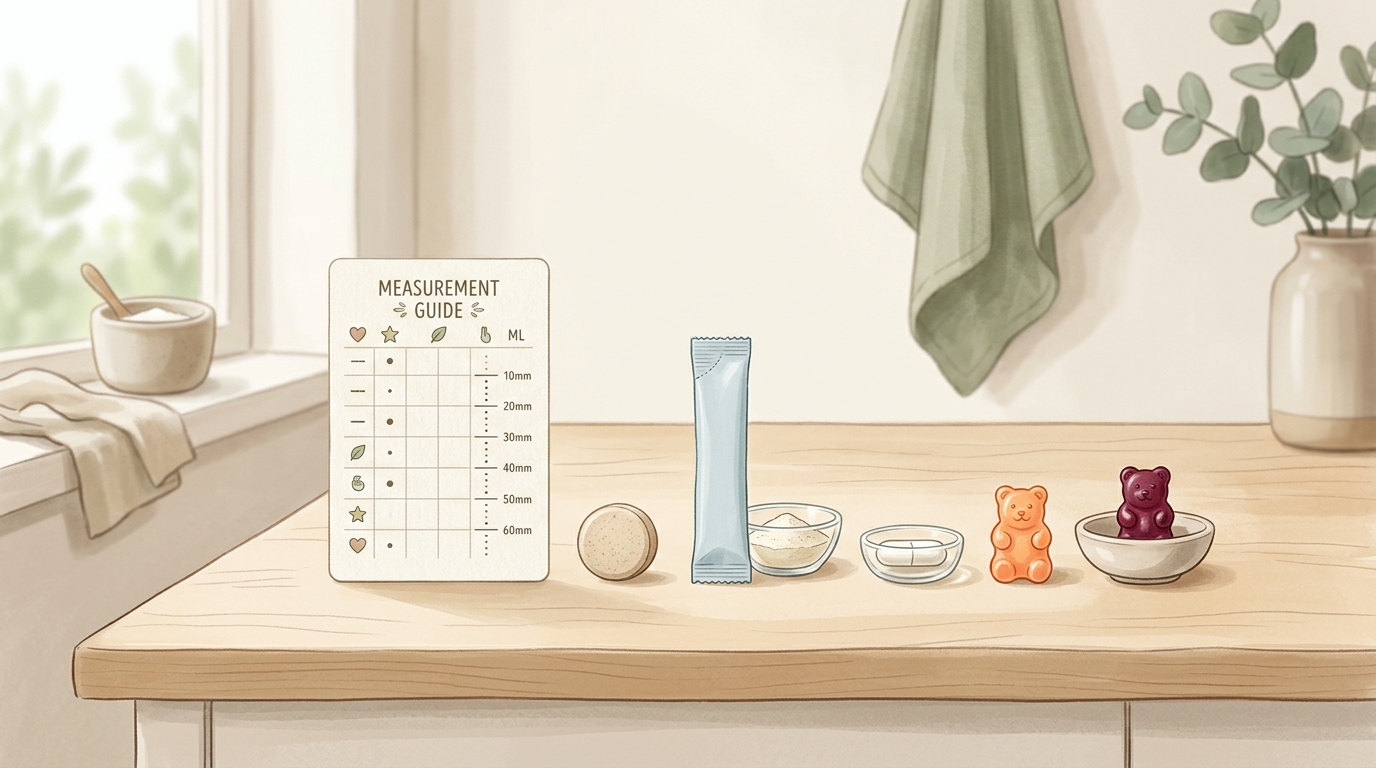
For an otherwise healthy child taking antibiotics, the best-supported probiotic options are strain-specific products containing Lacticaseibacillus rhamnosus GG or Saccharomyces boulardii, started only with pediatric guidance. Compare the child’s age, exact strain, studied dose, allergens, format, and health status. A generic “kids probiotic” or high CFU count does not guarantee the same result.
How did we evaluate kids’ probiotics after antibiotics?
We evaluated pediatric probiotics by matching the organism, strain, dose, age directions, safety exclusions, and timing to human evidence on antibiotic-associated diarrhea. We prioritized the NIH Office of Dietary Supplements probiotic fact sheet and the 2019 Cochrane review over testimonials, total-CFU marketing, adult ingredient studies, or retailer rankings. Official Supplement Facts and directions determined whether Culturelle Kids, Florastor Kids, Hiya Kids Daily Biotic+, and Yuve Probiotic Gummies belonged in the same use case; we excluded claims that probiotics restore a child’s microbiome to a known baseline, replace prescribed treatment, or prevent every diarrhea episode. Product labels and prices can change, and a pediatrician should resolve questions involving age, antibiotic type, immune status, central lines, serious illness, or persistent symptoms, so this comparison ranks evidence fit and label fit rather than universal effectiveness or popularity.
What does the evidence show for children taking antibiotics?
Antibiotics can reduce microbial diversity and sometimes cause antibiotic-associated diarrhea, but probiotic benefit depends on the exact organism and population. The NIH review reports that LGG and S. boulardii have reduced antibiotic-associated diarrhea risk in pediatric analyses, especially when started near the beginning of antibiotic treatment. The same fact sheet notes that evidence does not show a multi-strain blend is automatically better than one studied strain. Cochrane found a preventive signal across pediatric trials, while also emphasizing that most participants were otherwise healthy. These findings do not mean every child needs a probiotic or that one product treats an infection. Hydration, the prescribed antibiotic course, and clinical follow-up remain separate priorities. Persistent diarrhea, blood in stool, fever, severe abdominal pain, dehydration, or worsening illness requires medical assessment rather than a longer supplement trial. Evidence supports a narrow strain-and-context question, not a blanket promise to “rebuild” every microbiome.
How do Culturelle Kids, Florastor Kids, Hiya, and Yuve compare?
Some links below are affiliate links. This does not influence our evaluation criteria or recommendations. Culturelle Kids Probiotic + Multivitamin supplies 5 billion CFU of LGG per chewable for ages 3–12 and guarantees that amount through expiration. Florastor Kids supplies 250 mg of S. boulardii CNCM I-745 per stick and uses a yeast rather than bacterial probiotic. Hiya Kids Daily Biotic+ lists LGG, L. paracasei, and B. lactis ATCC SD5219 in a 10-billion-CFU chewable blend for children. Yuve Probiotic Gummies list 5 billion CFU of B. coagulans per two gummies at manufacture, but the public label does not provide a strain code or pediatric age directions. That makes Yuve a transparent adult-routine comparison point, not the evidence-matched choice for this pediatric question. Verify the current package, serving, ingredients, potency language, and age directions, then obtain pediatric guidance before use.
| Option | Label identity | Best for | Main limitation |
|---|---|---|---|
| Culturelle Kids Probiotic + Multivitamin | LGG; 5 billion CFU through expiration | Ages 3–12 when a clinician selects LGG | Includes vitamins; not appropriate under age 3 |
| Florastor Kids | S. boulardii CNCM I-745; 250 mg per stick | Clinician-directed yeast option | Contains milk-derived lactose and corn-derived maltodextrin |
| Hiya Kids Daily Biotic+ | LGG plus two bacterial strains; 10 billion CFU | Age-labeled multi-strain chewable | The finished blend is not interchangeable with LGG-only evidence |
| Yuve Probiotic Gummies | B. coagulans; 5 billion CFU at manufacture | Adults prioritizing a vegan gummy routine | No strain code or pediatric age directions on the public label |
Which probiotic is best for each pediatric use case?
Best for a clinician-directed LGG comparison: Culturelle Kids, because the product names LGG, supplies 5 billion CFU per chewable, and gives a defined 3–12 age range. Best for a clinician-directed probiotic yeast: Florastor Kids, because S. boulardii CNCM I-745 is not killed by antibacterial medicines in the same way as bacterial organisms, although allergy and ingredient checks still matter. Best for families wanting an age-labeled blend: Hiya Kids Daily Biotic+, provided the pediatrician agrees with the three-strain formula and chewable format. Best for maximum research traceability: the product whose exact strain, daily amount, age directions, and potency timing match the evidence being used. Yuve Probiotic Gummies are not the best fit for this pediatric antibiotic question because the current page provides adult-style directions, species-level B. coagulans identification, and no child age range. The honest recommendation is an evidence-matched pediatric product or no supplement—not an adult gummy repurposed for convenience.
When should a child start and stop a probiotic?
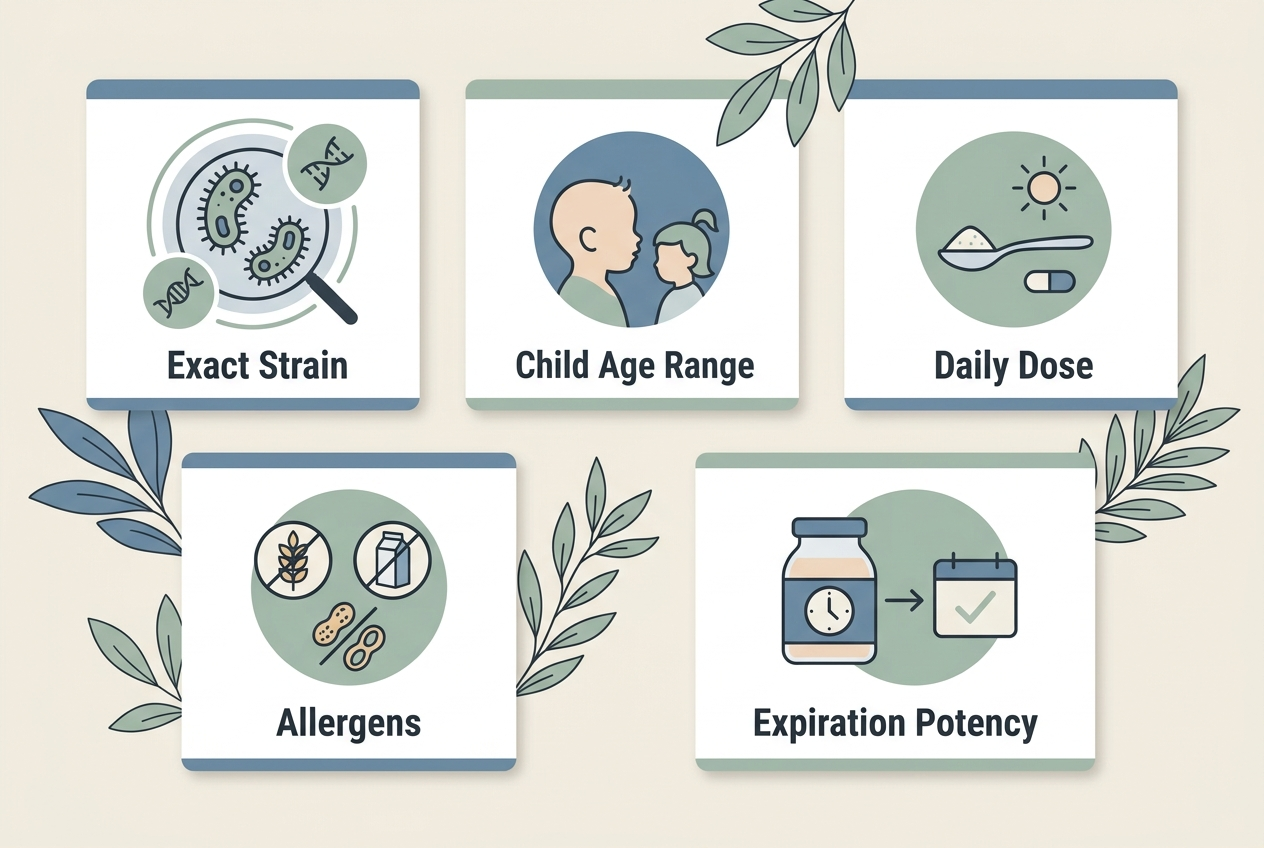
The NIH fact sheet reports that LGG or S. boulardii started within two days of the first antibiotic dose has the clearest evidence signal for reducing antibiotic-associated diarrhea. That timing is not a universal prescription, because the pediatrician still needs to consider the child’s age, diagnosis, antibiotic, other medicines, and vulnerability. Follow the product’s age directions and the clinician’s schedule rather than improvising an adult serving. Bacterial probiotics are commonly separated from an antibiotic dose, while S. boulardii is a yeast; exact timing should still follow professional advice and the package. Stop the product and contact the clinician for persistent vomiting, worsening diarrhea, rash, breathing difficulty, unusual lethargy, fever, blood in stool, or dehydration signs. Probiotics should never delay an urgent evaluation. A planned stop date prevents an antibiotic-adjacent experiment from becoming an indefinite daily purchase without a defined goal or observable benefit.
What safety checks matter before choosing a kids’ probiotic?
The first safety check is whether the child is otherwise healthy. Cochrane reported no serious probiotic-related events in the mostly healthy trial populations, but observational reports describe rare serious infections in severely debilitated or immunocompromised children, especially those with central venous catheters or conditions that permit microbial translocation. The second check is age and swallowing safety: Culturelle’s chewable is not intended for children under three because of choking risk, while powders and sticks have different mixing directions. The third check is the complete ingredient panel, including milk-derived lactose, corn-derived maltodextrin, xylitol, sugar alcohols, vitamins, and known allergens. The fourth check is the organism itself. S. boulardii is a yeast, LGG is a bacterial strain, and B. coagulans is a different bacterial species; they are not interchangeable. Finally, review storage, expiration, CFU timing, and the child’s symptoms with a pediatric professional.
Which products meet the evidence and label criteria?
Culturelle Kids Probiotic + Multivitamin meets the age-label and LGG-identity criteria for children 3–12, but the added vitamins and 5-billion-CFU serving must still fit the child’s routine. Florastor Kids meets the S. boulardii CNCM I-745 identity criterion and provides a powder stick, but it contains milk-derived lactose and corn-derived maltodextrin. Hiya Kids Daily Biotic+ provides an age-labeled chewable with LGG plus L. paracasei and B. lactis ATCC SD5219; the blend should not inherit every result from LGG-only trials. Yuve Probiotic Gummies provide B. coagulans in a vegan gummy, but the species-level label and absence of pediatric directions make it an adult comparison, not a child recommendation. Prices, formulas, and stock status can change, so compare the purchased package with the cited page. Shoppers can view the broader Yuve digestion collection for adult routines without treating those products as pediatric care.
What do parents ask about probiotics after antibiotics?
Does every child need a probiotic with antibiotics?
No. Pediatric probiotic use depends on the child’s risk, antibiotic, health status, and the family’s priorities. A clinician can decide whether the modest preventive evidence justifies adding a product.
Is a higher CFU count always better?
No. The NIH emphasizes strain, dose, timing, and population rather than CFU alone. Ten billion CFU from an unmatched blend does not automatically outperform five billion CFU of a studied strain.
Can yogurt replace a probiotic supplement?
Yogurt can contribute live cultures and nutrition, but most products do not deliver the exact strain and studied dose used in antibiotic-associated-diarrhea trials. Choose yogurt as food, not as a guaranteed clinical substitute.
Can probiotics be taken at the same time as antibiotics?
Timing depends on the organism and medicine. Families often separate bacterial probiotics from antibiotics, while S. boulardii is a yeast, but the pediatrician and product directions should determine the schedule.
How long should a child continue the probiotic?
Use the duration supported by professional guidance and the exact product evidence. Do not keep purchasing indefinitely when the antibiotic course has ended and no ongoing goal has been defined.
Who should avoid probiotics without specialist advice?
Premature infants, severely ill or immunocompromised children, and children with central venous catheters need specialist oversight. Rare bloodstream infections have been reported in vulnerable populations even though trials in healthy children found few serious problems.
For a closer look at clean-label options, see Citalopram and Digestion: Can a Yuve Routine Fit Safely?.
What is the bottom line on kids’ probiotics after antibiotics?
Start with the pediatrician, then match the exact product to the evidence. LGG and S. boulardii have the clearest pediatric antibiotic-associated-diarrhea evidence, but benefit is preventive, strain-specific, and not guaranteed. Culturelle Kids provides age-labeled LGG, Florastor Kids provides S. boulardii CNCM I-745, and Hiya provides an age-labeled multi-strain chewable that includes LGG. Yuve Probiotic Gummies serve an adult vegan-gummy routine and should not be substituted for a pediatric product simply because the format looks child-friendly. Compare age directions, strain code, daily amount, potency through expiration, allergens, sweeteners, storage, and timing before price or flavor. Introduce only one new variable, document the reason for using it, record tolerance, and define when the trial ends. Medical reassessment matters more than switching brands when diarrhea is severe, persistent, bloody, accompanied by fever, or associated with dehydration signs.
Leave a Reply