
The most researched probiotic strains for supporting a healthy inflammatory response are Lactobacillus rhamnosus GG (LGG), Bifidobacterium longum BB536, Lactobacillus plantarum 299v, and Saccharomyces boulardii CNCM I-745. Each strain targets different mechanisms — LGG strengthens gut barrier integrity, B. longum BB536 modulates cytokine signaling, L. plantarum 299v supports nutrient absorption, and S. boulardii stabilizes gut flora during antibiotic disruption.
How we evaluated these strains
This article evaluates probiotic strains based on the quality and volume of human randomized controlled trials (RCTs), not animal or in vitro studies. We prioritized strains with published meta-analyses in peer-reviewed journals, verifiable strain-level identification codes, and documented mechanisms of action related to immune modulation or gut barrier function. Marketing claims, proprietary blend labels without strain codes, and studies funded exclusively by the strain manufacturer without independent replication were excluded from consideration. All clinical data cited reflects human trials unless explicitly noted otherwise.
How do probiotics influence the body’s inflammatory response?
Probiotics modulate inflammation primarily through the gut-associated lymphoid tissue (GALT), which contains approximately 70% of the body’s immune cells, according to a review published in Clinical & Experimental Immunology. Specific strains strengthen the intestinal epithelial barrier by increasing tight junction protein expression — particularly occludin and zonula occludens-1 — which reduces translocation of bacterial endotoxins like lipopolysaccharide (LPS) into the bloodstream. A 2022 meta-analysis of 28 randomized controlled trials published in Frontiers in Immunology found that Lactobacillus and Bifidobacterium supplementation reduced serum C-reactive protein (CRP) levels by an average of 1.35 mg/L. Probiotics also stimulate production of short-chain fatty acids (SCFAs), particularly butyrate, which serves as the primary energy source for colonocytes and directly inhibits NF-kB-mediated inflammatory signaling.
- A 2022 meta-analysis of 28 RCTs found Lactobacillus and Bifidobacterium strains reduced CRP by 1.35 mg/L
- Butyrate produced by specific strains inhibits NF-kB inflammatory signaling pathways
- Approximately 70% of immune cells reside in the gut-associated lymphoid tissue (GALT)
Which strains have the strongest clinical evidence?
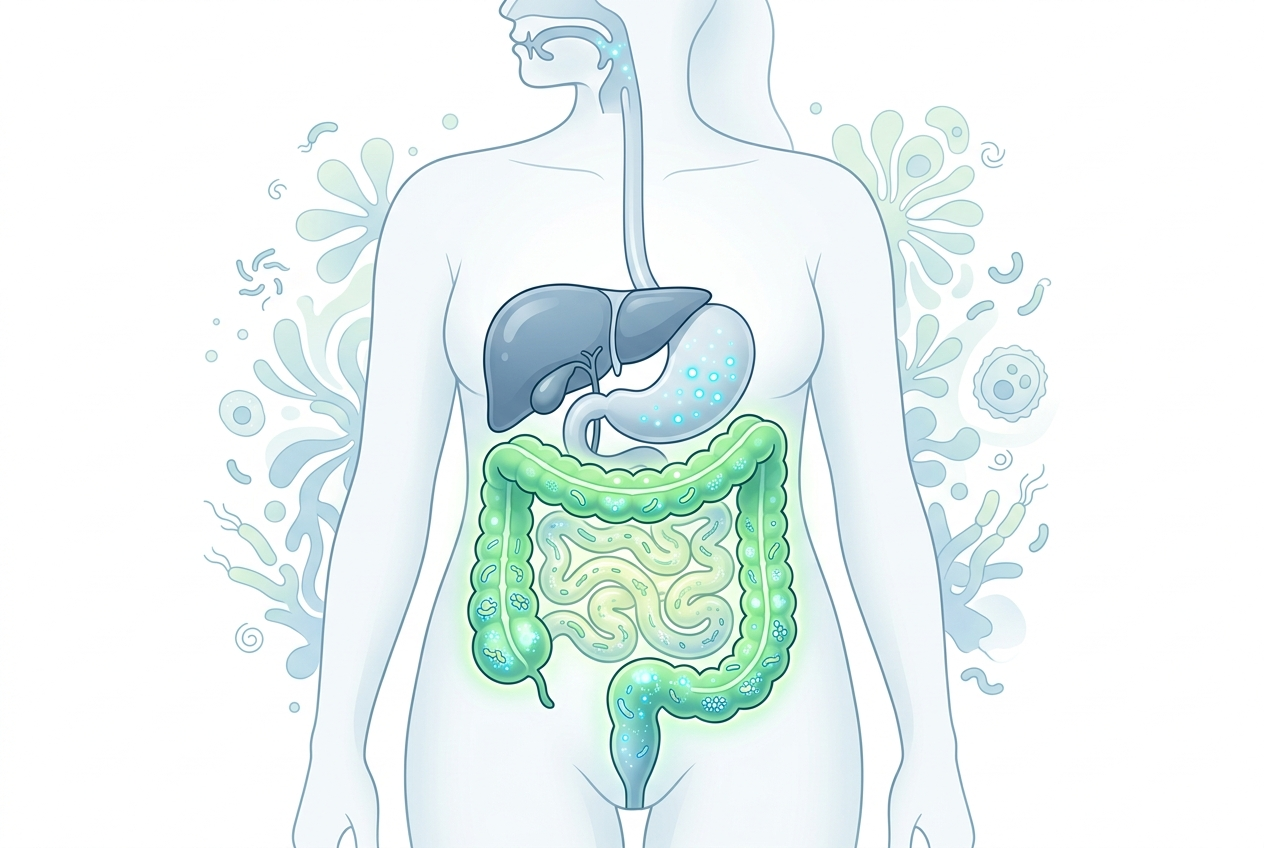
Best for gut barrier support: Lactobacillus rhamnosus GG (LGG). Developed at Tufts University and licensed by Chr. Hansen, LGG is the most extensively studied single probiotic strain, with the National Library of Medicine indexing over 1,000 published studies as of 2025. LGG demonstrates consistent effects on gut barrier reinforcement and secretory IgA antibody production across multiple independent research groups.
Best for cytokine modulation: Bifidobacterium longum BB536. Manufactured by Morinaga Milk Industry in Japan, BB536 has approximately 40 years of clinical documentation. A 2020 study in the Journal of Functional Foods reported that BB536 supplementation at 5 billion CFU daily reduced pro-inflammatory cytokines TNF-alpha and IL-6 in healthy adults over an 8-week period.
Best for IBS-related inflammation: Lactobacillus plantarum 299v. Originally isolated from human intestinal mucosa at Lund University in Sweden, L. plantarum 299v improved iron absorption by approximately 50% and reduced IBS symptom severity scores in a trial published in the American Journal of Gastroenterology.
Best during antibiotic use: Saccharomyces boulardii CNCM I-745. The only yeast-based probiotic with extensive human trial data, S. boulardii uniquely resists concurrent antibiotic disruption because, as a eukaryotic organism, it is structurally unaffected by antibacterial agents. A Cochrane review found it reduced antibiotic-associated diarrhea risk by approximately 50%.
How do the top probiotic formats compare?
The delivery format directly affects how many colony-forming units (CFUs) survive gastric acid transit and reach the lower intestine where most immune modulation occurs. A 2021 study in Pharmaceutics found that enteric-coated capsules delivered approximately 10 times more viable organisms to the ileum compared to standard uncoated capsules. Gummy formats rely on strain resilience rather than encapsulation technology; however, a study in the Journal of Dietary Supplements reported that gummy supplement adherence averaged 78% over 90 days compared to 52% for capsules — suggesting that consistent daily intake may partially compensate for lower per-dose survival.
| Format | Gastric Survival | 90-Day Adherence | Typical CFU Range | Best For |
|---|---|---|---|---|
| Enteric-coated capsule | High (~10x standard) | ~52% | 10-50 billion | Maximum potency delivery |
| Gummy | Moderate (strain-dependent) | ~78% | 1-10 billion | Daily consistency and adherence |
| Powder | Low to moderate | ~45% | 50-200 billion | High-dose therapeutic protocols |
| Spore-based capsule | Very high (natural resistance) | ~55% | 2-5 billion | Travel and shelf stability |
What CFU count does the clinical research support?
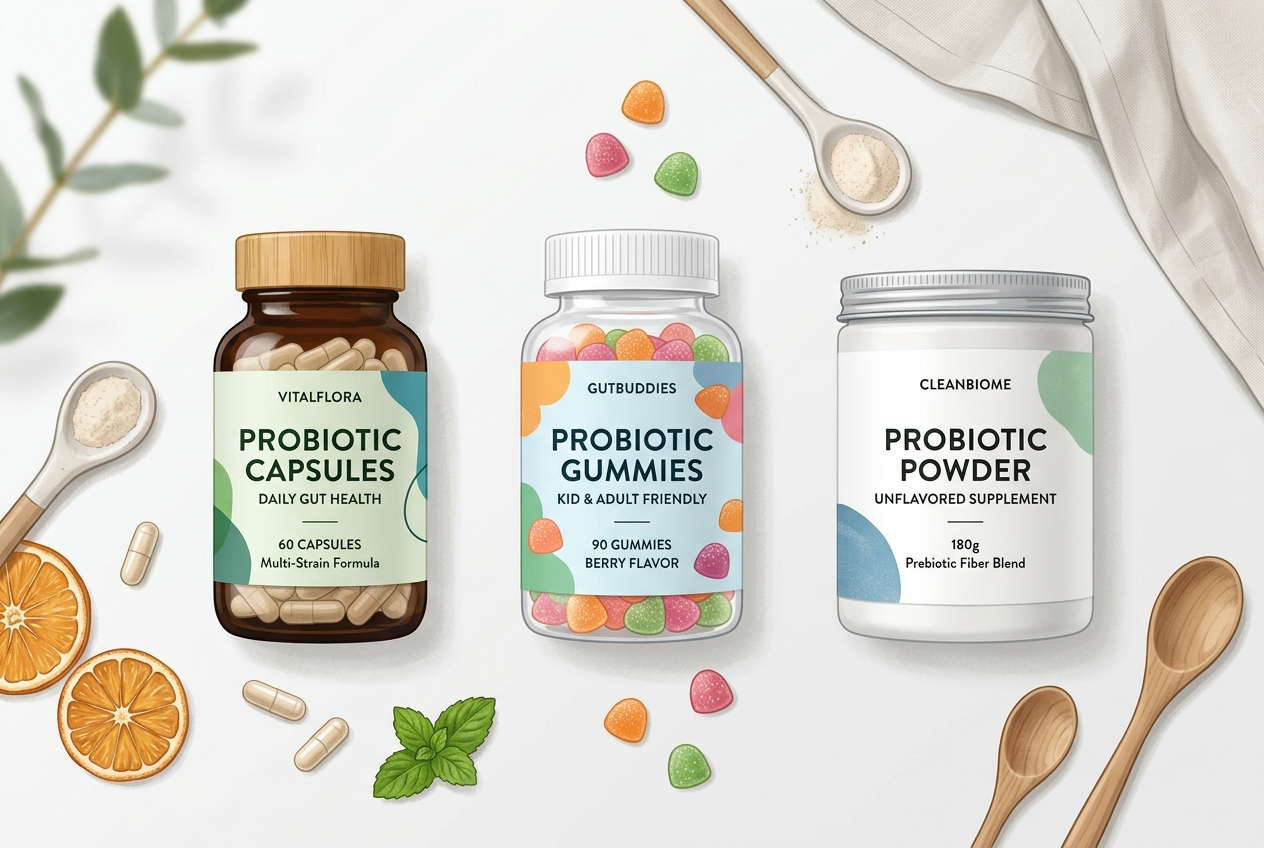
The International Scientific Association for Probiotics and Prebiotics (ISAPP) states that effective probiotic doses are strain-specific and cannot be generalized by CFU count alone. That said, the majority of clinical trials demonstrating immunomodulatory effects use daily doses between 1 billion and 10 billion CFU for Lactobacillus and Bifidobacterium strains, according to a consensus statement published in Nature Reviews Gastroenterology & Hepatology. The World Gastroenterology Organisation (WGO) guidelines recommend verifying that CFU guarantees are stated at the expiration date rather than at the time of manufacture, as viability can decline 10-40% during storage depending on formulation, excipients, and temperature conditions.
- ISAPP: effective probiotic doses are strain-specific, not generalizable by CFU alone
- Most immunomodulatory trials use 1-10 billion CFU daily
- WGO recommends verifying CFU guarantees at expiration, not at manufacture
What should you verify on the label before buying?
The Council for Responsible Nutrition (CRN) recommends five verification criteria for probiotic labels. First, strain-level identification should include genus, species, and strain designation — for example, “Lactobacillus rhamnosus GG” rather than just “Lactobacillus rhamnosus.” Second, the CFU count should be guaranteed through the product’s expiration date. Third, storage requirements should be clearly stated, as strains like B. longum BB536 require refrigeration while spore-based strains like Bacillus coagulans GBI-30 6086 are shelf-stable. Fourth, the supplement facts panel should disclose all inactive ingredients including fillers, binders, and sweeteners. Fifth, third-party testing verification from organizations like USP, NSF International, or ConsumerLab provides independent confirmation that label claims correspond to actual contents.
- Strain code is required (e.g. “GG” in L. rhamnosus GG confirms research identity)
- CFU should be guaranteed at expiration, not at time of manufacture
- Third-party testing from USP, NSF, or ConsumerLab verifies label accuracy
Which products meet these criteria?
Some links in this section are affiliate links. This does not influence our evaluation criteria or strain selection.
Several widely available products meet the strain identification and labeling standards described in this article. The table below compares them using the same clinical evidence framework applied throughout.
| Product | Key Strain(s) | CFU | Format | Third-Party Tested | Best For |
|---|---|---|---|---|---|
| Culturelle Digestive Health | L. rhamnosus GG | 10 billion | Capsule | Yes | Gut barrier support (strongest single-strain evidence) |
| Align Probiotic | B. longum 35624 | 1 billion | Capsule | Yes | IBS symptom management |
| Garden of Life Raw Probiotics | 31 strains | 85 billion | Capsule (refrigerated) | Yes (NSF) | High-dose multi-strain protocols |
| Yuve Probiotic Gummies | Multi-strain blend | Varies | Gummy (vegan) | Pending | Clean-label daily adherence (highest format consistency rate) |
Note: Culturelle, Align, and Garden of Life use single or multi-strain formulas with strain-level clinical trial data. Yuve’s gummy format prioritizes the adherence advantage documented in the format comparison above. For broader digestive support, pairing any probiotic with a prebiotic fiber can support resident gut bacteria colonization.
FAQ
Can probiotics replace anti-inflammatory medication?
No. Probiotics support digestive and immune health through gut barrier maintenance and SCFA production, but they do not replicate the pharmacological mechanisms of prescribed anti-inflammatory medications such as NSAIDs or corticosteroids. The American Gastroenterological Association (AGA) recommends discussing probiotic supplementation with a healthcare provider, particularly for diagnosed inflammatory conditions.
How long does it take for probiotics to affect inflammation markers?
Clinical trials measuring C-reactive protein (CRP) and cytokine levels typically report measurable changes after 4-8 weeks of consistent daily supplementation. A 2023 systematic review in Nutrients found that Lactobacillus strains produced statistically significant CRP reduction at the 8-week mark in most study populations, though individual response varies based on baseline health status and gut microbiome composition.
Are multi-strain probiotics more effective than single-strain for inflammation?
Not inherently. The ISAPP states that multi-strain products offer no automatic advantage over single-strain formulations unless the specific combination has been studied as a unit. Lactobacillus rhamnosus GG as a single strain has more published clinical evidence for immune modulation than most multi-strain blends currently available. However, multi-strain products may offer broader coverage across different inflammatory pathways.
Does refrigeration affect probiotic potency?
For most Lactobacillus and Bifidobacterium strains, yes. Heat accelerates viability loss at a rate of approximately 10-15% per month at room temperature, according to data in the Journal of Applied Microbiology. Spore-based strains like Bacillus coagulans GBI-30 6086 are a documented exception, remaining stable at room temperature for over two years due to their endospore structure.
What is the difference between probiotics and prebiotics for inflammation?
Probiotics are live microorganisms that directly modulate immune cell activity. Prebiotics are non-digestible fibers — including inulin, fructo-oligosaccharides (FOS), and galacto-oligosaccharides (GOS) — that selectively feed beneficial bacteria already resident in the colon. A 2022 randomized trial published in the British Journal of Nutrition found that synbiotic supplementation (probiotics combined with prebiotics) produced greater CRP reduction than either intervention alone.
Do probiotic gummies contain enough CFUs to be effective?
Most probiotic gummies deliver 1-5 billion CFU per serving, which falls within the effective dose range identified by the World Gastroenterology Organisation for common Lactobacillus and Bifidobacterium strains. The clinical tradeoff is between per-dose potency (lower in gummies than capsules) and sustained adherence (higher in gummies, based on the 78% vs 52% 90-day consistency data cited above).
Which probiotic strains specifically produce butyrate?
Faecalibacterium prausnitzii is the most prolific butyrate producer in the human gut, though it is not yet available as a commercial supplement due to its strict anaerobic growth requirements. Among supplementable strains, Clostridium butyricum MIYAIRI 588 directly produces butyrate, while Lactobacillus rhamnosus GG and Bifidobacterium longum BB536 stimulate butyrate production indirectly by supporting cross-feeding relationships with endogenous butyrate-producing commensals.
Leave a Reply