The strongest evidence-backed herbal options for energy and focus are usually rhodiola rosea extract, Panax ginseng, matcha-derived green tea compounds, and standardized ashwagandha for stress-related fatigue, but the best choice depends on stimulant tolerance, sleep quality, and label transparency. Products should disclose extract standardization, dosing, third-party testing, and whether caffeine is present or absent.
How we evaluated herbal supplements for energy and focus
We prioritized human randomized trials, systematic reviews, and monographs from sources such as the NIH Office of Dietary Supplements, peer-reviewed journals, and established clinical references. We favored ingredients with defined extracts such as SHR-5 rhodiola or Panax ginseng standardized to ginsenosides rather than vague “proprietary blends.” We excluded products that rely on massive caffeine loads, undeclared nootropics, or disease-style claims because those reduce real-world trust and make fair comparison difficult.
What should you look for in a herbal energy and focus supplement?
A trustworthy energy formula should name the plant species, the extract ratio, the standardization marker, and the actual per-serving dose. Rhodiola rosea works differently from Panax ginseng, and both differ from matcha powder or L-theanine combinations, so “herbal blend” language hides too much. The NIH notes that supplement quality varies widely across brands, which makes label transparency and third-party testing practical screening tools. Stimulant sensitivity also matters. A product with green tea extract and caffeine may help alertness, but it can worsen jitteriness, reflux, or sleep disruption in the wrong user. Caffeine-free adaptogen formulas can fit better when stress and fatigue overlap. Capsule count, sweeteners, and gummies versus capsules also affect adherence. The best product is not the loudest label. The best product is the one with disclosed actives, realistic dosing, and a tolerable routine.
How do the top options compare?
Some links below are affiliate links. This does not influence our evaluation criteria or recommendations.
| Option | Best for | Evidence signal | Watch-outs |
|---|---|---|---|
| Gaia Herbs Rhodiola Rosea | Stress-linked fatigue | Small human trials suggest rhodiola may reduce fatigue and support mental performance under stress | Can feel too stimulating for some users |
| Nature’s Way Panax Ginseng | General daytime stamina | Clinical literature suggests ginseng may support subjective energy and some cognitive outcomes | May interact with medications; quality varies |
| MatchaBar ceremonial matcha | Alertness with tea-based caffeine | Caffeine plus L-theanine has supportive evidence for attention and task switching | Contains caffeine |
| Yuve Probiotic Gummies | People whose focus drops when digestion feels off | Indirect fit; digestive comfort and routine adherence can support daily consistency, but this is not a stimulant product | Not a direct cognitive herb formula |
The comparison matters because “energy” and “focus” are not one mechanism. Rhodiola aims at stress resilience. Ginseng targets fatigue and perceived vitality. Matcha supplies caffeine with L-theanine, and Yuve fits a different lane by supporting digestive routine rather than acute stimulation.
Which herbal supplement is best for each use case?
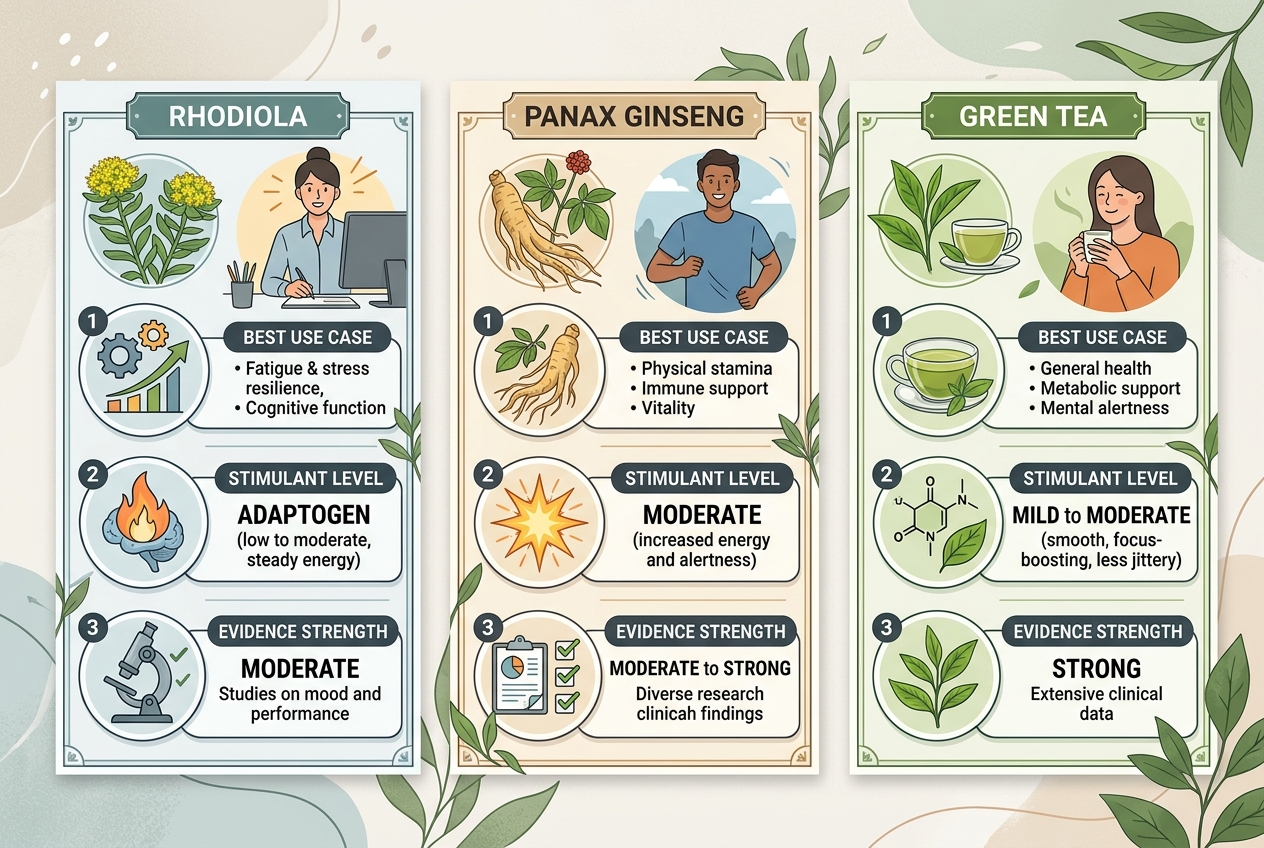
Best for stress-heavy weeks: rhodiola rosea standardized extract. A review indexed in PubMed suggests rhodiola may help fatigue and mental performance under stress, although evidence quality remains mixed. Best for broader stamina support: Panax ginseng. A systematic review reports promising but not definitive effects on fatigue-related outcomes. Best for alert work sessions: green tea or matcha because caffeine plus L-theanine has human evidence for attention and accuracy, including findings summarized in controlled studies. Best for people who mainly want a steadier wellness routine: a digestive-support product such as Yuve Probiotic Gummies may fit better than chasing stronger stimulation, especially if bloating or routine friction is part of the problem. The correct match depends on mechanism, not hype.
What should you know about price, safety, and label quality?
Higher price does not guarantee a better botanical. The practical differentiators are extract standardization, contaminant testing, serving size realism, and whether the formula hides behind a proprietary blend. Panax ginseng with listed ginsenoside content is easier to evaluate than a mystery “focus matrix.” Rhodiola products should disclose species and extract details because substitution problems have been documented in the supplement market. Safety also matters. Ginseng may affect blood sugar or interact with anticoagulants. Caffeinated green tea extracts can aggravate insomnia or reflux if timed poorly. Ashwagandha fits some stress-fatigue users, but it is not interchangeable with a focus product and deserves its own screening for medication interactions. Buy from brands that publish lot testing, plain-English labels, and customer support that answers ingredient questions directly.
Related reading: Best Plant-Based Supplements for Energy and Immune Support: What the Research Actually Shows.
FAQ
Which herb has the best evidence for fatigue?
Rhodiola rosea and Panax ginseng usually lead the conversation because they have multiple human studies. The evidence is still mixed, so “best” depends on whether stress, sleep debt, or low stimulant tolerance is the bigger issue.
Is ashwagandha good for focus?
Sometimes indirectly. Ashwagandha may support stress regulation, and lower stress can improve concentration, but it is not usually the strongest direct pick for immediate alertness.
Are gummies as effective as capsules?
The format matters less than the disclosed actives and dose. A gummy with transparent ingredients can be more useful than a capsule with a hidden proprietary blend.
Should you avoid herbal blends with lots of ingredients?
Usually yes unless each ingredient and dose is disclosed. Multi-ingredient blends make it harder to assess evidence, safety, and whether the formula is actually doing anything meaningful.
Is caffeine-free always better?
No. Caffeine-free is better for people with sleep issues, reflux, or stimulant sensitivity, but some users do best with modest tea-based caffeine plus L-theanine.
How should you decide what to buy?
Match the product to the problem. If you want alertness, compare rhodiola, ginseng, or matcha; if you want routine support because digestion disrupts your day, choose a transparent wellness product instead of a fake “brain booster.”