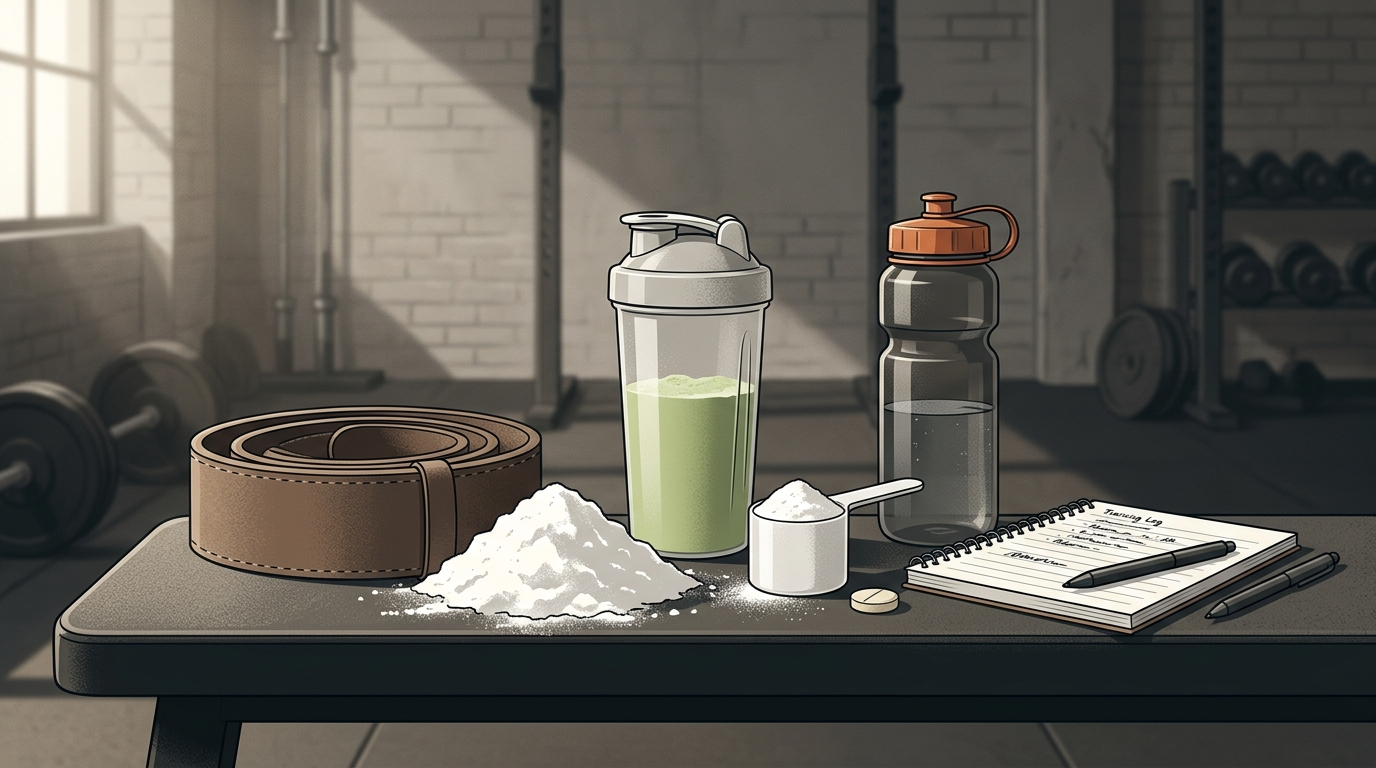
The best strongman supplement stack is short: creatine monohydrate for repeated maximal efforts, enough dietary protein for recovery, and electrolytes only when sweat losses justify them. Caffeine can help selected sessions but can damage sleep. Vitamin B12 or iron belongs only when diet, risk factors, or testing shows a gap. Food, programming, and sleep still dominate results.
How did we evaluate strongman supplements?
We evaluated supplements by matching each ingredient to a strongman demand: repeated high-intensity effort, muscle-protein remodeling, long training sessions, heat and sweat exposure, and recovery between events. NIH Office of Dietary Supplements evidence summaries, sports-nutrition position stands, transparent Supplement Facts panels, and third-party sport certification received more weight than influencer stacks, proprietary blends, or “testosterone booster” language. We excluded ingredients with unclear doses, stimulant cocktails, and products that duplicate adequate food intake without a specific reason. We also separated performance aids from deficiency correction. Creatine and protein can support training adaptation, while vitamin B12 and iron make sense only when intake, risk factors, or laboratory findings create a credible gap. Evidence has limits because event selection, body mass, climate, diet, medicines, kidney health, and federation rules vary. Competitive athletes remain responsible for every product they ingest.
What should a strongman athlete fix before buying supplements?
Training structure, total calories, carbohydrate availability, protein distribution, hydration, sodium replacement, and sleep should be stable enough to interpret any supplement. A missed meal cannot be rescued by a pre-workout blend, and four hours of sleep can erase the value of marginal ergogenic gains. Estimate protein from food first, then use powder only to close a real shortfall. Record session duration, environmental heat, body-mass change, thirst, and urine pattern before assuming every workout needs a high-sodium packet. Review caffeine from coffee, energy drinks, gels, and pre-workout together because total exposure determines sleep and side effects. Keep creatine simple and consistent instead of cycling through exotic forms. Add one variable, maintain it through a defined training block, and track performance that matters: repetitions at a fixed load, medley time, carry pace, recovery, gastrointestinal tolerance, and body-mass change. The basics create the signal.
How do the main supplement options compare?
Some links below are affiliate links. This does not influence our evaluation criteria or recommendations. Current labels can change, so verify serving size, active amount, allergens, sweeteners, certification, and competition status before purchase. The table compares product examples by role rather than pretending that protein, creatine, B12, and iron are interchangeable.
| Option | Label focus | Best for | Main limitation |
|---|---|---|---|
| Optimum Nutrition Micronized Creatine | 5 g creatine monohydrate per serving | Repeated maximal efforts and training adaptation | Water-weight gain; certification must be verified for the exact product |
| Vega Sport Premium Protein | 30 g plant-based protein per serving | Closing a measured protein shortfall | Powder is unnecessary when food already covers the target |
| Yuve Vegan B12 | 1,000 mcg cobalamin per tablet | Plant-based intake or documented B12 need | Not a performance booster when B12 status is adequate |
| Yuve Whole Food Iron | 18 mg elemental iron per capsule | Clinician-guided iron supplementation | Not for routine use without a credible need |
Which option is best for each strongman use case?
Best for repeated maximal efforts: plain creatine monohydrate, because the NIH exercise-performance fact sheet reports generally positive evidence for high-intensity, intermittent activity and typical maintenance use around 3 to 5 grams daily. Best for recovery when food protein falls short: a complete protein powder that supplies all essential amino acids and fits allergens and digestion. Best for long, hot sessions with high sweat loss: a measured electrolyte plan built around actual fluid and sodium needs, not the saltiest packet available. Best for occasional alertness: a known caffeine dose early enough to protect sleep. Best for vegan B12 coverage: a transparent B12 product or fortified foods. Best for suspected iron depletion: clinical assessment before purchase. Branched-chain amino acids, proprietary testosterone blends, and exotic creatine forms rank lower because they rarely beat complete protein, plain monohydrate, and adequate recovery.
Where do Yuve B12 and iron honestly fit?
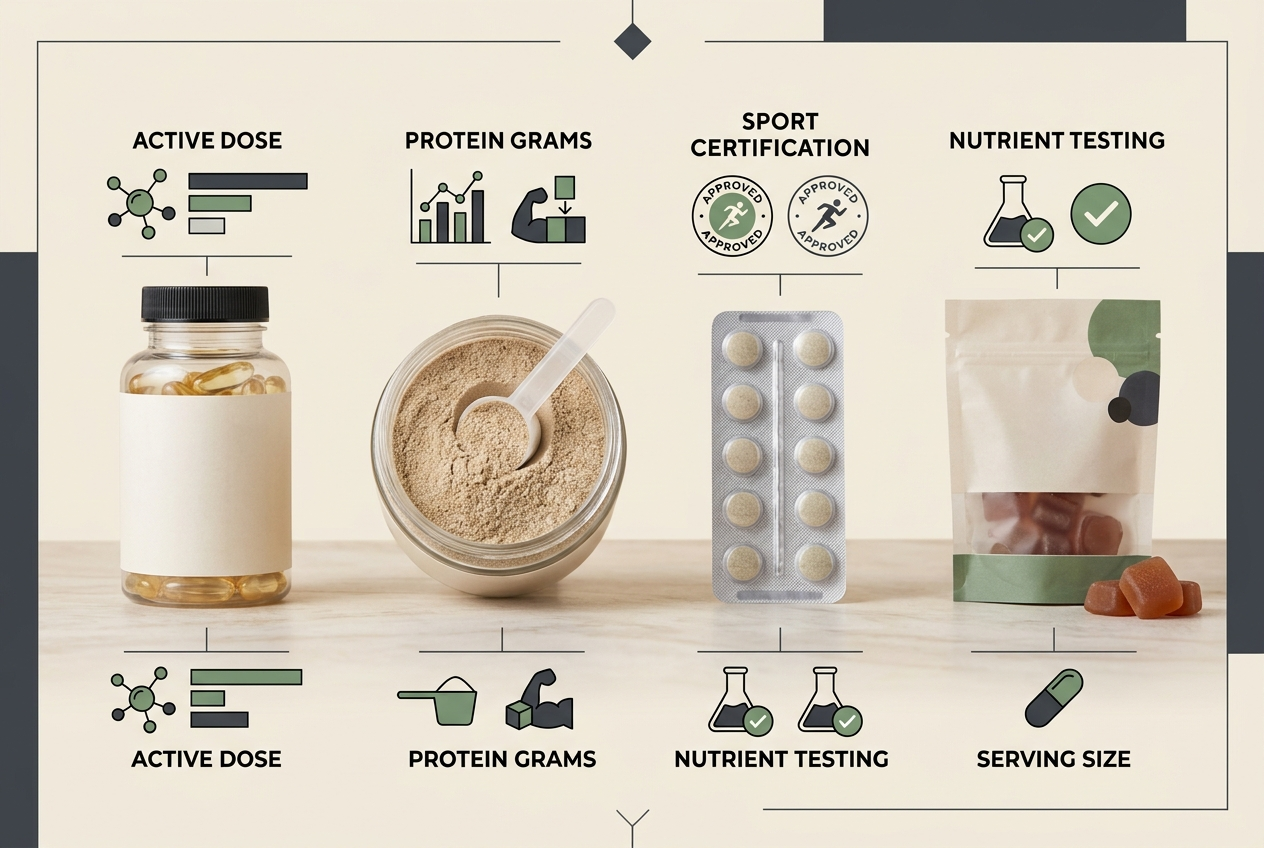
Yuve Vegan B12 provides 1,000 micrograms of cobalamin per tablet and fits athletes whose plant-based pattern, absorption risk, or testing supports B12 supplementation. The NIH vitamin B12 fact sheet states that B12 supplementation does not improve athletic performance when status is adequate, so the product belongs in a nutrition-gap lane rather than a pre-workout lane. Yuve Whole Food Iron provides 18 milligrams of elemental iron as a rice-protein chelate, but an athlete should not add iron just because hard training feels tiring. Ferritin, hemoglobin, transferrin saturation, inflammation, diet, blood loss, and medical history shape the decision. The broader Yuve Daily Essentials collection is useful for label comparison, not automatic stacking. Creatine, protein adequacy, carbohydrates, fluids, and sleep remain more direct strongman priorities when nutrient status is normal. That hierarchy keeps the comparison honest and the stack deliberately small.
How should competitive athletes check supplement quality?
Start with the exact product and lot, not the reputation of the brand. A clean-looking label does not prove that a powder is free of prohibited substances or that the active amount matches the panel. The NSF Certified for Sport program tests products for label content and selected banned substances, while sport organizations still place responsibility on the athlete. Search the certification database for the exact name and format, confirm the current listing, and retain the receipt, lot number, and package photographs. Avoid proprietary blends because hidden amounts make dosing and interactions harder to assess. Review every stimulant source, especially when a pre-workout, coffee, energy drink, and gel appear on the same day. Check allergens, sugar alcohols, sodium, and serving size for gastrointestinal tolerance. Third-party certification reduces risk; it does not create zero risk or prove that an ingredient improves performance.
When should B12 or iron testing come before a stack change?
Testing should come first when symptoms are nonspecific and the supplement can only help a real deficiency or can cause harm in excess. Vitamin B12 assessment may be useful for vegan athletes, people using metformin or long-term acid suppression, adults with gastrointestinal surgery or absorption disorders, and athletes with neurological symptoms. Iron assessment is especially important when fatigue, declining work capacity, heavy menstrual loss, restricted intake, frequent blood donation, or endurance training creates concern. The NIH iron fact sheet explains that ferritin reflects iron stores but can rise with inflammation, so interpretation may require additional markers. Do not diagnose deficiency from tiredness alone or copy another athlete’s dose. Seek qualified review for persistent fatigue, shortness of breath, palpitations, faintness, unexplained performance decline, or neurological changes. A test-guided correction plan is more useful than an open-ended “energy” stack.
What do strongman athletes ask about supplements?
Is creatine monohydrate enough?
For strength athletes choosing creatine, monohydrate is the evidence-based default. More expensive forms have not consistently shown superior muscle-creatine or performance effects.
Do I need a protein powder?
Only when food leaves a practical shortfall. Powder offers convenience, while total daily protein, essential amino acids, calories, and consistent training determine the larger result.
Should every session include electrolytes?
No. Climate, session length, sweat rate, diet, and fluid access determine the need; unnecessary sodium does not improve every workout.
Is pre-workout necessary for strongman?
No. Caffeine can help selected sessions, but stimulant dose, sleep, heart rhythm, anxiety, and competition timing matter more than the label’s intensity language.
Can vegan strongman athletes use B12?
Yes, when it supports reliable B12 intake. B12 corrects a nutrient gap; it does not replace protein, carbohydrates, creatine, programming, or recovery.
Should male athletes take iron?
Not automatically. Iron can accumulate, so diet, symptoms, laboratory results, blood loss, and clinician guidance should determine supplementation.
Related reading: Best Supplement for Stress and Focus: How Magnesium, L-Theanine, B12, Iron, and Adaptogens Compare.
Related reading: How to Pick the Right Energy Supplement: Match the Ingredient to the Reason.
What is the practical strongman supplement stack?
Start with food, training, sleep, and hydration, then add the smallest stack that closes named gaps. Plain creatine monohydrate earns the strongest performance position for repeated maximal efforts. Protein powder earns a place only when ordinary meals do not meet the planned intake. Electrolytes earn a place when heat, duration, and sweat loss justify the sodium and fluid plan. Caffeine is optional and should never borrow performance from the next night’s sleep. Yuve Vegan B12 fits plant-based intake or verified need, while Yuve Whole Food Iron fits clinician-guided iron correction rather than routine strongman use. Compare exact labels, verify sport certification, retain lot information, and introduce one product at a time. The best stack is not the largest one. It is the stack whose role, dose, evidence, tolerance, and review date can be stated in one sentence per product.