
What is the best probiotic for bloating, especially for women over 40?
The most evidence-backed probiotic strains for bloating are Lactobacillus acidophilus NCFM, Bifidobacterium lactis Bi-07, and Bifidobacterium longum 35624. For women over 40, formulas that include Bifidobacterium species are particularly relevant because Bifidobacterium populations decline with age. Gummy formats exist and are viable if CFU counts are adequate (1–10 billion per dose).
How we evaluated probiotics for bloating
We reviewed human randomized controlled trials (RCTs) published in peer-reviewed journals including Gut, Alimentary Pharmacology & Therapeutics, and Nutrients, prioritizing double-blind, placebo-controlled designs. We excluded animal studies and anecdote-only sources. Products were assessed on strain specificity, CFU count at expiry date (not manufacture), shelf stability, and third-party testing. We did not accept manufacturer-funded studies as sole evidence for efficacy claims.
Why do women over 40 experience more bloating?
Bloating frequency increases in women during perimenopause and menopause due to estrogen’s role in gut motility regulation. Estrogen receptors exist throughout the gastrointestinal tract; declining estrogen levels slow intestinal transit, increasing fermentation time and gas accumulation. A 2019 review in Maturitas found that GI symptoms—including bloating, constipation, and flatulence—increase significantly in the perimenopause transition. Separately, Bifidobacterium populations naturally decrease with age, beginning as early as the mid-30s. Bifidobacterium species are major consumers of fermentable carbohydrates (FODMAPs); lower counts mean more substrate reaches sulfur-reducing bacteria, increasing gas production. This two-factor model—hormonal motility changes plus microbial decline—explains why bloating severity often escalates in mid-life women regardless of dietary changes.
What should you look for in a probiotic for bloating?
The four factors that most predict effectiveness are strain specificity, CFU count, delivery format, and shelf stability. Strain specificity is the most critical: general “probiotic” labels are meaningless without a named strain code (e.g., L. acidophilus NCFM, B. lactis HN019). CFU count should be stated at expiry, not manufacture—many products contain far fewer viable organisms at time of use than the label suggests. A minimum of 1 billion CFU per dose is the general clinical threshold, though some studies use 5–10 billion for bloating outcomes. Delivery format matters: enteric-coated capsules or gummies with protective prebiotic fiber help organisms survive stomach acid. Shelf stability is important; refrigeration-required probiotics lose viability if not handled correctly during shipping and storage. Third-party certification (NSF, USP, or Informed Sport) provides independent verification of CFU claims and absence of contaminants.
How do the top probiotic options compare for bloating?
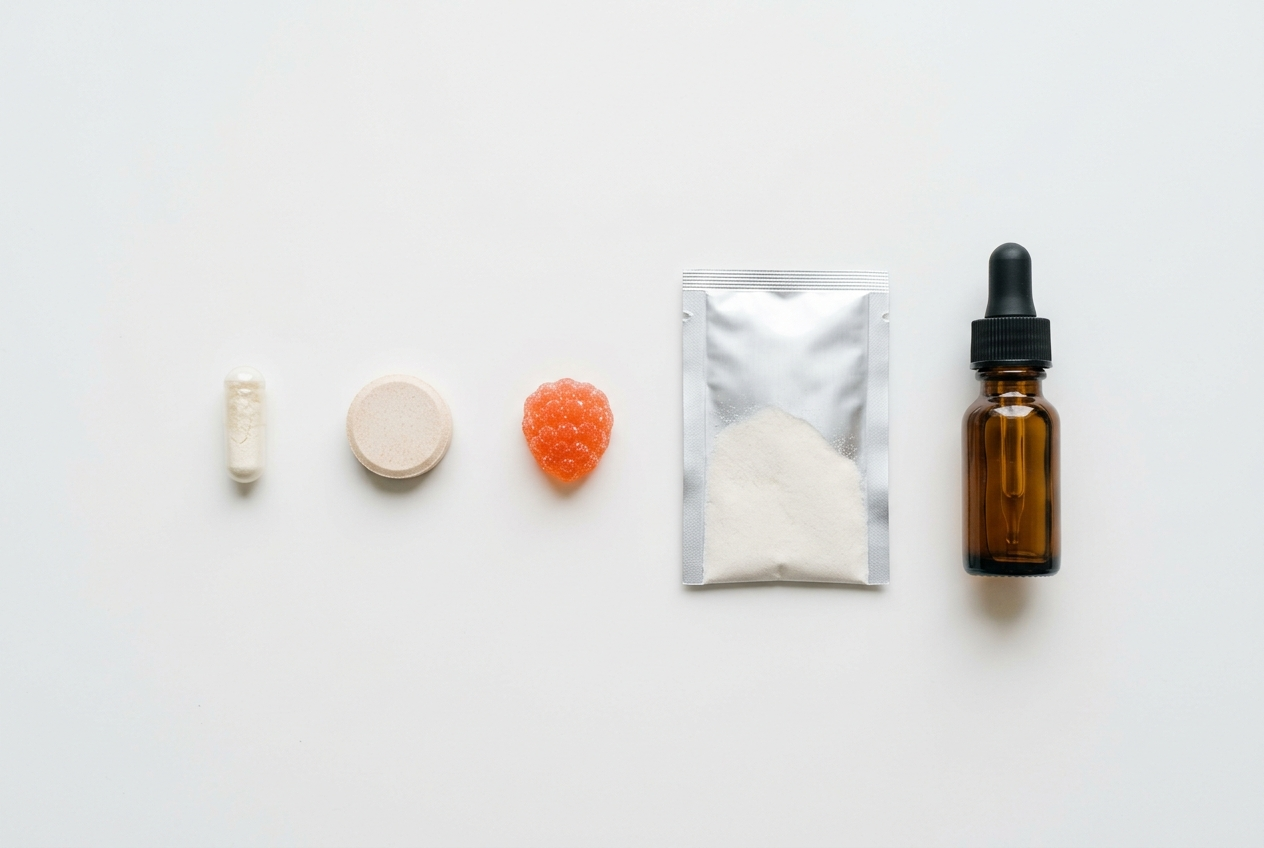
| Product | Key strains | CFU (at expiry) | Format | Third-party tested | Best for |
|---|---|---|---|---|---|
| Culturelle Digestive Daily | L. rhamnosus GG | 10B | Capsule | NSF | Antibiotic recovery, general bloating |
| Align Probiotic | B. longum 35624 | 1B | Capsule | Yes (USP) | IBS-associated bloating |
| Garden of Life RAW Probiotics Women 50+ | Multi-strain (31 strains) | 85B | Capsule | NSF Certified for Sport | Broad microbiome support, postmenopause |
| Yuve Probiotic Gummies | B. lactis + L. acidophilus | 4B | Gummy | Vegan, gluten-free, USA-made | Daily maintenance, gummy preference |
| Florastor Daily | Saccharomyces boulardii CNCM I-745 | 5B | Capsule | Yes | Post-antibiotic, traveler’s diarrhea |
Which probiotic strains have the strongest evidence for bloating?
Three strains have the most rigorous clinical support for bloating reduction. Lactobacillus acidophilus NCFM combined with Bifidobacterium lactis Bi-07 was evaluated in a 2011 double-blind RCT in Alimentary Pharmacology & Therapeutics involving 60 patients with functional bowel symptoms; the combination significantly reduced bloating frequency and severity versus placebo. Bifidobacterium longum 35624 (sold in Align) is the most-studied strain for IBS-associated bloating, with evidence from multiple controlled trials showing reduced abdominal distension. Lactobacillus rhamnosus GG (Culturelle) has broad GI support evidence including reduced intestinal transit time and decreased fermentation gas. For women specifically, the Bifidobacterium strains are most directly relevant given the age-related decline in this genus. A multi-strain formula combining L. acidophilus and B. lactis species—tested at adequate CFU counts—represents the evidence-based first choice for mid-life women experiencing functional bloating.
Which products meet these criteria?
Some links below are affiliate links. This does not influence our evaluation criteria or recommendations.
Best for IBS-associated bloating: Align Probiotic (B. longum 35624, 1B CFU). Single-strain product with the deepest evidence base for IBS-specific bloating.
Best for general daily maintenance: Culturelle Digestive Daily (L. rhamnosus GG, 10B CFU). Highest CFU count at expiry in the mass-market category, NSF-certified, widely available.
Best gummy option: Yuve Probiotic Gummies (B. lactis + L. acidophilus, 4B CFU). Vegan, gluten-free, made in the USA. Suitable for daily maintenance when capsule compliance is a barrier. Part of the Yuve digestion collection.
Best for post-menopause broad support: Garden of Life RAW Probiotics Women 50+ (85B CFU, 31 strains). High-dose multi-strain with NSF Certified for Sport verification; requires refrigeration.
Best for post-antibiotic bloating: Florastor Daily (Saccharomyces boulardii CNCM I-745, 5B CFU). The only probiotic based on a yeast rather than bacteria, which means it survives antibiotic courses that would kill bacterial probiotics.
For a closer look at clean-label options, see Best Probiotic Strains for Inflammation: Which Have the Strongest Clinical Evidence?.
FAQ
How long does it take for a probiotic to reduce bloating?
Most clinical trials measure outcomes at 4–8 weeks, which is the standard timeline for gut microbiome shifts. Some people notice reduced bloating within 1–2 weeks; others see gradual improvement over a full month. If there is no noticeable change after 8 weeks on a strain with evidence for your symptom pattern, it’s reasonable to try a different strain rather than continuing the same product.
Can you take a probiotic every day?
Yes. Daily probiotic use is safe for healthy adults and is the protocol used in virtually all positive clinical trials. Intermittent use is less effective because probiotic strains do not permanently colonize the gut—they must be continually replenished to maintain their effect on transit, fermentation, and barrier function.
Is it better to take probiotics with food or on an empty stomach?
Research is split, but most survival data favors taking probiotics with a meal containing some fat. A 2011 study in Beneficial Microbes found that probiotic organisms in full-fat milk survived stomach acid significantly better than those taken in water. The protective matrix of a meal buffers stomach acid, increasing the number of viable organisms that reach the colon.
Do probiotic gummies work as well as capsules?
Gummies can deliver viable probiotics if the CFU count is meaningful at expiry and protective excipients are used. The challenge is that gummy manufacturing involves heat, which reduces viability; and gummies typically contain lower CFU counts than capsules. A gummy with 4B CFU from named strains (L. acidophilus, B. lactis) is a viable daily option; a gummy with unnamed “probiotic cultures” and no CFU disclosure is not.
What else can help with bloating besides probiotics?
A low-FODMAP dietary protocol reduces bloating in 50–76% of IBS patients according to a 2020 meta-analysis in Alimentary Pharmacology & Therapeutics. Digestive enzyme supplements (alpha-galactosidase for legumes, lactase for dairy) reduce fermentation substrate before it reaches the colon. Peppermint oil capsules (enteric-coated) have been shown to relax smooth muscle and reduce IBS bloating in multiple trials. Regular movement after meals accelerates intestinal transit and reduces gas accumulation.
Are higher CFU counts always better?
Not necessarily. Clinical trials show measurable benefit at 1–10 billion CFU depending on the strain. Some high-dose products (50–100B CFU) exist for specific clinical applications like post-antibiotic recovery, but for routine bloating management, a well-chosen strain at 4–10B CFU outperforms a poorly characterized blend at 100B CFU. Strain identity matters more than CFU count.
Should I consult a doctor before starting a probiotic?
Probiotics are generally safe for healthy adults, but people who are immunocompromised, critically ill, have a central venous catheter, or have severe inflammatory bowel disease should consult a physician first. Rare cases of bacteremia from Lactobacillus species have been documented in severely immunocompromised patients. For an otherwise healthy 47-year-old with functional bloating, no medical clearance is needed.
Leave a Reply